
Ten minute yoga is a short yoga session you can fit into almost any day, using a few gentle poses, slow breathing, and a calm finish. You do not need a studio, special clothes, or flexibility. A small mat and a quiet corner are enough. This guide explains how to begin, what to do in each minute, how often to practise, and how to keep it comfortable and steady over time.
This article is general education about yoga and is not medical advice. If you have a health condition, an injury, or you are pregnant, please check with your doctor before you start.
What is ten minute yoga?
Ten minute yoga is a short practice of gentle poses and slow breathing that fits in one small block of time. It is not a special style. It is simply a short session, planned so that you warm up, move, and rest without rushing.
Why do people choose a ten minute practice?
Many people choose it because it is easy to fit into a busy day. A short session feels less heavy than an hour class. It is simple to begin, and it is simple to repeat the next day.
Is ten minutes really enough?
Ten minutes is enough to build a habit and to move your body with care. It will not feel like a long class, and that is fine. Many people find a small daily practice easier to keep than a big one they skip.
How do I start?
Start by picking a quiet spot, a time of day, and a simple plan you can repeat. Keep the first week very easy. Follow the plan below, stop if anything hurts, and do not try to copy photos of advanced poses.
What do I need before I begin?
You need a clear patch of floor, comfortable clothes, and a mat or folded blanket. Turn your phone to silent and set a timer for ten minutes. Having a drink of water nearby is also a good idea.
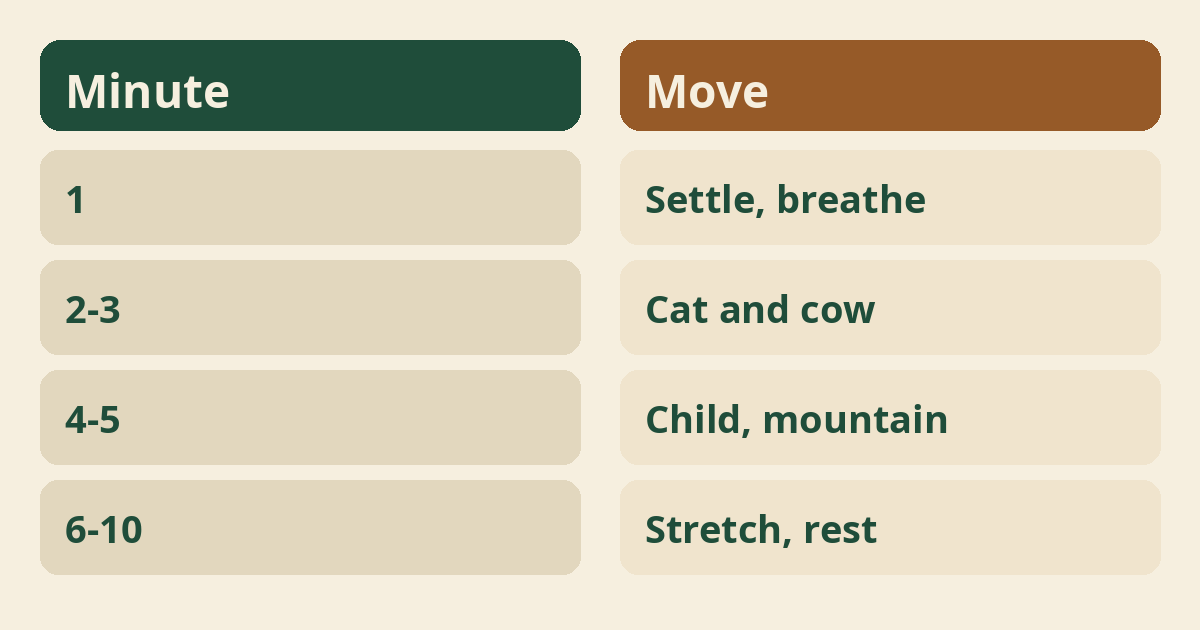
Step 1: Settle and breathe (minute 1)
Sit or stand quietly and take slow breaths for one minute. Close your eyes if that feels comfortable. Let your shoulders drop and notice the air moving in and out of your nose.
Step 2: Warm up with cat and cow (minutes 2 to 3)
Move on hands and knees between a rounded back and a gentle arch for two minutes. Go slowly and match each move to a breath. Cat and cow pose is a kind way to wake up the spine.
Step 3: Rest in child’s pose (minute 4)
Sit your hips back toward your heels and rest your forehead down for one minute. Place a pillow under your head or hips if it feels better. Child’s pose is a calm pause in the middle of a short session.
Step 4: Stand tall in mountain pose (minute 5)
Stand with feet hip width apart, arms relaxed, and stay for one minute. Feel your feet on the floor and lengthen through the top of your head. Mountain pose teaches steady standing posture.
Step 5: Stretch the sides and shoulders (minutes 6 to 7)
Reach one arm up and lean gently to the side, then switch, for about two minutes. Roll your shoulders back a few times too. Keep your neck long and your jaw soft, and never force a stretch.
Step 6: Finish with a seated rest (minutes 8 to 10)
Sit comfortably and let your breath settle for the last three minutes. You can sit on a cushion or a chair. This quiet end lets your body slow down before you carry on with your day.
How should I breathe?
Breathe slowly through your nose, in and out, at an easy pace. Do not hold your breath in a pose. If your breathing becomes rushed, you are going too far, so ease off. Belly breathing is a simple way to learn this.
How long should each pose last?
Hold most poses for a few slow breaths, or about thirty seconds to a minute. There is no prize for staying longer. Short, comfortable holds are better than long, strained ones, especially when you are new.
How often should I do it?
Many beginners do well with three to five short sessions each week. Daily practice is fine if it feels good. If you are unsure about the right amount, how often you should do yoga has a helpful overview.
What is the best time of day?
The best time is the one you will really keep. Some people like the morning to start fresh. Others prefer the evening to unwind. Try both for a week and see which feels easier.
Can I do it on a chair?
Yes, you can do a seated version of ten minute yoga on a sturdy chair. Sit tall, move your arms, twist gently, and breathe slowly. This is useful at work or when getting down to the floor is hard. See yoga at your desk for ideas.
Do I need props?
You do not need props, but a few simple items can make poses more comfortable. A folded blanket, a cushion, or a strap can help. You can read more in yoga props for beginners.
What should I wear?
Wear clothes that let you move and breathe freely. Soft, stretchy clothing is common, but any comfortable outfit works. Practise barefoot on a mat so your feet do not slip.
What are common mistakes?
The most common mistake is trying to do too much too fast. Others include holding the breath, pushing into pain, comparing yourself to others, and skipping the rest at the end.
Should it ever hurt?
A stretch can feel mild, but sharp or pinching pain is a signal to stop. Back off until the feeling eases. Yoga should feel steady and manageable, never like you are fighting your body.
Who should be careful?
People with injuries, joint trouble, high blood pressure, dizziness, or pregnancy should talk to their doctor first. Ask which moves are suitable for you. If you have back trouble, this guide on yoga with a bad back offers a cautious start. For pregnancy, see prenatal yoga vs regular yoga.
Is ten minute yoga a treatment?
No, ten minute yoga is not a treatment for any medical condition. It is a gentle movement and breathing habit. If you have symptoms or health worries, please see a qualified doctor and use yoga only as an extra activity they agree with.
What benefits might I notice?
Many people find that a short practice leaves them feeling calmer and a little looser. Results vary from person to person, and nothing is guaranteed. For general information on yoga, you can read the National Center for Complementary and Integrative Health page on yoga.
Can it help with stress?
Some people find that slow breathing and gentle movement help them feel more relaxed. It may be a nice pause in a busy day. If stress feels heavy, talk with a professional. See yoga for stress relief for gentle ideas.
Will it make me more flexible?
Regular practice may help you feel more flexible over time, though it is slow and personal. Be patient. Some days you will feel stiff, and that is normal. Yoga for flexibility explains how to build gently.
What about balance?
Standing poses can help you pay attention to your balance. Keep a wall or chair close for support at first. Yoga for balance has easy ways to practise safely.
What if my neck and shoulders feel tight?
Gentle shoulder rolls and slow neck movements may feel good after sitting for long hours. Move within a comfortable range and never force your head. Yoga for neck and shoulders offers more options.
What if my hips feel stiff?
Easy seated and kneeling poses can be added when your hips feel tight. Keep the stretch mild and use cushions for support. Yoga for hips is a good next read.
Can I swap in other poses?
Yes, you can swap poses as long as the session stays gentle and balanced. Try butterfly pose, garland pose, puppy pose, or thunderbolt pose, if your body is comfortable in them.
How do I progress?
Progress by adding a minute here and there, or by repeating the routine more often. Do not rush to longer sessions. When ten minutes feels easy, you might try fifteen, or add one new pose each week.
Do I need a teacher?
A teacher is not required for a gentle short routine, but one can be very helpful. A qualified teacher can check your form and suggest changes for your body. Start with a beginner class when you feel ready.
How do I stay consistent?
Link your session to something you already do, like brushing your teeth or making tea. Keep your mat in view. Tick a calendar after each session. Small wins add up, and missing a day is not a failure.
What mindset helps most?
A kind, patient mindset helps more than any pose. See the session as time for yourself, not a test. Notice how you feel, let thoughts pass, and be gentle when your mind wanders.
Where to read next
For a calm, beginner-friendly start, Ranjana Sinha’s Begin Where You Are is written for people who want simple steps. Our guide to starting a home yoga practice adds a gentle routine you can follow at home.
Frequently asked questions
Can I do ten minute yoga every day?
Many people do it daily when it feels comfortable, and rest days are fine too.
Do I need to be flexible to start?
No, yoga is a place to begin, whatever your flexibility is today.
Should I eat before ten minute yoga?
Most people feel better practising on a fairly empty stomach, so wait a little after a big meal.
Can I do it in bed or at work?
Yes, gentle seated or lying versions can be done almost anywhere, as long as you stay comfortable.
What if I miss a day?
Just begin again the next day without any guilt.
The bottom line
Start small, stay gentle, and let ten calm minutes become a habit that fits your life.

