
Five minute yoga is a short practice of gentle poses and slow breathing that fits into a busy day. You do not need a mat, special clothes or any experience. Pick a few easy movements, breathe slowly and move at your own pace. This guide explains what to do, how to breathe, what mistakes to avoid and how to build a small habit that feels easy to keep.
This article is general education and is not medical advice. If you have a health condition, an injury, or you are pregnant, check with your doctor before you start any new practice.
What is five minute yoga?
Five minute yoga is a very short session of simple poses and slow breathing. It is not a special style. It is just a small slice of yoga that you can fit between other tasks. Think of it as a quick, kind check-in with your body.
Why do people do short yoga sessions?
Many people choose short sessions because they are easy to start and easy to repeat. A long class can feel like a big task. Five minutes feels small, so it is harder to skip. Many people find that small habits last longer.
Can five minutes really be enough?
Five minutes is enough to move, breathe and pause, and that is a fine place to begin. You will not learn everything in one short session. But a few slow breaths and some gentle stretching can feel pleasant. Results vary from person to person.
How do I start?
Start by choosing a quiet spot, setting a timer for five minutes and wearing something comfortable. You can use a floor, a rug or a chair. Keep water nearby if you like. Decide on two or three poses before the timer starts, so you are not thinking about what comes next.
What do I need before I begin?
You need very little: a bit of space, comfortable clothes and a calm mind. A mat can help on a slippery floor, but it is optional. Take off your shoes if you can. Silence your phone, except for the timer.
Step 1: How do I settle in?
Sit or stand comfortably and take three slow breaths to settle in. Close your eyes or look softly at the floor. Let your shoulders drop away from your ears. This first minute simply tells your body that practice time has begun.
Step 2: How do I warm up my spine?
Use cat and cow movements to wake up your back gently. Come onto your hands and knees. Breathe in as you lift your chest, and breathe out as you round your back. Learn more in our guide to cat cow pose. Do it slowly for about six rounds.
Step 3: How do I stand tall?
Stand in mountain pose to feel your feet, your posture and your breath. Place your feet hip width apart and let your arms rest by your sides. Press evenly through both feet. Our page on mountain pose shows the details.
Step 4: How do I stretch my sides and arms?
Raise your arms overhead and lean gently to each side. Breathe in as you reach up. Breathe out as you lean to one side, then return to centre and change sides. Keep the movement small and smooth. Stop if anything feels sharp.
Step 5: How do I release my hips?
Try a seated butterfly or a low squat to ease tight hips. Sit with the soles of your feet together and let your knees fall open. Do not push them down. You can read more about butterfly pose or garland pose.
Step 6: How do I finish the session?
Finish with child’s pose or a quiet seated pause for the last minute. Rest your forehead on the floor or on stacked hands. Breathe slowly and let your body feel heavy. See our guide to child’s pose for easy options.
How should I breathe during five minute yoga?
Breathe slowly through your nose, and let the breath lead the movement. There is no need to force a deep breath. Aim for a smooth, even rhythm. If you feel dizzy, go back to normal breathing and rest. A simple start is belly breathing.
What if I cannot breathe through my nose?
Breathe in whatever way is comfortable for you. Nose breathing is common in yoga, but it is not a rule you must follow today. If your nose is blocked, a soft breath through the mouth is fine. Comfort comes first.
How long should each pose last?
Hold most poses for three to five slow breaths. In a five minute plan, that gives each pose about thirty to sixty seconds. Moving with the breath is also fine. Do not rush, and do not stay longer than feels comfortable.
How often should I practice?
Many beginners start with a few days a week and add more when it feels easy. A small, steady routine tends to work better than rare long sessions. Listen to your body and take rest days. Our page on how often to do yoga has more ideas.
What is the best time of day?
The best time is the time you will actually do it. Some people like a slow morning start. Others prefer a short break at midday or a gentle wind down at night. Try different times for a week and see what fits your life.
Can I do five minute yoga at my desk?
Yes, many gentle movements can be done from a chair. Seated twists, shoulder rolls and neck stretches are simple options. Keep your feet flat and your back tall. See yoga at your desk for easy ideas.
Do I need a yoga mat or props?
You can begin without any equipment, but a few simple props can add comfort. A folded blanket, a cushion or a strap can help if reaching the floor is hard. Read about yoga props to see what is useful and what is not.
What mistakes should beginners avoid?
The most common mistake is going too fast or pushing too far. Other common ones are holding the breath, comparing yourself with photos, and skipping rest. Yoga is not a contest. A smaller, gentler movement is always a good choice.
Why should I never force a stretch?
Forcing a stretch can leave you sore, and it works against the calm you are looking for. Stretch until you feel mild tension, not pain. If something hurts, ease off right away. Pain is a signal to stop, not a challenge to beat.
Who should be careful with yoga?
People with health conditions, injuries or pregnancy should speak with a doctor first. This includes anyone with back problems, joint pain, high or low blood pressure, balance problems or recent surgery. A doctor can tell you which movements are suitable for you.
What about a sore back?
If your back is sore, talk to a doctor before you try new movements. Some people find gentle movement comfortable, but it is not right for everyone. Our guide on yoga with a bad back explains what to ask and what to watch for.
Can I do five minute yoga while pregnant?
Pregnancy changes what is comfortable, so check with your doctor or midwife first. Many poses are changed during pregnancy. You can read how prenatal yoga differs from regular yoga. A trained prenatal teacher can guide you safely.
Is five minute yoga a treatment?
No, five minute yoga is not a treatment for any condition. It is a gentle practice for general wellbeing. If you have symptoms or a diagnosis, a doctor is the right person to ask. Yoga can sit alongside medical care, never in place of it.
What are the possible benefits?
Many people find short yoga sessions leave them feeling calmer and a little more relaxed. Others notice that their body feels looser or that they stand a bit taller. Results vary, and not everyone feels the same thing. For general background, see the National Center for Complementary and Integrative Health page on yoga.
Can it help with stress?
Some people find that slow breathing and gentle movement make a stressful day feel lighter. A short pause can give your mind a break from screens and worries. It is not a fix for everything. For more, read yoga for stress relief.
Can it help with stiff shoulders and neck?
Many people find that gentle shoulder and neck movements feel good after long hours of sitting. Use small, slow circles and keep your jaw relaxed. Never pull on your neck. Our guide to yoga for neck and shoulders has more options.
Will it make me more flexible?
Flexibility may improve slowly with regular practice, but it varies from person to person. Do not expect big changes in a week. Five minutes a day is a gentle start. You can explore yoga for flexibility when you are ready for more.
What about balance?
Standing poses can give you a chance to practice balance in a safe way. Stand near a wall or chair so you can steady yourself. Start with feet wide, then try narrower. See yoga for balance for simple steps.
Can I focus on tight hips?
A few simple hip openers can fit into five minutes, and many people enjoy them. Go slowly and avoid forcing the knees. A low squat or a seated pose may be enough. Visit yoga for hips for a longer routine.
How do I set up a simple sample routine?
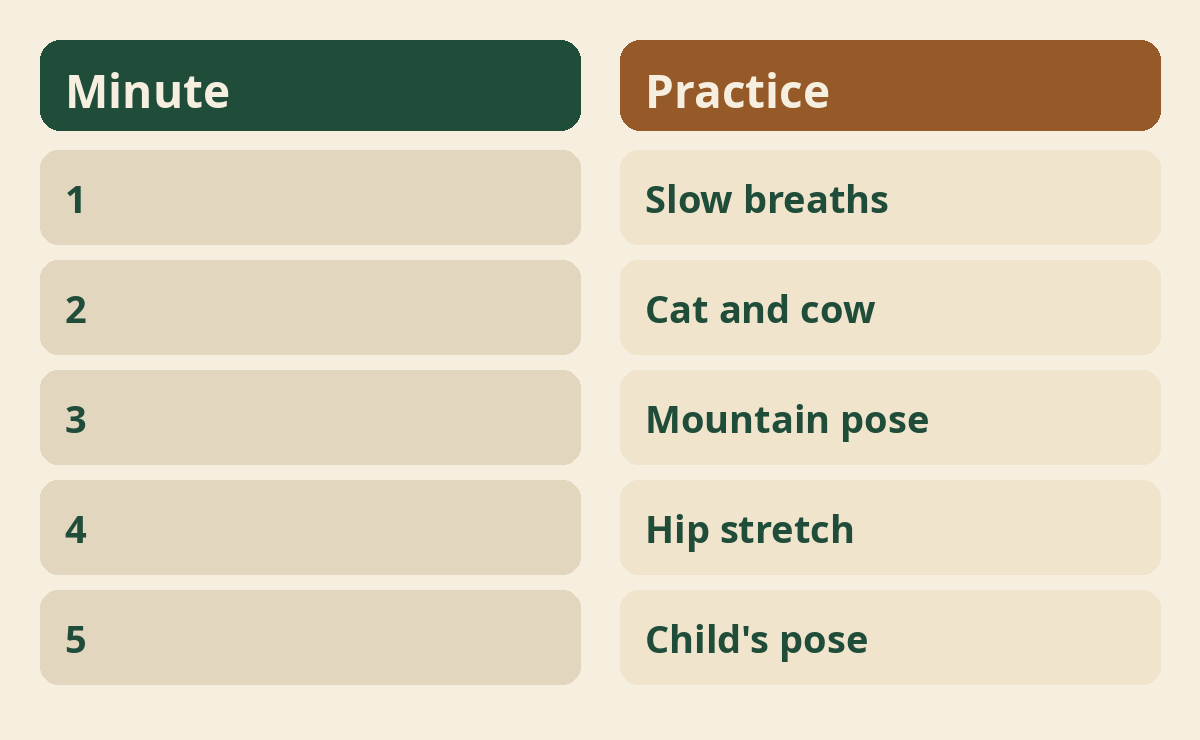
A good five minute plan has a settle, a warm up, two or three poses and a rest. Try one minute of breathing, one minute of cat and cow, one minute of mountain pose, one minute of a hip stretch and one minute of rest. Change it to suit you.
How do I make it a habit?
Link your practice to something you already do, such as brushing your teeth or making tea. Keep the bar low. If you miss a day, simply begin again. A tiny habit that you keep is worth more than a big plan that you drop.
How do I progress after a few weeks?
When five minutes feels easy, add a minute or one new pose at a time. There is no hurry to reach a long session. You might also try a gentle pose such as thunderbolt pose or puppy pose. Go step by step.
Do I need a teacher?
A teacher is not required to start, but a good one can help a lot. A qualified teacher can check your form and offer changes that suit your body. If you are unsure about a pose, ask. Online videos are helpful, yet they cannot see you.
What mindset works best?
A kind and curious mindset works best, with no pressure to look a certain way. Notice how you feel before and after. Let go of goals for a few minutes. Yoga is a practice, not a performance, and every small session counts.
Where to read next
For a calm, beginner-friendly start, Ranjana Sinha’s Begin Where You Are is written for people who want simple steps. Our guide to starting a home yoga practice adds a gentle routine you can follow at home.
Frequently asked questions
Is five minute yoga good for total beginners?
Yes, it is a gentle way to begin because the sessions are short and simple.
Do I need to be flexible?
No, you do not need to be flexible, because yoga is a way to build ease over time.
Can I do it every day?
Many people do short sessions daily, but it is fine to start with fewer days and listen to your body.
Should I eat before I practice?
Most people feel more comfortable on a light stomach, so wait a little after a big meal.
What if I feel pain?
Stop, rest and speak with your doctor if the pain continues.
The bottom line
Take your five minutes today, breathe slowly, and let that small start be enough.

