
Cradle pose is a seated yoga pose where you hold one leg like a baby and rock it gently from side to side. It is also called Hindolasana. Most beginners can try a soft version with a folded blanket under the hips. This guide explains the steps, the breathing, common mistakes, and who should check with a doctor first.
This article is general education and is not medical advice. If you have a knee, hip, back, or other health condition, or you are pregnant, please check with your doctor before you try this pose.
What is cradle pose?
Cradle pose is a seated pose where you hold a bent leg in your arms and rock it like a baby. In Sanskrit it is often called Hindolasana, which points to a swing or cradle. It is a slow pose, not a stretch you force. Think of it as a gentle hello to your hips.
Why do people practise cradle pose?
Many people practise it to feel looser in the hips after sitting for long hours. It also gives a calm, rocking feeling that some people enjoy at the end of a session. Others use it as a warm-up before deeper hip poses. Results vary from person to person.
Where does the name come from?
The name comes from the shape of your arms, which look like they are holding a baby. The rocking motion adds to the picture. You are not trying to look perfect. You are only trying to hold the leg with care and move with ease.
What do you need to begin?
You need a mat, a folded blanket, and a quiet space where you can sit on the floor. Wear clothes that let your knees and hips move freely. Keep a strap or a scarf nearby in case you cannot reach your foot. Start on a soft, flat surface. See yoga props for beginners for more ideas.
How do you warm up first?
Warm up for a few minutes with easy movements before you hold your leg. Try slow ankle circles, gentle knee hugs, and a few rounds of cat cow pose. Your joints will feel more ready. Never start this pose when your body feels cold or stiff.
Step 1: How do you sit down?
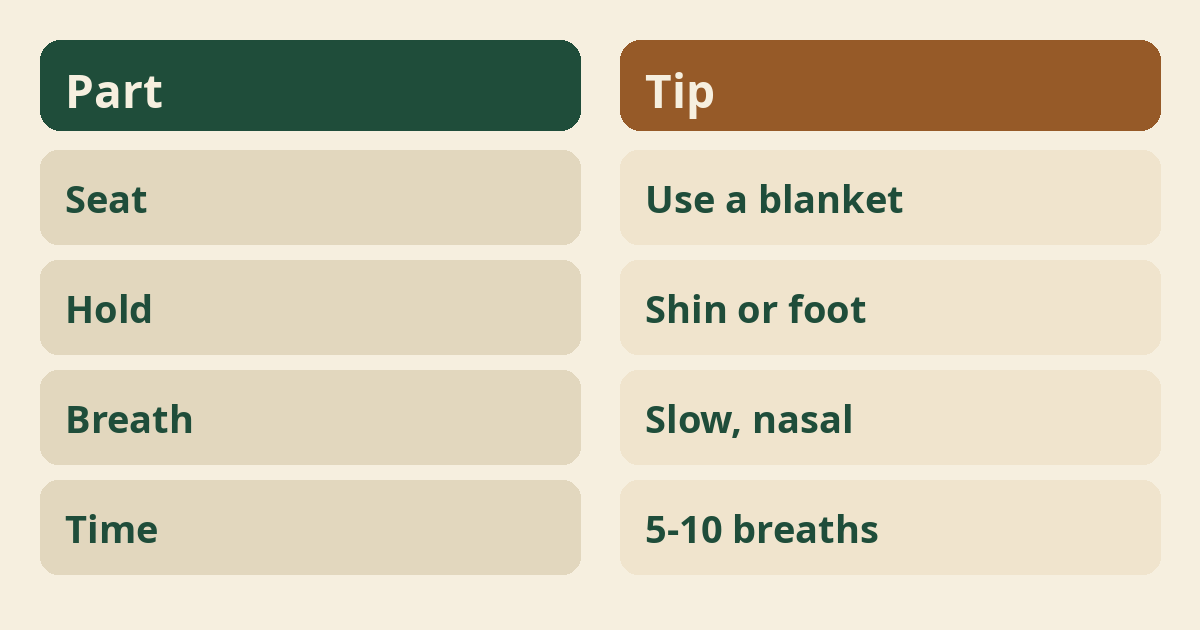
Sit on the floor with your legs stretched out and your back tall. Put a folded blanket under your hips if your knees rise above your hips. Place your hands on the floor beside you. Feel both sitting bones press evenly into the ground.
Step 2: How do you bend the first leg?
Bend your right knee and bring your right foot toward your chest slowly. Keep the left leg long or lightly bent. Use your hands to guide the right leg, not to pull it. Stop at the first sign of any pinch in the knee.
Step 3: How do you hold the leg?
Hold the right shin or foot with both hands so the leg rests across your arms. Place the right foot in the crook of your left elbow and the right knee in the crook of the right elbow. If that feels too much, simply hug the shin. A soft hold is enough.
Step 4: How do you rock the leg?
Rock the leg gently from side to side, like a slow swing. Keep the movement small and smooth. Let the hip soften as you rock. If your knee complains, make the swing smaller or stop and rest the foot down.
Step 5: How do you switch sides?
Lower the leg with care, shake out your hips, and repeat on the other side. Take a breath between sides so you can notice any difference. Most people find one side tighter than the other. That is normal and you do not need to match them today.
Step 6: How do you come out of the pose?
Release your hands slowly, place the foot on the floor, and stretch both legs out. Sit for a few breaths and feel your hips settle. Do not jump up quickly. A slow exit helps you stay steady and calm.
How should you breathe in cradle pose?
Breathe slowly through your nose and let the breath stay easy. Try to lengthen each breath out a little. If you lose your breath, the pose is too strong, so ease off. A practice like belly breathing pairs well with this pose.
How long should you stay?
Beginners can stay for about five to ten slow breaths on each side. You can rock for a short while and then hold still. Shorter is fine when you are new. Let comfort, not a clock, decide the time.
How often can you practise?
Many beginners practise two or three times a week and see how the body feels. You can add more days slowly if everything feels good. Listen to the next day too. Soreness that lingers or sharp pain is a signal to rest. See how often should you do yoga.
What are common mistakes?
The most common mistake is forcing the knee or foot toward the chest. Others include holding the breath, rounding the back hard, and rocking too fast. Another is sitting on the edge of a sore hip. Go slowly and use props to remove strain.
Why should the knee never twist?
Your knee is a hinge joint, so the work should come from the hip and not the knee. If you feel a twisting or pinching in the knee, stop. Keep the foot close and the shin supported. A teacher can help you find a safer angle.
What if my back rounds?
Sit on a folded blanket and keep the chest lifted so the back stays long. A rounded back usually means the hips are tight. Raise your seat and loosen your grip on the leg. If your back is a worry, read can you do yoga with a bad back.
How can a strap help?
A strap lets you hold your foot without pulling your body forward. Loop it around the foot and hold both ends. You get the same shape with less strain. Many experienced students use a strap on tight days.
How can a blanket help?
A folded blanket under the hips tilts the pelvis forward and makes sitting easier. It also lifts the hips above the knees, which reduces knee pressure. You can place a second blanket under the foot if you wish. Props are a tool, not a sign of weakness.
Can I use a wall or chair?
Yes, you can sit with your back against a wall or on the edge of a sturdy chair. The wall gives your back support. A chair gives you room to hug the leg without the floor. Both are good choices if the floor feels hard.
Who should be careful with this pose?
People with knee, hip, ankle, or back concerns should talk to a doctor before trying it. The same goes for anyone with a recent injury or surgery. Pregnant students should ask their doctor too. See prenatal yoga vs regular yoga for context.
Is cradle pose a treatment?
No, cradle pose is not a treatment for any medical condition. It is a gentle movement practice. If you have pain or a health concern, please see a doctor first. Yoga can sit next to good care, but it does not replace it.
What might you feel in the pose?
You may feel a mild stretch in the outer hip and the back of the thigh. A mild, steady sensation is usually fine. Sharp, hot, or pinching feelings are not. When in doubt, back off and breathe.
What are the possible benefits?
Many people find the pose helps them feel looser in the hips and calmer in the mind. Results vary, and it is not a promise for everyone. Some students like the slow rocking as a way to settle after a busy day. For general information on mind and body practices, visit National Center for Complementary and Integrative Health.
How does it help after a long day of sitting?
Many people find that a few minutes of hip movement feels good after hours at a desk. The rocking invites small, easy motion into stiff areas. Pair it with yoga at your desk for breaks. Keep it gentle and stop if anything hurts.
How does it connect to flexibility?
Cradle pose can be one small part of a flexibility routine built slowly over weeks. Flexibility grows with calm and regular practice, not force. Some days will feel tighter than others. See yoga for flexibility.
How does it relate to other hip poses?
Cradle pose pairs well with other gentle hip openers in the same session. Try butterfly pose or garland pose after it. See also yoga for hips. Move from easy to deeper shapes over time.
What is a good way to follow with a rest?
Finish with a quiet rest such as child’s pose to let the body settle. Fold forward with the knees apart and the forehead down. Stay for a few easy breaths. See child’s pose for steps.
How can I progress over time?
Progress by holding longer, rocking with more ease, and slowly reaching for the foot with both arms. Do not rush to the full shape. Move forward only when the current step feels easy. Patience matters more than depth.
Should I learn from a teacher?
A qualified teacher can see your body and fit the pose to you. They can adjust your angle, suggest props, and keep you safe. If classes are not possible, a short video can help you start. A teacher is especially useful if you have any past injury.
What mindset helps most?
A kind, patient mindset helps you enjoy the pose and stay safe. Leave comparison aside. Your hips are unique and your day is unique. The aim is to feel at ease, not to look like a picture.
How can I make it a calming habit?
Practise at the same time each day in a quiet corner so the pose becomes a relaxing habit. Even five minutes counts. Dim the lights and breathe slowly. A steady habit often matters more than a long session.
What if I feel nothing at all?
That is fine, since small sensations are normal at the start. Your body may need more days to settle. Keep the pose gentle and keep breathing. Do not push to feel more.
Where to read next
For a calm, beginner-friendly start, Ranjana Sinha’s Begin Where You Are is written for people who want simple steps. Our guide to starting a home yoga practice adds a gentle routine you can follow at home.
Frequently asked questions
Is cradle pose the same as Hindolasana?
Yes, Hindolasana is the Sanskrit name most often used for cradle pose.
Can beginners do cradle pose?
Many beginners can try a soft version with props, as long as their doctor agrees when they have a health concern.
Should cradle pose hurt?
No, you should feel at most a mild stretch, and you should stop if you feel sharp or pinching pain.
How long should I hold it?
About five to ten slow breaths on each side is a common starting point.
Can I do it every day?
Some people do, but starting with two or three days a week and listening to your body is a sensible choice.
The bottom line
Go slowly, use your props, and let your hips open at their own pace.

