
Wheel pose prep is a short series of gentle moves that help your body get ready for a full backbend. It is not a race to lift off the floor. You work on your shoulders, hips, legs and breath first, then try a smaller backbend such as bridge. Go slowly, stay in comfort, and stop whenever something feels wrong.
This article is general education only and is not medical advice. If you have a back, neck, shoulder, wrist, heart or blood pressure condition, or you are pregnant, check with your doctor before trying backbends.
What is wheel pose?
Wheel pose is a deep backbend where you press up from the floor onto your hands and feet, with your chest and belly lifted toward the sky. Many teachers call it a big pose that asks a lot of the shoulders, hips and legs. That is why prep matters so much.
What does wheel pose prep mean?
Wheel pose prep means the smaller poses and stretches you do before you try the full shape. Think of it as building a staircase instead of jumping to the top. Each step teaches your body one piece of the pose.
Why do people do wheel pose prep?
People do prep because it makes the full pose feel steadier and less rushed. Some want to open a stiff chest. Others simply like a clear plan. Many people find that slow practice feels kinder than forcing a shape.
Do I need to be flexible first?
No, you do not need to be flexible to begin prep. You only need patience and a willingness to move gently. Prep itself is how most people build range over time, and results vary from person to person.
How do I start wheel pose prep?
Start with a short warm-up of five to ten minutes, then move into one or two gentle backbends. Begin on a mat with a clear space around you. Wear clothes you can move in and keep your phone and distractions away.
Step 1: How do I warm up the spine?
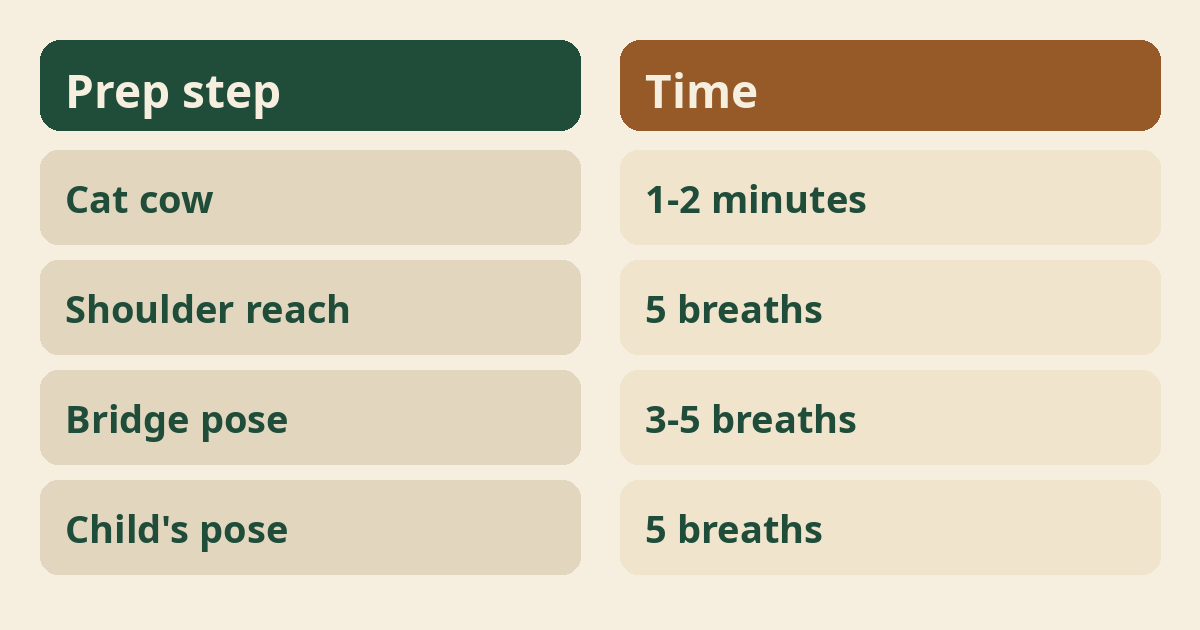
Warm up the spine with slow, small movements before any backbend. Try cat cow pose for a minute or two. Let your back round and arch in a smooth rhythm that matches your breath.
Step 2: How do I open the shoulders?
Open the shoulders with easy arm stretches, because wheel pose needs the arms to reach overhead. Reach both arms up, clasp your hands and gently stretch. You can also read more in yoga for neck and shoulders.
Step 3: How do I prepare the hips?
Prepare the hips with a few slow stretches so your lower back does not do all the work. Poses like butterfly pose and garland pose ask the hips to open a little at a time.
Step 4: How do I try bridge pose?
Bridge pose is the most common first backbend to practice before wheel. Lie on your back, bend your knees, set your feet hip width apart and press into your feet to lift your hips. Stay a few breaths, then lower slowly.
Step 5: How do I try a supported backbend?
A supported backbend lets you feel the shape with help from a prop. Place a folded blanket or a block under your upper back or hips while lying down. Stay only as long as it feels comfortable.
Step 6: How do I rest after the backbends?
Rest after backbends so your body can settle. Hug your knees to your chest or move into child’s pose. Take a few calm breaths before you get up.
How should I breathe during prep?
Breathe slowly through your nose and keep the breath smooth the whole time. Breathe in as you lift and out as you lower. If you notice you are holding your breath, ease off the pose. You can learn more in belly breathing for beginners.
Why does the breath matter in backbends?
A calm breath tells you whether the pose is comfortable. If your breath turns short or tight, the pose is probably too much for today. A steady breath is a good sign to stay in the shape.
How long should I hold each prep pose?
Hold each prep pose for three to five slow breaths. That is long enough to notice the shape without tiring yourself. You can add a breath or two over time if it feels fine.
How often should I practice wheel pose prep?
Two or three times a week is a gentle pace for most beginners. Rest days matter too. For a wider view, see how often should you do yoga.
What are common mistakes in wheel pose prep?
The most common mistake is going too deep too soon. Others include skipping the warm-up, holding the breath and letting the knees fall far apart. Slow down and these tend to sort themselves out.
Why should I avoid cranking the lower back?
Cranking the lower back means bending only at one spot instead of sharing the curve across the whole spine. Aim to lift through the chest and hips together. If you feel a pinch low in the back, come down and rest.
Why should I keep my feet and knees steady?
Steady feet and knees give you a stable base in bridge and wheel. Keep your feet parallel and about hip width apart. Let your knees point forward instead of wide out to the sides.
What about the wrists and hands?
Wrists need a gentle warm-up because wheel pose puts weight on the hands. Make slow circles with your wrists and press your palms into the mat on hands and knees. Stop if you feel sharp discomfort.
Which props help with wheel pose prep?
A mat, a folded blanket and a yoga block are the most useful props. A strap can keep the arms and knees in line. Browse yoga props for beginners for ideas.
How can a wall help?
A wall gives your hands or feet something firm to press against. Some people practice a standing backbend near a wall so they can reach back with support. Move slowly and keep your wall close.
How does mountain pose help?
Mountain pose teaches you to stand tall and feel your legs and posture. That awareness carries into backbends. Try mountain pose before you start your warm-up.
Who should be careful with backbends?
People with back, neck, shoulder, wrist or heart concerns should talk with a doctor before trying wheel pose prep. Anyone who feels dizzy easily, has high blood pressure or is pregnant should also ask first. See can you do yoga with a bad back and prenatal yoga vs regular yoga.
When should I stop right away?
Stop right away if you feel sharp pain, numbness, tingling, dizziness or shortness of breath. Come out of the pose slowly and rest. If the feeling stays, talk with a doctor or qualified health professional.
Is wheel pose prep a treatment?
No, wheel pose prep is not a treatment for any condition. It is simply a gentle movement practice. Please do not use it in place of care from a doctor or other health professional.
What might I notice from practice?
Many people find that regular, gentle backbends leave them feeling more open and awake. Results vary, and some people notice little change. For general information on yoga, see the National Center for Complementary and Integrative Health site.
Can prep help with posture awareness?
Many people find that prep makes them more aware of how they sit and stand. Desk workers often notice their chest feeling tight. A short break like yoga at your desk may feel good between tasks.
How does flexibility build over time?
Flexibility tends to build slowly with regular, gentle practice. Some weeks you may feel stiff and others loose. That is normal. See yoga for flexibility for beginners.
What is the next step after bridge?
After bridge feels easy, you may try holding it longer or lifting one leg at a time. Some people then try a supported backbend over a bolster or with a teacher. Move on only when each step feels calm.
How do I know I am ready for full wheel?
You may be ready when bridge feels steady, your shoulders open easily and your breath stays smooth. Many people never need to do full wheel, and that is fine. Ask a teacher to watch you the first time.
Why work with a teacher?
A teacher can see your shape and offer changes that you cannot see yourself. Look for someone who welcomes beginners and respects limits. A few classes can make your home practice feel safer.
What mindset helps most?
A patient, curious mindset helps more than strength or stretch. Let go of comparing yourself to photos or other students. Your pose will look like your body, and that is exactly right.
Can balance practice help too?
Balance work builds focus and steady legs, which many people find useful in backbends. Try yoga for balance for beginners on days you skip backbends.
How can I calm my mind before a backbend?
A few quiet breaths before you start can help you feel settled and less rushed. Many people like a short moment of stillness. See yoga for stress relief for beginners for more ideas.
Where to read next
For a calm, beginner-friendly start, Ranjana Sinha’s Begin Where You Are is written for people who want simple steps. Our guide to starting a home yoga practice adds a gentle routine you can follow at home.
Frequently asked questions
Is wheel pose hard for beginners?
It can feel challenging, which is why gentle prep and patience are a good idea.
How long does wheel pose prep take?
A single session often takes ten to twenty minutes, and progress over weeks or months varies.
Can I skip bridge pose?
Bridge is a popular first step, but you can ask a teacher about other gentle options that suit you.
Should it hurt?
No, you should feel a mild stretch at most, and sharp pain means stop.
Do I need a teacher?
You can begin gently at home, though a teacher can offer helpful guidance.
The bottom line
Take it one small step at a time, and let your breath tell you when to stay and when to rest.

