
Calf stretches are gentle positions that lengthen the muscles at the back of your lower legs without forcing your ankle or heel. For beginners, a supported wall stretch or seated version offers a simple place to start. You need only a little space, a steady support, and a willingness to stop before discomfort becomes pain. This guide explains how to set up, choose a mild stretch, and build a small routine while keeping unexplained symptoms separate from ordinary exercise.
This guide is general education, not medical advice or a personal exercise plan. Check with your doctor before starting if you have pain, an injury, recent surgery, pregnancy-related concerns, or a condition affecting your legs, balance, circulation, or sensation.
What are calf stretches?
Calf stretches gently lengthen the muscles behind the lower leg by changing the angle at the ankle. Your calf contains muscles that work when you walk, climb, and rise onto your toes. A stretch is a quiet position, not a test of how far you can push your heel toward the floor.
Why do people stretch their calves?
People often stretch their calves to explore ankle movement and ease the feeling of everyday tightness. You might notice that feeling after sitting or spending time on your feet. Tightness alone does not explain its cause, so do not assume stretching is the right answer when symptoms are new, persistent, or painful.
What might the benefits be?
Many people find that gentle stretching makes movement feel less restricted, but results vary. It can also offer a calm moment to notice how your legs feel without rushing. Broader yoga information at National Center for Complementary and Integrative Health is background reading, not proof that a particular calf stretch will change a medical condition or suit every person.
How should beginners start?
Start with a supported position and a small range that feels easy to control. Choose a wall rather than balancing in the middle of a room. A brief look at mountain pose basics can help you think about a comfortable standing position before you move one foot back for the stretch.
Step 1: Set up your space
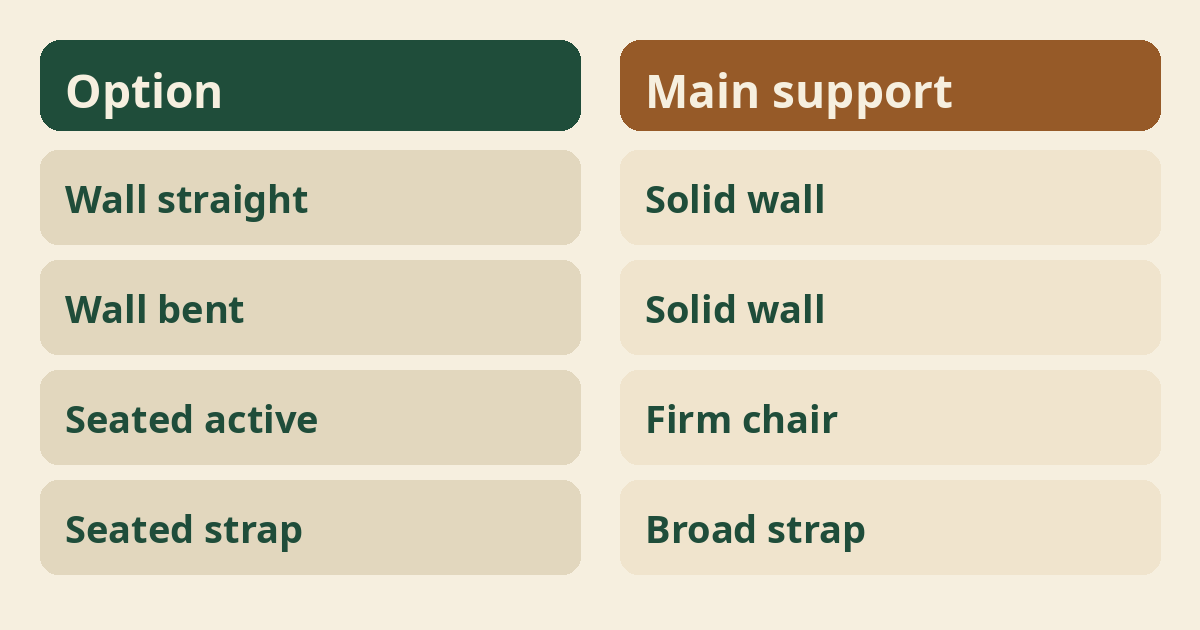
Put your hands against a solid wall and check that your feet cannot slide. Clear loose objects from the floor and leave enough room to step back without hitting furniture. If you use a chair instead, it must be stable and unable to roll or tip when you lean on it.
Step 2: Place your feet
Step one foot back a short distance while keeping both feet directed comfortably forward. Leave some space between your feet from side to side, rather than standing on a narrow line. Keep your back heel resting on the floor and bend your front knee slightly without letting your body twist toward either side.
Step 3: Find a mild stretch
Bend your front knee a little more until you notice a gentle pull in the back calf. Keep the back knee straight without locking or pressing it backward. Move your body forward only as far as your heel can stay down comfortably, and shorten your stance if the pull becomes too strong.
Step 4: Stay comfortable
Hold the position only while you can breathe normally and keep the rest of your body relaxed. Let your shoulders drop and avoid gripping the floor with your toes. A light stretch may feel clear without being intense; sharpness, burning, tingling, or pain means you should come out rather than wait for it to pass.
Step 5: Come out and switch
Shift your weight back slowly, bring your feet together, and repeat gently on the other side. Pause before changing legs so you can notice how standing feels. Use the same careful setup on both sides, but allow different step lengths if one calf reaches a comfortable stretch sooner than the other.
Why try a bent-knee version?
A small bend in the back knee changes how the stretch feels within the calf. Begin from a shorter wall stance and keep the back heel down as you bend that knee slightly. You do not need to sink low; choose this variation only if your knee and ankle both remain comfortable throughout the movement.
Can you stretch while seated?
A seated option can reduce the need to balance while you explore a gentle calf stretch. Sit upright on a firm chair and extend one leg with the heel supported on the floor. Bring the toes gently toward your shin using your own ankle movement, stopping before you feel strain behind the knee or along the foot.
How can a strap help?
A strap can make a seated stretch easier to reach, but it should never become a pulling contest. With your knee softly bent, place a broad strap around the ball of your foot and keep the heel supported. Hold lightly and draw the toes toward you only a little, keeping your shoulders and jaw relaxed.
Which props are useful?
A wall, firm chair, and optional strap are enough for most beginner setups. You do not need a sloping board or a deep heel drop to begin. Read simple yoga prop guidance if you want to choose supports that make a position steadier rather than using equipment to force a larger range.
How should you breathe?
Breathe naturally instead of holding your breath to tolerate a stronger stretch. Let each breath stay easy enough that you could speak a short sentence. If you want a separate quiet practice, explore gentle belly breathing, but avoid making your breathing unusually deep or using breath as a reason to push further.
How long should you hold?
Begin with a short hold of about ten to twenty seconds if that feels comfortable. Release sooner whenever the sensation becomes unpleasant, and remember that the clock is not a goal you must finish. One gentle hold on each side can be enough for a first attempt; repeat only if your legs still feel settled.
How often should you practise?
Try a few brief sessions across the week before deciding whether more frequent stretching suits you. Notice how your legs feel later that day and the next morning rather than judging only the stretch itself. The ideas in choosing a yoga practice frequency can support a routine that leaves room for rest.
Should you warm up first?
Start after a little comfortable movement rather than forcing a strong stretch as soon as you get up. An easy walk around the room may help you settle into the session if walking is comfortable for you. If movement itself hurts, do not use stretching to push past the problem or assume you only need a longer warm-up.
What sensation is appropriate?
Aim for a mild, steady pull in the muscle rather than pain in a joint or tendon. You should be able to ease the sensation simply by shortening your stance or moving less. When you cannot tell whether a feeling is safe, stop and ask a qualified health professional instead of repeatedly testing the same uncomfortable position.
What are common mistakes?
Bouncing, twisting the foot, and taking an oversized step often make a simple stretch harder to control. Another mistake is holding your breath while trying to keep up with someone else’s range. Return to a smaller stance, steady support, and an easy breath whenever the position starts to feel like effort you must endure.
Must your heel reach the floor?
In the wall version, shorten your stance so your heel can rest down without being forced. Do not press hard through the heel or twist your foot just to make contact. If this still feels awkward, choose a seated option rather than turning heel contact into a measure of whether you are flexible enough.
Should both sides feel equal?
Your two calves may feel different, and you do not need to make their range match in one session. Work within a comfortable limit on each side without giving the tighter side a much stronger stretch. A new, marked difference with pain, swelling, or weakness calls for medical advice rather than an extra-long hold.
Who should ask a doctor first?
Ask your doctor before stretching if you have an injury, unexplained symptoms, or a condition that changes what exercise is safe. This includes recent surgery or concerns about circulation, sensation, or balance. During pregnancy, seek advice about new calf symptoms rather than assuming they are routine; a familiar exercise may still need a different setup.
When is urgent care needed?
New calf pain with one-sided swelling, warmth, or redness needs urgent medical assessment, not a stretching session. Do not try to work out the cause by stretching or massaging the area. If you also have chest pain, trouble breathing, or feel faint, seek emergency help rather than waiting to see whether the leg settles down.
Is this a treatment?
No, this beginner stretching routine is not a treatment for calf pain or any diagnosed condition. A clinician may include specific exercises within a personal care plan, but that is different from following a general guide. Do not replace prescribed care with these stretches or use a comfortable stretch as proof that an injury is minor.
What if you get a cramp?
Stop the routine and let the leg settle rather than pulling harder against a cramp. Choose a comfortable position and avoid sudden movements while you assess how you feel. Repeated, severe, or unexplained cramps deserve a discussion with your doctor; this article cannot tell you why they happen or which response fits your situation.
Can you stretch before walking?
You may choose a gentle stretch around a walk, but stretching is not a required entry test for walking. Begin the walk at a comfortable pace and avoid making the stretch intense in an attempt to prepare faster. If calf symptoms regularly limit your walks, ask for an assessment rather than adding more stretching on your own.
Can you stretch at your desk?
A supported seated ankle movement can be a simple movement break if your legs feel comfortable. Move away from a rolling chair setup before trying anything that needs pressure through your hands or feet. For other modest breaks, see yoga at your desk, choosing movements that fit your workspace and balance.
How does this fit into yoga?
Calf stretching can be a small part of yoga without becoming the aim of the whole practice. You can place one gentle stretch between comfortable standing and a quiet finish. The broader approach in yoga for flexibility keeps attention on useful, controlled movement rather than collecting deeper positions or forcing a particular shape.
Should beginners use a stair edge?
A flat-floor wall stretch is usually a simpler starting choice than dropping a heel from a step. A stair edge adds balance demands and can make it easy to go deeper than intended. There is no need to advance to that version, especially when a supported stretch already gives you a clear, comfortable sensation.
What about downward-facing dog?
You do not need downward-facing dog to stretch your calves. That pose also asks your wrists, shoulders, and back to share the work, which may distract from learning a gentle calf stretch. If you practise it elsewhere, keep the knees soft as needed and do not force the heels toward the floor for appearance.
How can you progress?
Progress by making the setup steadier and the movement more comfortable before seeking a larger range. After several easy sessions, you might add another short hold or make a very small stance change, but not both at once. If the change leaves lingering discomfort, return to the earlier version and seek advice if symptoms continue.
When can a teacher help?
A qualified teacher can help you adjust support and position when you are unsure about the setup. Look for someone who welcomes a smaller range and does not push you deeper with their hands. Pain, swelling, numbness, or suspected injury belongs with a health professional first; a yoga class is not a place to diagnose symptoms.
What mindset is useful?
Treat the stretch as a chance to listen rather than a challenge to overcome. You may notice that one day feels easier than another without needing to label either session a success or failure. Coming out early, choosing a chair, or skipping the stretch because something feels wrong are all sensible decisions, not signs of poor effort.
What is a simple routine?
Begin with easy movement, try one mild wall stretch per side, and finish by standing comfortably. Add the small bent-knee variation only if the first version felt easy and you have no concerning symptoms. Take a few ordinary steps afterward and note your response, keeping the next session equally modest instead of automatically increasing the stretch.
Where to read next
For a calm, beginner-friendly start, Ranjana Sinha’s Begin Where You Are is written for people who want simple steps. Our guide to starting a home yoga practice adds a gentle routine you can follow at home.
Frequently asked questions
Can I do calf stretches every day?
Some people choose brief daily stretching, but start less often and adjust according to comfort and any medical advice.
Should a calf stretch hurt?
No, stop for pain, tingling, burning, or any sensation that feels wrong rather than trying to stretch through it.
Do I need to touch my toes?
No, a supported wall or seated calf stretch does not require you to bend down and reach your toes.
Can calf stretches replace strengthening?
No, stretching and strengthening are different activities, and a suitable exercise plan may include both according to your needs.
What if tightness keeps returning?
Ask a health professional about persistent tightness, especially if it affects walking or comes with pain or other symptoms.
The bottom line
Keep calf stretches small, supported, and comfortable, and choose medical advice over a deeper stretch whenever symptoms leave you unsure.

