
Finger and hand stretches are slow, gentle movements that open and lengthen the muscles of your fingers, palms, and wrists. Most people can learn them in a few minutes, with no gear and no special space. This guide shows you how to start, how to breathe, what mistakes to skip, and when to check with a doctor first. Go slowly and stay kind to your hands.
This article is general education and is not medical advice. If you have pain, numbness, swelling, an injury, or any medical condition, please check with your doctor before you start.
What are finger and hand stretches?
They are gentle movements that lengthen and open the small muscles of the fingers, palm, and wrist. You hold each shape for a few slow breaths. Nothing is forced, and nothing should hurt.
Why do people stretch their hands?
Many people stretch their hands because the hands work all day and often feel tight. Typing, phone use, cooking, writing, and crafts all ask a lot from small muscles. A short pause to stretch can feel like a small reset.
How do I start?
Start with one minute of easy movement and one or two stretches. Sit tall, relax your shoulders, and rest your forearms on a table or your lap. Begin with a simple fist and open, then add more only if it feels comfortable.
Should I warm up first?
Yes, a short warm up makes the stretches feel easier. Rub your palms together for about ten seconds until they feel warm. Then shake your hands out loosely, like you are flicking off water.
Step 1: How do I do the fist and spread?
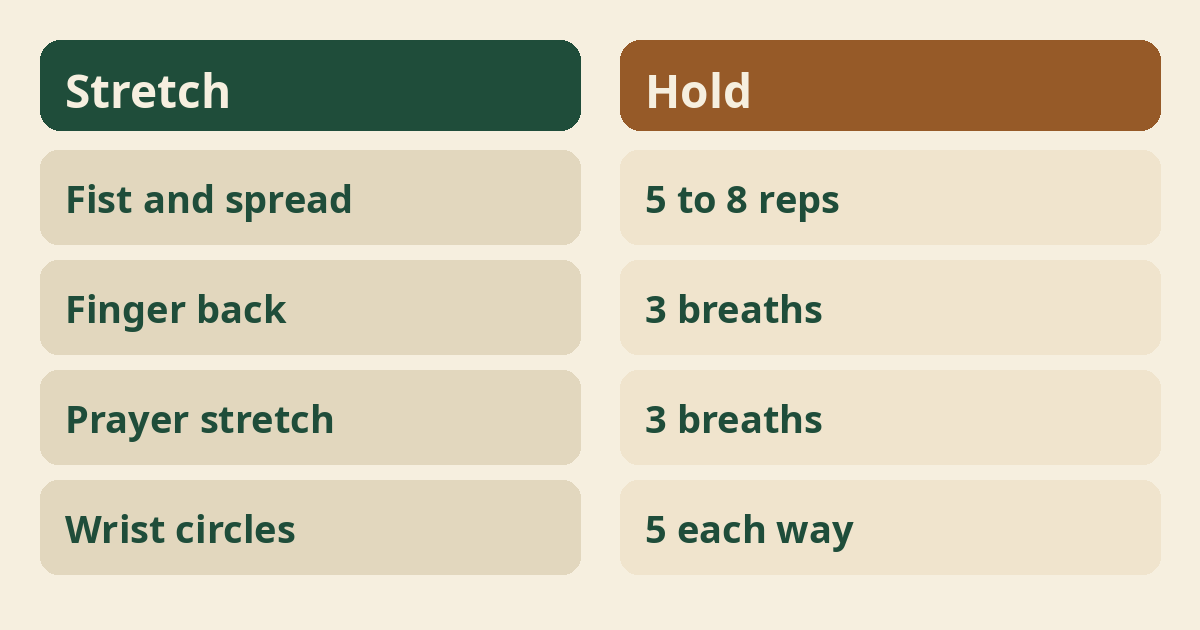
Make a soft fist, then spread your fingers wide like a star. Close slowly, and open slowly. Repeat five to eight times, moving only as far as feels easy.
Step 2: How do I stretch my fingers back?
Press your palm gently against the other hand’s fingers and ease them back. Keep the elbow soft and the pressure light. Hold for three slow breaths, then switch sides.
Step 3: What is the prayer stretch?
Press your palms together at your chest and lower them slowly toward your waist. Keep the palms touching as long as you comfortably can. Stop when you feel a mild stretch in the wrists and forearms.
Step 4: How do I stretch my thumb?
Hold your thumb gently with the other hand and ease it across your palm and then away. Move in small, calm amounts. Do not pull. A mild, steady stretch is enough.
Step 5: What is the finger lift?
Rest your hand flat on a table and lift one finger at a time. Go slowly and keep the other fingers relaxed. This is a good way to notice which fingers feel stiff and which move freely.
Step 6: How do I do wrist circles?
Make a loose fist and draw slow circles with your wrist in both directions. Keep the circles small and smooth. Five in each direction is plenty at first.
How should I breathe during these stretches?
Breathe in through your nose, and let the breath out slowly as you ease into each stretch. Slow breathing helps the body feel calm, and a calm body often stretches more easily. If you hold your breath, you are probably pushing too hard. Try belly breathing to find a steady rhythm.
How long should I hold each stretch?
Hold each stretch for about three to five slow breaths. That is roughly fifteen to thirty seconds for most people. Shorter holds are fine when you are new.
How often should I stretch my hands?
A few short sessions a day, or even once a day, is a good place to begin. Gentle and regular tends to feel better than long and rare. Read how often you should do yoga for more on building a steady habit.
How long does a full routine take?
A simple routine takes about three to five minutes. You can do all six steps above, with a warm up, in that time. Short is fine, and you can repeat it later in the day.
When is a good time to stretch my hands?
Any quiet moment works, such as after waking, during a work break, or before bed. Many people like a short break after long periods of typing or phone use. Pick a time you can remember, like after your tea.
What are common mistakes?
The most common mistake is pushing too hard. Other mistakes include pulling on the joints, holding your breath, and rushing. Stretching should feel mild and steady, never sharp.
Should I feel pain?
No, you should not feel pain, tingling, or numbness during a stretch. A mild, pleasant stretch is the goal. If something feels sharp or odd, ease off right away and speak with your doctor.
Do I need any props?
You do not need any props, though a few simple items can help. A soft towel, a small rubber ball, or a table edge can all be useful. See yoga props for beginners for more ideas.
How can I use a small ball?
Hold a soft ball in your palm and squeeze it gently, then release. Keep the squeeze light and slow. Choose a ball that feels soft, and stop if your hand feels tired.
What if my hands feel cold?
Warm them first by rubbing your palms or holding a warm cup for a minute. Warm hands usually move more easily. Go slowly and use less range until they feel looser.
Who should be careful?
Anyone with pain, swelling, numbness, a past injury, arthritis, or a recent surgery should check with a doctor first. The same goes for pregnancy, tingling in the fingers, or any condition that affects the hands or wrists. Your doctor or a physical therapist can tell you which movements suit you.
Is this a treatment?
No, finger and hand stretches are not a treatment for any condition. They are a simple way to move and relax your hands. If you have a medical concern, please speak with a qualified professional.
What are the possible benefits?
Many people find that these stretches help their hands feel looser and more relaxed. Some also enjoy a calm, mindful pause in a busy day. Results vary from person to person. For general information on movement and wellbeing, visit National Center for Complementary and Integrative Health.
Can these stretches help me relax?
They can be a calming break for some people. Slow movement and slow breath give the mind something simple to follow. Many people find this a small but welcome pause. Try pairing it with yoga for stress relief.
Can I stretch at my desk?
Yes, most of these stretches work well in a chair. Sit tall, keep the feet flat, and rest the arms on the desk. Our guide to yoga at your desk has more easy ideas.
How do I pair hand stretches with neck and shoulders?
Add a few shoulder rolls, since the hands, arms, and shoulders work as a team. Tight shoulders can make the arms feel heavy. Try yoga for neck and shoulders after your hand routine.
How do I progress as I get comfortable?
Add a little time, a few more repeats, or one new stretch at a time. Change only one thing each week. If anything feels worse, go back to the easier version.
How can I make the stretches a little deeper?
Hold a bit longer and ease the stretch slightly, without forcing. Keep the breath slow and the shoulders soft. Depth is not the goal, comfort and control are.
How do these fit into a yoga practice?
They make a gentle warm up for poses that load the hands and wrists. Poses like puppy pose and child’s pose ask the hands to press or reach. A few minutes of preparation can feel kind.
Do I need a teacher?
A teacher is not required, but one can be very helpful. A yoga teacher or physical therapist can check your form and suggest changes. This is especially useful if you have any concerns about your hands.
What mindset helps most?
A patient, curious mindset helps most. Give your hands the same care you give a friend. Notice, do not judge, and let each day be different.
What if I miss a few days?
Just begin again, with no guilt. Habits grow from returning, not from perfect streaks. Start with the easy warm up and carry on.
How do I keep it simple?
Pick three stretches you enjoy and repeat them. You do not need a long list. A short routine you actually do is better than a long one you skip.
Where to read next
For a calm, beginner-friendly start, Ranjana Sinha’s Begin Where You Are is written for people who want simple steps. Our guide to starting a home yoga practice adds a gentle routine you can follow at home.
Frequently asked questions
Can I do finger and hand stretches every day? |
Many people do gentle stretches daily, but go slowly and check with your doctor if you have any concerns.
How long until my hands feel looser? |
This varies a lot, and some people notice a calmer feeling right after a short session.
Should I stretch if my fingers are sore? |
If your fingers are sore, swollen, or numb, rest and ask your doctor before stretching.
Can children do these stretches? |
Children can try them in a playful way with an adult nearby.
Do I need to be flexible to start? |
No, you can start at any level and move only as far as feels comfortable.
The bottom line
Be patient and gentle with your hands, and let each small stretch be enough for today.

