
Yoga for the jaw and face is a set of slow, gentle movements that help you notice and soften tension around your mouth, cheeks, eyes and forehead. Many people hold stress in these places without knowing it. You need no gear and no experience. A few quiet minutes, a calm breath and a bit of patience are enough to begin.
This article is general education and not medical advice. If you have jaw pain, clicking, headaches, injury, dental work or any health condition, check with your doctor or dentist before you start.
What is yoga for the jaw and face?
It is a gentle practice that pairs easy facial movements with slow breathing. You soften the jaw, tongue, lips, cheeks and brow on purpose. Nothing is forced, and nothing should hurt.
Why do people practice it?
Many people try it because they notice tightness in the face during a busy day. Screens, worry and long hours of focus can make us clench without thinking. A short pause to release the face feels calming to many.
Where do we hold tension in the face?
Most people hold it in the jaw hinge, the forehead and around the eyes. You may also feel it in the tongue or the small muscles near the temples. Learning where you grip is the first step.
How do I start?
Start by sitting comfortably and simply noticing your face without changing anything. Close your eyes for a few breaths. Ask yourself if your teeth are touching, your tongue is pressed up, or your brow is drawn in.
What is the resting jaw position?
A relaxed jaw has lips closed, teeth slightly apart and the tongue resting softly. Think of a small gap between the upper and lower teeth. Many people find this a helpful reminder to return to through the day.
Step 1: How do I settle the body first?
Begin with a steady seat so the face does not have to work to hold you up. Sit tall on a chair or cushion with feet on the floor. If you like, try mountain pose for a calm, upright base.
Step 2: How do I release the jaw?
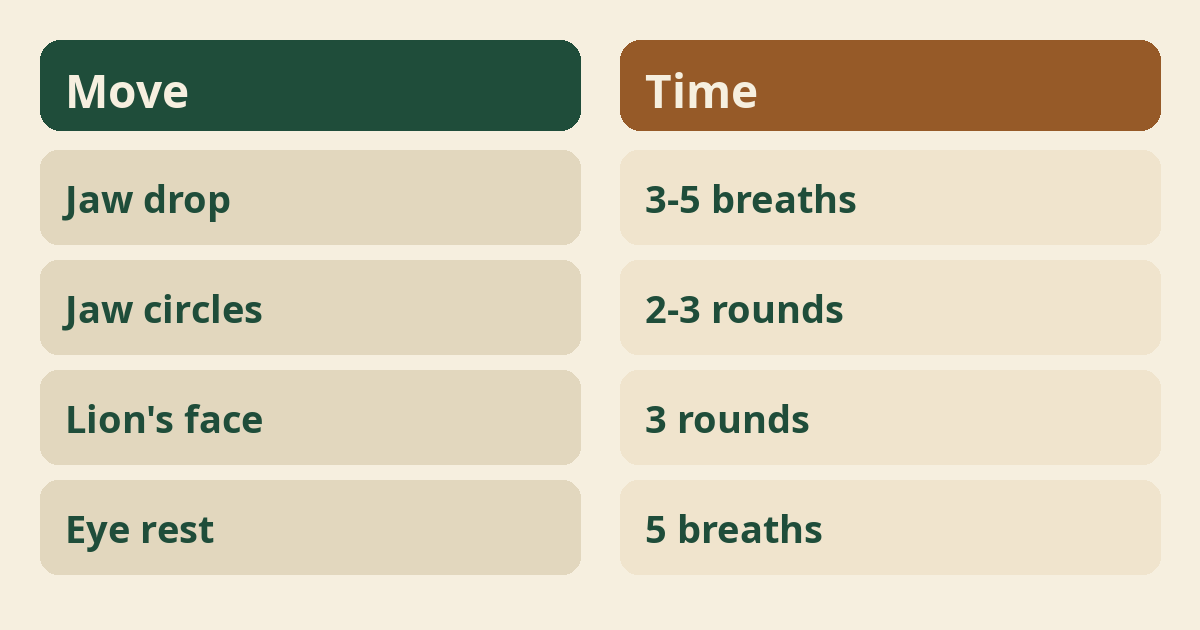
Let the lower jaw drop a little, as if you were about to yawn softly. Keep the lips closed and breathe through the nose. Stay for three to five breaths and notice any small letting go.
Step 3: How do I do gentle jaw circles?
Move the jaw in a small, slow circle only within a pain-free range. Open a little, glide to one side, close, and glide to the other. Do two or three rounds each way and stop if anything clicks or aches.
Step 4: What is lion’s face?
Lion’s face is a classic pose where you open the mouth and eyes wide and stick out the tongue. Inhale through the nose, then exhale with a soft “ha” sound as you open wide. Many people find it playful and a good way to release the face.
Step 5: How do I soften the eyes and brow?
Gently close your eyes and let the space between the brows widen. Imagine the skin of your forehead spreading out like smooth water. Rest your palms over your closed eyes for a few breaths if that feels pleasant.
Step 6: How do I relax the cheeks and lips?
Puff the cheeks softly, then release with a long, slow breath out. Follow with a light smile and let it fade. These small shifts remind the face that it can move and rest.
How does breathing help?
Slow breathing gives the face a steady rhythm to relax into. Breathe in through the nose for a count of four and out for a count of six. Practice belly breathing if you tend to breathe high in the chest.
What should I do with my tongue?
Let the tongue rest wide and soft in the mouth, not pressed hard against the teeth or roof. A tense tongue often goes with a tight jaw. Imagine it floating gently in a warm pool.
How long should a session last?
Five to ten minutes is plenty for a beginner. Short, calm practice is better than a long push. You can always add a minute or two once it feels easy.
How often should I practice?
A few short sessions a week is a kind place to start. Daily practice is fine for many people if it feels good. See how often should you do yoga for more on building a steady rhythm.
When is the best time to practice?
Any time you can be quiet and unhurried works well. Some people like the morning to set a calm tone. Others prefer the evening to unwind before sleep.
Can I practice at my desk?
Yes, many of these moves fit neatly into a work break. Drop the jaw, soften the brow and breathe slowly for a minute. Take a look at yoga at your desk for more simple ideas.
What props can help?
A cushion, a folded blanket and a mirror are all you need. A cushion lifts the hips so you sit comfortably. A mirror helps you see whether you are clenching. See yoga props for more options.
Which body poses go well with face work?
Gentle poses for the neck, shoulders and back pair nicely with face relaxation. The jaw, neck and shoulders are closely linked in daily life. Try yoga for neck and shoulders alongside this routine.
Can child’s pose help?
Child’s pose offers a quiet, supported place to rest the face. Rest your forehead on a block or folded hands and let the jaw hang loose. Learn the shape in child’s pose.
What about cat-cow?
Cat-cow moves the spine and the neck in a slow rhythm that may ease overall tightness. Let the head hang loose on the cow and cat stages and keep the jaw soft. Find the steps in cat-cow pose.
Can I link it with stress relief?
Yes, face relaxation fits well with calming practices. Combine it with slow breathing and a few quiet poses. Explore yoga for stress relief for a fuller routine.
Is this a treatment for jaw problems?
No, it is not a treatment for any jaw or face condition. It is a gentle awareness practice only. For pain, clicking, locking or other symptoms, please see your doctor or dentist first.
Who should be careful?
Anyone with jaw pain, recent injury, dental work or a medical condition should speak to a doctor first. People with headaches, facial nerve concerns or recent surgery need clear guidance before trying new movements. Your doctor can tell you what is suitable for you.
What are common mistakes?
The biggest mistake is forcing the jaw to open wide or move far. Others include holding the breath, pulling the face into a hard grimace and practicing through pain. Go slowly and stay within comfort.
Why is less often more?
Gentle, small movements are kinder than big, strained ones. The jaw is a delicate joint. Aim for a feeling of ease, not a stretch you can feel strongly.
What benefits might I notice?
Many people find the practice leaves the face feeling calmer and softer, though results vary. Some also notice they clench less during the day. For general wellness background, see the National Center for Complementary and Integrative Health resource.
How can I progress over time?
Add a minute at a time, and combine face work with longer calm poses. Once it feels familiar, try holding the soft jaw during hips work such as yoga for hips. Keep each step small.
Can I work on balance and focus too?
Yes, a steady face often goes with a steady mind. Try keeping the jaw soft during simple balance work. See yoga for balance for easy options.
Do I need a teacher?
A teacher is not required, but a good one can offer helpful feedback. A teacher can spot clenching you may miss and suggest gentler options. Choose someone who encourages you to go slowly and listen to your body.
What mindset helps most?
A kind, curious, unhurried mindset works best. You are not trying to force the face into a look. You are simply noticing and letting go.
How do I check in during the day?
Set a quiet reminder to drop your jaw and take one slow breath. Pair it with a daily habit such as drinking water or opening email. Small check-ins add up gently.
What should I do if I feel discomfort?
Stop, release the movement and rest. Mild discomfort that stays or any sharp pain is a sign to pause and speak with your doctor. There is no prize for pushing.
How can I end a session well?
Finish with a few breaths of stillness and a gentle smile. Rest your hands in your lap and feel the face settle. Take a moment before you stand and return to your day.
Where to read next
For a calm, beginner-friendly start, Ranjana Sinha’s Begin Where You Are is written for people who want simple steps. Our guide to starting a home yoga practice adds a gentle routine you can follow at home.
Frequently asked questions
Can yoga fix a clenched jaw?
Yoga is not a fix or treatment, but many people find gentle practice helps them notice and soften clenching.
Is lion’s face safe for everyone?
Not always, so check with your doctor first if you have jaw pain or a related condition.
How long until I notice a change?
Results vary, and some people feel calmer after a single session while others need weeks of steady practice.
Do I need to do it every day?
No, a few short sessions each week is a fine start, and you can add more if it feels good.
Can I do this with glasses or makeup on?
Yes, though removing glasses can make it easier to relax the eyes and brow.
The bottom line
Keep it small, keep it kind, and let your face remember what rest feels like.

