
Gentle yoga can add mobility, balance and calm to a runner’s week. Do short sessions on rest days or after easy runs, avoid deep stretches on cold muscles and never push into pain. Ten to twenty minutes once or twice a week is a good start.
This is general education, not medical advice. If you have an injury, pain, heart or breathing concerns or any health condition, check with your doctor before adding yoga to your training.
Can yoga help runners?
Yoga can be a useful partner to running, because it adds gentle stretching, balance work and calm breathing to a sport that repeats the same movement again and again. Running uses the legs in a straight line over and over. Yoga moves the body in other directions and asks you to slow down. Many runners add one or two short sessions a week. Our guide to yoga for flexibility explains safe stretching. Results vary from person to person.
What can yoga add to your running week?
Yoga can add mobility, balance, body awareness and a calm way to recover on easy days. Runners often have tight hips, calves and hamstrings. Gentle, regular stretching may help you feel looser. Balance poses train the small muscles that steady the ankle and knee. The National Center for Complementary and Integrative Health describes yoga as a mind and body practice.
When is the best time to do yoga?
Gentle yoga fits well on rest days or after an easy run, and a short warm up flow can be done before one. Avoid deep, long stretches right before a hard run, because cold muscles resist stretching. After a run, gentle holds feel pleasant. Do not stretch into pain. Listen to your body.
How long should a session be?
Ten to twenty minutes is plenty for most runners, once or twice a week. Our guide to how often to do yoga gives a simple plan. Short, regular sessions fit around training better than one long class.
What is a good warm up?
Try cat and cow, a few gentle sun salutations and leg swings before a run. Our guide to sun salutation shows a simple flow. Keep the movement smooth and easy. Warm muscles move more freely.
Which poses help tight hips?
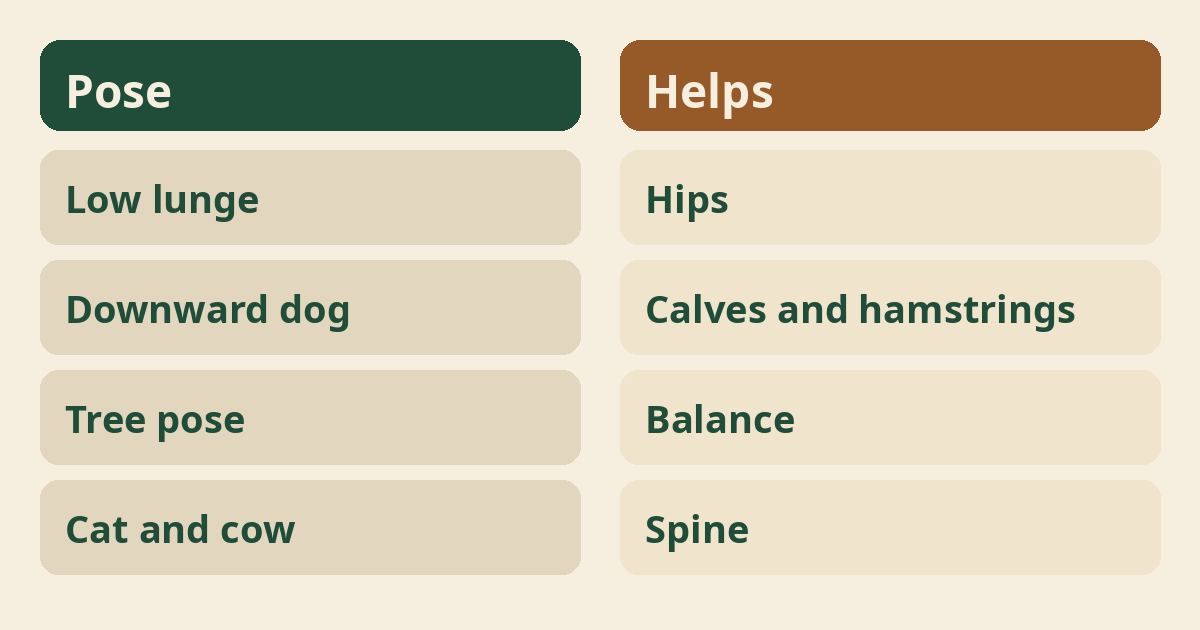
A low lunge, a reclined figure four and a gentle low squat are good choices for hips that feel tight after running. Our guide to yoga for hips explains safe options. Hold each for about five slow breaths and do not force.
Which poses help calves and hamstrings?
Downward dog and a gentle seated forward fold stretch the backs of the legs. Our guide to downward dog shows how to bend the knees if the legs are tight. Keep the back long and the breath easy.
What about balance?
Single leg balance poses train the ankle and hip, which may help with steadiness on uneven ground. Our guide to tree pose is a simple start. Hold a wall if needed. Balance improves with practice.
What about the feet and ankles?
Gentle ankle circles, toe stretches and standing on one foot help wake up the feet. Sit on a chair and draw slow circles with each foot. Roll a tennis ball under the sole if it feels comfortable. Be gentle.
What about the core and back?
Cat and cow, bridge and a gentle plank build steady support for the spine. A strong, steady middle helps you hold your form over long runs. Our guide to cat and cow shows an easy start. Keep it comfortable.
How does breathing help?
Slow nose breathing in yoga may help you stay calm and notice your breath on a run. Our guide to pranayama explains simple breathing practices. After a hard run, slow breathing can help you settle.
How can yoga help recovery?
Gentle poses and rest help the body wind down after effort, though recovery also needs sleep and food. Finish with a short rest. Our guide to savasana explains how to lie still. Do not use yoga to replace rest days.
What about mental focus?
Yoga trains attention, which many runners find useful for staying calm during long or hard efforts. Our guide to body scan meditation offers a quiet way to notice the body. Results vary.
What mistakes should runners avoid?
Stretching cold muscles, pushing into pain, doing too much too soon and skipping rest are common mistakes. Go gently. Yoga should not leave you sore. If a stretch hurts, ease off. Respect your body on training days.
What if you have an injury?
Speak with a doctor or physiotherapist before adding yoga, and let them guide what is safe. Do not stretch an injured muscle. This guide is general education, not medical advice. Rest and get proper advice.
How do you fit yoga into a busy week?
Link it to something you already do, such as after your easy run or before bed. Keep a mat in view. Ten minutes counts. Our evening yoga routine is a gentle way to end the day.
What about long runs and race weeks?
Keep yoga gentle in the days before a long run or race, and avoid new or deep stretches. Stay with what feels familiar. Choose easy movement and good rest. Your body does not need new challenges just before an event.
What about older runners?
Older runners can benefit from balance and gentle mobility, and may want longer warm ups and more rest days. Check with a doctor if you have a health condition. Keep movements smooth. Our guide to chair yoga is a gentle option for rest days.
What about beginners to running?
New runners can use yoga to build body awareness and gentle strength while they build up their distance slowly. Increase running gradually. Add yoga on rest days. A calm, patient approach is the best way to avoid injury.
What about posture while running?
Run tall with relaxed shoulders, a gentle forward lean and a quick light step. Yoga helps you notice tension in the neck and shoulders. Our guide to neck and shoulder stretches can help you release it after a run.
How can you track progress?
Notice whether runs feel easier, whether you recover more comfortably and whether you feel more relaxed. Keep a short note after each session. Small changes over several weeks tell you more than a single day.
How long before you notice changes?
Many people notice small changes in comfort within a few weeks, though results vary and depend on training. Be patient and consistent. Gentle practice builds slowly.
When should you see a doctor?
See a doctor if you have pain that lasts, an injury, heart or breathing concerns, or any health condition. Stop if you feel chest pain, dizziness or sharp pain. This guide is general education, not medical advice.
What does a simple ten minute runner’s flow look like?
Start with cat and cow, move to a low lunge on each side, then downward dog, a reclined figure four and a short rest. Spend about a minute on each shape and keep the breath slow. This flow touches the hips, calves, hamstrings and spine, which are the places many runners feel tight. Do it on a rest day or after an easy run, and add a minute or two as it becomes comfortable. Never rush the transitions.
How can you tell a good stretch from a bad one?
A good stretch feels mild and steady and fades when you come out, while sharp, pinching or burning pain is a sign to stop. Runners are used to pushing, so this can be a hard habit to change. In yoga, effort should stay gentle. If your breath becomes short or your face tightens, you are doing too much. Ease back until the breath is smooth again.
How can you use yoga to slow down?
A short, quiet session can balance a busy training week by giving your mind a rest from numbers, pace and distance. Try ending a session with a minute of lying still, noticing your breath without judging it. Many runners find this a welcome change from timing and tracking. It also builds the habit of listening to the body, which helps you spot early signs of tiredness.
What if you do not like stretching?
Choose movement you enjoy, such as flowing poses or balance work, and keep stretches short and gentle. Yoga is more than stretching. Standing poses, balance and breathing all count. If long holds bore you, try a slow flow with the breath. The best practice is the one you actually do, so pick something that feels pleasant rather than something you think you should do.
Where to read next
For a calm, beginner-friendly start, Ranjana Sinha’s Begin Where You Are is written for people who want simple steps. Our guide to starting a home yoga practice adds a gentle routine you can follow at home.
Frequently asked questions
Is yoga good for runners?
Gentle yoga can add mobility, balance and calm, and may help many runners feel looser.
Should I do yoga before or after running?
Gentle flows before and longer holds after an easy run or on rest days.
How often should runners do yoga?
Once or twice a week for ten to twenty minutes is a good start.
Which yoga poses are best for runners?
Low lunge, downward dog, reclined figure four and tree pose are good beginners.
Can yoga prevent running injuries?
It may help with mobility and balance, but it cannot guarantee protection.
The bottom line
Add short, gentle yoga on easy days, warm up first and listen to your body. Calm, regular practice can complement running well.

