
Most beginners do well with two to three yoga sessions a week, each twenty to forty-five minutes. Short, regular practice beats occasional long sessions. Add days slowly, take rest days when you feel sore and ask a doctor first if you have health concerns.
This is general education, not medical advice. If you have an injury, health condition or are pregnant, check with your doctor before starting or increasing your practice.
How often should a beginner do yoga?
Most beginners do well with two to three sessions a week, each lasting twenty to forty-five minutes, and can add more as the practice feels easy. There is no single right number. Regular practice matters more than long sessions. Shorter, frequent sessions often suit people better than one long weekly class. Our guide to doing yoga every day explains how to listen to your body if you want to practise daily.
Why does consistency matter?
Regular practice helps your body get used to the poses and helps the habit stick. If you practise only now and then, each session may feel like starting over. A steady routine builds comfort. A short ten-minute session counts. The National Center for Complementary and Integrative Health describes yoga as a mind and body practice, and most programmes in studies involve regular sessions over weeks.
What does a good starting schedule look like?
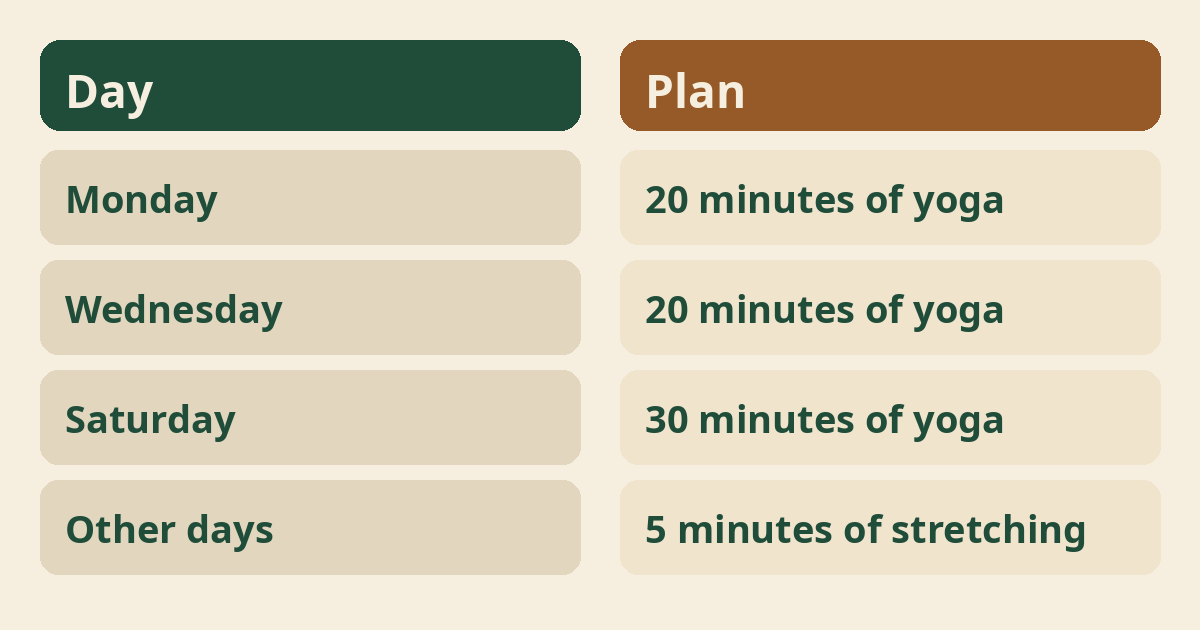
Two or three sessions a week with a rest day between, plus a few minutes of gentle stretching or breathing on other days. For example, practise on Monday, Wednesday and Saturday for twenty minutes. Add a five-minute stretch on other days if you wish. Keep a calendar. Our guide to starting a home yoga practice shows how to plan a simple week.
Is daily yoga okay?
For many people, gentle daily yoga is fine, but strong or demanding styles need rest days. If you feel sore, tired or in pain, take a rest day. Mix gentle and stronger days. Our guide to Ashtanga every day covers a more demanding style. Listen to your body.
How long should each session be?
Twenty to forty-five minutes is a good range for most beginners, and ten minutes is better than nothing. If you are short of time, do a few poses and a rest. Our morning yoga routine and evening yoga routine are good short options. Longer sessions can be enjoyed on weekends.
What if you are very busy?
Aim for tiny sessions, such as five minutes of stretching and breathing, at the same time each day. Link it to a habit you already have. Our guide to neck and shoulder stretches can be done at a desk. Small steps keep the habit alive when life gets busy.
How do you know if you are doing too much?
Signs include lasting soreness, pain in the joints, tiredness, poor sleep or dreading practice. Reduce the frequency or intensity. Rest. If pain persists, speak with a doctor or physiotherapist. Gentle practice should leave you feeling comfortable and calm.
How do you know if you are doing too little?
If poses never feel easier after several weeks, or you keep skipping sessions, you may want to build a more regular habit. Try a smaller target, such as two ten-minute sessions a week, and then add more. Do not judge yourself. A kind start is better than a strict plan.
Should you mix different types of yoga?
Mixing gentle, flowing and restful sessions can keep your practice balanced and interesting. For example, you might do a flow on one day, a stretch session on another and a restorative or breathing session on a third. Our guide to the benefits of yoga explains what different practices offer.
How does age affect how often you can practise?
Older adults may prefer gentler, shorter sessions with more rest, while younger people may handle more frequent practice. Everyone is different. Our guide to chair yoga is a good option for those who prefer support. Adjust to how you feel.
What about practising after other exercise?
If you do other workouts, plan yoga on lighter days or after sessions, and keep it gentle when you are tired. Gentle stretching after exercise may feel pleasant. Avoid deep stretches on sore muscles. Give yourself rest days. Our guide to yoga for flexibility explains safe stretching.
Should you practise when you are ill or tired?
Rest if you are unwell, and choose very gentle practice, such as slow breathing, if you are only mildly tired. If you have a fever, chest symptoms or severe fatigue, rest. Do not use yoga to push through illness. Listen to your body and speak with a doctor if symptoms continue.
How can you build a routine you will keep?
Choose a regular time, keep it short and make it easy to start. Lay out your mat. Set a reminder. Track your practice. If you miss a day, begin again the next. Be kind. Our guide to morning meditation offers a calm start to the day.
Does it help to practise with others?
A class or a friend can add structure and support, and many people find they attend more regularly. Choose a beginner-friendly class. Ask the teacher about modifications. If group classes do not suit you, an online class or a video at home can work. Community can make it easier to keep going.
What if your schedule changes?
Adjust your plan and keep a minimum habit, such as five minutes of breathing or stretching. Life will change. A flexible plan helps you carry on. Return to your usual routine when things settle. Do not give up after a break. Starting again is part of the journey.
How do rest days help?
Rest days let your muscles and joints recover, and they give you time to notice how your practice feels. You can take a full rest or do a very gentle walk. Rest is part of the practice. Our guide to savasana explains how rest fits within a session.
Who should check with a doctor?
People with injuries, health conditions or pregnancy should ask a doctor before starting or increasing practice. This guide is general education and not medical advice. Tell your teacher about any concerns. Stop if you feel pain, dizziness or unwell. Our guide to prenatal yoga explains yoga in pregnancy.
What should you expect over time?
You may feel more comfortable and steady after a few weeks, but results vary, and frequency alone is not a guarantee of change. Be patient. If you have ongoing health concerns, speak with a doctor. Enjoy practice for its own sake.
How can you track your progress?
Keep a simple note after each session with the date, the length and how you felt. After a few weeks, look back. You may notice that poses feel easier, that you feel calmer or that you are sleeping better. These notes help you see progress that is easy to miss day by day. They also help you spot when you are doing too much, such as when soreness keeps appearing.
What if you miss a week?
Simply start again with a short, gentle session and build back up over a few days. Do not try to make up for lost time with a long or strong session. Your body may feel stiff at first, which is normal. Begin with easy poses and slow breathing. Being kind to yourself keeps the habit alive far better than guilt does.
How can you keep practice enjoyable?
Choose poses and styles you like, vary your routine and add music or a quiet space if that helps. If practice feels like a chore, change something small, such as the time of day or the length. Enjoyment is one of the best reasons people keep going for years.
How does sleep affect your schedule?
Poor sleep can make practice feel harder, so choose gentler sessions after a short night. Rest is part of any routine. On tired days, do slow stretching and breathing instead of a strong flow. Our guide to evening yoga routine can help you wind down. Over time, steady practice may support a calmer end to the day, though results vary.
Should you change your plan with the seasons of life?
Yes, allow your routine to grow and shrink with work, family and health. A busy month may need five-minute sessions. A quiet month may allow longer ones. What matters is that you keep a link with the practice. A flexible plan is easier to follow than a perfect plan, and it will still be there when you have more time.
Where to read next
For a calm, beginner-friendly start, Ranjana Sinha’s Begin Where You Are is written for people who want simple steps. Our guide to starting a home yoga practice adds a gentle routine you can follow at home.
Frequently asked questions
How many times a week should a beginner do yoga?
Two to three times a week is a good start.
Is ten minutes of yoga enough?
Yes. Short regular sessions are worthwhile.
Can I do yoga every day?
Many people can, if it is gentle. Take rest days if you feel sore or tired.
What is the best time to practise?
Any time you can keep. Many people like mornings or evenings.
How soon will I see results?
Many people notice small changes within a few weeks, but it varies.
The bottom line
Regular, gentle practice is the goal. Start with two or three short sessions a week and build slowly. Rest when you need to.

