
Gratitude meditation is a quiet practice in which you bring to mind things you appreciate, one at a time, and rest in the feeling of thanks for five to ten minutes. Keep it small and real, and do not worry if the feeling is faint at first.
This is general education, not medical advice. If strong sadness or distress comes up, pause and speak with a doctor, counsellor or qualified teacher.
What is gratitude meditation?
Gratitude meditation is a quiet practice in which you bring to mind things, people or moments you appreciate and rest in that feeling of thanks. It is a simple, warm practice that many people use to end the day or to start it. The National Center for Complementary and Integrative Health describes meditation and mindfulness practices as ways to train attention and awareness, and gratitude practice works by directing attention toward what is going well, even in a small way.
How do you do it step by step?
Sit comfortably, take a few slow breaths and bring to mind one thing you are grateful for, then stay with it for a few breaths. Do this for five to ten minutes.
- Sit upright on a chair or cushion and close your eyes or soften your gaze.
- Take three slow breaths to settle.
- Bring to mind one simple thing, such as a warm drink, a friend or a quiet morning.
- Notice how it feels in your body, such as warmth in the chest or a softening in the shoulders.
- Silently say thank you, in your own words.
- Move to a second and third thing, and linger on each.
- End with a slow breath and open your eyes.
What can you be grateful for?
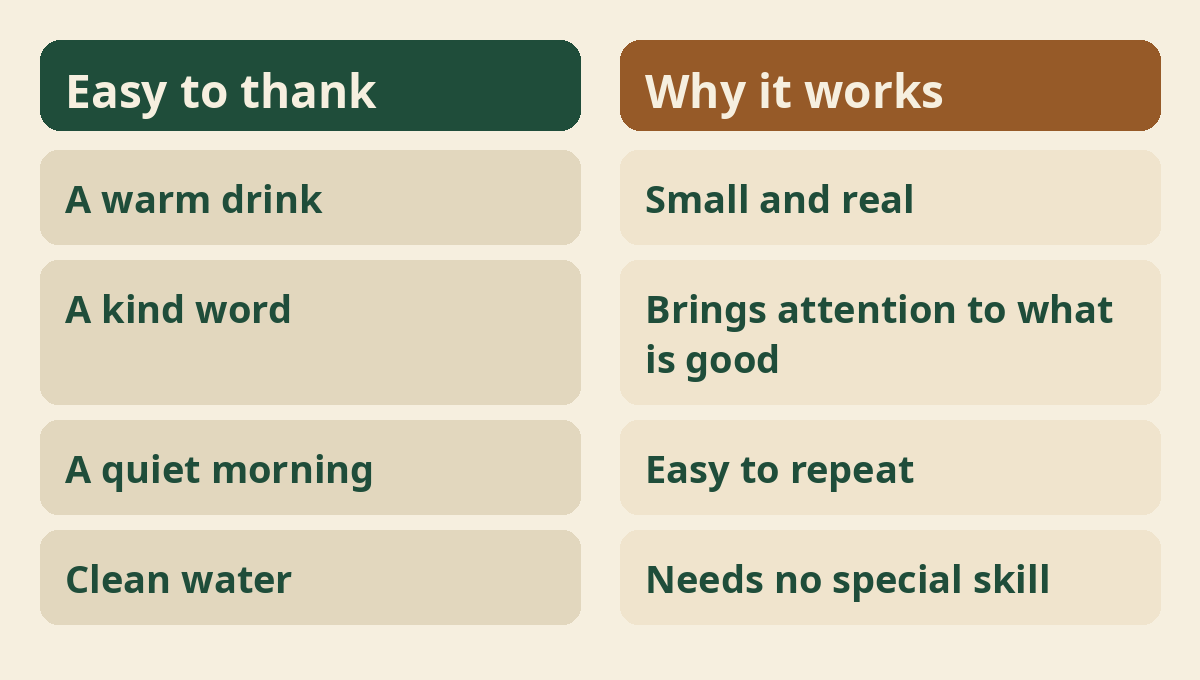
Small, ordinary things work best, such as food, a kind word, clean water, a comfortable bed or a good walk. You do not need to feel grateful for everything. If a big theme feels forced, choose something small and real. The aim is to notice what is already there. On hard days, even a single small thing is enough.
When is the best time to practise?
Many people like to practise in the morning to set a tone for the day, or at night to close the day on a calm note. If you practise before bed, our guide to meditating before bed explains how to make it part of a gentle routine. If you prefer mornings, our guide to morning meditation shows how to build the habit.
How long should a session last?
Five to ten minutes is plenty, and even two minutes counts. Short, regular practice is more useful than long sessions that feel like a chore. Our guide on how long you should meditate explains how to extend your sittings in a comfortable way.
How is it different from keeping a gratitude journal?
Journaling uses writing, while gratitude meditation uses quiet attention and feeling. You can combine them. Write three lines in a notebook, then sit with the most meaningful one for a few minutes. Some people find writing helps them focus, while others prefer to sit without a pen.
What if you do not feel grateful?
That is normal, and you do not need to force a feeling. Start with neutral facts, such as I have a roof or I can breathe, and let any warmth come in its own time. If you feel sad or irritated, treat that kindly. If strong feelings arise, pause and consider talking with a trusted person, counsellor or doctor. Gratitude practice is not a replacement for care.
Is it linked to breathing practice?
Yes, you can link your thanks to the out-breath, silently saying thank you as you exhale. This gives the mind a gentle rhythm. Keep the breathing natural and do not force it. Our pranayama for beginners guide has more simple breathing practices to try separately.
Can gratitude meditation help in hard times?
It can offer a small anchor, but it should not be used to push away pain. On difficult days, you might thank yourself for getting through the day or notice one small kindness. That is enough. If life feels heavy for a long time, talk with someone you trust or a professional. Gratitude can sit beside hard feelings without replacing support.
What posture should you use?
Sit comfortably with a tall spine, relaxed shoulders and hands resting on your lap or over your heart if that feels natural. A chair is fine. Some people like to place a hand on the chest to feel the warmth. Keep your face soft and your jaw loose. If sitting is hard, lie down on your back with knees bent. Comfort matters more than form.
How can you include other people?
Bring to mind someone who has helped you and silently thank them, then wish them well. This can deepen the practice. You can also write them a short note or tell them in person later, if you like. Keep the practice simple and sincere. Not everyone will be easy to thank, and that is fine, so start with someone uncomplicated.
What are the possible benefits?
Some studies suggest gratitude practices may help people feel more positive and connected, though results vary and it is not a treatment. Many people say it helps them notice good things they would otherwise miss. Treat this as a personal experience rather than a promise. It sits well with other healthy habits, such as exercise, good sleep and time with friends.
Who should be careful?
People dealing with grief, trauma or low mood should go gently and not force positive feelings. Gratitude can sit alongside sadness. You do not have to push away difficult feelings. If strong distress comes up, pause and talk with a doctor, counsellor or qualified teacher. This guide is general education, not medical advice.
How does it connect with yoga?
Yoga’s ethical guidelines include contentment, called santosha, which is closely related to gratitude. Our guide to the eight limbs of yoga explains where these niyamas sit on the traditional path. Gratitude practice is a modern, everyday way to live that value.
Can you do it with others?
Yes, many families share one thing they are thankful for at dinner or at bedtime. This is a gentle way to practise together. Keep it brief and light. At home, you can also say thanks silently while you walk, wash dishes or wait for a train. Our guide to walking meditation shows how to bring attention into movement.
What if your mind wanders?
Notice it and return to the thing you are thankful for. Wandering is normal. Each return is part of the practice. If your mind is very busy, try a few breaths first or use grounding, as in our grounding meditation guide. Our guide on common obstacles to meditation has more help.
Common myths about gratitude meditation
Some ideas can put people off. Here are a few to rethink.
- Myth: you should always feel positive. You can feel mixed things.
- Myth: it ignores real problems. It balances attention, it does not deny difficulty.
- Myth: it is only for spiritual people. Anyone can try it.
- Myth: it must be long. A minute counts.
How can you keep it fresh?
Vary what you focus on, such as people one day, nature the next and small comforts on another day. Repeating the same list can feel flat. Choose something new each time, or revisit an old memory in more detail. Keep it light and curious, and let it be a small break rather than a task to complete.
How do you build the habit?
Attach it to something you already do, such as brushing your teeth or making tea. Start with two minutes and build slowly. Missing a day is fine, simply begin again. Over a few weeks, you may notice that you look for small good things during the day. Keep the practice kind and unforced.
Where to read next
For a calm, beginner-friendly start, Ranjana Sinha’s Begin Where You Are is written for people who want simple steps. Our guide to starting a home yoga practice adds a gentle routine you can follow at home.
Frequently asked questions
What is gratitude meditation?
A quiet practice of bringing to mind things you appreciate and resting in that feeling of thanks.
How long should I do it?
Five to ten minutes is plenty. Two minutes counts.
What if I do not feel grateful?
That is normal. Start with small, neutral facts and be patient. Do not force a feeling.
Can gratitude meditation help depression?
It may help some people feel more positive, but it is not a treatment. See a doctor if low mood continues.
When is the best time?
Morning or evening. Choose a time you can keep.
Is it different from a gratitude journal?
Yes. Journaling uses writing, meditation uses quiet attention. You can combine them.
The bottom line
Gratitude meditation is a simple, kind practice. Choose small things, stay with them for a few breaths and let the habit grow at its own pace.

