
Yoga for skiers is a set of slow, simple poses that help your body feel ready for time on snow. You do not need to be flexible or strong to begin. A few minutes a day on a mat can help you notice your legs, hips, core and breath. This guide uses plain words and easy steps so you can start at home, at your own pace.
This article is general education only and is not medical advice. If you have a knee, back or other health condition, or you are unsure, check with your doctor before you start.
What is yoga for skiers?
Yoga for skiers is gentle yoga that focuses on the body parts skiing asks the most from. These are the legs, hips, core and ankles. The poses are the same basic ones many classes use, just chosen with the slopes in mind.
Why do skiers try yoga?
Many skiers try yoga because they want to feel steadier and more at ease on their skis. Skiing uses muscles in ways daily life does not. A short yoga habit gives you a calm way to wake those muscles up.
Do you need to be flexible?
No, you do not need to be flexible to start yoga. Yoga is a way to build comfort in your body, not a test. Most beginners feel stiff at first, and that is normal. Go only as far as feels easy.
How do you start?
You start with one small habit, such as ten minutes on a mat a few times a week. Wear clothes you can move in. Pick a quiet spot with enough room to lie down. Begin with easy poses and add more later.
What do you need?
You need very little to begin. A mat or a firm carpet, a water bottle and comfy clothes are enough. A folded blanket and a strap can help later. See yoga props for beginners for simple ideas.
Step 1: How do you warm up?
Begin with a short, easy warm up so your body feels awake. Walk in place for a minute, roll your shoulders, and circle your ankles. Keep every move slow. Stop if anything feels sharp.
Step 2: How do you do mountain pose?
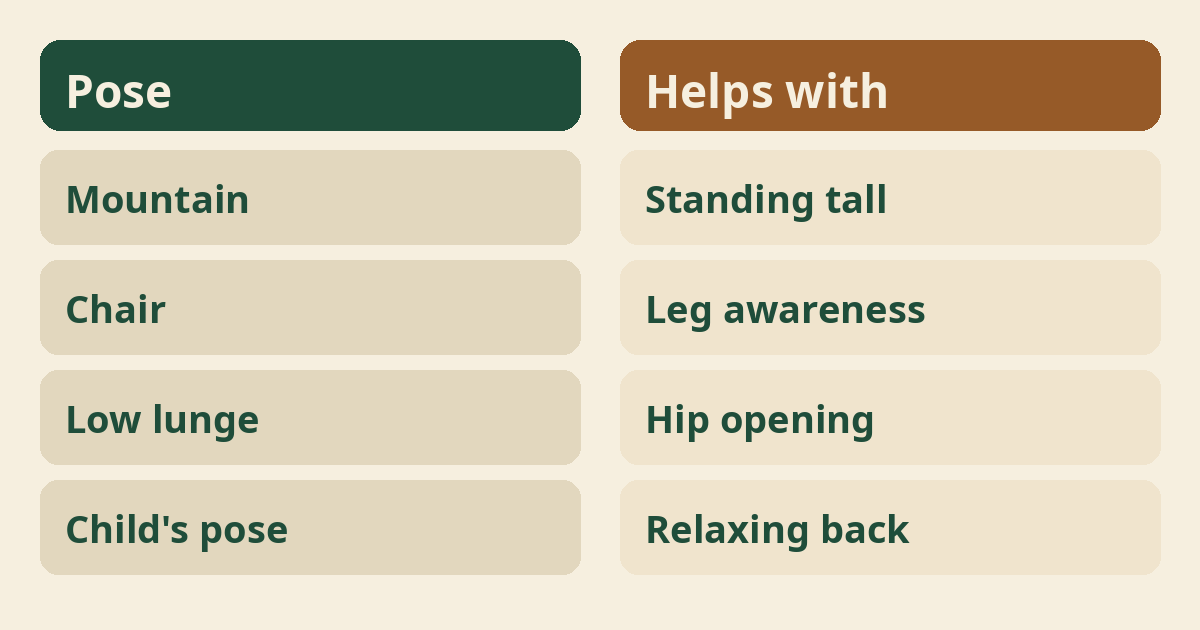
Stand tall with your feet hip width apart and press evenly through both feet. Let your arms rest by your sides and breathe slowly. This pose teaches you to stand with balance, which is a good base for skiing. Learn more in mountain pose for beginners.
Step 3: How do you do chair pose?
Bend your knees as if you are sitting back into a chair, and keep your weight in your heels. Hold for a few breaths, then stand up slowly. It feels a lot like the ready stance on skis. Use a shallow bend if your knees feel unsure.
Step 4: How do you do a low lunge?
Step one foot back, lower your back knee onto a folded blanket, and let your front knee bend over your ankle. Keep your chest tall. This opens the front of the hip. Switch sides after a few breaths.
Step 5: How do you stretch the hips?
Sit with the soles of your feet together and let your knees relax out to the sides. Sit on a cushion if that feels better. This is a gentle way to open the hips. See butterfly pose for beginners for more.
Step 6: How do you stretch the back of the legs?
Lie on your back, loop a strap around one foot, and lift that leg a little. Keep the other leg resting on the floor. Bend the knee if the stretch feels too strong. Breathe and switch sides.
How does breathing help?
Slow breathing helps you stay calm and steady while you move. Breathe in through your nose for a count of four, then out for a count of four. Many skiers find calm breathing useful when a slope looks steep. Try belly breathing for beginners.
How long should a session be?
A session of ten to twenty minutes is plenty for a beginner. Short and regular is better than long and rare. You can always add a few poses as you feel ready. End each session with a minute of rest.
How often should you practice?
Two to four times a week is a good place to begin. Choose days that fit your life, and keep it light. If your body feels tired, take a rest day. For more ideas, read how often should you do yoga.
When is the best time to practice?
The best time is the time you will actually stick with. Some people like a morning stretch, and others like a calm evening session. Avoid practicing right after a big meal. Keep the routine simple so it feels easy to repeat.
Why does balance matter on skis?
Balance matters because skis slide, and small shifts in weight change what happens. Yoga poses on one leg train you to notice those shifts. Start near a wall for support. Our guide to yoga for balance for beginners has more.
How do you practice tree pose?
Stand on one foot and rest the other foot on your calf or ankle, never on the knee. Keep your eyes on one still spot. Hold the wall with one hand if needed. Wobbling is normal and part of learning.
Why do the core muscles matter?
A steady core helps your upper body stay calm while your legs do the work. Easy poses like plank on your knees and boat pose with bent legs wake up these muscles. Keep your breath flowing. Rest whenever you need to.
What about the legs and ankles?
Strong, awake legs and ankles help you feel more stable in ski boots. Try slow calf raises, chair pose and gentle lunges. Move with control rather than speed. Stop if you feel any pinching in the joints.
What about the knees?
Keep your knees in line with your toes in every standing pose. Do not let them cave in or twist. If a pose bothers your knees, make the bend smaller or skip it. Ask your doctor if you have knee concerns.
How can you relax the lower back?
Skiing can leave the lower back feeling tight. Try child’s pose, where you sit back on your heels and rest your forehead down. See child’s pose for beginners. Also read can you do yoga with a bad back if your back is a worry.
Can cat and cow help?
Yes, cat and cow is a gentle way to move your spine after sitting or travelling. On hands and knees, round your back as you breathe out and lift your chest as you breathe in. Go slowly. See cat cow pose for beginners.
What about the neck and shoulders?
Carrying poles and gear can leave the shoulders tight. Gentle shoulder rolls and neck stretches can feel good. Move within a comfortable range and never force your head. Try yoga for neck and shoulders too.
What are the benefits?
Many people find yoga helps them feel calmer, steadier and more aware of their body, though results vary. It is not a promise of any outcome. For general, trusted information on yoga, visit National Center for Complementary and Integrative Health. Enjoy the practice for what it gives you each day.
Is yoga a treatment?
No, yoga is not a treatment for any condition or injury. It is a gentle form of movement and mindful breathing. If you have pain or a health issue, speak with a doctor or a physical therapist first. Yoga can sit alongside their advice.
Who should be careful?
Anyone with a health condition, a past injury, or pregnancy should check with a doctor first. This includes knee, hip, back and balance concerns. Tell your yoga teacher about it too. A careful start is a wise start.
What are common mistakes?
The most common mistake is pushing too hard, too soon. Others include holding the breath, locking the knees, and comparing yourself with others. Slow down and listen to your body. Small steady steps work better than big ones.
How do props help?
Props make poses easier to reach and safer to hold. A block under your hand or a cushion under your hips can change a pose a lot. Using props is smart, not a sign of weakness. Everyone uses them at times.
How do you progress?
Add one new pose or one extra breath at a time. When a pose feels easy, hold it a little longer or try a slightly deeper version. Keep the same easy core routine as a base. Progress is slow, and that is fine.
Should you find a teacher?
A good teacher can check your form and offer easy changes. Look for a beginner class and tell the teacher you ski. Online classes can work too if you follow slowly. Ask questions whenever you feel unsure.
What mindset helps most?
A patient, kind mindset helps most. Think of yoga as time to check in with your body, not a task to win. Skiing is a joy, and a relaxed attitude can carry over to the slopes. Be proud of small steps.
Can yoga help with stress before a trip?
Many people find slow movement and breathing help them feel calm before a trip. A short routine can become a quiet ritual. See yoga for stress relief for beginners. Results differ from person to person.
Does it replace ski fitness training?
No, yoga does not replace other fitness work such as walking, cycling or strength training. It works well beside them. Think of it as one helpful part of how you get ready. A balanced routine is a good aim.
What should you do after skiing?
After a day on snow, try a few slow stretches, such as child’s pose, a gentle hip stretch and easy breathing. Drink water and rest. Do not force deep stretches on tired muscles. Keep it light and kind.
What is a simple weekly plan?
Try three short sessions each week. Begin each with mountain pose, then do chair pose, a low lunge, a hip stretch and child’s pose. Finish with a minute of calm breathing. Adjust the plan to suit how you feel.
Where to read next
For a calm, beginner-friendly start, Ranjana Sinha’s Begin Where You Are is written for people who want simple steps. Our guide to starting a home yoga practice adds a gentle routine you can follow at home.
Frequently asked questions
Can a complete beginner do yoga for skiing?
Yes, the poses here are basic and can be made easier with props and small movements.
How long does a session take?
Ten to twenty minutes is plenty when you are starting out.
Do I need special gear?
No, a mat or carpet and comfortable clothes are enough to begin.
Is it safe if I have sore knees?
Check with your doctor first, and keep any knee bend small and comfortable.
When should I start before a ski trip?
Any time is fine, and a few weeks of easy, regular practice gives you a relaxed routine.
The bottom line
Start small, breathe slowly, and enjoy getting to know your body before you head out on the snow.

