
Yoga for gymnasts is a gentle practice that adds breathing, balance, and slow stretching to a gymnast’s week. You do not need to be flexible or calm to start. This guide shows simple poses and easy steps that fit around training. You will learn how long to practice, how often, and which mistakes to skip. Everything here suits beginners, and you can do it at home or in the gym with a mat.
This article is general education, not medical advice. If you have an injury, pain, or a health condition, check with your doctor before you start.
What is yoga for gymnasts?
Yoga for gymnasts is a beginner-friendly practice built around breathing, balance, and slow stretching. It is not a workout and not a replacement for training. It is quiet time on a mat where you move gently and pay attention to your body. Most sessions mix a few poses with easy breathing and a short rest at the end.
Why do gymnasts add yoga?
Many gymnasts add yoga to slow down and care for their bodies between hard training days. Gym training is fast, strong, and repetitive. Yoga gives the same body a softer kind of work. Many people find it a calm way to stretch tight muscles and quiet a busy mind.
How do you start?
You start with a mat, ten quiet minutes, and two or three easy poses. Pick a calm spot at home or at the gym. Wear clothes that let you move. Begin with one short session this week and see how your body feels the next day.
Step 1: Begin with your breath
Sit comfortably and take ten slow breaths before you move. Close your eyes if that feels good. Breathe in through your nose and out slowly. Belly breathing is a simple way to settle your body before any pose.
Step 2: Warm up your spine
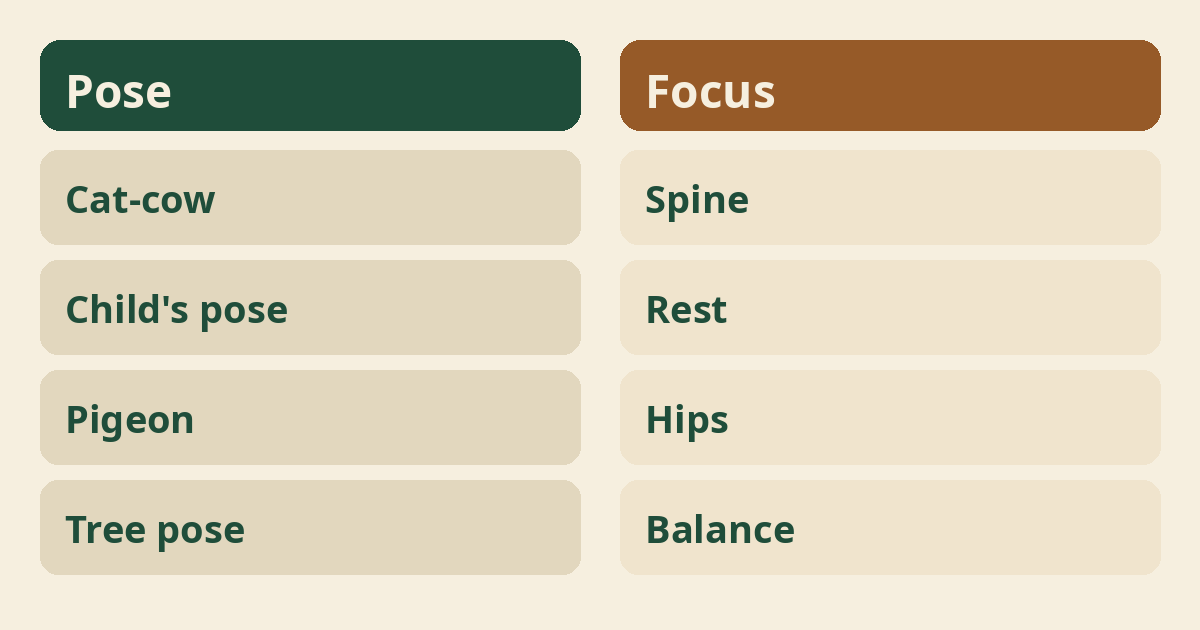
Move your spine slowly with a few rounds of cat-cow. Come onto your hands and knees. Round your back as you breathe out, then arch gently as you breathe in. Cat-cow pose is a soft way to wake up a stiff back.
Step 3: Open your hips gently
Use slow hip openers to ease tightness from splits and leaps. Gymnasts often carry a lot of tension in the hips. Sit comfortably and let your knees fall open, or lie back and hug one knee at a time. Move slowly and never force a stretch.
Step 4: Practice your balance
Stand on one leg for a few breaths to build steady balance. Tree pose is a good start. Place one foot against your standing leg and hold a wall if you need it. Yoga for balance carries over well to beam work and landings.
Step 5: Stretch your shoulders
Open your shoulders with slow, easy reaches and gentle twists. Tumbling and bar work load the shoulders hard. Reach your arms up, then fold forward and let your arms hang. Keep every movement small and pain free.
Step 6: Cool down and rest
End every session lying still for a few quiet minutes. Rest on your back with your eyes closed. Let your breath slow down on its own. This short rest helps your body take in the practice.
How do you breathe during practice?
Breathe slowly through your nose and let each pose follow your breath. A common pattern is to breathe in as you open and out as you fold. If you lose track, just return to slow, even breaths. Never hold your breath in a stretch.
How long should a session be?
A beginner session can be ten to twenty minutes long. Short and regular beats long and rare. Even five minutes of stretching and breathing on a busy day counts. Add time only when the shorter sessions feel easy.
How often should you practice?
Two to four sessions a week is a good rhythm for most gymnasts. Rest days and light training days are the easiest slots. Read more about how often to do yoga and match it to your training week. Your body will tell you if you are doing too much.
What are common mistakes?
The biggest mistake is pushing a stretch to match your gymnastics flexibility. Gymnasts are used to deep ranges, so they often force poses. Other mistakes are holding the breath, skipping the warm up, and copying advanced poses from videos. Stay easy and small.
What props help gymnasts?
Blocks, a strap, and a folded blanket make poses safer and more comfortable. Blocks bring the floor closer in folds. A strap helps you reach your foot without rounding your back. See yoga props for beginners for simple options you can use at home.
Who should be careful?
Anyone with a current injury, joint pain, or a health condition should talk to a doctor first. Gymnasts deal with wrist, back, and ankle issues more than most people. A pose that looks easy can still stress a healing joint. Get the all clear before you begin, and stop if anything hurts.
Is yoga a treatment for injuries?
No, yoga is not a treatment, a cure, or a fix for any injury. It is a gentle form of movement and rest. Some people find it soothing while they recover, but it never replaces care from a doctor or a physiotherapist. Follow your medical advice first.
What are the benefits?
Many people find that yoga helps them feel looser, calmer, and more body aware, though results vary. Some gymnasts say they sleep better and feel less stiff on training days. Research on yoga and wellbeing is growing, and National Center for Complementary and Integrative Health is a good place to read about it. Your own experience is the best guide.
How do you progress over time?
You progress by holding poses a little longer and trying slightly harder versions. Add a minute to your rest, a breath to each hold, or one new pose each week. Keep the same calm pace. Progress in yoga is slow, and that is the point.
Should you work with a teacher?
A teacher helps you learn safe alignment faster than practicing alone. Even a few classes can show you small fixes that change everything. Tell the teacher you are a gymnast so they know your body is strong but often very mobile. Online beginner classes also work well.
What mindset helps gymnasts?
Treat yoga as rest and care, not as another skill to win. Gymnasts love scores and goals, but yoga has neither. There is no perfect pose and no finish line. Showing up gently is the whole practice.
Can yoga replace conditioning?
No, yoga does not replace strength or conditioning work. It sits alongside training as recovery and mobility time. Think of it as the soft half of a hard sport. Your coach’s plan still comes first.
Does yoga help with flexibility?
Many gymnasts find yoga keeps their flexibility usable and comfortable. Deep stretching is familiar to you, but yoga pairs it with breathing and control. Yoga for flexibility is less about going deeper and more about moving well. That helps flexibility feel easier, not just bigger.
When is the best time to practice?
The best time is whenever you can practice without rushing. Some gymnasts like evenings to unwind after training. Others like mornings to wake up the body. Avoid a long session right before hard tumbling, since very relaxed muscles are not ideal for power.
What kind of mat do you need?
Any non-slip yoga mat with a little cushioning works fine. Thin mats travel well and feel stable for balance poses. Thicker mats are kinder to knees and wrists. You do not need anything expensive to begin.
Is soreness normal after yoga?
Mild next-day soreness is normal when you use muscles in new ways. Sharp pain is not normal and means you should stop and rest. Easy sessions rarely cause much soreness at all. Drink water, move gently, and give your body a day.
How do you care for your wrists?
Warm your wrists up and spread your weight across your whole hand. Gymnasts put heavy loads on their wrists every week. Make fists, roll your hands, and shake them out before poses on hands and knees. Skip weight-bearing poses if your wrists are sore.
Should you practice during competition week?
Light, calming yoga can fit competition week if it stays very gentle. Skip deep stretching and new poses before you compete. Short breathing sessions and easy poses are the safest choice. Many gymnasts use slow breathing to settle pre-meet nerves.
Can yoga help with focus?
Many people find that slow breathing and quiet movement sharpen their focus. Paying attention to one pose at a time trains the same attention you use on the beam. It is practice for the mind as much as the body. Over weeks, that calm can show up in training too.
What poses suit beginners best?
Simple poses like mountain, cat-cow, child’s pose, and butterfly suit beginners best. Child’s pose is a rest you can take any time. Mountain pose teaches tall, steady standing. Keep the list short until the basics feel easy.
How is yoga different from stretching?
Yoga joins stretching with breathing, balance, and quiet attention. A quick stretch targets one muscle. A yoga session links poses together and slows everything down. The breathing and rest are what make it feel different in your body.
Can you practice at home?
Yes, home practice works well with a mat and a little floor space. You do not need mirrors or equipment. Follow a beginner video or a short list of poses you know. Quiet corners of the gym work too if home is busy.
What should you wear?
Wear comfortable clothes that stretch and stay in place when you fold. Fitted shorts or leggings and a simple top work well. Bare feet give the best grip on the mat. Skip anything with zips or buttons that dig in when you lie down.
How do you stay motivated?
Attach yoga to a habit you already have, like stretching after training. Keep your mat somewhere you can see it. Track sessions on a calendar if that helps you. Small, regular practice beats big plans you never start.
What if you miss a day?
Missing a day is fine, and you can simply start again tomorrow. Yoga is not a streak you can break. Rest is part of the practice too. Come back gently and keep going.
Where to read next
For a calm, beginner-friendly start, Ranjana Sinha’s Begin Where You Are is written for people who want simple steps. Our guide to starting a home yoga practice adds a gentle routine you can follow at home.
Frequently asked questions
Can beginners with no yoga experience start this?
Yes, every pose and step here suits someone brand new to yoga.
How soon will I notice a difference?
Many people feel calmer after the first session, and body changes usually build over weeks of regular practice.
Should I do yoga before or after gymnastics training?
After training or on rest days works best for most gymnasts.
Do I need to be flexible to do yoga?
No, yoga meets you where you are and flexibility grows with practice.
Can yoga stop gymnastics injuries?
No, yoga cannot prevent injuries, but many gymnasts use it as gentle care alongside smart training.
The bottom line
Start small, breathe slowly, and let yoga be the calm part of your gymnastics week.

