
Yoga for martial arts is a gentle practice that helps beginners move better, breathe calmly, and stay loose for training. You do not need to be flexible or experienced to start. This guide walks you through simple poses, easy breathing, and clear steps you can follow at home. Everything here is beginner friendly, and you can go at your own pace while your body adapts over time. No special skills or experience are needed.
This article is for general education only and is not medical advice. If you have an injury, a health condition, or ongoing pain, check with a doctor before you start.
What is yoga for martial arts?
Yoga for martial arts is a gentle yoga practice shaped around the needs of people who train in fighting and movement arts. It uses simple poses, slow stretching, and calm breathing. The goal is to support your training, not replace it. Many martial artists use yoga to stay loose, balanced, and focused.
Why do martial artists do yoga?
Many martial artists do yoga to improve flexibility, balance, and calm under pressure. Kicks, stances, and grappling all ask a lot from the hips, legs, and shoulders. Yoga gives those areas slow, careful attention. It also trains steady breathing, which helps during hard rounds.
Is yoga good for beginners in martial arts?
Yes, yoga is good for beginners in martial arts because it builds body awareness from day one. New students often feel stiff or sore after class. Gentle yoga helps the body recover and learn to relax. You can start with very simple poses and short sessions.
What do you need to start?
You need a quiet space, a mat, and comfortable clothes to start. That is genuinely all it takes at home. A folded blanket can replace a mat at first. Keep the room calm and give yourself twenty to thirty unhurried minutes.
Should you check with a doctor first?
It is a good idea to check with a doctor first if you have an injury or a health condition. Most healthy beginners can start gentle yoga safely. Still, old injuries from training deserve care. A doctor can tell you what movements to avoid for now.
How to start step 1: pick a regular time
Pick a regular time for practice, such as after training or on a rest day. A set time makes the habit stick. Many martial artists like evenings because the body is warm. Start with two or three short sessions per week and grow from there. This guide on how often to do yoga can help you plan.
How to start step 2: set up a calm space
Set up a calm space with room to stretch your arms and legs. Clear the floor and keep water nearby. Silence your phone so the session stays focused. A small, tidy corner works fine for most poses.
How to start step 3: begin with your breath
Begin every session by sitting quietly and noticing your breath for a minute. This small pause settles the mind. It also marks the shift from fast training to slow practice. Let your shoulders drop and your jaw relax before you move.
How to start step 4: warm up gently
Warm up gently with slow movements like rolling the shoulders and swaying side to side. Cold muscles resist stretching, so take a few minutes here. Easy movement wakes up the spine and joints. It also lowers the chance of a strain during deeper poses.
How to start step 5: learn a few basic poses
Learn a few basic poses that feel stable and calm, and hold them without bouncing. Start with simple standing and floor poses before anything deep. Mountain pose is a good first pose for posture and balance. Move slowly in and out of each position.
How to start step 6: finish with rest
Finish every session with a few minutes of quiet rest on your back. Rest lets the body absorb the work you did. Lie down, close your eyes, and breathe slowly. Two to five minutes is enough for a short practice.
How do you breathe during practice?
Breathe slowly through your nose during practice, and let the breath guide each movement. Nasal breathing keeps the pace calm and steady. If you lose your breath, ease out of the pose. Smooth breathing is a skill that carries into sparring and drills.
What is belly breathing?
Belly breathing means letting your abdomen expand as you inhale and soften as you exhale. Place one hand on your belly to feel it move. This style of breathing calms the nervous system. Fighters often use it to settle nerves before a match. Try this belly breathing practice to learn it.
What if a pose feels hard?
If a pose feels hard, back off and breathe in an easier position. There is no prize for pushing into pain. Bend your knees, use a prop, or rest. The pose will open over weeks of patient practice.
How long should a session be?
A beginner session of 20 to 30 minutes is plenty. Even 10 minutes counts on busy days. Regular short sessions beat rare long ones for building flexibility. Add time slowly as the poses get familiar.
How often should you practice?
Most martial artists do well with two to four yoga sessions per week. Fit sessions around training days so the body still gets rest. Gentle yoga on rest days works well. Consistency over months matters more than any single week.
What mistakes do beginners make?
The most common beginner mistake is forcing stretches to match someone else. Other mistakes are skipping the warm-up, holding the breath, and rushing. Mild effort is fine, sharp pain is not. Treat every session as practice, not a test.
What props help?
Props like blocks, straps, and folded blankets make poses safer and easier. A block brings the floor closer in standing poses. A strap helps you reach a foot in a hamstring stretch. Using props is smart training, not a shortcut. See this guide to yoga props for ideas.
Which standing pose should you learn first?
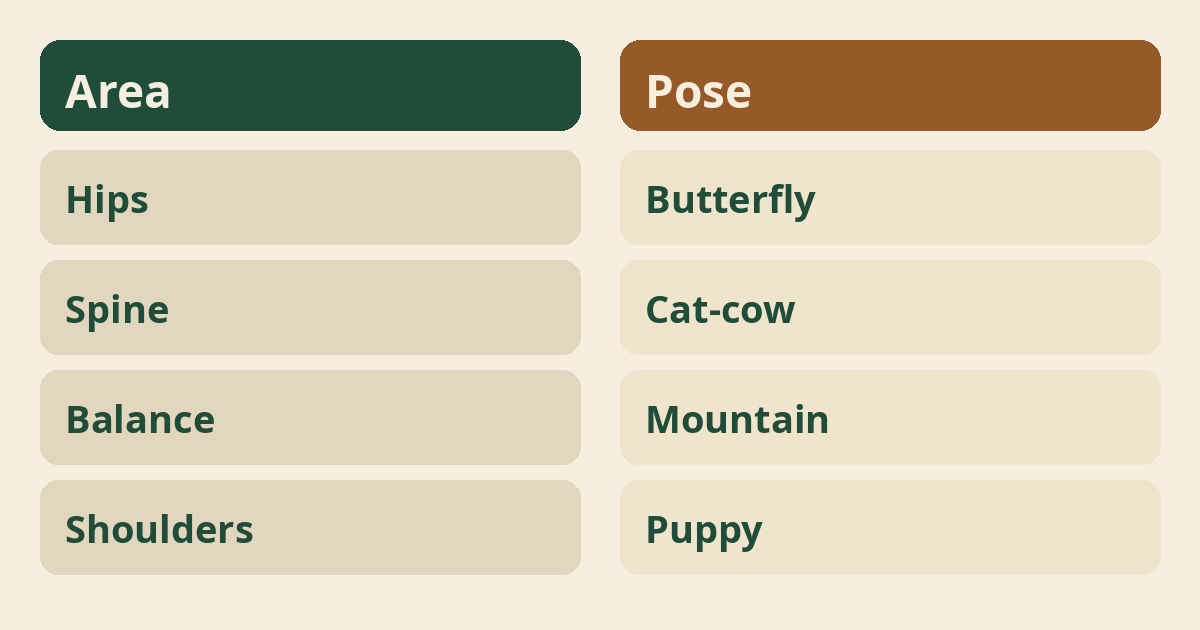
Learn mountain pose first because it teaches posture, grounding, and calm attention. Stand tall with your feet rooted and your spine long. Relax your shoulders away from your ears. This stance feels familiar to martial artists because good guard positions start with the same alignment.
Which pose warms up the spine?
Cat-cow is the classic pose for warming up the spine gently. Move between arching and rounding with your breath. A few slow rounds loosen a stiff back before harder work. The cat-cow pose guide shows the full movement.
Which pose is best for rest?
Child’s pose is the best resting pose between harder efforts. Kneel, fold forward, and rest your forehead on the mat or a cushion. Use it any time you need a break. Here is a simple walkthrough of child’s pose for new students.
Which pose opens the hips for kicks?
Butterfly pose opens the hips gently, which matters for kicks and low stances. Sit tall, bring the soles of your feet together, and let the knees fall toward the floor. Sit on a folded blanket if your hips feel tight. The butterfly pose guide has easy steps.
Which pose builds hip and ankle mobility?
Garland pose, a deep squat, builds hip and ankle mobility for low stances and ground movement. Hold a sturdy support if your heels lift at first. Keep your chest lifted and your breath steady. Learn it step by step in the garland pose guide.
Which kneeling pose is useful?
Thunderbolt pose is a useful kneeling posture you can hold between drills or after meals. Sit back on your heels with a tall spine and breathe slowly. It gently stretches the front of the ankles and thighs. See thunderbolt pose for details.
Which pose opens the shoulders?
Puppy pose opens the shoulders and upper back, where striking arts hold a lot of tension. From hands and knees, walk your hands forward and soften your chest down. Keep your hips above your knees. The puppy pose guide explains the shape.
How does yoga help flexibility?
Yoga helps flexibility by lengthening tight muscles slowly and safely over time. Flexible hips and legs make kicks smoother and stances deeper. Slow, steady stretching opens the body over weeks and months. Read more in this guide to yoga for flexibility.
How does yoga help balance?
Yoga helps balance by training you to hold steady positions with calm focus. Balance is the backbone of footwork and kicking control. Simple standing balances build this skill safely, and holding a wall at first is fine. This guide to yoga for balance has beginner options.
How does yoga help the hips?
Yoga helps the hips by stretching the muscles that tighten from kicks, stances, and sitting. Tight hips limit both high kicks and deep stances. Gentle hip openers done often make a clear difference. See this guide to yoga for hips for safe poses.
How does yoga help the neck and shoulders?
Yoga helps the neck and shoulders by easing the tension that builds from holding a high guard. Slow rolls and gentle stretches relieve this area after training. Keep the movements small and smooth, never jerky. Try these neck and shoulder stretches after class.
How does yoga help with stress and focus?
Yoga helps with stress and focus by training calm breathing while the body works. Staying relaxed under pressure is a real skill in sparring. Over time, many fighters find they recover composure faster between rounds. This guide to yoga for stress relief explains the basics.
What benefits do people report?
Many martial artists say yoga helps them feel looser, calmer, and more aware of their bodies. Some notice fewer aches after hard training weeks. Results vary from person to person, and steady practice matters more than any single session. Research groups like the National Center for Complementary and Integrative Health note that yoga may support flexibility, balance, and stress management.
Is yoga a treatment?
No, yoga is not a treatment and it does not replace medical care. It is a general wellness practice that many people enjoy alongside their sport. If you have an injury or a health concern, talk with a doctor. Keep yoga in the role of support for your training.
Who should be careful?
People with recent injuries, joint problems, or ongoing pain should be careful and talk with a doctor first. The same goes for anyone with back trouble or a medical condition. If your back is sensitive, this guide on whether you can do yoga with a bad back explains careful options.
How do you progress over time?
You progress by holding poses a little longer and adding new poses slowly. Small steps beat big jumps in flexibility work. Notice progress in weeks and months, not days. A short notebook of sessions helps you see how far you have come.
Do you need a teacher?
A teacher is helpful but not required, especially with gentle beginner poses. A good teacher watches your form and offers safer options when something does not fit. Look for someone experienced with beginners or athletes. Tell them about your training and any old injuries.
What mindset should you bring?
Bring a patient mindset and let go of comparing your stretch to anyone else. Some days the body feels stiff, and that is normal. Martial arts teaches patience, and yoga rewards the same quality. Show up, breathe, and let the practice do its work.
Where to read next
For a calm, beginner-friendly start, Ranjana Sinha’s Begin Where You Are is written for people who want simple steps. Our guide to starting a home yoga practice adds a gentle routine you can follow at home.
Frequently asked questions
Can yoga improve my kicks?
Many martial artists find that regular hip and leg stretching makes kicks feel smoother and higher over time.
How many times a week should a martial artist do yoga?
Two to four short sessions per week works well for most beginners alongside training.
Do I need to be flexible before starting yoga?
No, you start yoga to build flexibility, not because you already have it.
Should I do yoga before or after martial arts training?
Gentle yoga fits best after training or on rest days, while deep stretching is best saved for after class.
Can yoga replace my warm-up?
Yoga can be part of a warm-up, but keep dynamic, sport-specific drills in your pre-training routine.
The bottom line
Start small, stay consistent, and let your yoga practice quietly support your martial arts journey.

