Yoga for focus means using slow movement, steady breathing and quiet attention to practice staying with one thing at a time. You do not need to be flexible or experienced. A few minutes a day is enough to begin. Many people find that a short, calm routine helps them feel more settled before work, study or reading. This guide covers the basics in plain words, with simple steps you can try today at home.
This article is general education only and is not medical advice. If you have a health condition, an injury, or a concern about attention or mood, please check with your doctor before you start.
What is yoga for focus?
Yoga for focus is a gentle practice that trains your attention through posture, breath and awareness. You hold a simple pose and keep your mind on one thing, like your breath or your feet on the floor. When the mind wanders, you notice and come back. That small act of returning is the heart of the practice.
Why do people practice yoga for focus?
People practice it to feel calmer and more present during a busy day. Many people find that a few quiet minutes helps them step away from noise and screens. It can feel like a reset button before a task. Results vary from person to person.
How do I start?
Start with five minutes in a quiet spot with a mat or a folded blanket. Wear clothes you can move in. Turn off notifications and sit or stand comfortably. Pick one pose and one breath pattern, and keep it simple on day one.
Do I need to be flexible?
No, flexibility is not needed to practice yoga for focus. The goal is attention, not a deep stretch. Bend your knees, use a chair or skip a pose if it does not feel right. Your body will open slowly over time. For more on that, see yoga for flexibility.
Step 1: Settle into a comfortable seat
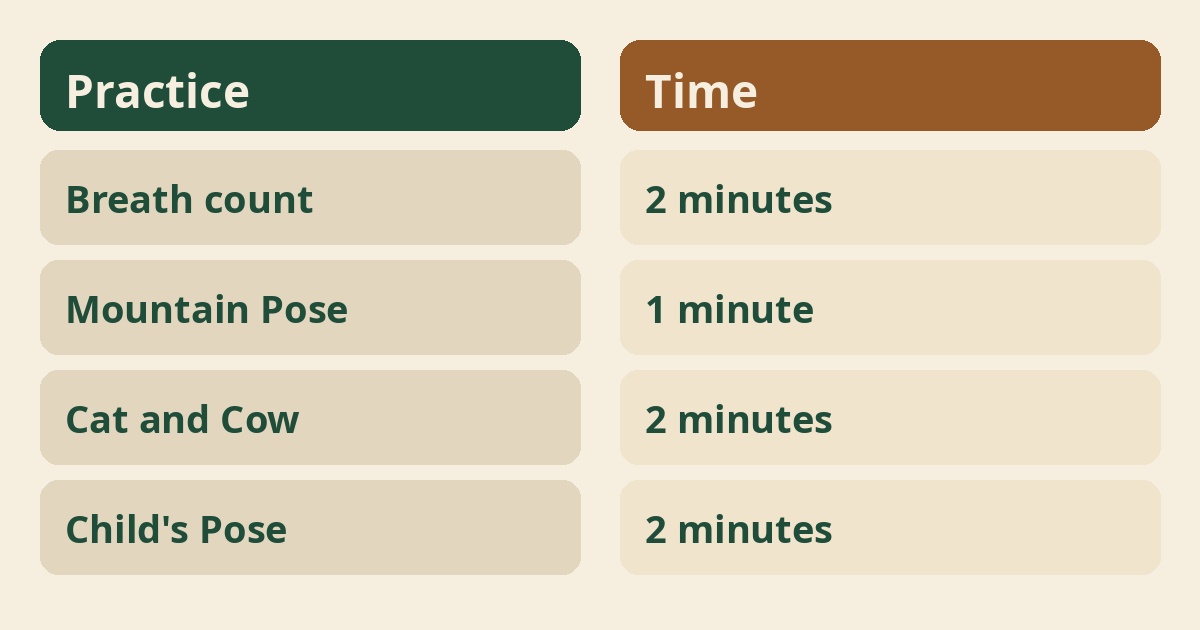
Sit on the floor or a chair with your back tall and your hands resting on your knees. Let your shoulders drop away from your ears. Soften your jaw and your face. Take a moment to simply arrive.
Step 2: Notice your natural breath
Watch your breath for ten slow rounds without changing it. Feel the air move in through your nose and out again. If your mind drifts, gently return to the next breath. There is no need to judge yourself.
Step 3: Stand tall in Mountain Pose
Mountain Pose gives you a steady base to feel your feet and your posture. Stand with feet hip width apart and press evenly into the floor. Let your arms hang and look at a spot ahead. Learn the pose in mountain pose for beginners.
Step 4: Move with Cat and Cow
Cat and Cow links your breath to a slow, steady movement. On hands and knees, breathe in as you lift your chest and breathe out as you round your back. Move slowly, one breath per movement. Try the full steps in cat cow pose.
Step 5: Rest in Child’s Pose
Child’s Pose is a quiet place to rest and bring your attention inward. Kneel, sit back toward your heels and fold forward with your forehead down. Place a pillow under your head if it helps. Stay for five slow breaths. See child’s pose for tips.
Step 6: Finish with a still minute
Close your practice by sitting still and noticing how you feel. Rest your hands, close your eyes if that is comfortable, and breathe naturally. Notice your body and your mind without trying to change them. Then open your eyes slowly.
How does breathing help focus?
Slow, even breathing gives your mind one steady thing to follow. Counting each breath is a simple anchor. Many people find that slowing the exhale feels calming. Keep it gentle, never forced, and stop if you feel dizzy.
What is belly breathing?
Belly breathing means letting your belly rise as you breathe in and fall as you breathe out. Place a hand on your belly and feel it move. It is slow and easy, with no strain. You can learn more in belly breathing for beginners.
Can I count my breaths?
Yes, counting breaths is one of the easiest ways to hold your attention. Count one on the exhale, two on the next, up to ten, then start again. If you lose count, simply begin at one. This is normal and not a failure.
How long should a session be?
Five to ten minutes is a good length for a beginner. A short, regular session is easier to keep than a long one you skip. As it becomes familiar, you may add a few minutes. Quality of attention matters more than the clock.
How often should I practice?
Most beginners do well with a short practice on most days of the week. Even three days a week can build a habit. Pick a time you can repeat, like after waking up. See how often should you do yoga for more ideas.
What is the best time of day?
The best time is whichever time you can keep every day. Some people like mornings before the day gets busy. Others like a short break in the afternoon or a calm evening. Try a few and see what feels right.
Can I practice at my desk?
Yes, a few simple moves at a desk can give your mind a short pause. Sit tall, roll your shoulders and take ten slow breaths. It takes about two minutes. Find more ideas in yoga at your desk.
What props can help?
A folded blanket, a cushion or a strap can make poses easier to hold. Props let you stay comfortable so your mind is free to focus. A chair or a wall also works well. Learn more in yoga props for beginners.
Why does balance help attention?
Balance poses ask you to pay close attention to your body, which is a form of focus practice. Standing on one foot makes your mind come into the present. Use a wall for support at first. Try yoga for balance when you feel ready.
What about neck and shoulder tension?
Easing tension in the neck and shoulders can make it simpler to sit and concentrate. Slow shoulder rolls and gentle neck turns are a good start. Move within a comfortable range and never force a stretch. See yoga for neck and shoulders.
Can yoga for focus help with stress?
Many people find that a calm routine helps them feel less rushed. Stress and focus often go together. A steady practice can give you a moment of quiet. Read yoga for stress relief for a wider view.
What are the benefits?
Many people find that yoga leaves them feeling calmer, more present and a little more alert. Results vary, and yoga is not a quick fix. Some people also notice better posture and body awareness. For general, neutral information on mind and body practices, visit National Center for Complementary and Integrative Health.
Is yoga for focus a treatment?
No, yoga for focus is not a treatment for any condition. It is a general wellness practice for relaxation and attention. It does not replace care from a doctor or other professional. If you have concerns about attention, please talk to a qualified health professional.
Who should be careful?
Anyone with a health condition, injury, or pregnancy should speak with a doctor first. Check in before you begin if you have high blood pressure, dizziness, back pain, eye conditions or recent surgery. If you are pregnant, see prenatal yoga vs regular yoga. Stop any pose that causes pain.
What if I have a bad back?
Go slowly, choose gentle poses and ask your doctor before starting. Seated and supported poses are often kinder than deep folds. Skip anything that hurts. Read can you do yoga with a bad back for general guidance.
What are common mistakes?
The most common mistake is trying too hard. Others include practicing with a phone nearby, holding the breath and pushing into pain. Go gently and keep your sessions short. Be kind to yourself when your mind wanders.
What if my mind keeps wandering?
A wandering mind is normal, and noticing it is part of the practice. Each time you bring your attention back, you are practicing. Try counting breaths or feeling your feet. Do not scold yourself.
How do I deal with distractions?
Make your space simple and quiet before you begin. Silence your phone, close the door and tell people you need a few minutes. If noise remains, use it as something to notice and let go. Practice a little each day.
How do I make it a habit?
Link your practice to something you already do every day. You might practice right after brushing your teeth or before your first cup of tea. Keep your mat visible. Tick a calendar each day you finish.
How can I progress?
Add a little time or one new pose every week or two. Move from five minutes to ten, then try a longer hold. Add poses such as butterfly pose or garland pose. Go at your own pace.
Do I need a teacher?
A teacher is not required, but a good one can help you stay safe and learn faster. A qualified teacher can check your form and suggest changes. Choose someone patient who respects your limits. A class can also help you stay regular.
What mindset helps most?
Curiosity and kindness help more than effort and pressure. Approach each session as an experiment. You are not trying to win or reach a perfect state. You are simply learning how your mind behaves.
Can I use yoga with other activities?
Yes, yoga fits well with walking, study breaks and other routines. A short pause between tasks can help you switch gears. Combine it with a quiet walk if you like. Keep the mood relaxed and the effort light.
Where to read next
For a calm, beginner-friendly start, Ranjana Sinha’s Begin Where You Are is written for people who want simple steps. Our guide to starting a home yoga practice adds a gentle routine you can follow at home.
Frequently asked questions
Can beginners do yoga for focus? |
Yes, the poses and breathing are simple and can be adjusted to your level.
How long until I notice a difference? |
It varies, and some people feel calmer after a single session while others need more time.
Do I need special equipment? |
No, a quiet space and comfortable clothes are enough, and a cushion or blanket is optional.
Can I do it with my eyes open? |
Yes, you can rest your gaze softly on one spot if closing your eyes feels uncomfortable.
Is it a replacement for medical care? |
No, it is a general wellness practice and does not replace advice from your doctor.
The bottom line
Start with five quiet minutes today, and let your attention grow slowly, one breath at a time.