
Wall balance standing means standing on your feet while a wall is close enough to touch, so you can practice balance with less fear of falling. You rest a hand or your back on the wall and shift your weight slowly. Many beginners find it a calm, low-pressure way to learn steadiness. This guide covers the steps, breathing, props, common mistakes and safety points, all in plain words you can use today.
This article is general education and is not medical advice. If you have a health condition, dizziness, an injury or pain, check with your doctor before you try it.
What is wall balance standing?
It is a standing practice where a wall sits within reach to support your balance. You stand tall, keep one hand or your back near the wall, and practice shifting weight. The wall is a safety net, not a crutch. You can use it as little or as much as you need.
Why do people practice it?
People use it to build confidence standing on one foot or in a narrow stance. Balance can feel scary when you worry about falling. A wall removes much of that worry, so your mind can relax and your body can learn. Many people find the calm focus pleasant.
How do I start?
Start by standing sideways to a wall with your feet hip-width apart. Place your near hand lightly on the wall at shoulder height. Look at one spot ahead of you. Stay here for a few easy breaths before you try anything harder.
Step 1: How do I set up my feet?
Set your feet parallel, about hip-width apart, with toes pointing forward. Spread your toes and feel the whole sole touch the floor. Keep a small gap between you and the wall, about one forearm length. Let your knees stay soft, not locked.
Step 2: How do I stand tall?
Lengthen your spine by imagining a string lifting the top of your head. Relax your shoulders away from your ears. Keep your ribs stacked over your hips. This is close to mountain pose, with a wall nearby for comfort.
Step 3: How do I shift my weight?
Move your weight slowly onto one foot while the other stays lightly on the floor. Go only as far as feels safe. Keep your hand on the wall. Pause, breathe, then return to the middle and try the other side.
Step 4: How do I lift a foot?
Lift the heel of the free foot first, with the toes still touching the floor. If that feels steady, raise the whole foot a few inches. Keep your standing knee soft. Lower the foot back down before you get tired or wobbly.
Step 5: How do I place the foot on the ankle or calf?
Rest the sole of the free foot against your standing ankle or calf, never on the knee. Press the foot and leg gently toward each other. Keep your hips level. Stay for a few breaths and come down with control.
Step 6: How do I use the wall less?
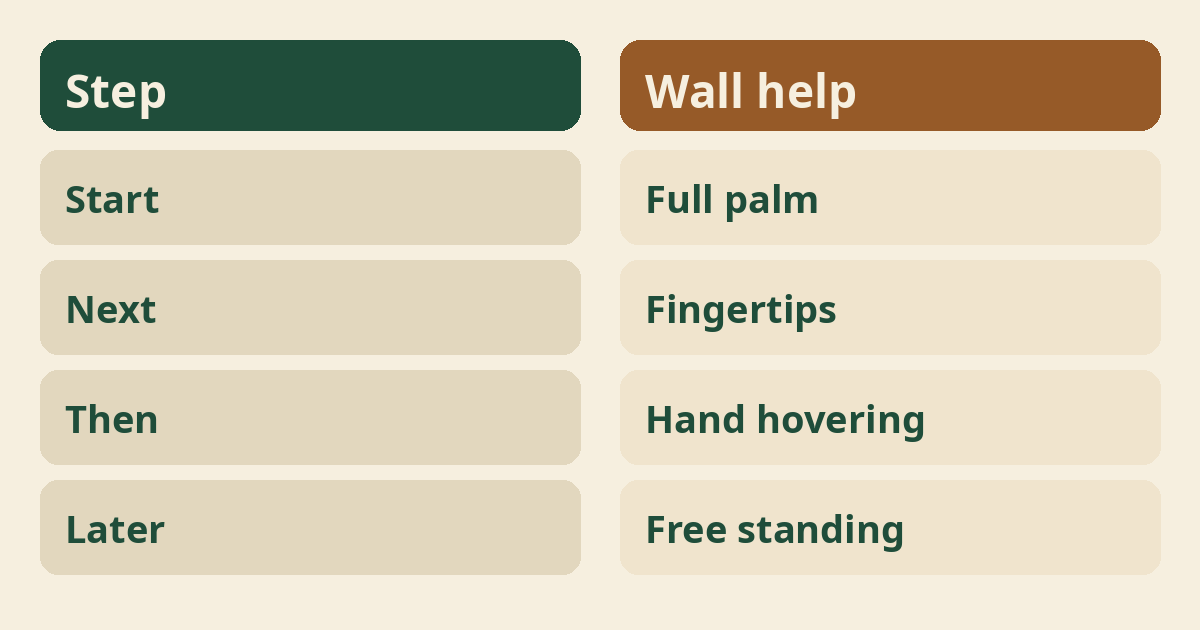
Reduce support in small steps, from a full palm to a few fingertips. Over many sessions you may hover your hand near the wall without touching it. Go at your own speed. There is no prize for rushing.
How should I breathe?
Breathe through your nose in a smooth, even rhythm. Slow breathing can help your body feel calm while you wobble. If you hold your breath, your shoulders and legs tend to tense. Try belly breathing before you start to settle in.
Where should I look?
Keep your eyes on one still spot at about eye level. A steady gaze gives your brain a simple reference point. Looking down or around makes balance harder. A small mark on the wall works well.
How long should I hold?
Hold each side for about 20 to 30 seconds, or less if you tire. Short holds done with care are better than long holds done with strain. Some days you will manage more, some days less. Both are normal.
How often should I practice?
A few short sessions a week is a reasonable start for most beginners. Five minutes at a time is enough. See how often to do yoga for ideas on building a routine. Rest days are part of the plan.
What are common mistakes?
The most common mistakes are locking the knee, gripping the wall and holding the breath. Others include staring at your feet, leaning your whole body into the wall and pushing too far on day one. Notice these habits gently and adjust without judging yourself.
Why should I not grip the wall?
Gripping tells your body to tense instead of balance. Keep your hand light, like resting it on a table. If you need to press hard, you are probably doing a step that is too hard. Step back to an easier version.
Is a wobble a bad sign?
A small wobble is normal and is part of how balance improves. Your muscles and joints make tiny corrections all the time. Wobbling means those corrections are happening. Stop if you feel pain, dizziness or sharp discomfort.
What props can help?
A wall, a sturdy chair and a non-slip mat are the most useful props. A block under the free foot can give a lower step for early practice. Wear bare feet or grippy socks, never slippery socks. See yoga props for beginners for more ideas.
Should I use a mat?
A non-slip mat is helpful, but a firm clean floor also works. Thick soft mats can make balance harder because they sink under your foot. Choose a thin, firm one. Keep the area around you clear of clutter.
Who should be careful?
People with dizziness, joint problems, recent injury, pregnancy or low blood pressure should speak with a doctor first. Anyone who has had falls, vision or inner ear concerns, or who takes medicines that affect alertness should also ask. A doctor or physical therapist knows your situation best. If you are unsure, check first.
Can I practice if I have a bad back?
Many people with back concerns still move gently, but ask your doctor first. Your doctor can tell you which standing shapes suit you. Read yoga with a bad back for general ideas. Stop at once if pain appears.
Is this a treatment?
No, wall balance standing is not a treatment for any condition. It is a gentle practice for learning body awareness. It does not replace care from a doctor or therapist. Think of it as a simple habit, not a fix.
What are the possible benefits?
Many people find it helps them feel steadier and more confident on their feet. Some also notice better posture awareness and a calmer mind, though results vary from person to person. For general background on mind and body practices, see the National Center for Complementary and Integrative Health resource. Your experience may differ.
Does it help with focus?
Many people find that balancing practice draws their attention to the present moment. When you stand on one foot, your mind has little room to wander. That simple focus can feel restful. How much you notice depends on you.
How is it different from yoga for balance?
Wall balance standing is a supported starting point, while balance yoga uses more free-standing shapes. Think of the wall version as a first step. When you feel ready, move on to yoga for balance. Both build the same basic skills.
Can I do it at my desk?
Yes, a short version works well during a break if you have a wall or sturdy surface nearby. Stand tall, shift weight, and lift a heel for a few breaths. It takes a minute or two. See yoga at your desk for more small breaks.
What warm-up helps?
A few ankle circles and gentle knee bends make a good warm-up. Move slowly for a minute or two. You can also do cat cow on the floor to wake up your spine. Warm muscles feel more steady.
Can flexibility help my balance?
Gentle stretching may make standing shapes feel easier, though it is only one part of balance. Tight ankles and hips can limit how you stand. Slow stretching over time may help. Explore yoga for flexibility at an easy pace.
What about my hips and ankles?
Open, strong hips and mobile ankles tend to make standing balance feel smoother. Slow hip movements and ankle circles are good habits. A few minutes of hip work now and then can be useful. Never force a stretch.
How do I progress?
Progress by reducing wall contact, then by lifting a foot longer, then by holding a little longer. Move one thing at a time. Change only the wall support, or only the hold length, not both. When a step feels easy and calm, try the next one. Patience is the real skill.
Do I need a teacher?
A teacher is not required, but one can spot habits you cannot see yourself. A qualified yoga teacher can check your alignment and offer safe changes. Tell them about any health concerns first. A short class or video can also guide you.
What mindset helps most?
A kind, patient mindset helps more than strength. Expect to wobble and laugh about it. Compare yourself only to your last session. Small steady steps add up over time.
How do I end a session?
End by standing evenly on both feet and taking three slow breaths. Let your arms hang loose. Notice how your legs and feet feel. Then walk around slowly before you sit or move on.
Can I practice after a long day?
Yes, a short calm session can be a quiet way to end the day if you feel alert enough. Skip it if you feel very tired, dizzy or rushed. Balance is best learned when you are awake and unhurried. Try another time instead.
Can stress affect my balance?
Feeling anxious or hurried can make standing steadiness feel harder. Pause and take a few slow breaths before you start. You might also try yoga for stress relief on busy days. A calmer body often stands more easily.
Where to read next
For a calm, beginner-friendly start, Ranjana Sinha’s Begin Where You Are is written for people who want simple steps. Our guide to starting a home yoga practice adds a gentle routine you can follow at home.
Frequently asked questions
Is wall balance standing safe for beginners?
It is a gentle option for most healthy adults, but check with your doctor first if you have any health concern.
How close should I stand to the wall?
About one forearm length away, so you can touch it without leaning on it.
Can I do it every day?
Short daily sessions are fine for many people, but listen to your body and rest when you feel tired.
What if I feel dizzy?
Stop, sit down, breathe slowly, and speak with your doctor if it happens again.
Do I need special clothes?
No, wear comfortable clothes that let you move, and keep your feet bare or in grippy socks.
The bottom line
Stand tall, keep a light hand on the wall, and let your balance grow one calm breath at a time.

