A yoga cooldown routine is a short, gentle finish that moves from active practice toward comfortable rest. You do not need deep stretches or a long list of poses to do it well. Start by slowing your movements, choose a few easy positions, and leave time to settle before standing up. This guide offers a simple routine you can adapt to your space and comfort. The goal is an unhurried ending, not another workout or a test of how far you can stretch.
This article is for general education and is not medical advice. Check with your doctor before trying it if you have a health condition, an injury, recent surgery, pregnancy-related concerns, or symptoms that affect exercise.
What is a yoga cooldown?
A yoga cooldown is the quieter part of practice that follows more active movement. It can include slower movements, light stretches, and a supported resting position, with no need to reach an exact shape. Think of it as a change in pace rather than a separate performance, and make the ending gentler than the work that came before it.
Why do people use a cooldown?
People use a cooldown to give their practice a clear and gradual ending. Going straight from an active sequence to a busy task can feel abrupt, especially when your attention is still on movement. A short closing routine gives you space to notice how you feel and decide whether you are ready to move on.
How should you start?
Start by choosing a few familiar movements that already feel comfortable. Clear enough space to sit, lie down, or use a stable chair, and keep a cushion within reach. If you have been sweating or breathing hard, ease the pace first rather than dropping into a long stretch while you are still working hard.
Step 1: Ease your pace
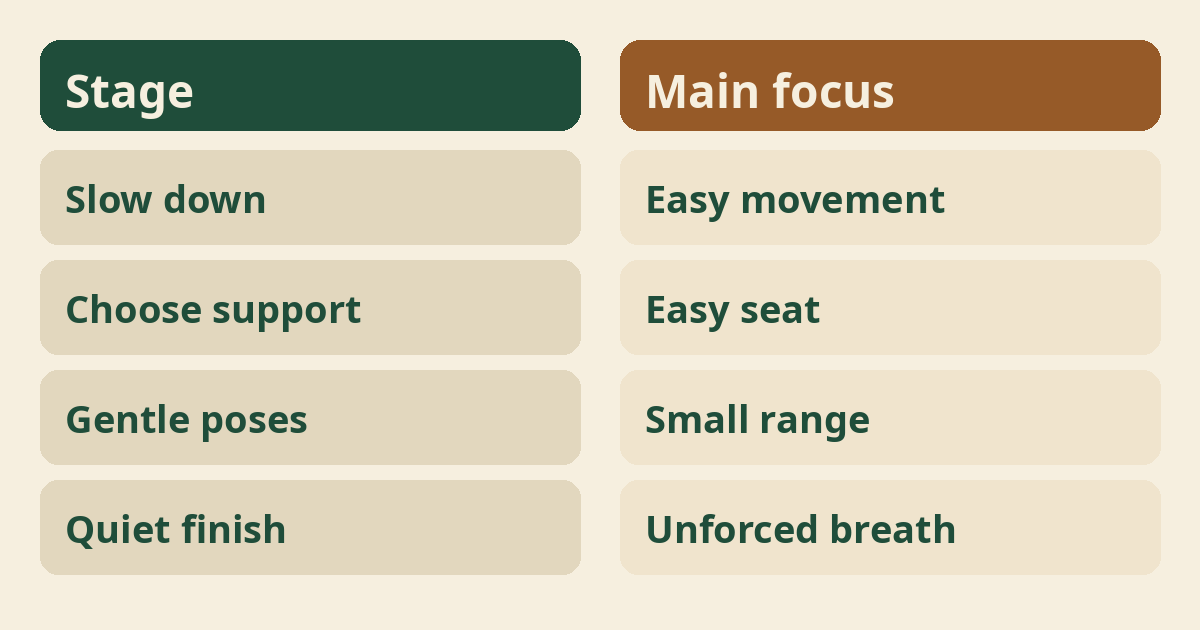
Begin the cooldown by making your last movements smaller and slower. After standing poses, release the effort gradually and take a few easy steps if that feels steadier than standing still. Let your arms hang naturally, soften your gaze, and keep breathing without trying to match a strict count or forcing your breath to slow.
Step 2: Find a supported seat
Choose a supported seat before moving into floor stretches. Sit on a firm cushion or a stable chair with your feet resting on the floor, using whatever position lets you breathe comfortably. There is no need to cross your legs, straighten your back rigidly, or hold yourself upright through strain just because a pose looks that way.
Step 3: Try small cat-cow movements
Small cat-cow movements are one optional way to shift toward gentler practice. If kneeling is comfortable, move on hands and knees through a small range without pushing your back into either direction. Keep your neck easy and use cat-cow guidance for a closer look, or skip this step if your wrists or knees object.
Step 4: Choose an easy resting fold
An easy resting fold is optional, and comfort matters more than depth. Try a supported child’s pose only if kneeling and folding feel suitable, placing cushions where they reduce effort. Keep your head supported rather than hanging, and consult child’s pose options for alternatives; a chair-based rest is equally valid if the floor position does not suit you.
Step 5: Rest with knees bent
Lying on your back with bent knees can be a simple resting choice if it feels comfortable. Place your feet on the mat and leave your arms wherever they rest easily, without pressing your lower back flat. If lying on your back is unsuitable or makes you feel unwell, use a supported side position or remain seated instead.
Step 6: Return without rushing
Finish by returning to sitting or standing slowly and with support nearby. From the floor, roll to a comfortable side and use your hands to help you rise, rather than springing up in one movement. Pause before standing, and do not carry on if you feel dizzy, faint, or less steady than usual.
How should you breathe?
Let your breath stay easy rather than turning the cooldown into a breathing challenge. Avoid holding your breath, taking repeated huge breaths, or forcing a long exhale that leaves you short of air. If useful, explore comfortable belly breathing separately, keeping it gentle and returning to your usual breathing whenever a technique feels awkward.
How long should it take?
A brief cooldown of around five to ten minutes is a practical starting point, not a rule. You might spend a little time slowing down, a little time in comfortable positions, and a quiet minute resting. If you only have a short window, choose fewer steps rather than rushing through every pose on the list.
How often should you do it?
You can include a short cooldown whenever you finish a yoga session. Its length can change with the session, your energy, and how much time you have available, so a gentle practice may need only a brief close. Use yoga frequency guidance when planning your wider routine rather than treating the cooldown as another daily target.
How much stretching is enough?
Mild, comfortable movement is enough for a beginner cooldown. You do not need a strong pulling sensation to make the final minutes worthwhile, and a stretch should not feel like something you must endure. Keep a smaller range than your maximum and stop any movement that causes pain, numbness, tingling, or a feeling of joint strain.
Which common mistakes should you avoid?
Avoid chasing depth, forcing your breath, and rushing to stand at the end. Another common mistake is copying a teacher’s exact shape even when your own body needs a different position or a prop. If the cooldown feels like the hardest part of your session, simplify it instead of pushing harder to complete the sequence.
Which props can help?
A chair, cushion, folded blanket, or yoga block can make the routine easier to adapt. Use supports to bring the resting surface closer to you, not to lever your body farther into a stretch. Check that every support is stable and explore beginner yoga props before using unfamiliar equipment, especially when it must bear your weight.
Who should be careful?
Ask your doctor first if illness, injury, surgery, or other health concerns could change what is safe for you. Explain the actual positions you want to try rather than asking only whether yoga is allowed in general. A qualified teacher can then help you adapt within that advice, but should not replace medical guidance or decide which symptoms you can ignore.
Is this a treatment?
A yoga cooldown is not a treatment for pain, disease, or an injury. Do not use this routine to diagnose a problem, replace prescribed care, or test whether an injured area has recovered. If symptoms are persistent, new, or getting worse, discuss them with your doctor before choosing stretches or adding more exercise to your schedule.
What benefits might you notice?
Many people find that a gentle finish feels calmer and less rushed, but results vary. You may enjoy the chance to notice your breathing, let go of unnecessary effort, or end with a sense of completion rather than hurry. These are possible personal experiences, not promised medical results; see National Center for Complementary and Integrative Health for wider background on yoga and safety.
Can you use a chair throughout?
A whole cooldown can be done with a stable chair if floor work does not suit you. Keep your feet supported, make small comfortable movements, and finish with your hands resting on your thighs rather than trying to copy floor poses. Chair-friendly yoga ideas can help you find a version that fits limited space and avoids unnecessary transfers.
What if you have back pain?
Speak with your doctor before using a cooldown to manage back pain or related symptoms. The right movements depend on the cause and your own circumstances, so a general routine cannot tell you which direction is safe to stretch. Read questions about yoga with a bad back as background, not as permission to work through pain.
What changes during pregnancy?
Get advice from your maternity care team before choosing a cooldown during pregnancy. Positions, effort, and time spent lying in certain ways may need to change, and a general beginner sequence is not a prenatal plan. Work with a teacher trained in prenatal yoga and use prenatal and regular yoga differences to prepare questions rather than make medical decisions.
What if your knees dislike kneeling?
Skip kneeling poses if they are uncomfortable, even when extra padding is available. A folded blanket can change contact with the floor, but it does not make every knee position appropriate for every person. Stay seated, rest in a suitable lying position, or choose easy standing movements instead of assuming child’s pose is a required part of yoga.
What if your wrists feel sore?
Leave out hands-and-knees movements if your wrists are sore or cannot comfortably support you. You can finish with a supported seat and relaxed breathing without replacing that step with another weight-bearing pose. If soreness keeps returning, ask a qualified professional about it rather than repeatedly changing your hand position and hoping discomfort will disappear during the routine.
Should you stretch your neck?
Keep neck movements small and comfortable, and avoid forcing a stretch with your hands. You might simply let your shoulders soften while your head stays in a natural position, which is enough for a quiet ending. Neck and shoulder yoga guidance offers background, but recurring pain or unusual symptoms need medical advice before more movement.
How can you progress?
Progress by making the routine easier to follow, not by making every stretch deeper. Once a short sequence feels familiar, you might add a little resting time or learn one suitable variation with a teacher. Change one thing at a time, and keep the simpler version available for days when you are tired, stiff, or short of time.
When is a teacher useful?
A qualified teacher is useful when you are unsure about transitions, support, or a pose’s fit. Ask them to watch how you get down to the floor and back up, as well as how you hold the positions. Explain any medical advice you have received and choose someone who welcomes questions, offers alternatives, and does not pressure you to stretch through discomfort.
What mindset works best?
Treat the cooldown as a chance to finish kindly rather than prove flexibility. Your range can change from one session to the next, and there is no need to judge that change or make up for it. Choosing a chair, using a cushion, or stopping early can be the thoughtful option rather than a sign that the practice went badly.
Do you need background music?
Music is optional, and silence works just as well for a simple cooldown. If you use sound, keep it low enough that you can notice your surroundings and hear a teacher’s guidance when needed. Choose something that does not make you rush to match the beat, and skip it when quiet feels more comfortable or less distracting.
Is relaxation pose required?
A traditional lying relaxation pose is not required to finish your practice well. Resting seated or in another suitable supported position can serve the same role of giving the session a quiet ending. Keep your eyes open if that feels better, and do not assume stillness must be prolonged or that everyone enjoys the same kind of rest.
What if you feel dizzy?
Stop the routine if you feel dizzy, faint, or suddenly unwell. Settle safely with support rather than standing or stretching more, and seek medical help if symptoms persist, recur, or concern you. Severe symptoms such as chest pain, fainting, or marked difficulty breathing need urgent medical attention, not a different yoga pose or a longer cooldown.
Can it follow a workout?
You can use a few familiar gentle movements after exercise once you have eased the effort. This yoga routine does not replace advice specific to your sport, workout, or health needs, and it does not need to include demanding poses. After a tiring session, choose supports and fewer transitions rather than using the cooldown to add more challenging work.
Can a cooldown stop next-day soreness?
A cooldown does not guarantee that you will avoid soreness after practice. Do not add stronger stretches in an attempt to make that promise come true, especially when you are already tired. Keep the routine comfortable and discuss severe, unusual, or persistent pain with a health professional rather than treating every ache as a normal result of exercise.
How can you make it a habit?
Make the cooldown easy to remember by keeping a short sequence and your props ready. Leave a little time for it when planning the session so the final rest is not squeezed out by another pose. Afterwards, notice which positions felt comfortable and keep those, instead of changing the whole routine each time or tracking how deeply you stretched.
Where to read next
For a calm, beginner-friendly start, Ranjana Sinha’s Begin Where You Are is written for people who want simple steps. Our guide to starting a home yoga practice adds a gentle routine you can follow at home.
Frequently asked questions
Can beginners skip floor poses?
Yes, a supported chair-based cooldown is a valid choice when floor positions or transfers do not suit you.
Should every cooldown include a forward fold?
No, choose comfortable positions and leave out forward folds if they are unsuitable or require strain.
Must I breathe through my nose?
No, use a comfortable way of breathing and do not force nasal breathing when it feels difficult.
Can I rest with my eyes open?
Yes, keeping your eyes open is fine if it helps you feel comfortable and aware of your surroundings.
Should I finish a pose that hurts?
No, stop the movement and seek appropriate advice rather than trying to complete a painful stretch.
The bottom line
Finish with less effort than you started, choose support freely, and let comfort guide your yoga cooldown routine.