
That sharp, buzzing line down the back of your leg makes sitting through a movie feel like a chore. If you want sciatica pain relief at home, a few slow yoga moves may help you feel more at ease. Many people find that calm stretching and breathing take the edge off a tight, cranky lower back. This guide shows you where to begin, step by step, in plain words.
This article shares general education about yoga and is not medical advice. If you have a health condition, numbness, or pain that worries you, please talk with your doctor before you try any new movement.
What is sciatica?
Sciatica is a name for pain that travels along the sciatic nerve, from the lower back through the hip and down one leg. People describe it as burning, tingling, or a dull ache on one side. It often shows up after long sitting or a sudden twist. The cause differs from person to person.
Why do people try yoga for sciatica pain relief at home?
Many people try yoga because it is slow, low-cost, and easy to do in a living room. You need no gym and no special gear. A short session fits between chores. Many people find that moving slowly helps them feel more in control of an achy back.
Why does sitting make sciatica feel worse?
Long sitting can squeeze the hips and lower back, which may leave the area feeling tight. Desks, couches, and car seats keep your hips bent for hours. Many people notice their leg feels louder after a long sit. Short breaks to stand and move often feel better.
How do I start sciatica pain relief at home?
Start with a flat, quiet spot, a mat or rug, and about ten minutes. Wear clothes that let you move. Keep a pillow and a folded blanket nearby. Go slowly and stop if anything feels sharp. A calm start matters more than a big effort.
What should I check before my first session?
Check that your pain is steady and mild enough to move with, and that you have talked with your doctor. If you feel new weakness, numbness, or pain that wakes you at night, pause and call a medical professional first. Yoga is for comfortable days, not for flare ups that feel urgent.
Step 1: How do I begin with a pelvic tilt?
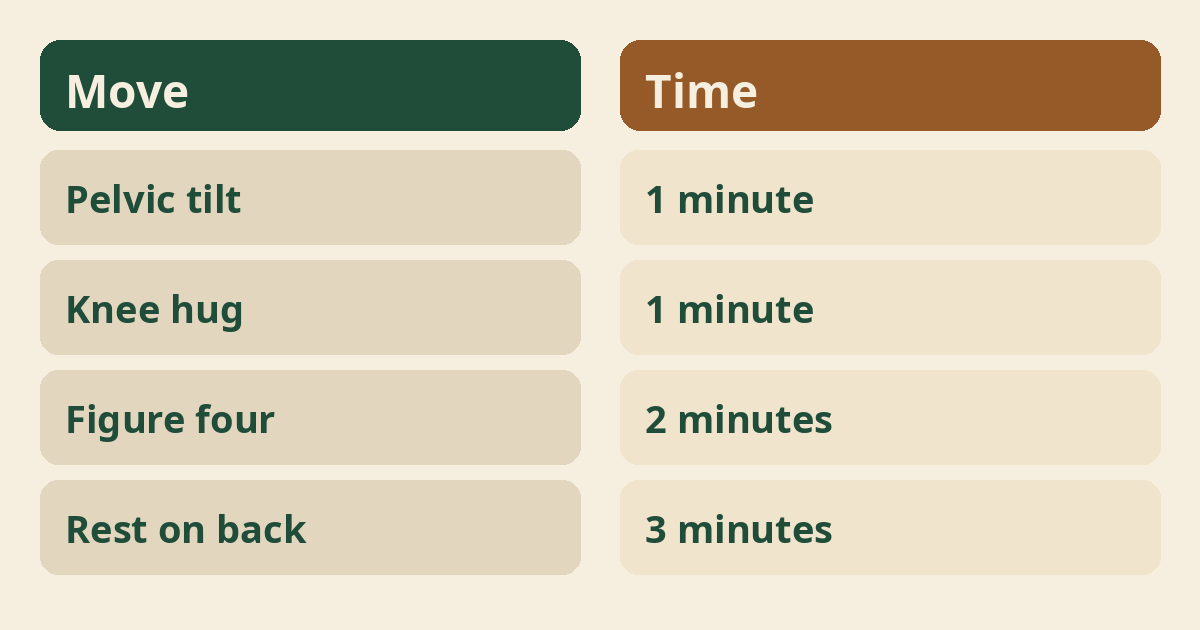
Lie on your back with knees bent and feet flat, then rock your pelvis slowly forward and back. Keep the motion small, like a rolling wave. Breathe out as you flatten your lower back toward the floor. Do six to eight slow rounds. Many people find this a kind way to wake up the spine.
Step 2: How do I do a supine knee hug?
Lying on your back, hug one knee toward your chest while the other foot stays on the floor. Hold for a few slow breaths, then switch sides. If your hands cannot reach, loop a towel behind the thigh. Skip any pull that sends pain down the leg.
Step 3: How do I do the figure four stretch?
Cross one ankle over the opposite knee while lying on your back with your feet on the floor. This stretches the outer hip, where tight muscles may sit near the nerve. Stay easy and keep your head resting down. Hold for five slow breaths on each side and release if it pinches.
Step 4: How do I move through cat and cow?
Come onto hands and knees and slowly round and arch your back with your breath. Think of a smooth, slow wave through your spine. If you want a closer look, see this beginner walkthrough of cat and cow for tips on keeping your wrists and knees comfortable.
Step 5: How do I rest in child’s pose?
Sit your hips back toward your heels, fold forward, and let your arms rest on the floor. If your hips lift away from your heels, slide a pillow under them. Many people enjoy this as a calm reset. A deeper guide is in our child’s pose walkthrough for new students.
Step 6: How do I finish with a rest on my back?
Lie flat with knees bent over a pillow or calves on a chair and let your body go quiet. Stay for two or three minutes. This ends the session on a soft note. Many people find the pause helps them notice how the leg and back feel afterward.
How should I breathe during these moves?
Breathe slowly through your nose, with a longer breath out than in. Tight breathing can make a sore back feel even tighter. Try breathing in for a count of three and out for a count of four. Belly breathing for new students is an easy way to practice.
Can breathing alone ease a tense back?
Slow breathing may help your muscles feel less tense, though results vary. Lie down, place a hand on your belly, and feel it rise and fall. A few minutes can leave many people feeling calmer. It costs nothing and you can do it anywhere.
How long should a session last?
Ten to fifteen minutes is plenty when you are new. Short sessions are easier to repeat on busy days. If you feel good, you can add a few minutes next week. Stopping while you still feel fine is a smart habit.
How often can I practice?
Most beginners do well with three or four short sessions a week. Some people add a two minute stretch in the morning. Listen to your body and take a rest day when it asks. For a wider look at pacing, read how often to do yoga as a beginner.
When is the best time of day?
Pick the time you will actually stick with, whether morning, midday, or evening. Mornings may feel stiff, so move slower and warm up longer. Evenings can feel loose after the day. A steady routine often matters more than the exact hour.
What props make sciatica pain relief at home easier?
A folded blanket, a firm pillow, a strap, and a chair are enough. Props let you reach the floor without strain and keep your hips level. A towel works as a strap. Learn more in this guide to simple props for new students.
Can I use a chair instead of the floor?
Yes, a sturdy chair is a fine place to practice if getting down is hard. Sit tall near the front edge, feet flat, and try slow side bends or an ankle over knee stretch. Many people like this for work breaks. Try these desk friendly yoga ideas too.
What is a good warm up before yoga?
A slow walk or a few gentle shoulder and hip circles will do. Warm muscles tend to feel easier to move. Spend two or three minutes on this. You can also take a short stroll around the house before you roll out the mat.
What are the most common mistakes?
The biggest mistake is pushing into a stretch that sends pain down the leg. Others include holding the breath, rushing, and comparing yourself to photos. A stretch should feel like mild tension, not a sharp zing. When in doubt, back off by half.
Should I stretch the sore leg harder?
No, pulling hard on the sore leg can leave it feeling more irritated. Keep the effort light and even on both sides. Some people find that working the hip and low back, not the leg itself, feels better. Small and steady beats big and bold.
Which moves should I skip for now?
Skip deep forward folds, big twists, and any move that sends sharp pain along the leg. These can feel too strong at the start. If a pose does not feel right, swap it for a lying down version. You can return to it later, or never. That is fine.
Who should be extra careful?
Anyone with numbness, leg weakness, recent injury, pregnancy, or a known spine condition should talk with a doctor first. Ask a medical professional which moves fit your body. If you are expecting, see how prenatal yoga differs from a regular class before you start.
When should I stop and call someone?
Stop and seek medical help if you notice new weakness, numbness in the groin area, or loss of bladder control. These signs need prompt attention, not more stretching. Also pause if pain gets steadily worse over several days. Your safety comes before any routine.
Is yoga a treatment for sciatica?
No, yoga is not a treatment for sciatica and it does not replace medical care. It is a movement habit that some people use alongside advice from their doctor. Think of it as one small tool. Do not expect it to fix the cause on its own.
Can yoga make sciatica go away?
Yoga is not a fix for sciatica, and no honest guide can promise that. What it may offer is a calm routine and a sense of ease. Pain comes from many causes, and a professional can help you find yours. Keep your hopes realistic and kind.
What benefits do people notice?
Many people find that slow yoga leaves them feeling looser, calmer, and more aware of their posture, though results vary. Some say it makes daily tasks feel easier. Others enjoy the quiet time. For a trusted overview of mind and body practices, see National Center for Complementary and Integrative Health. Your own experience may differ.
Can yoga help my mood while I am in pain?
Many people find that slow breathing and quiet movement help them feel more relaxed. Ongoing pain can wear on the mind. A short routine gives you something steady to do. For more ideas, try yoga for stress relief for beginners.
Do my hips matter for this?
Yes, tight hips often sit near the center of a stiff low back, so many routines include hip work. Slow hip openers can feel useful when done within comfort. Take a look at this beginner guide to hip yoga for easy ideas you can add later.
How do I know I am doing it right?
You are doing it right if you can breathe easily and feel mild stretch, not sharp pain. Pain is a signal to stop or ease off. A good session leaves you feeling about the same or a bit better. If it leaves you worse, change the plan and ask a professional.
How do I progress over time?
Add a minute, a second round, or one new move every week or two. Change only one thing at a time so you can tell what feels good. When you feel steady, you might try a standing move like mountain pose to practice tall, even posture.
Do I need a teacher?
A teacher is not required, but a good one can help you adjust moves for your body. Look for someone with experience in back care and tell them about your sciatica before class. A private lesson or video session can be a calm way to begin.
What mindset helps most?
A patient, curious mindset helps more than pushing hard. Pain days and easy days will come and go. See each session as a check in, not a test. Many people find that kindness toward the body makes the practice easier to keep.
How does this fit with the larger plan?
This article is one part of a bigger series on the topic. For the full picture, read our main sciatica guide, Yoga for Sciatica for Beginners, which is the pillar of this series. It covers more poses and a longer routine you can grow into.
What daily habits go along with yoga?
Short walks, standing breaks, and a comfortable chair often pair well with a yoga routine. Try to stand up every half hour when you work. Sleep in a position that feels easy on your back. Small daily choices add up, and they cost almost nothing.
What if I only have five minutes?
Five minutes of pelvic tilts and slow breathing still counts. Short sessions keep the habit alive on busy days. Do the tilts, one knee hug on each side, and a minute of rest. Something small and steady is better than nothing.
Where to read next
For a calm, beginner-friendly start, Ranjana Sinha’s Begin Where You Are is written for people who want simple steps. Our guide to starting a home yoga practice adds a gentle routine you can follow at home.
Frequently asked questions
Can I do yoga when my sciatica flares up?
If the pain is sharp or getting worse, rest and check with your doctor before you move.
Will yoga make my leg pain go away for good?
No one can promise that, but many people find slow movement helps them feel more comfortable.
Is a mat required for these moves?
A mat is helpful, but a carpet or a folded blanket on a flat floor works too.
Should I feel a stretch down my leg?
You should feel mild tension in the hip or back, and you should ease off if pain runs down the leg.
How soon might I notice a change?
It varies, and some people notice they feel easier within a few weeks of steady practice.
The bottom line
Go slowly, stay curious, and let your body set the pace.

