
Sciatica pain can make even sitting still feel like hard work, and many beginners look for something simple they can do anywhere. Slow breathing exercises are one of the easiest places to start. They may help your body relax around the discomfort, they cost nothing, and they need no equipment. This guide walks you through sciatica breathing exercises step by step, in plain words, so you can try them safely at home.
This article is general education, not medical advice or a diagnosis. If you have sciatica or any health condition, talk with your doctor before starting new exercises.
What is sciatica pain?
Sciatica is pain that travels along the sciatic nerve, usually from the lower back down through one leg. The nerve runs deep through the hip and leg, so the pain can feel sharp, dull, burning, or tingly. Some people also notice numbness or weakness in the leg or foot. The cause and the intensity vary a lot from person to person.
What are sciatica breathing exercises?
Sciatica breathing exercises are slow, controlled ways of breathing that beginners use to relax while living with sciatica pain. They are not a fix for the nerve itself. They are a way to calm the body so the muscles around the back and hips can soften a little. Many beginners find this makes daily discomfort easier to manage.
Why do people try breathing for pain?
People try breathing exercises because pain often makes the whole body tense, and slow breathing is a simple way to release some of that tension. When pain flares, breathing often turns shallow and fast without you noticing. That pattern can keep muscles braced for hours. Slowing the breath is one small lever you control at any moment, in any place.
How are breathing and pain linked?
Pain and breathing affect each other: stress and guarding tighten the body, and slow exhales can signal the nervous system to settle down. Researchers often describe a relaxation response that comes with slow, steady breathing. The idea is simple. A calmer body usually holds less extra tension around a sore spot.
Is this a treatment for sciatica?
No, breathing exercises are not a treatment, a cure, or a replacement for medical care for sciatica. They are a comfort practice that may sit alongside the care your doctor or physiotherapist gives you. If your pain is new, severe, or changing, get it checked before you try anything at home.
Who should talk to a doctor first?
Anyone with new, severe, or worsening leg pain, numbness, or weakness should talk to a doctor before trying these exercises. The same applies if you have had back surgery, a disc problem, osteoporosis, or a recent injury. Breathing practice is low impact, but positions still matter. A quick conversation with a professional keeps you on the safe side.
Which symptoms need urgent care?
Loss of bladder or bowel control, numbness in the groin area, or sudden severe weakness in a leg needs urgent medical care, not home exercises. These signs can point to a serious problem that needs fast attention. Do not wait it out. Do not try to breathe through it.
How do you set up your space?
Choose a quiet spot where you can lie down or sit without being disturbed for about ten minutes. Switch your phone to silent and wear loose clothing around your waist. A calm setting makes it much easier to notice your breath instead of your to-do list.
What props make it easier?
A firm pillow, a folded blanket, and a yoga mat cover almost everything a beginner needs. A pillow under the knees takes pressure off the lower back when you lie down. Our guide on yoga props for beginners shows simple household swaps if you do not own any gear yet.
What positions work best?
Most beginners do best lying on the back with the knees bent, or sitting tall in a supportive chair. Side lying with a pillow between the knees is another kind option when the back feels sore. Pick the position where your pain feels quietest. Then stay there for the whole session.
How do you start in five minutes?
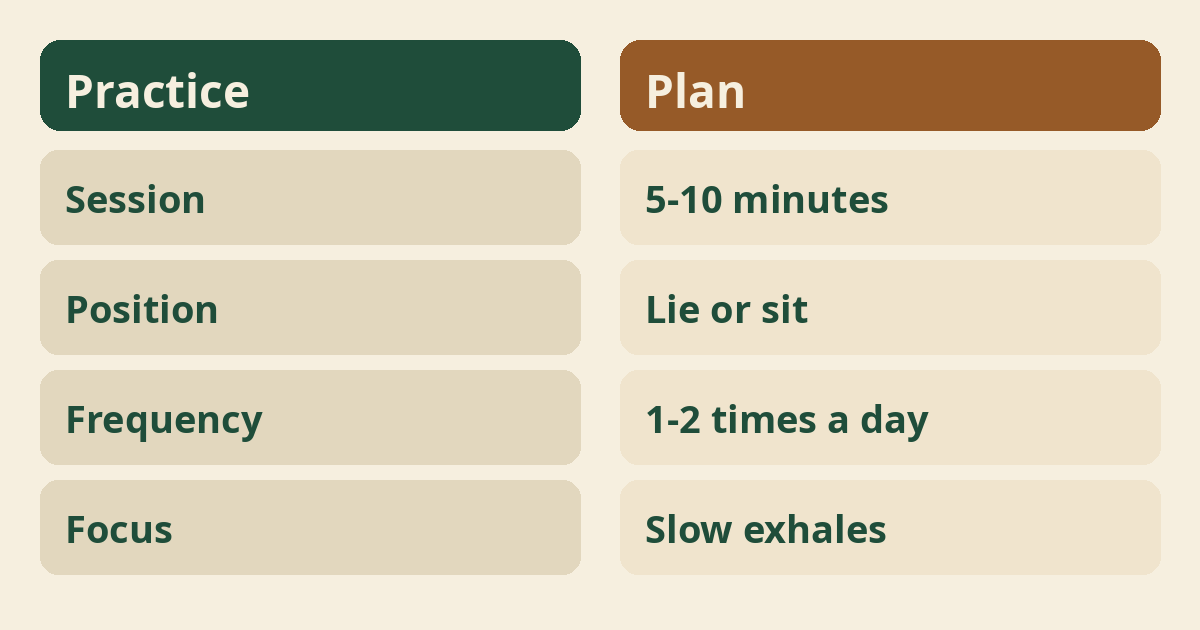
Start with one short session: get comfortable, close your eyes, and breathe slowly for five minutes. That is the entire first practice. Short and repeatable beats long and rare, especially while pain makes you cautious. You can build from there once it feels familiar.
Step 1: settle into your position
Lie on your back with your knees bent and feet flat, or sit with both feet on the floor. Let your arms rest by your sides or on your belly. Give yourself a minute to stop fidgeting before you change anything about your breath.
Step 2: notice your natural breath
Spend the first minute simply watching your breath without changing it at all. Notice where you feel it most: chest, belly, or nose. This quiet scan shows you your starting point. It also settles your attention before the real practice begins.
Step 3: breathe into your belly
Place one hand on your belly and breathe so the hand rises on the inhale and falls on the exhale. Keep the chest fairly still and let the belly do the work. If this feels unfamiliar, our lesson on belly breathing for beginners breaks it down step by step.
Step 4: lengthen your exhale
Make your exhale a little longer than your inhale, and let the air leave the body slowly. Long exhales are the part many people find most calming. Never strain or push the air out. Easy does it, every single breath.
Step 5: add a soft count
Breathe in for a count of three or four, then out for a count of four to six. Counting gives the mind a simple job so it wanders less. If any count feels like effort, shorten it. Breathing should always feel smooth, never forced.
Step 6: finish and notice
After five to ten rounds, let the breath return to normal and rest quietly for a minute. Notice how your back and legs feel compared with when you started. That small check-in teaches you what works for your body over time.
Belly breathing for sciatica
Belly breathing is the foundation of most sciatica breathing exercises for beginners. It moves the diaphragm fully, which many people find relaxing for the whole trunk. Practice it lying down first. Once it feels natural, try it sitting in a chair.
Side-rib breathing
Side-rib breathing means sending the breath into the sides of the ribs instead of the belly. Wrap your hands around your lower ribs and feel them widen as you inhale. Some people with lower-back pain find this more comfortable than belly breathing. Try both and keep the one that feels kinder.
Box breathing made simple
Box breathing uses four equal parts: breathe in, hold, breathe out, hold, each for the same count. A count of two or three is plenty for beginners. Skip the holds entirely if they make you tense or dizzy. The plain slow version works fine.
Can you breathe with movement?
Yes, pairing breath with small movements can keep the body from stiffening up between breathing sessions. Slow spinal movements on all fours, matched to the breath, are a common choice; see cat cow pose for beginners for a careful walkthrough. Move only in a range that stays comfortable for your back and leg.
What about breathing during a flare?
During a pain flare, keep the practice very small: a comfortable position and slow, quiet breaths for a few minutes. The goal is not to fix the flare but to stop the tension spiral around it. If breathing seems to make the pain sharper, stop and rest. Flares are a time for less, not more.
How long should a session be?
Five to ten minutes per session is enough for most beginners. Short sessions are easier to repeat, and repetition is where people usually notice changes. You can always add time later. Consistency matters far more than length.
How often should you practice?
Once or twice a day works well for most people, and a daily habit beats one long weekly session. If you are unsure how to build a routine around practice, how often should you do yoga explains how beginners find a rhythm they can actually keep.
When in the day works best?
The best time is the time you will actually do it, though many people like mornings or just before bed. An evening session may help you unwind after a day of sitting. A morning one can set a calm tone before a commute or a long shift.
What benefits do people report?
Many people say slow breathing helps them feel calmer and less guarded around their pain, though results vary from person to person. Possible benefits people mention include easier relaxation, better sleep, and less stress on difficult pain days. National Center for Complementary and Integrative Health offers a clear overview of relaxation techniques and what research suggests. None of this is guaranteed, and breathing is a support, not a solution.
What results should you expect?
Expect subtle changes first, like falling asleep more easily or feeling less braced during the day. Progress with any comfort practice is usually slow and uneven. Some weeks feel better than others. That is normal, and it does not mean the practice is failing.
Common mistakes to avoid
The biggest mistakes are breathing too fast, forcing deep breaths, and quitting because one session felt pointless. Forcing air can make you lightheaded and even more tense. Keep every breath small, soft, and repeatable. Give the practice a few honest weeks before you judge it.
Breathing mistakes with a sore back
With a sore back, the common traps are holding the breath, bracing the stomach hard, and practicing in a painful position. Breath holding is a stress habit many people bring to pain without knowing it. If you catch yourself doing it, just restart with a quiet exhale. Then shift to an easier position.
Signs you should stop
Stop if you feel dizzy, short of breath, or if your leg pain, numbness, or tingling gets clearly worse. Sit or lie still until you feel normal again. If symptoms like these keep returning, mention them to your doctor before you continue.
Can you pair this with easy poses?
Yes, many people pair breathing with restful positions like lying on the back or a supported child’s pose. If back pain makes you cautious about movement in general, can you do yoga with a bad back covers how beginners approach it safely. Start with the breath alone if you are unsure.
What about breathing at your desk?
Short breathing breaks at your desk can interrupt the long sitting spells that often irritate sciatica. Even two minutes of slow breathing in your chair can reset how you are holding your back. Yoga at your desk for beginners has more ideas for getting through workdays with less stiffness.
How does this fit a bigger routine?
Breathing works best as one piece of a wider routine that may include walking, easy stretches, and medical guidance. Our pillar guide, yoga-for-sciatica-for-beginners, covers a full beginner routine for sciatica if you want the bigger picture. Think of breathing as the foundation that makes the rest easier to approach.
Should you work with a teacher?
A qualified yoga teacher or physiotherapist can check your positions and breathing habits in person. One or two sessions can correct small habits you would never notice alone. Tell them about your sciatica before you begin so they can adapt things for you.
What mindset helps most?
A patient, curious mindset helps more than willpower: treat each session as an experiment, not a test. Some days breathing will feel easy and some days it will not. Both are fine. Neither says much about tomorrow.
What comes next?
Once daily breathing feels natural, you can extend sessions or add simple movements matched to the breath. Many beginners grow into a short home routine from there. Keep your doctor in the loop about what you are doing, especially if anything changes.
Where to read next
For a calm, beginner-friendly start, Ranjana Sinha’s Begin Where You Are is written for people who want simple steps. Our guide to starting a home yoga practice adds a gentle routine you can follow at home.
Frequently asked questions
Do breathing exercises help sciatica pain?
Many people find slow breathing helps them relax around the pain, but it is not a treatment and results vary.
What is the easiest breathing exercise to start with?
Belly breathing while lying on your back with bent knees is the easiest starting point for most beginners.
How quickly will I notice anything?
Some people feel calmer after one session, while physical changes usually take a few weeks of regular practice.
Is it safe to do breathing exercises every day?
Daily practice is generally considered safe for most people, but check with your doctor if you have breathing or heart conditions.
Can breathing exercises replace physiotherapy?
No, breathing exercises are a comfort practice that works alongside, not instead of, care from a doctor or physiotherapist.
The bottom line
Start with five quiet minutes today and let slow breathing become a small daily habit.

