
You feel the familiar tightness start behind one eye, the light seems too bright, and your shoulders are already up near your ears. Many people look for quiet, low-effort ways to ease that tension and feel a little more in control. This guide shares simple relaxation exercises you can try at home, in plain steps, at your own pace.
This article is general education and not medical advice. Please talk with your doctor about your headaches, especially if they are new, severe or changing, before you try anything here.
What are relaxation exercises for migraine?
They are slow, quiet practices that help your body and mind unwind. Think of breathing patterns, easy stretches, muscle release and short rests. They do not need special skills or equipment. Many people use them as one small part of how they look after themselves.
Why do people try relaxation for migraine?
Many people want a calm, drug-free habit they can use anywhere. Stress and tight muscles often show up around headache days, so people look for ways to soften both. Relaxation gives you something kind and active to do. It can also make a hard day feel less out of your hands.
Who is this guide for?
It is for adults who are new to relaxation and want a slow, simple start. You might get headaches often or only now and then. You might have never done yoga or meditation. Everything here is low-impact and can be done sitting or lying down.
What should you know before you start?
Talk with your doctor first, then begin with short, quiet sessions. A doctor can look at your symptoms and rule out other causes. Once you have the go-ahead, keep sessions short at first. Stop if anything feels worse.
Is this a treatment for migraine?
No, relaxation exercises are not a treatment and not a replacement for medical care. They are self-care habits that some people find comforting. They sit alongside the plan you build with your doctor. Please never stop or change medicine because of something you read here.
How do you set up a calm space?
Choose a quiet spot with low light and a comfortable place to sit or lie down. Dim the lamps, silence your phone and loosen tight clothing. A chair with back support works well. Keep a glass of water nearby so you do not need to get up.
What is the easiest first exercise?
Slow belly breathing is the easiest place to begin. Rest one hand on your belly and breathe in through your nose for a count of four. Breathe out slowly for six. If you want more detail, see our step-by-step belly breathing guide.
How do you do slow belly breathing?
Let your belly rise as you breathe in and fall as you breathe out. Sit tall but relaxed and keep your shoulders loose. Breathe in softly, then out a little longer. Try ten rounds and notice if your jaw and forehead feel softer.
What is the longer exhale trick?
Making your out-breath a bit longer than your in-breath can feel very calming. Try in for four counts and out for six or seven. Keep it smooth, never forced. If you feel dizzy, go back to your normal breathing.
How do you do progressive muscle relaxation?
Tighten one muscle group lightly, hold for a few seconds, then let it go. Start with your feet and work up through your legs, belly, hands, arms and shoulders. Use only light effort, never a hard squeeze. Skip any area that feels sore.
How do you relax your face and jaw?
Soften your forehead, unclench your teeth and let your tongue rest low in your mouth. Many people hold tension in the jaw without noticing. Place your lips gently together with a small gap between your teeth. Breathe slowly for a minute and let your cheeks go heavy.
How can you release neck and shoulder tension?
Slow neck and shoulder rolls can ease that tight, hunched feeling. Drop your shoulders away from your ears and roll them back five times. Then tip your ear toward one shoulder and pause. For a fuller routine, try these neck and shoulder stretches.
What is a good resting pose?
Child’s pose lets your body fold forward and rest. Kneel, sit back toward your heels and lower your forehead to the floor or a cushion. Let your arms lie wherever they feel easy. Our guide to child’s pose shows simple ways to adjust it.
Can you do easy spine movements?
Slow spine movements can loosen your back without strain. Come onto your hands and knees and move between rounding and arching with your breath. Keep the pace slow and the range small. Cat-cow for beginners explains each step.
What about a body scan?
A body scan means moving your attention slowly through the body and letting each part rest. Lie down and start at your toes. Notice each area for a breath or two, then move on. There is nothing to fix, only to notice.
How does guided imagery work?
You picture a calm, safe place and let your mind rest there. It could be a quiet beach, a shady garden or a cozy room. Add small details such as sounds and warmth. Many people find this easier than silent sitting.
Can a short meditation help?
Even five quiet minutes of focused attention can feel like a reset. Sit comfortably and follow your breath, or silently repeat a calm word. When your mind wanders, bring it back without blame. Short and regular beats long and rare.
Why does breathing matter so much?
Slow breathing signals your body that it is safe to slow down. When you are tense, breathing tends to get quick and shallow. Easing it down can help your shoulders and face unwind. It is also free and always with you.
How long should a session be?
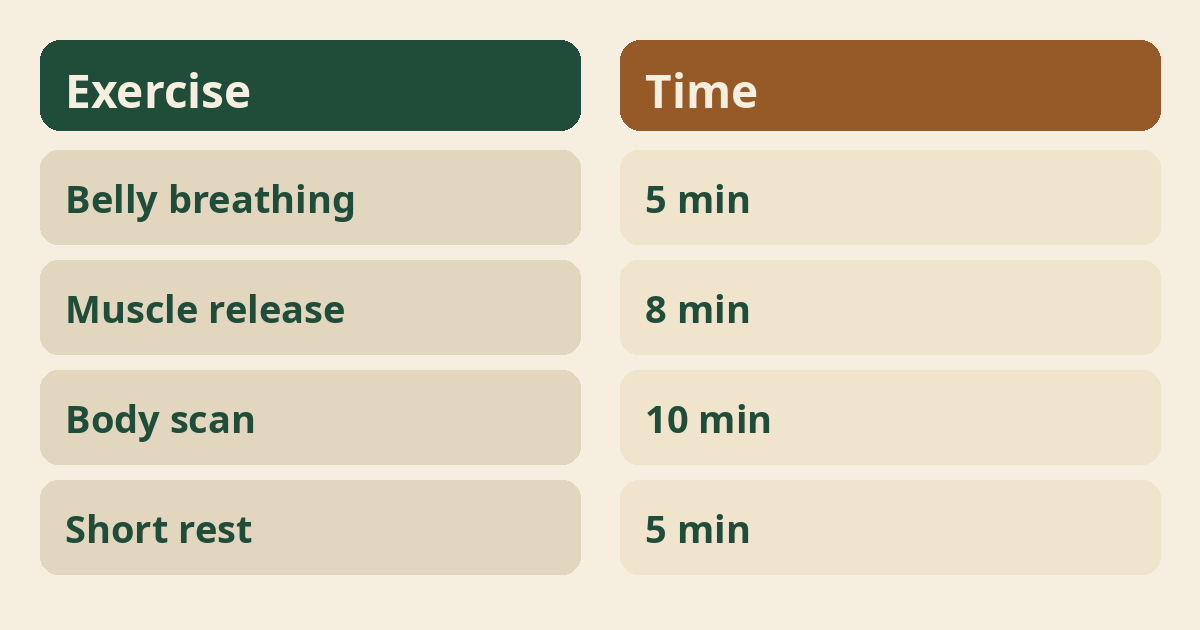
Five to ten minutes is plenty when you are starting out. A short session you finish feels better than a long one you dread. You can stretch to twenty minutes later if you enjoy it. Listen to your body, not the clock.
How often can you practice?
A few short sessions a week is a realistic starting point. Many people like a daily five-minute habit at a set time. If that feels like too much, begin with two or three days. For ideas on pacing, read how often to practice yoga.
When is the best time of day?
Pick a time you can keep, such as after waking or before bed. A calm evening routine can help you wind down. A short morning session can set a steady tone. The best time is the one you will actually use.
Should you practice during a migraine?
Only if it feels comfortable, and many people prefer simple rest and quiet. On a hard day, lying still in a dark room with slow breathing may be plenty. Skip stretches if movement feels bad. Follow the advice your doctor has given you.
What props can make it easier?
A pillow, folded blanket or cushion can make rest poses more comfortable. Support under your knees or head can reduce effort. A soft eye cover blocks light. Browse simple yoga props for budget-friendly ideas.
Can desk work make things harder?
Long hours at a screen can leave you tense, so short breaks may help. Every hour or so, look away, drop your shoulders and take three slow breaths. Stand and stretch if you can. Desk yoga for beginners has more quick ideas.
How does stress relief fit in?
Stress is a common companion of tough days, and calming routines can take the edge off. Relaxation will not remove life’s pressures. It may help you meet them with a steadier body. For a wider routine, see yoga for stress relief.
What are the possible benefits?
Many people find relaxation exercises leave them calmer and less tense, though results vary. Some notice softer shoulders, easier breathing or better sleep. Others notice little at first. For balanced, plain-language background on mind and body approaches, visit National Center for Complementary and Integrative Health.
What are the common mistakes?
The most common mistakes are trying too hard, going too long and skipping rest. Forcing a stretch or holding your breath can add tension. Doing too much too soon makes it easy to quit. Keep everything easy and let it be small.
Who should be extra careful?
Anyone with new, sudden or severe headaches should see a doctor before trying anything. Please also check first if you are pregnant, have neck or back problems, or have blood pressure or balance concerns. If you ever have a sudden, very strong headache, seek medical help right away. See also yoga with a bad back.
What if breathing exercises make you dizzy?
Stop, return to normal breathing and rest. Dizziness often means the breath was too deep or too fast. Next time, shrink your counts and keep it soft. If it keeps happening, tell your doctor.
How can you keep a simple diary?
Jot down what you tried, how long and how you felt afterward. A few lines in a notebook is enough. Over weeks you may spot what you enjoy. Your doctor may also find the notes useful.
How do you progress slowly?
Add one small thing at a time, such as an extra minute or a new exercise. Change only one piece per week. If something feels off, step back. Progress here means comfort and consistency, not difficulty.
Do you need a teacher?
You do not need one, but a qualified teacher can personalize things. Look for someone with experience in relaxation or restorative styles who is happy to adapt. Tell them about your headaches. A good teacher never pushes you past comfort.
What mindset helps most?
A patient, kind attitude works better than pressure to feel better fast. Some days will feel easier than others. That is normal. Take each session as a small act of care and let go of scores.
How can you build a calm routine?
Link your practice to something you already do, like brushing your teeth. Pair it with a daily cue so it becomes automatic. Keep a short version for busy days. Where it fits, add a stretch from beginner flexibility yoga.
What else supports a calm day?
Regular sleep, water, meals and breaks all play a supporting role. Relaxation works best as part of a steady daily rhythm. Your doctor can suggest other habits for your situation. Small, kind choices add up.
Where does this guide fit in the bigger picture?
It is a supporting guide, and our main resource is Yoga for Migraine for Beginners. That pillar article walks through a fuller yoga approach with safety notes and slow progressions. Read it alongside this one. Together they give you a calm place to start.
Where to read next
For a calm, beginner-friendly start, Ranjana Sinha’s Begin Where You Are is written for people who want simple steps. Our guide to starting a home yoga practice adds a gentle routine you can follow at home.
Frequently asked questions
Which relaxation exercise is easiest for a first try?
Slow belly breathing is usually the simplest, since you can do it sitting in any chair.
Is it okay to practice with the lights off?
Yes, a dim, quiet room is a comfortable setting for most relaxation exercises.
Do these exercises replace my medicine?
No, they are not a substitute for your doctor’s plan, so keep following the advice you were given.
What if my mind will not settle?
That is very common, so just return to your breath each time you notice you have drifted.
Can I do these on a work break?
Yes, a few slow breaths and shoulder drops at your seat can fit into a short break.
The bottom line
Start small, stay kind to yourself, and keep your doctor in the loop as you find what feels calming.

