
A hip opener cooldown routine is a short series of gentle movements that helps you slow down after activity and notice how your hips feel. You do not need to reach a deep stretch or follow a fixed level of flexibility. Move at an easy pace, keep your breath comfortable, and choose shapes that feel steady. This guide offers a simple sequence, ways to adjust it, and signs to pause. You can use it after a walk, a yoga session, or a long day of sitting.
This article is for general education and is not medical advice. If you have a health condition, an injury, or questions about whether these movements are suitable for you, check with your doctor first.
What is a hip opener cooldown?
A hip opener cooldown is a gentle sequence that gives your hips and legs time to settle after movement. It can include easy seated shapes, supported lunges, or small motions rather than intense stretches. Think of it as a quiet transition, not a test of flexibility. beginner hip movements
Why do people use one?
Many people use a cooldown to shift from active movement to a slower pace. A calm routine may help you pay attention to your posture, breathing, and comfort after exercise. Some people simply enjoy taking a few minutes without rushing. Experiences vary, and there is no single result everyone should expect.
Who is this routine for?
This sequence is intended for adults who want a gentle, adaptable way to wind down. Beginners can keep every movement small and use a chair or cushion for support. If you are unsure whether a pose fits your body or circumstances, skip it and ask a qualified health professional.
Before you begin
Start only when you have enough space to move without bumping into furniture. Wear clothes that let you move easily and place a folded blanket nearby. If you are following a hard workout, take a few minutes to let your breathing return to a comfortable pace first.
How to start: settle
Begin by sitting or lying in a position that feels stable. Let your shoulders soften and notice whether your feet, back, or hands need support. Take a moment to check in with your hips before changing shape; you do not have to begin with a stretch.
Step 1: easy knee sways
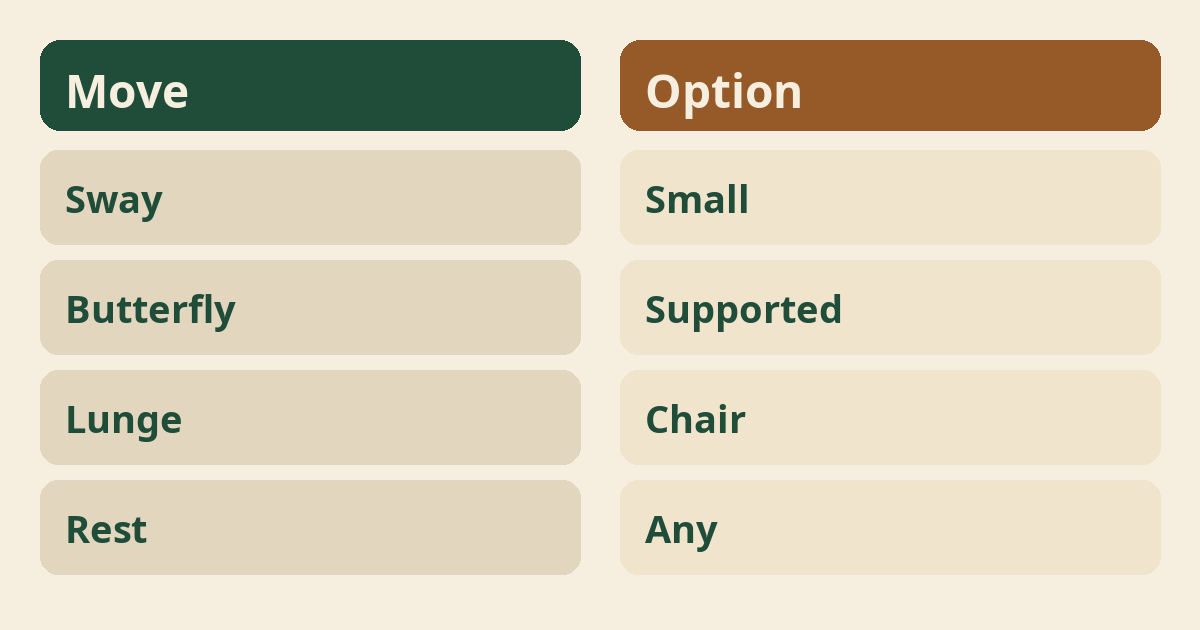
Lie on your back with knees bent and feet resting on the floor, then let both knees move a little to one side and back to center. Keep the range small enough that your back and hips feel at ease. Repeat slowly in each direction, and stop if the movement feels sharp or unstable.
Step 2: supported figure four
Stay on your back and place one ankle over the opposite thigh only if that position feels comfortable. Keep the crossed foot active and let the lower leg remain supported rather than pulling it toward you. A cushion beneath your head may make the position easier to hold. butterfly pose options
Step 3: seated butterfly
Sit on a folded blanket and bring the soles of your feet together, leaving them as far from your body as feels easy. Hold your ankles or rest your hands beside you; do not press your knees down. If sitting upright is difficult, sit with your back against a wall or choose another shape.
Step 4: low lunge with support
From hands and knees, step one foot forward and place your hands on blocks or a sturdy chair. Let the back knee rest on a folded blanket and keep your front foot planted. Move your hips only a little forward if comfortable; you can stay upright or skip the lunge. simple prop ideas
Step 5: child’s pose or rest
Finish on hands and knees by sitting back toward your heels only as far as feels comfortable. Place a bolster or cushions under your chest if useful, or stay upright in a chair instead. Resting in a different position is a valid choice. supported child’s pose
Use a smaller range
Choose a range that lets you breathe normally and remain steady. A pose can still be useful when it looks different from a picture or demonstration. Reduce the movement, add support, or leave the shape whenever your body asks for a change.
Breathe without forcing it
Let your breath stay quiet and natural throughout the sequence. You might notice the breath moving in and out without trying to make it deeper or longer. If breath counting makes you tense or light-headed, stop counting and return to ordinary breathing. easy breathing practice
How long should it take?
A short cooldown can take about five to ten minutes, but the length is your choice. Spend a few unhurried breaths in each position and use fewer shapes when time is limited. There is no need to hold a pose until it feels intense or to complete the full list.
How often can you do it?
You can use this routine when a gentle wind-down suits your day. Some people include a few movements after activity, while others choose them occasionally. Let comfort and your own schedule guide you; this article does not set a required weekly target. yoga frequency guide
Common mistake: pushing too far
Avoid forcing a stretch to match someone else’s depth or shape. A strong pulling feeling is not a goal, and pain is a reason to stop. Move back to a comfortable position, reduce the range, or end the routine for the day.
Common mistake: holding your breath
Do not hold your breath to stay in a pose. If you notice yourself bracing, come out a little and settle into a position where breathing feels easy. You can pause between sides or take a full rest whenever you need one.
Common mistake: rushing through
Moving quickly can make it harder to notice how a position feels. Give yourself time to enter and leave each shape with control. If you feel unsteady, use a wall, chair, or another stable support rather than hurrying to the next movement.
Helpful props
A folded blanket, firm cushion, yoga block, or sturdy chair can make the routine more comfortable. Use props to bring the floor closer or support a joint, not to push your body further. Check that anything you lean on is stable and will not slide.
What should the sensations feel like?
Aim for a mild, manageable sensation or no stretch at all. Sensation can differ from side to side and from day to day. Stop for sharp, sudden, or worsening discomfort, numbness, tingling, dizziness, or a feeling that you cannot move safely.
When should you stop?
Stop the movement if it causes pain, unusual symptoms, or a sense of instability. Return to a neutral position slowly and rest. If symptoms are severe, persist, or concern you, contact an appropriate health professional rather than trying to solve them with a stretch.
Who should be careful?
Check with your doctor first if you have an injury, a health condition, recent surgery, or a concern about movement. This is especially important when a clinician has given you movement limits or when a position brings on symptoms. During pregnancy or after childbirth, ask a qualified clinician or prenatal yoga teacher about suitable options.
Is this a treatment?
No, this routine is not a treatment for pain, injury, or a health condition. It is a general movement guide for people who find these positions comfortable. Do not use it in place of an assessment or care plan from your health professional.
Possible benefits
Many people find that a gentle cooldown feels calming or helps them notice their range of motion, but results vary. This routine cannot promise a specific change in flexibility or comfort. For general background on yoga and health, see National Center for Complementary and Integrative Health; that information does not make this sequence a treatment.
After sitting for a long time
If you have been sitting, begin with standing or seated movement before trying a floor pose. Take a few easy steps, or gently bend and straighten your knees while holding a chair. A small transition can feel more suitable than moving straight into a deep stretch. movement at your desk
After a yoga session
After yoga, choose one or two shapes that feel restful rather than repeating every pose. Let the session you just completed guide your choice, and avoid adding effort simply because a cooldown is listed. You can finish with quiet sitting or lying down instead.
Progress gradually
Change only one thing at a time, such as adding a breath or using a slightly different support. Keep the movement easy for several sessions before considering a change. More range is not always the aim; a steady, comfortable practice can remain small.
If one side feels different
It is common to notice that the two sides do not feel identical. Do not force the less comfortable side to match the other. Use the same easy range on both sides, or spend less time on the side that feels more sensitive.
Choosing a teacher
A qualified yoga teacher can help you find options that suit your experience and movement needs. Ask whether the teacher can offer modifications and whether you may rest or skip poses. For health concerns, consult your doctor first; a yoga class is not a substitute for medical care.
A helpful mindset
Treat the routine as a chance to notice, not a challenge to win. You can change the order, use a chair, or stop early. There is no need to compare your pose with another person’s shape or to feel that you have failed by choosing rest.
Can I skip a pose?
Yes, skip any pose that does not feel suitable. Choose an easier position, take a break, or end the routine. A sequence is a set of options, not an instruction to move through every shape regardless of comfort.
Should I feel a deep stretch?
No, a deep stretch is not required for this cooldown. Keep the sensation mild and easy to leave. If you have to strain, hold your breath, or brace to remain in a position, make the shape smaller or choose a different one.
Can I do this before activity?
You can use gentle movements before activity, but this sequence is written as a wind-down. Before exercise, many people prefer movements that prepare them for the activity they plan to do. Follow your own training guidance and avoid turning a calm cooldown into a forceful stretch.
What if I have no yoga props?
You can do the routine without special equipment. A folded towel or stable chair may help, but only use household items that will not slip or tip. If a position needs more support than you have, leave it out.
Can this routine improve flexibility?
The routine does not guarantee a change in flexibility. Many people find that practicing comfortable movement helps them become more familiar with their range, but results vary. Stay patient and do not push for a particular shape or timeline.
How should I finish?
End in a position where your breathing and body feel settled. Sit or lie down for a moment, then get up slowly if you were on the floor. Notice how you feel without judging it, and return to ordinary activity at your own pace.
Where to read next
For a calm, beginner-friendly start, Ranjana Sinha’s Begin Where You Are is written for people who want simple steps. Our guide to starting a home yoga practice adds a gentle routine you can follow at home.
Frequently asked questions
How many poses should I do?
Choose any one or more shapes that feel comfortable.
Can I use a chair?
Yes, a stable chair can support seated movement or a standing rest.
Should I stretch through pain?
No, stop and change position if you feel pain.
Do I need to be flexible?
No, keep the movements small and use support as needed.
Can I do it every day?
You may choose to, but there is no required schedule and comfort matters.
The bottom line
Keep the movements gentle, use support when helpful, and let comfort guide when you begin and stop.

