
A yoga sleep prep checklist is a simple way to make your evening practice calm, short, and easy to repeat. Start by setting aside a few quiet minutes, choosing comfortable clothes, and picking gentle movements that feel pleasant rather than demanding. You do not need to complete every step or reach a special pose. Use this guide to make a flexible routine, then change or skip anything that does not suit your body, your space, or your evening.
This article is for general education and is not medical advice. If you have a health condition, pain, pregnancy-related questions, or concerns about movement or breathing, check with a doctor before starting and follow their guidance.
CHECKLIST AT A GLANCE
A short checklist can help you begin without turning bedtime into a project. Choose a time, make a little space, gather a cushion or folded blanket, and select two or three comfortable movements. Keep the plan gentle and brief. If you feel tired, doing less or resting is a valid choice.
WHAT YOGA SLEEP PREP MEANS
Yoga sleep prep means using quiet yoga-inspired movement as part of an evening wind-down routine. It is not a fixed sequence or a promise about how quickly you will fall asleep. You can combine easy stretches, stillness, and comfortable breathing. The goal is to make a routine that feels manageable, not to perform perfectly.
WHY PEOPLE TRY IT
Many people use a gentle evening routine to create a clear transition from busy tasks to rest. Slow movement can give attention a simple place to settle, while a familiar sequence may feel calming. Experiences vary from person to person. Yoga is one optional part of an evening routine, not a requirement for rest.
CHOOSE A COMFORTABLE TIME
Pick a time that leaves room to move slowly without rushing through the rest of your evening. Some people prefer to practice before getting into bed, while others like a few quiet movements beside the bed. There is no universal best hour. Choose a point that fits your home routine and can be repeated without pressure.
MAKE A SMALL SPACE
A clear patch of floor or a sturdy chair is enough for a simple practice. Move sharp or slippery objects out of the way and make sure you can change position safely. Keep the lighting comfortable for you. If the floor is awkward, adapt the plan using a chair or stay seated rather than forcing a setup.
WEAR EASY CLOTHES
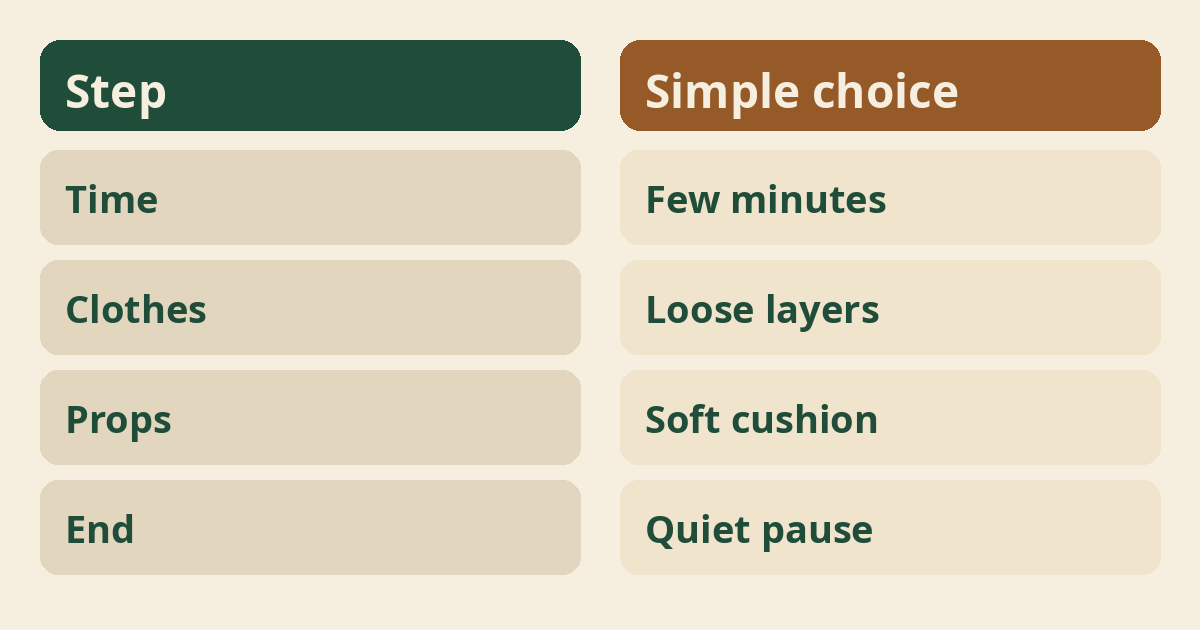
Wear clothes that let you bend, sit, and breathe comfortably. Tight waistbands or layers that make you too warm can distract from a quiet practice. You do not need special yoga clothing. Choose what feels comfortable at home, and keep a light layer nearby if the room feels cool.
GATHER SIMPLE PROPS
A cushion, folded blanket, or stable chair can make a position easier to adjust. Props are optional tools for comfort, not equipment you must buy. Put them within reach before you begin so you do not need to interrupt the routine. See simple yoga props for ideas on using everyday supports.
SETTLE YOUR EVENING TASKS
Finish or pause any small task that would otherwise keep pulling your attention away. You might set your phone aside, lower the volume, or leave a note for tomorrow. There is no need to create a perfect, screen-free home. Make one small change that helps you focus on the next few quiet minutes.
PICK A GENTLE PLAN
Choose a small number of familiar movements instead of building a long sequence each night. A plan might include easy seated movement, a comfortable forward fold, and a brief rest. Keep options open: if a movement does not feel right, skip it. how often to practise yoga can help you think about a flexible routine.
STEP ONE: ARRIVE
Begin by sitting or standing in a position that feels steady and comfortable. Notice where your body meets the chair, floor, or wall, without trying to change anything. Let your shoulders rest in a natural position. Give yourself a moment to arrive before moving, even if the whole practice is short.
STEP TWO: CHECK IN
A brief body check can help you choose movements that suit how you feel today. Notice whether you feel tired, stiff, restless, or comfortable, and keep the plan gentle. You do not need to diagnose or fix a sensation. If something feels painful, concerning, or unusual, stop and seek appropriate professional guidance.
STEP THREE: MOVE THE SPINE
A few slow, comfortable spine movements may be an easy way to begin. Try a small seated or tabletop movement only if it feels safe for you, and keep the range modest. Move without bouncing or pushing. gentle cat-cow movement is one option, but stillness is also fine.
STEP FOUR: RELAX THE SHOULDERS
Gentle shoulder movements can offer a simple pause after a day of sitting or carrying things. Roll the shoulders in a small, easy range or let the arms rest at your sides. Avoid pulling hard on the neck or forcing a stretch. If movement brings discomfort, return to a supported position and leave the exercise out.
STEP FIVE: CHOOSE A RESTING POSE
Select one easy resting position that lets your body feel supported. You could sit with a cushion, lie on your back if comfortable, or rest in a modified child’s pose. Use a support under the head or knees if helpful. a supported child’s pose is optional, not a test of flexibility.
STEP SIX: PAUSE
Leave a little time at the end to be still or make a slow transition to bed. You may sit quietly, lie down, or simply notice the support beneath you. There is no need to count breaths or empty your mind. If stillness feels uncomfortable, open your eyes, change position, or end the practice.
KEEP BREATHING COMFORTABLE
Let breathing stay natural and easy throughout the routine. You do not need to take unusually deep breaths, hold the breath, or follow a strict count. If you want, notice the ordinary movement of breathing without changing it. Stop any breathing exercise that feels uncomfortable and return to your normal pattern.
HOW LONG TO PRACTISE
A few minutes can be enough for a simple evening routine. Choose a length that leaves you feeling settled rather than rushed or overworked. You may start with five minutes and finish earlier if that is enough. Longer practice is not automatically better, and there is no required duration.
HOW OFTEN TO PRACTISE
Practise as often as it fits your life and feels comfortable. A short routine on some evenings can be more realistic than aiming for a perfect daily streak. Rest days are fine, and you can change the plan when your schedule shifts. Let your own comfort and professional advice guide your choices.
COMMON MISTAKE: MAKING IT A WORKOUT
Keep the evening sequence easy instead of trying to reach a fitness goal at bedtime. Strong effort, competitive targets, or a demanding flow may not match the quiet purpose of this checklist. Choose movements that leave room to slow down. If you finish feeling more activated, try fewer movements or end with stillness next time.
COMMON MISTAKE: PUSHING A STRETCH
Do not force a pose to match a picture or someone else’s range of motion. Use a smaller movement, bend the knees, or add support if that feels more comfortable. Sensations differ across bodies and days. Sharp pain or a concerning symptom is a reason to stop, not a signal to stretch harder.
COMMON MISTAKE: EXPECTING A RESULT
Treat the routine as an option, not a guarantee of a particular night. Some evenings may feel calmer, and others may not feel different. Avoid judging yourself by how quickly you become sleepy. If sleep concerns continue or affect your daily life, discuss them with a qualified health professional.
USE PROPS FOR SUPPORT
Props can bring the floor or a position within easier reach. Place a folded blanket under your knees or sit on a cushion if that makes the position more comfortable. Use only stable supports that will not slide. Adjust or remove a prop if it creates pressure or feels awkward.
WHO SHOULD BE CAREFUL
If you have a health condition or a movement concern, ask a doctor before beginning. This is especially important if you have pain, balance concerns, recent surgery, pregnancy-related questions, or instructions to limit activity. Follow the guidance you receive, and do not rely on a general article to decide what is safe for you. A qualified teacher can help adapt a pose after medical guidance.
IS THIS A TREATMENT?
No, this routine is not a treatment for sleep problems or any health condition. Yoga sleep prep is a general wellness practice that some people choose to include in an evening. It should not replace medical care, prescribed treatment, or advice from a clinician. If you are worried about sleep or another symptom, ask a health professional for help.
POSSIBLE BENEFITS
Many people find that gentle movement and a quiet routine feel pleasant, though results vary. Some may value a few minutes of body awareness or a consistent pause before bed. These experiences are personal and do not show that yoga treats a condition. For general information about yoga research and safety, see National Center for Complementary and Integrative Health.
PROGRESS AT YOUR OWN PACE
Keep the routine small at first and change only what you want to change. After a few tries, you might keep a movement that feels comfortable or remove one that does not. There is no need to add harder poses or longer sessions. Consistency means finding a workable pattern, not following a strict plan.
WHEN A TEACHER MAY HELP
A qualified yoga teacher can show options for comfortable, accessible movement. Tell the teacher about any limits or questions before class, and ask whether they can offer modifications. A teacher does not replace a doctor’s guidance about a health condition. If you prefer learning at home, use a beginner-friendly approach and skip anything that feels uncertain.
KEEP THE MINDSET SIMPLE
Let the checklist support your evening rather than become another task to complete. You can use one item, skip the rest, or decide that rest is what you need. There is no score for finishing every step. A flexible routine leaves room for changing energy, space, and needs from one day to another.
ON A BUSY EVENING
Shorten the plan when time or energy is limited. Sit comfortably, move the shoulders gently if that feels good, and take a quiet pause before moving on with your evening. Even skipping the movement and making a small transition can suit your needs. You do not owe the routine a minimum number of minutes.
IF YOU CANNOT USE THE FLOOR
A floor sequence is not necessary for a simple yoga-inspired wind-down. Sit in a stable chair and keep both feet supported, or use a standing position near a steady surface if that is appropriate for you. Avoid unstable furniture. If balance or standing is a concern, ask a doctor or qualified teacher about safer options first.
AFTER THE ROUTINE
Move into the rest of your evening in a way that feels unhurried. You might put props away, get ready for bed, or sit quietly for another moment. If the practice did not feel useful, there is no need to repeat the same sequence. Change it, leave it aside, or ask a professional for advice if a concern remains.
MAKE THE CHECKLIST YOURS
Keep only the steps that are comfortable, practical, and useful to you. A steady evening routine can be simple and personal: make space, choose gentle movement, breathe normally, and finish with a pause. Let your needs lead each choice. Yoga is optional, and caring for your comfort matters more than following a checklist exactly.
Where to read next
For a calm, beginner-friendly start, Ranjana Sinha’s Begin Where You Are is written for people who want simple steps. Our guide to starting a home yoga practice adds a gentle routine you can follow at home.
Frequently asked questions
Can I do this routine in bed?
Yes, you can choose a comfortable seated or lying position, but skip movements that feel awkward or unsafe.
Do I need yoga experience?
No, you can keep the routine simple and leave out any movement you do not understand or enjoy.
Should I use deep breathing?
No, let your breathing remain comfortable and natural.
What if a pose hurts?
Stop, change position, and seek professional guidance if pain or concern continues.
Can I skip a night?
Yes, the routine is optional, and you can return to it whenever it suits you.
The bottom line
Use this checklist as a gentle starting point, then keep the parts that suit your evening and leave the rest.

