Resting between yoga poses gives you time to notice how a movement feels and choose what to do next. You do not have to move from one shape to another without stopping. A brief pause can be standing, sitting, lying down, or simply taking a slower breath. Beginners can use rest whenever they need it, then continue only when they feel ready. This guide explains practical ways to pause, common questions, and when to ask a qualified health professional for advice. Want the full foundation set? See our complete yoga poses for beginners guide.
This article is for general education and is not medical advice. If you have a health condition, injury, pregnancy-related concern, or uncertainty about whether yoga is suitable for you, check with your doctor before practising.SECTIONS
What resting between poses means
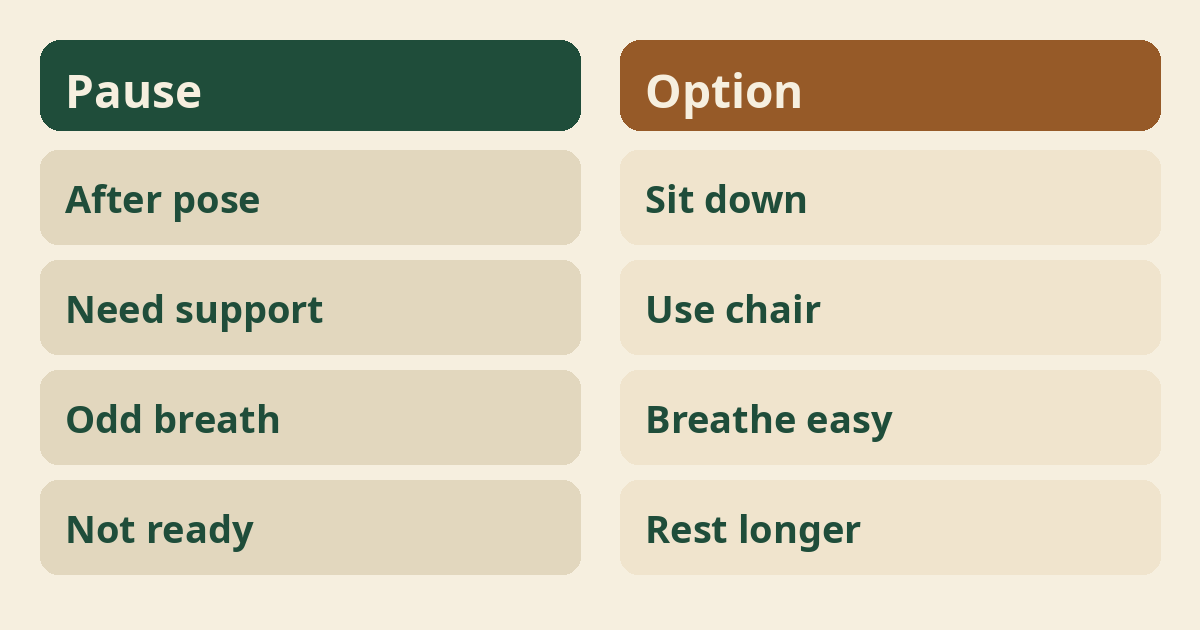
Resting between poses means taking a pause before you move into the next yoga shape. You might stay still for a breath, sit on a chair, or lie down on a mat. There is no single correct resting position for everyone. Choose a pause that feels steady, comfortable, and easy to leave when you are ready.
Why people pause
People pause between yoga poses to make room for attention and choice. A short break can help you notice whether you want to repeat a movement, change it, or stop for the day. It can also make a beginner’s practice feel less rushed. Rest is a normal part of learning, not a sign that you have failed.
Rest is part of practice
Rest belongs in a yoga practice just as movement does. Yoga is not a race to complete a list of poses. A quiet moment lets you feel the effects of the movement without needing to judge them. You can include pauses even in a short home routine.
When to take a pause
Take a pause whenever you want more time before the next pose. You might rest after a balance, a sequence that feels unfamiliar, or a position that asks you to focus. You can also pause because your mind is busy or you simply want a drink of water. You do not need to wait for a set point in class.
How to start simply
Begin by choosing a comfortable position and letting the transition slow down. After a pose, come out of it in a controlled way rather than dropping quickly into another shape. Stand or sit with support if that feels steadier. Give yourself a moment to decide whether you want to continue.
Step one: leave the pose gently
Move out of the pose slowly enough to stay aware of your position. Use your hands, a chair, or a wall for support when helpful. Avoid forcing a quick transition just to keep up with a video or another person. If getting out feels difficult, stop and seek guidance from a qualified teacher or clinician.
Step two: find a steady base
Choose a resting position where you feel supported and balanced. You could sit on a firm chair, stand with your feet apart, or rest on your side. A stable position matters more than making the pause look like a yoga pose. If the floor is uncomfortable, there is no need to use it.
Step three: let your breath be easy
Let your breathing continue in a way that feels natural to you. You do not need to take a special kind of breath or hold it. If paying attention to the breath feels uncomfortable, let your focus rest on the floor, a sound, or another neutral point. Return to ordinary breathing without trying to control it.
Step four: notice what you need
Notice whether you feel ready to move, want a longer rest, or would rather stop. A simple check can be enough: do you feel steady, comfortable, and clear about the next movement? If not, remain where you are or choose a simpler option. You are allowed to change your plan at any time.
Step five: return with an easy transition
Resume with a movement you know and can enter comfortably. Take one small action at a time instead of rushing into a full sequence. For example, after resting on your back, roll to your side before sitting up. If you are unsure what comes next, remain in a supported position until you decide.
Breathing during a pause
During a rest, allow the breath to be ordinary and unforced. Some people enjoy noticing the breath, while others prefer not to focus on it. Do not try to make breaths deeper or slower if that does not feel comfortable. A simple breathing practice such as belly breathing basics is optional, not a requirement for resting.
How long to rest
Rest for as long as you need to feel ready to make a clear choice. There is no universal number of breaths or seconds that suits every person and every practice. One person may want a brief pause; another may need to sit quietly longer or finish for the day. Let comfort and steadiness guide the decision rather than a timer.
How often to rest
Rest as often as you need during a yoga practice. Some beginners pause after every pose while learning, and others pause only when a transition calls for it. You can adjust from one day to another. If you often feel unable to continue comfortably, ask a qualified teacher or your doctor how to adapt your practice.
Places to rest
You can rest on a chair, against a wall, on your side, or on your back. Pick a position that does not make you strain to hold still. A chair can be a useful choice if lowering to the floor or getting back up is awkward. For a familiar floor option, see child’s pose for beginners, but use it only if it suits you.
Using props for support
Props can make a pause more comfortable and steady. A folded blanket, cushion, yoga block, or chair may help support the body. Props are tools, not tests of skill, and you do not need special equipment to rest. Learn more about basic yoga props if you want ideas for a home setup.
Rest after a standing pose
After a standing pose, pause with your feet planted or sit somewhere stable. Keep a hand near a wall or chair if you would like extra support. Give yourself a moment before bending, turning, or changing direction. If standing does not feel comfortable, choose a seated rest instead.
Rest after a floor pose
After a floor pose, take time to leave the position in a way that feels manageable. Rolling to one side before sitting up can be an option, but it may not suit everyone. Use your hands and any supports you need. If you cannot get up without pain, strain, or fear of falling, stop and ask for personal guidance.
Rest during a class or video
You may rest during a class even if the teacher or video keeps moving. Pause the video, sit out a pose, or choose a comfortable position while you wait. A class pace is not a rule for your body. If you are in a live class, tell the teacher before class if you may need extra time or adaptations.
Rest in a home sequence
Build pauses into a home sequence instead of treating them as interruptions. You could alternate one movement with a moment of stillness, or leave extra space between unfamiliar poses. A simple sequence might include a comfortable standing pause after cat-cow pose or before a seated movement. Keep the plan flexible.
A beginner’s practice rhythm
A beginner’s rhythm can be slow, uneven, and full of pauses. You may try a pose, rest, and decide not to repeat it. That still counts as making a thoughtful choice about your practice. Over time, you may learn which transitions feel familiar and which ones call for a longer pause.
Common mistake: copying someone else’s pace
Copying another person’s pace can make it harder to notice your own needs. People have different experience, energy, mobility, and preferences. A teacher or video can offer ideas, but you can pause or modify them. If the practice asks you to move faster than feels safe, choose a slower version or stop.
Common mistake: treating rest as failure
Resting does not mean you are doing yoga incorrectly. Beginners sometimes believe every pose should flow into the next without a break. In practice, pausing can be a sensible way to learn what feels workable. There is no prize for completing a sequence without stopping.
Common mistake: forcing a particular breath
Forcing a breathing pattern is not needed during a rest. Let go of counting or controlling breaths if it distracts you or feels uncomfortable. You can breathe normally and focus on something else. If breath-focused practices bring up concern, skip them and ask a qualified professional for advice.
Common mistake: choosing an uncomfortable rest
A rest position should not require you to struggle to remain in it. If a kneeling or floor position does not feel good, choose a chair, stand with support, or lie on your side if appropriate. You do not need to endure discomfort to prove that you can rest in a certain pose.
Who should be careful
People with a health condition, recent injury, pregnancy-related concern, or balance difficulty should get individual guidance before starting or changing yoga. Ask your doctor whether yoga is suitable and what limits or precautions apply to you. A qualified yoga teacher can help adapt a class, but cannot replace medical advice. Stop a movement if you feel unwell or unsafe.
When to stop and seek advice
Stop practising and seek appropriate help if you feel unwell or are worried about a symptom. Do not use a yoga pause as a way to push through something that concerns you. A doctor can advise you about symptoms and whether an activity is suitable. For urgent or severe symptoms, use local emergency services rather than continuing a practice.
Is resting a treatment?
No, resting between yoga poses is not a treatment for a health condition. It is simply a way to pause within a movement practice. Yoga and rest should not replace care from a doctor or other qualified health professional. If you are considering yoga for a health concern, discuss that plan with your doctor first.
Possible benefits, with care
Many people find that pauses make a practice feel calmer and easier to follow, though results vary. A break may give you time to notice your comfort, attention, and preference for the next step. It does not guarantee a particular physical or emotional outcome. For general information about yoga and health, see National Center for Complementary and Integrative Health and discuss personal questions with your doctor.
How to progress at your pace
Progress by making choices that feel clear and manageable, not by removing every pause. You might become familiar with a transition, choose a different resting position, or learn to pause before you feel rushed. There is no need to make the practice longer or harder to show progress. Keep changes small and ask for guidance when you are unsure.
Working with a teacher
A qualified teacher can help you plan safe transitions and alternatives for a class. Tell the teacher what support or extra time you may need before class begins. You can ask for a chair-based option or request that a movement be explained before you try it. A teacher’s guidance should respect your ability to stop or rest.
A helpful mindset
Treat each pause as information, not a judgment about your ability. Ask yourself what would make the next moment feel comfortable and steady. It is fine if the answer is to keep resting, choose a simpler movement, or finish. A kind approach makes room for different needs on different days.
Where to read next
For a calm, beginner-friendly start, Ranjana Sinha’s Begin Where You Are is written for people who want simple steps. Our guide to starting a home yoga practice adds a gentle routine you can follow at home.
Frequently asked questions
Do I have to rest?
No, you do not have to rest at a set point, but you can pause whenever you want. Use a pause when it helps you feel ready to decide what comes next. You can also stop the practice altogether.
Should I lie down between every pose?
No, lying down is only one possible way to rest. Sit, stand with support, or choose another comfortable position. Use the option that feels steady and easy for you.
Can I skip a pose and rest instead?
Yes, you can skip a pose and rest instead. A class or video is a guide, not an obligation to try every movement. Ask a teacher for a suitable alternative if you want one.
What if I feel awkward resting in class?
It is okay to take a pause even if other people keep moving. You can choose a simple seated or standing position and let the teacher know what you need. Your practice does not need to match the room’s pace.
Do I need special props to rest?
No, you can rest without buying special props. A stable chair or comfortable clear space may be enough. Use household support only when it is firm and safe.
The bottom line
Rest between poses whenever you need it, and let comfort, steadiness, and your doctor’s advice guide your choices.