
Ujjayi breathing is a slow, audible breathing technique often used in yoga. Its faint, ocean-like sound comes from a light narrowing at the back of the throat while air moves through the nose. You do not need to make the sound loud or hold your breath. This beginner guide explains how to explore the technique, how to recognize when you are forcing it, and how to choose a simpler breath instead.
This is general yoga education, not medical advice or treatment. If you have a health condition, breathing difficulty, recent surgery, or questions about whether breath practices are suitable for you, ask a qualified healthcare professional before trying them. Stop if you feel unwell, dizzy, panicky, short of breath, or uncomfortable, and return to ordinary breathing.
What ujjayi breathing means
Ujjayi is a gentle, audible breath made by slightly narrowing the throat as you breathe through the nose. The Sanskrit word is commonly translated as “victorious” or “conquering,” while yoga traditions use the practice in different ways. Beginners can focus on its simple mechanics rather than trying to match a special sound. It should remain quiet and comfortable, with no breath retention required.
How the sound is made
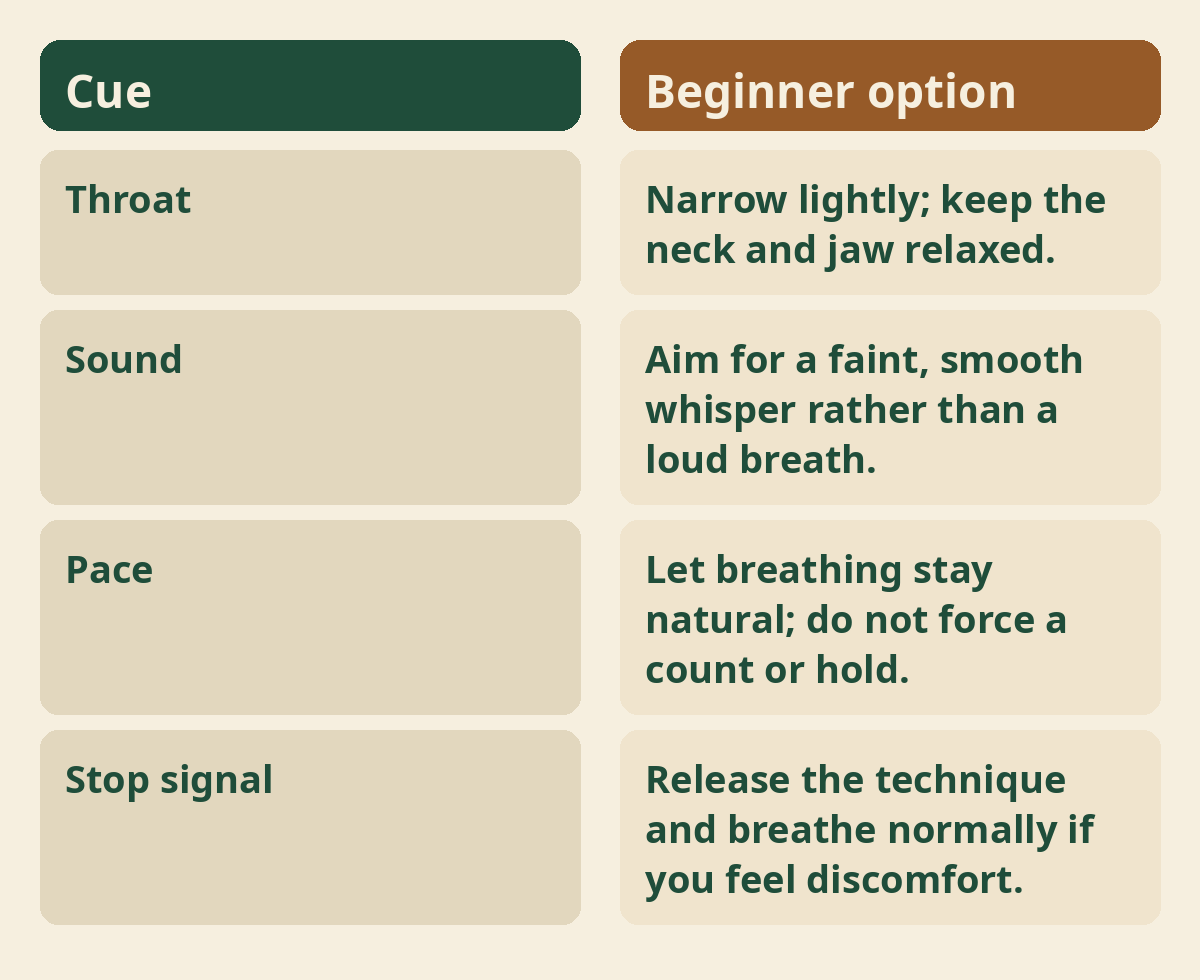
A soft whisper-like sound comes from a small narrowing in the throat, not from squeezing the neck. Imagine lightly fogging a mirror with your mouth open, then keeping a similar gentle feeling as the lips close and breathing through the nose. The image is only a starting cue. Do not push air against a tight throat or deliberately scrape the vocal cords.
What the breath may sound like
A comfortable ujjayi breath may make a faint, even sound that resembles distant waves. The sound is not a performance and does not need to be audible across the room. Some people hear it more on the exhale at first; others notice it on both phases. If it becomes harsh, raspy, or effortful, reduce the narrowing or stop the technique.
Set up before practising
Sit or lie in a position where your chest, belly, jaw, and shoulders can stay at ease. Choose a quiet place and a few minutes when you are not rushing. Sit on a chair with your feet supported, or sit comfortably on a cushion. You may also lie down if that feels better. Keep the spine natural rather than rigid and let the hands rest.
Begin with ordinary breathing
Notice a few unmodified breaths before adding any sound or throat control. Feel the air moving at the nostrils, and notice whether your breathing is already comfortable. Let the exhale finish without pushing it out. This brief check helps you compare the technique with your baseline and gives you a clear reason to skip it if ordinary breathing feels difficult today.
Try the mirror-fog cue
Exhale gently through the open mouth as though making a quiet patch of fog on glass. Keep the jaw relaxed and use very little air. Notice the soft throat sensation rather than trying to create a loud “haa” sound. Repeat once or twice only if it feels easy. If you feel throat irritation, coughing, tightness, or strain, leave out this exploration.
Close the lips gently
After the cue, let the lips meet and breathe through the nose while keeping the same light throat feeling. There is no need to clamp the mouth shut or change the shape of the jaw. Let the tongue rest naturally and keep the teeth unclenched. The sound may become quieter when the mouth closes, which is fine. If the nose is blocked, use ordinary comfortable breathing instead.
Find a natural pace
Let the inhale and exhale follow their own comfortable timing without counting at first. Ujjayi is not a contest to make each breath longer. If your breath naturally changes when you add the sound, allow a small change but do not force a slow rhythm. Keep breathing continuously, without pauses at the top or bottom, unless a qualified teacher has guided a separate practice.
Keep the throat soft
Use only enough narrowing to notice a faint sound while air still moves freely. A helpful test is whether the breath feels smooth rather than caught or pushed. Soften the throat if the sound grows too strong. Avoid tightening the front of the neck, jutting the chin, or gripping the tongue. The cue should be subtle and easy to release at any time.
Relax the face and shoulders
A calm face and unraised shoulders can make it easier to notice whether you are forcing the breath. Let the brow smooth, release the jaw, and allow the shoulders to rest rather than lifting with each inhale. The ribs and belly can move naturally. If you notice tension accumulating, pause the technique and breathe normally until your body feels settled.
How long to practise
For a first exploration, a few comfortable breaths are enough to learn the sensation. You might try three to five easy cycles, then stop and compare with ordinary breathing. There is no required duration or daily target for beginners. If you feel steady and curious, you can practise briefly again another time. A shorter session is preferable to pushing through discomfort.
What counts as one cycle
One cycle means a comfortable inhale followed by a comfortable exhale, without a forced pause. Keep the same gentle quality on both directions if that is easy, but do not insist on matching the sound perfectly. If the sound disappears during a breath, let that happen. You can return to the technique only if the next breath remains relaxed and unforced.
Using ujjayi during yoga
Some yoga classes pair ujjayi with movement so students can notice breath and pace together. If you practise during postures, keep the movement simple and breathe without holding. Let the breath return to normal whenever a pose, transition, or exertion makes the technique difficult. A teacher may offer a different cue, so ask for clarification rather than copying a breath pattern that does not suit you. See pranayama basics for beginners for the wider context.
Practising while seated
A seated practice gives you a steady position for learning the sound before adding movement. Settle your weight on a chair or cushion and allow the hands to rest. Try a few gentle breaths, then stop to notice how you feel. Do not sit in a rigid “perfect” posture. Comfort and ease matter more than keeping a textbook shape or producing a consistent sound.
Practising while lying down
Lying down can be a comfortable way to explore the breath if sitting is tiring or awkward. Rest on a supportive surface with the head and neck in a neutral, easy position. Let the abdomen move without pressing it down. If lying down makes breathing feel restricted, change position or end the practice. There is no need to use the technique in every posture or at every time of day.
Common mistake: making it too loud
A loud, dramatic breath is not a sign that the technique is correct. Reducing the sound often means reducing unnecessary effort. Try easing the throat, breathing less forcefully, and allowing the sound to remain private. If you cannot make a quiet sound without tension, practise the mirror-fog cue briefly or simply return to normal nasal breathing.
Common mistake: pulling in more air
Ujjayi does not require unusually deep inhales or forceful exhales. Let each breath use a comfortable amount of air. Overfilling the lungs or emptying them aggressively can make the practice feel demanding. Avoid competing with a teacher or another student’s breath volume. Your own steady, easy breath is a better guide than matching someone else’s pace.
Common mistake: tightening the neck
The throat sensation should be light, not a clench around the windpipe. Notice whether the jaw, front of the neck, tongue, or shoulders are bracing. If so, release the sound and take ordinary breaths. You can try again later with less narrowing, but you do not need to master the technique. A strained version is not more advanced than an easy one.
Common mistake: forcing a slow count
Counting can distract from comfort if it makes you stretch the breath beyond its natural range. Start without a count. If a teacher later offers counting, keep it flexible and stop counting when you feel the urge to gasp or push. The purpose of a cue is to help attention, not to impose a fixed duration on every person. Simple breathing counts can be a gentler guide.
Common mistake: holding the breath
Beginners can practise ujjayi without retaining the breath at either end. Let the inhale flow into the exhale and the exhale flow into the next inhale. Do not add pauses to make the practice seem more advanced. If you have been taught a version with retention, ask a qualified teacher whether and how it fits your circumstances before attempting it independently.
How to stop comfortably
To stop, release the throat sensation and let the next breaths happen normally. You do not need a special closing ritual. Sit quietly or change position, and notice whether ordinary breathing feels comfortable. If you are in a yoga sequence, pause the movement as needed. Stopping early is a sensible adjustment, not a failure or a reason to push harder.
If you feel dizzy or uneasy
Stop the technique immediately if you become dizzy, panicky, unusually breathless, or unwell. Release any throat narrowing, stop counting, and return to ordinary breathing in a comfortable position. Do not resume just to finish a set. If symptoms are severe, persist, or worry you, seek appropriate medical help. This guide cannot determine what caused a symptom or whether a practice is safe for you.
Who should ask a clinician first
People with a health condition or a history of breathing difficulty should get individual guidance before trying breath techniques. This includes anyone who is unsure whether nasal breathing, throat narrowing, or deliberate changes in breathing are appropriate for them. A healthcare professional can advise about personal risks; a yoga teacher can help with technique but cannot replace medical assessment. Do not treat ujjayi as a substitute for prescribed care.
When to choose ordinary breathing
Normal, comfortable breathing is the right choice whenever ujjayi feels strained or unsuitable. You can skip the technique if you have a cold, nasal congestion, a sore throat, fatigue, or simply no interest in practising it. These are not tests to overcome. Wait until you feel comfortable, or ask a qualified professional if you are unsure whether to try again.
How ujjayi differs from audible mouth breathing
Ujjayi is generally practised with air moving through the nose and a subtle throat sound. The open-mouth mirror-fog cue is only a way to recognize a possible throat sensation before closing the lips. It is not the full practice. If you cannot breathe easily through the nose, do not force nasal airflow; pause and use the breathing that is comfortable for you.
A simple beginner practice
Try a short sequence of ordinary breaths, a few gentle ujjayi breaths, then ordinary breathing again. First notice your baseline. Next, add a faint sound for three easy cycles without counting or holding. Finally, release the throat and rest with normal breathing for several cycles. Stop sooner if anything feels uncomfortable. This structure lets you compare sensations without turning the exercise into a test.
A practical self-check
Ask whether your breath is quiet enough, smooth enough, and easy to release. Check for unnecessary tension in the throat, jaw, face, shoulders, or belly. Notice whether you can stop the sound at will and return to ordinary breathing. If the answer to any of these checks is no, reduce the effort or stop. The goal is a comfortable exploration, not a score.
How often to practise
There is no universal schedule that every beginner needs to follow. A brief experiment when you feel well may be enough to learn the basic cue. If a class includes ujjayi, you can ask the instructor how to adapt or skip it. Avoid turning frequency into an obligation, and do not increase duration simply because the first attempt felt easy.
What to ask a yoga teacher
Ask a qualified yoga teacher to demonstrate a soft version and explain how to release it. You can ask whether the sound should be audible, how to avoid neck tension, and what alternatives are available in class. Share relevant comfort concerns without assuming the teacher can diagnose them. For questions about medical suitability, seek advice from a qualified healthcare professional rather than relying on a class demonstration.
What beginners can take away
Ujjayi is an optional breath technique, and ease matters more than sound or duration. Start with ordinary breathing, explore a faint throat sound only if it feels comfortable, and leave out counting or retention. You can pause at any point. If you have health concerns, seek individual medical guidance; if the technique causes discomfort, return to normal breathing instead of pushing through. For general information about yoga research and safety, see National Center for Complementary and Integrative Health.
Making the practice your own
The most useful version is the one you can practise gently and stop without difficulty. Some people enjoy a quiet ocean-like sound in yoga; others prefer ordinary breathing. Both choices are valid. Rather than chasing a particular sensation, notice what is comfortable today and adapt accordingly. Ujjayi can remain a small, optional part of practice, not a requirement for yoga or meditation. You might also like alternate nostril breathing or the humming bee breath.
Does the sound need to stay even
A steady sound can be a useful cue, but it is not necessary for every breath. The sound may fade or change as your attention shifts, and you can let it do so without correcting each cycle. If trying to keep it even makes you tense, return to natural breathing. Comfort is more important than maintaining a particular texture.
Where to read next
For a calm, beginner-friendly start, Ranjana Sinha’s Begin Where You Are is written for people who want simple steps. Our guide to starting a home yoga practice adds a gentle routine you can follow at home.
Frequently asked questions
What does ujjayi breathing mean?
Ujjayi is a yoga breathing technique that creates a gentle sound by lightly narrowing the throat while breathing through the nose.
Should ujjayi breathing be loud?
No, a faint and comfortable sound is enough, and you can stop if creating it feels strained.
Can beginners hold their breath during ujjayi?
Beginners can explore the technique without holding the breath at either end.
How long should I practise ujjayi breathing?
Start with a few comfortable breaths and stop whenever you feel strain or discomfort.
Is ujjayi breathing suitable for everyone?
Not necessarily, so people with health concerns should ask a qualified healthcare professional before trying it.
The bottom line
Explore ujjayi breathing as a gentle option, not a goal to force. Begin with ordinary breathing, try only a few soft breaths if they feel easy, and return to normal breathing whenever you want. Your comfort and personal guidance come first.

