
You sit down to meditate, your mind races, and ten minutes later you are checking your phone instead. A short, repeatable kriya yoga routine gives that time a shape. It links easy movement, slow breathing, and quiet focus in one order, so you always know what comes next. This guide walks you through it step by step.
This guide shares general education about a daily practice and is not medical advice. If you have a medical condition, are pregnant, or take regular medication, talk with your doctor before you begin.
What is a daily kriya yoga routine?
It is a short, set order of movement, breathing, and quiet sitting that you repeat each day. The word kriya points to action or practice in the yoga tradition. For a beginner, the routine stays simple: a few warm-up moves, slow breathing, and a few minutes of still focus.
Where does kriya yoga come from?
Kriya yoga comes from Indian yoga traditions that stress steady, disciplined practice. Different teachers describe it in different ways. Some advanced methods are passed on in person, so this guide sticks to beginner-friendly habits that most people can try safely at home.
Why do people keep a daily routine?
A fixed order removes guesswork, so it is easier to show up. When you do not have to decide what to do, you spend less energy on planning. Many people find that a small daily habit feels more doable than one long session each week.
What do you need before you start?
You need a quiet corner, a mat or folded blanket, and about fifteen minutes. Wear clothes you can move and breathe in. Silence your phone and keep a glass of water nearby. Nothing else is required.
Where should you practice?
Pick one spot that is calm, flat, and free of clutter. Using the same place each day helps your mind link that spot with slowing down. A bedroom corner or a quiet space by a window works well.
What time of day works best?
The best time is the one you can keep, though many people like early morning or just before bed. Morning sessions can feel fresh and are less likely to be skipped. Evening sessions can feel like a calm close to a busy day. Try both for a week and see which one sticks.
How long should a beginner session last?
Start with ten to fifteen minutes and add time only when it feels easy. A short session done daily is easier to keep than a long one you dread. After a few weeks you can stretch toward twenty or twenty-five minutes if you like.
How often should you practice?
Aim for most days of the week, with one rest day if you need it. Steady rhythm matters more than length. If you are unsure how to fit yoga into your week, this plain guide to weekly yoga frequency can help you pick a pace.
Step 1: How do you settle in?
Sit or lie down, close your eyes, and notice your breath for one minute. Let your shoulders drop and your jaw soften. Do not change anything yet. Just watch the air move in and out and let the day fade into the background.
Step 2: How do you warm up the body?
Move your spine slowly with a few rounds of easy flowing motion. Start on hands and knees and try a few slow rounds of cat-cow to wake up a stiff spine. Move with your breath and stop if anything pinches.
Step 3: How do you open the hips and back?
Rest in a low, folded shape for a few calm breaths. A resting fold lets your back and hips soften without effort. If you are new to it, child’s pose with simple support under your chest is a kind place to stay for a minute or two.
Step 4: How do you practice slow breathing?
Breathe in through your nose, let your belly rise, and breathe out a little longer. Place one hand on your belly to feel the movement. If belly breathing is new to you, this walkthrough on belly breathing shows the basics. Keep the breath smooth, never forced.
Step 5: How do you sit for quiet focus?
Sit tall, rest your hands on your knees, and keep your attention on the breath. Choose a seat that lets your spine stay long without strain. Stay for three to five minutes. When your mind wanders, which it will, simply return to the breath without scolding yourself.
Step 6: How do you close the session?
Lie back for a minute of stillness, then roll to one side and sit up slowly. Give your body a moment to settle before you stand. Notice how you feel without judging it. Then go back to your day at an easy pace.
What does the breath look like in a kriya yoga routine?
The breath is slow, smooth, and quiet, with no strain. You should be able to breathe through your nose and keep a steady count. If you feel dizzy, tight, or short of breath, return to normal breathing right away and rest.
What should you do with your mind?
Give it one simple job: follow the breath. You may count each exhale from one to ten, then start again. A busy mind is normal, not a sign of failure. Each time you notice and return, you are practicing.
What is a sample 15-minute routine?
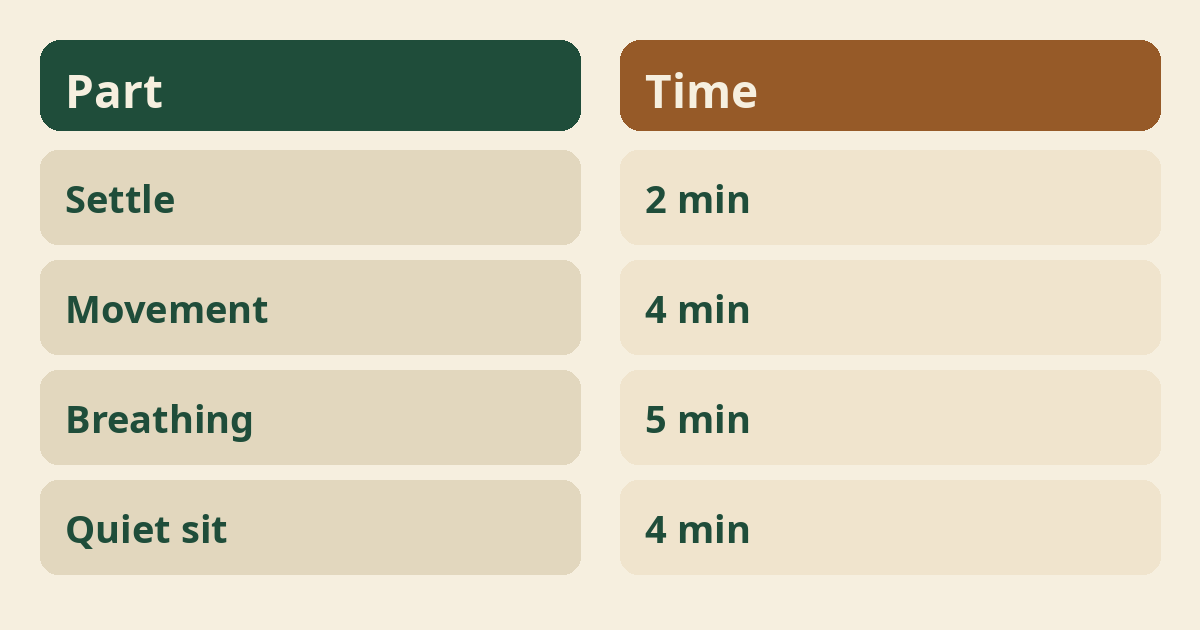
Spend two minutes settling, four on movement, five on breathing, and four sitting quietly. Finish with one minute of rest. This plan fits before work or after dinner. Use a timer with a soft sound so you are not checking the clock.
What is a sample 25-minute routine?
Add more time to each part, keeping the same order. Try three minutes settling, eight on movement, seven on breathing, and six sitting quietly, then one minute of rest. Only move to this length after the shorter plan feels easy for a few weeks.
What if you have a very busy day?
Do a three-minute version: breathe slowly, move your spine, and sit still. Even a tiny session keeps the habit alive. If you are stuck at a desk, a few seated moves you can do at your desk fit nicely before the breathing part.
Which props help?
A folded blanket, a cushion, and a strap cover most needs. Props make a pose easier on your body and let you stay longer in comfort. For ideas on what to buy or borrow, see this simple list of beginner props.
How can you sit if the floor feels hard?
Raise your hips on a cushion or sit on a chair with both feet flat. Sitting does not need to look a certain way. A seat that keeps your back long and your knees easy is the right seat. If kneeling suits you, thunderbolt pose with a folded blanket behind your knees is another low-effort option.
What are common mistakes?
The usual ones are going too long, forcing the breath, and skipping the warm-up. Beginners also tend to judge each session as good or bad. Keep it short, keep it slow, and see every session as practice rather than a test.
Should you push for longer breaths?
No, longer is not better if it makes you tense. Strain in the throat, face, or chest is a sign to back off. Let the breath grow longer on its own over weeks, not days.
Who should be careful?
People with heart or lung conditions, high or low blood pressure, eye conditions, pregnancy, or recent surgery should talk with a doctor first. Breathing practices can affect how you feel, so get personal advice before you start. The same goes if you have ongoing pain, dizziness, or take regular medication. Stop and rest if anything feels wrong.
Is this a treatment?
No, a kriya yoga routine is not a treatment for any condition. It is a calm daily habit, not medical care. It does not replace a doctor, therapy, or medicine. Use it alongside the care your doctor gives you, never in place of it.
What benefits do people report?
Many people find the routine leaves them feeling calmer and more aware of their breath, though results vary. Some also notice an easier time sitting still and a bit more ease in the body. These are personal experiences, not promises. For general background on yoga and what is known so far, see the National Center for Complementary and Integrative Health overview.
Can it help you unwind after a hard day?
Some people find a slow, steady routine is a pleasant way to pause. It may give you a few minutes that belong only to you. If stress is a bigger theme in your life, this guide to stress-friendly yoga for beginners adds a few more calm options.
How do you track your progress?
Keep a simple log of the date, how long you practiced, and one word about how it felt. After a few weeks, look back at the notes. You may see patterns, such as which time of day suits you. Progress here means showing up, not hitting a goal.
How do you progress after the first month?
Add a few minutes, a second breathing round, or one new movement, but change only one thing at a time. When you want to go deeper, our guide to kriya yoga techniques explains the wider set of practices and how they fit together. Read it slowly and pick only what feels right for you.
Do you need a teacher?
A teacher is helpful, and strongly advised before any advanced breathing or meditation methods. A good teacher can watch your posture and breathing and answer questions. Many beginners start with a class or video and then build a home habit. Ask about the teacher’s training before you commit.
What mindset helps most?
Curiosity works better than pressure. Think of the routine as an experiment. Some days will feel smooth and others restless. Both are fine. The goal is to turn up with kindness toward yourself.
How do you stay consistent?
Link the routine to something you already do, like brushing your teeth or making tea. Lay your mat out the night before. Start with a promise as small as five minutes. A habit that feels light is a habit you will repeat.
What if you miss a few days?
Just begin again with the short version, with no guilt. Missing days is part of every routine. Do not try to make up for lost time. One calm session today is enough to restart.
How can you keep your body ready?
Add a short standing practice and a hip opener on some days. A bit of balance and flexibility work supports easy sitting. You might try mountain pose for simple standing posture or a few low-impact hip stretches on your off days.
What if your neck or shoulders get tight?
Pause, roll your shoulders back, and check that you are not hunching. Long sitting can tighten the upper body. A few slow shoulder moves before you sit can help, and these easy neck and shoulder moves show how.
What does a good first week look like?
Practice the ten-minute version five days, rest two, and keep notes. Days one and two: settle and breathe only. Days three and four: add the spine warm-up. Day five: add a short quiet sit. Keep every day slow and low-pressure.
Where to read next
For a calm, beginner-friendly start, Ranjana Sinha’s Begin Where You Are is written for people who want simple steps. Our guide to starting a home yoga practice adds a gentle routine you can follow at home.
Frequently asked questions
Is a kriya yoga routine safe for complete beginners?
A short, slow version is a common starting point, but check with your doctor first if you have any medical concerns.
Can I do this routine without a teacher?
Many people practice the basic movement and breathing at home, while advanced methods are best learned from a qualified teacher.
What if my mind will not stay quiet?
A busy mind is normal, so keep bringing your focus back to the breath without judging yourself.
Should I practice on a full stomach?
Most people feel more comfortable waiting a couple of hours after a big meal.
When will I notice a difference?
Experiences vary a lot, and some people notice a calmer feel within a few weeks while others take longer.
The bottom line
Start small, keep it kind, and let a few quiet minutes each day become your own routine.

