
Maybe your energy runs low, your neck feels tight, or a blood test recently put the word thyroid into your life. Yoga poses for thyroid health are slow, low-impact shapes and breathing exercises that many beginners use to care for their neck, throat, and stress levels. You need no experience, no special gear, and only a small clear floor space. This guide walks you through safe starter poses, simple steps, and the caution points that matter most.
This article is general education, not medical advice, and it cannot diagnose or treat any thyroid condition. If you have a thyroid disorder, neck problems, or any ongoing health concern, check with your doctor before starting.
What are thyroid yoga poses?
Thyroid yoga poses are easy stretches and shapes that gently open the neck, throat, and chest area. They are usually slow poses held with calm breathing, not fast flows or hard workouts. Beginners often start with floor poses and seated poses because they feel safe and steady. The goal is comfort and relaxation, not pushing your body into deep shapes.
Why do people try yoga for thyroid health?
Many people turn to yoga because thyroid issues often come with tiredness, stress, and a tight neck or shoulders. A slow practice gives them a quiet way to move, breathe, and unwind after a long day. Some also like that yoga asks for little equipment and works in a small room. It fits around work, family, and low-energy days.
How might yoga touch the thyroid?
Yoga may support the thyroid area mainly through relaxation, better posture, and improved blood flow around the neck. Certain poses lightly stretch the front of the throat, where the thyroid gland sits. Slow breathing can also settle the nervous system, and calmer stress levels matter to many people with thyroid concerns. These effects are supportive, not a fix, and results vary from person to person.
What is a thyroid yoga asana?
A thyroid yoga asana is simply a pose chosen because it opens or relaxes the throat, neck, or upper chest region. The word asana is the Sanskrit term for a yoga pose or seat. In practice it just means a position you hold with steady breathing. Beginners do not need to remember Sanskrit names to benefit from the shapes themselves.
Is yoga a treatment for thyroid problems?
No, yoga is not a treatment for hypothyroidism, hyperthyroidism, or any other thyroid condition. Thyroid disorders need proper medical care, which often includes blood tests and sometimes medication. Yoga can sit alongside that care as a calming habit if your doctor agrees. Never change or stop any prescribed treatment because of a yoga practice.
Who should talk to a doctor first?
Anyone with a diagnosed thyroid condition, neck injury, or recent surgery should speak with a doctor before starting. The same goes for people who are pregnant, have high blood pressure, or feel dizzy in certain positions. A quick conversation with your doctor can flag which poses to skip or adjust. Most beginners get the green light for slow, easy practice.
How do you get started?
You get started with a short daily slot, a clear floor space, and two or three simple poses. Pick a time you can keep most days, like early morning or just before bed. Wear comfortable clothes and keep a folded blanket nearby. Ten quiet minutes is a better start than one long session you never repeat.
Step 1: set up your space
Clear a small patch of floor and place a mat or folded blanket where you will practice. Turn off bright lights if you can and silence your phone for these few minutes. Keep a cushion, a wall, and some water within reach. A calm setup makes it far easier to actually begin.
Step 2: warm up the neck and spine
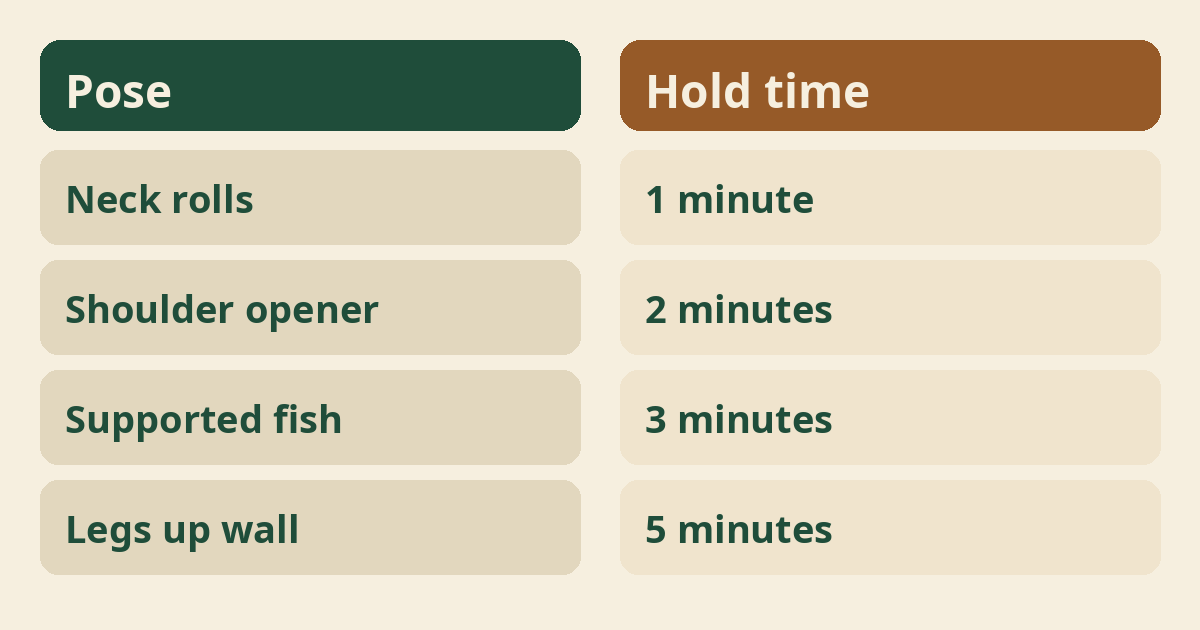
Start with slow neck rolls and a few rounds of cat and cow on your hands and knees. Move your head gently side to side and ear to shoulder, never forcing the range. Then follow a slow cat cow pose flow, arching and rounding your back with each breath. Two or three minutes of this prepares the neck and spine for the poses ahead.
Step 3: practice a shoulder opener
Sit tall and roll your shoulders back, then clasp your hands behind you to open the chest. Lift your chest slightly and let the front of your throat feel long but not strained. Hold for five slow breaths, then release. This counters the slumped posture many of us carry from desk work all day.
Step 4: try a supported fish shape
Lie back over a folded blanket placed under your upper back so your chest opens and your throat lengthens. Your head should rest comfortably, either on the floor or on a low cushion, with no pinching in the neck. Breathe slowly for up to a minute, then roll to one side to come out. Stop right away if you feel any strain or dizziness.
Step 5: add an easy inversion feel
Rest on your back with your legs up against a wall for a mild, beginner-friendly inversion. Scoot your hips close to the wall and let your arms relax by your sides, palms up. Stay for three to five minutes with slow breathing. Many people find this deeply restful after a tiring day.
Step 6: rest and breathe
Finish by lying flat on your back for a few minutes of quiet rest. Let your whole body soften and pay attention to the natural rhythm of your breath. This resting pose is where the calming effect of the practice settles in. Give it at least two minutes before you get up.
Which poses are often grouped under thyroid yoga?
The poses often grouped under thyroid yoga are shoulder-opening shapes, supported fish, shoulder stands, and legs-up-the-wall. Beginners should stick with the supported and mild versions of these, using blankets and walls for help. Deep poses like full shoulder stand belong to later stages, ideally with a teacher. Even the easy versions give your neck and throat plenty of useful opening.
How should you breathe during these poses?
Breathe slowly through your nose, letting your belly rise and fall with each breath. A good starter pattern is breathing in for a count of four and out for a count of six. If your breath feels strained, the pose is too deep, so ease back. You can practice the basics anytime with belly breathing on its own.
How long should a session be?
A beginner session can be as short as ten to fifteen minutes and still be worthwhile. Short daily practice beats one long weekly session for building the habit. As the poses feel more familiar, you can stretch sessions to twenty or thirty minutes. Listen to your energy level, especially on low days.
How often should you practice?
Practicing three to five times a week suits most beginners well. Consistency matters more than intensity, so choose days you can actually keep. If you are unsure how to build a rhythm, our guide on how often you should do yoga walks through realistic weekly plans for new students. Rest days are part of the plan, not a failure.
What are common mistakes to avoid?
The biggest mistakes are forcing the neck, holding the breath, and copying deep poses from videos too soon. Your throat area is sensitive, so never push into pain or pinching. Keep your breathing smooth instead of bracing through hard moments. Backing off is a skill, not a weakness.
What props make this easier?
A folded blanket, a firm cushion, and a nearby wall cover nearly everything a beginner needs. Props let your body relax into a shape instead of straining to hold it. Our yoga props for beginners guide explains cheap household swaps for blocks, straps, and bolsters. Use support freely; it is smart practice, not cheating.
What benefits might you notice?
Many people find that a slow neck and throat practice leaves them calmer, looser, and sleeping a bit better, though results vary. Some notice less neck tension and easier stress levels within a few weeks of steady practice. Research on yoga and wellbeing is growing, and the National Center for Complementary and Integrative Health notes that yoga may help with stress, balance, and general quality of life. None of this replaces medical care, and your experience may differ from someone else’s.
How do you progress over time?
Progress means holding easy poses a little longer and breathing a little slower, not chasing harder shapes. After a few comfortable weeks, you can add one new pose or extend your rest periods. Keep the neck work mild and pain-free at every stage. Slow progress you enjoy is the kind that lasts.
Do you need a teacher?
A teacher is helpful but not required for the gentle starter poses in this guide. If you want to try deeper inversions or shoulder stands later, a qualified teacher becomes important for safety. Look for someone experienced with health conditions and tell them about your thyroid history. A few classes can correct small alignment habits early.
What mindset helps the practice stick?
A patient, curious mindset works far better than chasing quick results. Treat each session as a small act of care rather than a test you can pass or fail. Some days your neck will feel open and other days stiff, and both are normal. Showing up kindly and regularly is the real practice.
Can you practice on busy workdays?
Yes, you can fit thyroid-friendly movement into a workday with short seated sessions at your desk. Shoulder rolls, slow neck tilts, and chest openers all work in a chair between meetings. Our yoga at your desk routine shows how to do this without leaving your seat. Two minutes of calm breathing also counts on the busiest days.
What if stress is your main struggle?
If stress sits at the center of your thyroid worries, lean toward the breathing and rest parts of the practice. Poses like legs-up-the-wall and long quiet rest calm the body directly. Our yoga for stress relief guide offers a fuller routine built around relaxation. Lower stress supports your overall wellbeing alongside your medical care.
Is neck or shoulder tension common here?
Yes, many people with thyroid concerns also carry extra tension in the neck and shoulders. Slow stretches and gentle posture work can ease that tightness over time. If that sounds like you, our yoga for neck and shoulders routine pairs well with this one. Move slowly and stop if anything pinches or hurts.
Can you do these poses with a stiff back?
Most of these poses are floor-based and kind to a stiff or sensitive back when done with props. Keep cushions under your knees and blankets under your spine wherever they help. If back trouble is a bigger issue for you, read our notes on doing yoga with a bad back before starting. When in doubt, ask your doctor which movements are safe for you.
Should you worry about flexibility first?
No, these beginner poses ask for very little flexibility, and props close most of the gap. Stiffness is exactly what slow practice works with, not a barrier to it. Over months, easy poses often improve how freely your neck and shoulders move. Our yoga for flexibility guide explains how that change happens gradually.
What about balance and steadiness?
Balance poses are optional here, since most thyroid-friendly work happens seated or lying down. Feeling steady on your feet still supports confidence as you practice more. Simple standing work can round out your routine when you are ready for it. Our yoga for balance guide keeps it approachable for beginners.
Do morning and evening sessions differ?
Morning sessions tend to wake up a stiff neck, while evening sessions help you unwind before sleep. Both work, so choose the time you will actually keep. Low-energy days often suit evening rest poses like legs-up-the-wall. You can also split your practice into two very short sessions.
Where can you find the full beginner plan?
For a broader starting point, read our complete beginner guide at yoga-for-thyroid-health-for-beginners. That pillar guide covers the wider picture of practicing yoga with thyroid concerns, from safety basics to building a routine. Use this poses article as the movement piece alongside it. Together they give you a full, careful starting path.
What is the first thing to try today?
Lie down with your legs up the wall for five slow minutes and simply breathe. That single restful pose needs no skill, no strength, and almost no setup. If it feels good, add the neck warm-up tomorrow and build from there. Small and steady always beats big and rare.
Where to read next
For a calm, beginner-friendly start, Ranjana Sinha’s Begin Where You Are is written for people who want simple steps. Our guide to starting a home yoga practice adds a gentle routine you can follow at home.
Frequently asked questions
Can yoga fix my thyroid problem?
No, yoga cannot fix or treat a thyroid condition, but many people use it as a calming habit alongside their medical care.
How soon might I notice any changes?
Many people report feeling calmer and less tense within a few weeks of steady practice, though results vary widely.
Which pose is safest for a total beginner?
Legs-up-the-wall is the safest starting point because it needs no strength, flexibility, or neck strain.
Should I stop my thyroid medication if I feel better?
Never stop or change prescribed medication on your own; any change belongs in a conversation with your doctor.
Is it normal for my neck to feel sore at first?
Mild awareness is normal, but real pain or pinching means you should ease back and adjust the pose with props.
The bottom line
Start small, breathe slowly, and let this quiet practice support your wellbeing while your doctor guides your thyroid care.

