
Your head is throbbing after hours at a screen, and you want relief without reaching for a pill. A short, easy yoga routine may help: slow poses and calm breathing can release the neck and shoulder tension that often feeds a headache. This guide shows you a beginner routine you can do at home in about fifteen minutes, with simple steps, breathing tips, and safety notes so you can start today.
Everything here is general education for healthy adults, not medical advice for your situation. If you deal with frequent, severe, or unusual headaches, talk with a doctor before you start.
What is yoga for headache relief?
It is a set of slow poses and calm breathing meant to help your body relax when your head hurts. The moves are easy and low-impact, so most beginners can try them. You focus on loosening the neck, shoulders, and upper back, where tension often builds.
Why do people turn to yoga for headaches?
Many people carry stress in their neck and shoulders, and that tightness can feed a headache. A quiet practice gives those muscles a chance to let go. It also gives your mind a short break from screens, noise, and worry.
Can yoga really help a headache?
Some people find that slow movement and deep breathing take the edge off, but results vary from person to person. Research on yoga for headaches is still growing, and it does not work the same way for everyone. Think of it as one helpful habit, not a fix. If your headaches keep coming back, a doctor can help you find the cause.
Is yoga a treatment for headaches?
No, yoga is not a treatment or a cure for headaches. It is a wellness practice that may help you feel more comfortable. Medical care is the right path for diagnosis and treatment. Keep using any care plan your doctor has given you.
When should you see a doctor first?
See a doctor before trying yoga if your headaches are new, sudden, severe, or getting worse. A doctor should also check headaches that follow an injury or come with fever, confusion, or vision changes. Get medical help right away for those.
Who should be careful with these poses?
People with neck injuries, glaucoma, high blood pressure, or balance problems should ask a doctor first. Pregnant women may need different poses and should get guidance too. Skip any move that causes pain. When in doubt, ask a health professional before you begin.
What do you need to get started?
You need a mat or a soft carpet, a quiet spot, and ten to twenty minutes. A folded blanket and a pillow can make poses kinder on your body. Our guide to yoga props for beginners explains simple swaps using things you already own.
Where should you practice?
Pick a dim, quiet room where you will not be disturbed. Bright light and noise can make a headache feel worse for many people. A calm space helps your nervous system settle down. Turn your phone to silent before you begin.
How do you start when your head already hurts?
Start small: sit or lie down, close your eyes, and breathe slowly for one minute. If that feels okay, add one easy pose at a time. Stop right away if the pain grows or you feel dizzy or sick. Resting quietly is always an acceptable choice.
Step 1: Child’s Pose
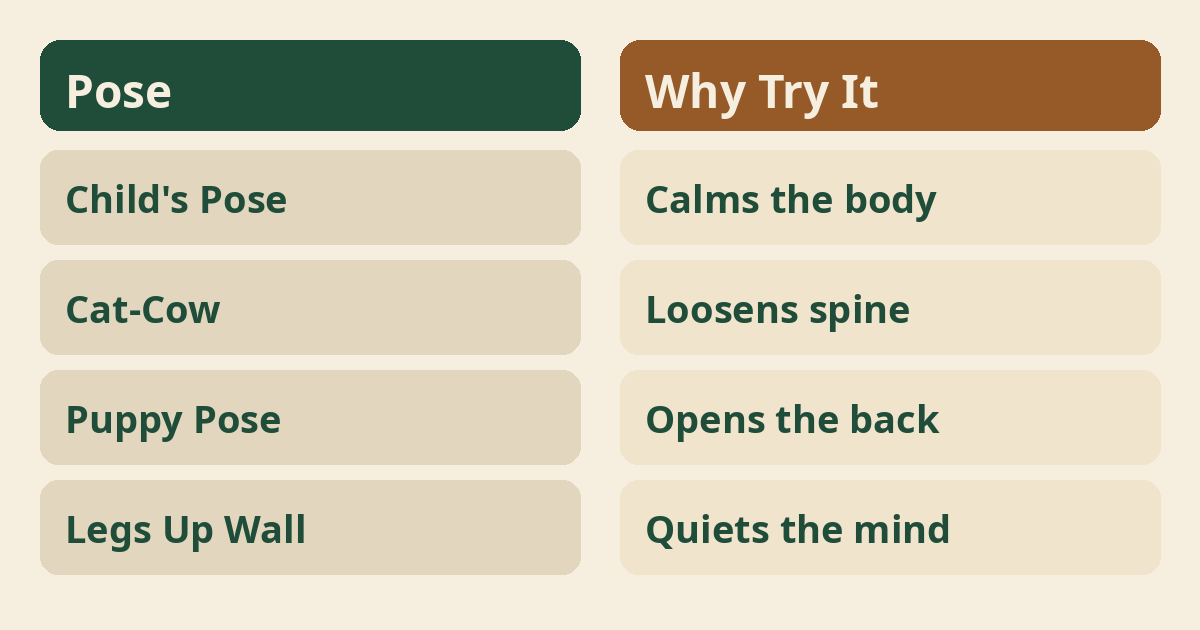
Kneel, fold forward, and rest your forehead on the mat or a pillow while you breathe slowly. Stay for one to three minutes and let your shoulders drop. The full steps in Child’s Pose for beginners show how to pad your knees and hips.
Step 2: Cat-Cow
On hands and knees, slowly round your back, then softly arch it, moving with your breath. Do eight to ten slow rounds to loosen your spine and shoulders. Our Cat-Cow pose for beginners guide walks through the timing.
Step 3: Neck and shoulder release
Sit tall and slowly tilt your ear toward one shoulder, then the other, without forcing the stretch. Roll your shoulders back a few times to release the muscles that tighten during screen time. The routine in yoga for neck and shoulders has more easy options.
Step 4: Puppy Pose
From hands and knees, walk your hands forward and melt your chest toward the floor. This opens the upper back, where desk posture often locks up. Puppy pose for beginners shows how to keep it comfortable.
Step 5: Legs up the wall
Lie on your back and rest your legs up against a wall for three to five minutes. Many people find this quiet rest deeply calming. If it strains your neck or head, come out of it and lie flat instead.
Step 6: Quiet rest
Finish by lying flat with your eyes closed for a few minutes. Let your breathing slow down on its own. This short rest is where your body soaks in the calm. Do not skip it, even when you are short on time.
How should you breathe during the poses?
Breathe slowly through your nose, letting your belly rise and fall without strain. Slow belly breathing tells your body it can relax, which may ease the tension feeding your head. Belly breathing for beginners teaches the basic pattern.
How long should a session last?
Ten to twenty minutes is plenty for a beginner session. Even five calm minutes can help on a rough day. Short and regular beats long and rare. You can always add time later as the habit grows.
How often should you practice?
A few short sessions each week is a good rhythm for most beginners. Daily practice is fine if it stays easy and pain-free. Our article on how often you should do yoga can help you set a schedule.
Can you do this at your desk?
Yes, small neck rolls, shoulder circles, and slow breathing work well at a desk. These mini breaks can stop tension from building during the workday. Yoga at your desk for beginners has more moves you can do in a chair.
What are the possible benefits?
Many people find that a calm practice helps them feel looser, less tense, and better able to rest. Possible benefits include easier breathing, less muscle tightness, and lower stress, though results vary. The National Center for Complementary and Integrative Health notes that yoga may help with stress and some pain conditions National Center for Complementary and Integrative Health.
What are the most common mistakes?
The biggest mistake is pushing into stretches when your head already hurts. Other common ones are holding your breath, practicing in bright light, and rushing through the rest at the end. Slow down and keep every move small.
What if a pose makes the pain worse?
Come out of the pose right away and rest in a comfortable position. Pain that gets worse is your signal to stop, not to push through. If headaches keep getting worse over time, see a doctor. Note which pose caused trouble so you can avoid it.
Is it okay with a bad back?
Many of these poses are easy on the back, but check with a doctor if you have a back condition. Our guide on doing yoga with a bad back explains which moves usually need extra care. Move slowly and support your knees and spine with padding.
What about migraines?
Migraines are different from ordinary tension headaches and need medical guidance. If migraines are your main concern, our migraine pillar guide for beginners, yoga-for-migraine-for-beginners, covers that topic in depth. Keep any practice during a migraine very mild, or rest instead.
How do you progress over time?
Add a minute here and a pose there as the practice starts to feel natural. Progress with headaches is less about harder poses and more about steady habits. Notice what helps on your good days and repeat it. A simple journal can show you patterns over a few weeks.
Do you need a teacher?
A teacher is not required for these simple poses, but a beginner class can help. Look for slow, restorative, or beginner classes rather than fast flows. Tell the teacher about your headaches before class begins. A good teacher will offer easier versions of any pose.
What mindset helps the most?
Approach the practice as rest, not exercise, and let go of doing it perfectly. The goal is comfort, not performance. A kind, patient attitude makes the whole routine work better.
Why does stress matter for headaches?
Stress tightens the jaw, neck, and shoulders, and that tension is a common headache trigger. A regular calming practice may help you unwind before tension builds. Yoga for stress relief for beginners is a good next read if stress is your main trigger.
Is morning or evening better?
Either can work, so choose the time when you can be quiet and unhurried. Mornings can set a calm tone for the day. Evenings can help you release the tension you picked up. Try both for a week and keep the one that fits.
What if you feel dizzy during a pose?
Stop, sit or lie down, and let the dizziness pass before moving again. Standing up too fast after forward folds is a common cause. Move slowly between every position. If dizziness keeps happening, mention it to a doctor.
Can a total beginner do this routine?
Yes, every step here is designed for someone who has never done yoga. You do not need to be fit or experienced. All you need is a quiet spot and a few unhurried minutes. Each pose has an easier option if the full version feels like too much.
Do daily habits play a role?
Simple habits like water, regular meals, and breaks from screens matter alongside yoga. Many common headaches connect to long screen hours, skipped meals, or poor sleep. Yoga works best as part of an overall kind routine. Small changes add up over the weeks.
Is it safe to practice every day?
Light, easy practice is generally safe daily for healthy people. Skip or shorten sessions when a headache is strong. On those days, one quiet rest pose is enough. Listen to your body rather than any schedule.
What is the one thing to remember?
Comfort comes first: if it hurts or strains, it is not helping. Keep the practice slow, dim, and quiet. Over time, these small sessions can become a reliable way to unwind. Your head and shoulders will tell you what works.
Where to read next
For a calm, beginner-friendly start, Ranjana Sinha’s Begin Where You Are is written for people who want simple steps. Our guide to starting a home yoga practice adds a gentle routine you can follow at home.
Frequently asked questions
Will yoga make my headache go away?
It may help some people feel better, but results vary and it is not a cure.
Can I do these poses during a bad headache?
Stick to quiet rest poses when the pain is strong and skip anything that strains your head or neck.
Which pose is best for a tension headache?
Child’s Pose and slow neck releases are popular starting points, but comfort is the real test.
Should I do hot yoga for headaches?
Hot, intense classes can be too much when your head hurts, so a mild restorative practice is the better pick.
When is a headache a reason to skip yoga entirely?
Skip practice and seek medical care for sudden, severe, or unusual headaches.
The bottom line
Start with five quiet minutes, keep it kind, and let your body tell you what helps.

