
Yoga for farmers is a gentle way to ease the aches that come from long days of bending, lifting and walking on hard ground. You do not need a studio, special clothes or free mornings. A few simple poses, done slowly at home, can help your back, hips and shoulders feel less stiff. This guide shows you how to start, what to do and how to stay safe.
This article is for general education only and is not medical advice. If you have a health condition, an injury or ongoing pain, check with a doctor before you begin.
What Is Yoga for Farmers?
Yoga for farmers is a gentle form of yoga shaped around the work your body does on a farm. It uses simple poses that stretch the back, hips, legs and shoulders. You move slowly, breathe deeply and rest when you need to. There is no competition and no need to be flexible before you start.
Why Do Farmers Try Yoga?
Many farmers try yoga because farm work is hard on the body year after year. Lifting feed bags, bending over crops and sitting on a tractor for hours can leave the back tight and the joints sore. Many people find that a short daily practice helps them feel looser and calmer. Results vary from person to person.
How Is It Different From Regular Yoga?
Yoga for farmers is not a separate style, it is regular yoga adjusted for a working body. The poses are basic and the pace is slow. Sessions are short so they fit around chores. The focus is on comfort and mobility, not on perfect shapes.
How Do I Start Yoga as a Farmer?
You start yoga as a farmer by picking a quiet spot and learning a few basic poses. A clear patch of floor, a mat or a folded blanket is enough. Begin with ten minutes a day. Learn one or two poses well before you add more.
What Time of Day Works Best?
The best time for yoga is the time you can repeat most days. Some farmers like a few minutes in the morning before chores to wake up stiff joints. Others prefer the evening to unwind after the day’s work. Try both and keep the one that sticks.
Step 1: Set Up a Simple Space
Your first step is to make a small, clear space where you can move safely. Move anything you might trip on. Use a mat or a thick folded blanket so your knees and back have some padding. Good light helps, but it is not required.
Step 2: Start With Your Breath
Your second step is to sit or stand tall and take a few slow breaths. Breathing slowly tells your body it is safe to relax. If you want a fuller guide, belly breathing is a gentle place to begin. Five slow breaths is a fine warm-up.
Step 3: Warm Up Gently
Your third step is to warm up with slow, easy movements. Roll your shoulders, turn your head slowly side to side and sway gently at the hips. Warm muscles stretch more comfortably than cold ones. Keep every movement small and pain free.
Step 4: Try a Simple Standing Pose
Your fourth step is to practice one easy standing pose. Mountain pose is simply standing tall with your feet grounded and your arms relaxed. It looks easy, but it teaches posture and balance. Hold it for five slow breaths.
Step 5: Add a Hands and Knees Pose
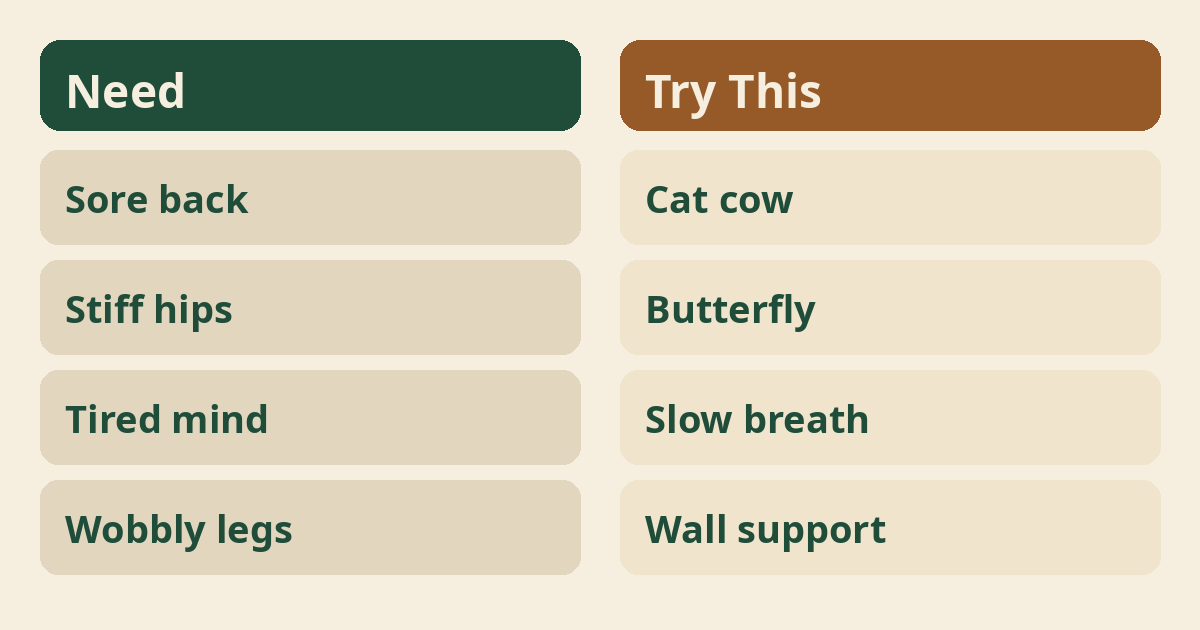
Your fifth step is to come to your hands and knees for a gentle spine stretch. Cat cow pose moves your spine slowly between rounding and arching. Many farmers find it soothing after hours bent over in the field. Move with your breath, never forcing the range.
Step 6: Finish With a Rest Pose
Your final step is to rest in a comfortable pose before you get up. Child’s pose lets your back and hips release fully. Stay for a minute or two, breathing slowly. Get up slowly so you do not feel dizzy.
Which Poses Help a Tired Back?
Poses that gently lengthen the spine tend to help a tired back feel better. Cat cow, child’s pose and a slow standing forward bend are common choices. Keep bends small at first. If any pose causes sharp pain, stop and rest.
Which Poses Help Stiff Hips?
Hip openers like butterfly pose and garland pose can help hips that feel stiff from sitting and squatting. Butterfly pose is done sitting with the soles of the feet together. Garland pose is a deep squat that many farmers already know from daily work. Go slowly and use support if you need it.
Which Poses Help Neck and Shoulders?
Slow shoulder rolls and gentle neck stretches can ease the tightness that carrying and lifting can cause. Move only as far as feels comfortable. Pain is a signal to back off, not to push harder. A fuller routine is covered in yoga for neck and shoulders.
Can Yoga Help With Balance?
Yes, simple standing poses can help improve balance over time. Good balance matters on uneven ground, ladders and wet surfaces. Practice near a wall or chair so you can steady yourself. Balance improves slowly, so be patient with it.
How Does Breathing Fit In?
Breathing is the heart of yoga and it matters as much as the poses. Slow, steady breaths help your muscles relax into each stretch. Try to breathe in through your nose and out through your nose or mouth. If a pose makes you hold your breath, ease out of it.
How Long Should a Session Be?
A beginner session of ten to fifteen minutes is plenty. Short sessions done often beat long sessions done rarely. When ten minutes feels easy, you can grow to twenty. There is no prize for going longer.
How Often Should I Practice?
Practicing most days of the week, even briefly, works better than one long weekly session. Your body adapts to what it does regularly. Three to five short sessions a week is a solid goal. More guidance lives in how often you should do yoga.
What Are Common Mistakes?
The most common mistakes are pushing too hard, skipping the warm-up and holding the breath. Yoga is not about forcing a stretch deeper. Pain is not progress. Move slowly, breathe the whole time and stop before a stretch becomes a strain.
What Props Do I Need?
You need very little, but a few simple props make yoga more comfortable. A mat or blanket, a folded towel under the knees and a sturdy chair or wall for balance cover most needs. A belt or old scarf can stand in for a yoga strap. See yoga props for beginners for easy options.
Can I Do Yoga in Work Clothes?
Yes, you can do gentle yoga in loose work clothes. You do not need special gear. Clothes that let you bend and breathe freely are enough. Boots come off so your feet can grip the floor.
Can I Do Yoga at My Desk or in the Truck?
Yes, many stretches can be done seated in a chair or during a break. Shoulder rolls, seated twists and neck stretches all work sitting down. They are handy on long drives or during office work. Yoga at your desk has more ideas.
Will Yoga Make Me More Flexible?
Many people find that regular gentle practice slowly improves flexibility. Tight hamstrings and hips often ease over weeks and months, not days. Results vary and there is no fixed timeline. Consistency matters more than intensity.
What Are the Benefits People Report?
Many farmers report less stiffness, easier movement and a calmer mind after practicing for a while. Some also say they sleep better and handle long workdays with less tension. These are personal reports, not promises, and results vary. The National Center for Complementary and Integrative Health has plain overviews of what research says about yoga in general.
Is Yoga a Treatment for Pain?
No, yoga is not a treatment or a cure for any condition. It is a gentle form of movement and relaxation that many people enjoy. It should never replace care from a doctor. If you have ongoing pain, get it checked.
Who Should Be Careful?
Anyone with a back injury, joint problem, recent surgery or ongoing pain should talk to a doctor first. The same goes for heart conditions, high blood pressure and balance problems. A doctor can tell you which movements to avoid. If you already have back trouble, doing yoga with a bad back explains gentle options to discuss with them.
What If I Am Not Flexible at All?
You do not need to be flexible to start yoga, that is one of the most common myths. Yoga meets your body where it is today. Poses can be made smaller, supported with props or done in a chair. Flexibility is a possible result of practice, not a requirement for it.
How Do I Progress Over Time?
You progress by holding poses a little longer and adding one new pose at a time. When a pose feels easy and steady, you can deepen it slightly or try a variation. Progress in yoga is slow and that is normal. Rushing it is how strains happen.
Do I Need a Teacher?
A teacher is helpful but not required to begin with simple poses at home. If a class is available nearby or online, a good teacher can check your form and keep you safe. If not, go slowly, keep poses basic and listen to your body. Never copy advanced poses from videos as a beginner.
What Mindset Helps?
A patient, curious mindset helps far more than a competitive one. Some days your body will feel stiff and that is fine. Yoga is a practice, not a performance. The goal is to feel a little better over months, not to master a pose in a week.
Can Older Farmers Do Yoga?
Yes, gentle yoga can suit older adults when poses are kept simple and supported. A chair, a wall and slow movements make practice safer. Balance poses should always have support within reach. A doctor’s okay is wise before starting anything new.
What If I Feel Pain During a Pose?
If you feel sharp or sudden pain, come out of the pose right away and rest. A mild stretch feeling is normal, pain is not. Note which pose caused it and skip that one next time. Pain that continues after you stop deserves a doctor’s visit.
How Do I Fit Yoga Around Farm Work?
You fit yoga in by keeping sessions short and tying them to a daily habit. Attach your practice to something you already do, like after morning tea or before bed. Ten minutes counts. Missed days happen on a farm, just restart the next day.
Can Yoga Help With Stress?
Many people find that slow movement and deep breathing help them feel calmer. Farm life carries real pressure from weather, money and long hours. A quiet few minutes of breathing can be a useful pause in the day. Yoga for stress relief covers this in more depth.
Where to read next
For a calm, beginner-friendly start, Ranjana Sinha’s Begin Where You Are is written for people who want simple steps. Our guide to starting a home yoga practice adds a gentle routine you can follow at home.
Frequently asked questions
Is yoga for farmers a real style of yoga?
It is regular beginner yoga adapted to the aches and schedule of farm work, not a formal style.
How fit do I need to be to start?
You need no special fitness, just the ability to move slowly and get up and down with support if needed.
Can yoga replace stretching before work?
Gentle morning poses can warm you up, but yoga is not a medical program or injury shield.
How soon will I feel a difference?
Many people notice small changes in a few weeks of regular short sessions, though results vary.
Do I need to buy anything?
No, a mat or folded blanket and clothes you can bend in are enough to begin.
The bottom line
Start small, breathe slowly and let a few quiet minutes a day do their work over time.

