
Cobra pose is a gentle backbend where you lie on your belly and lift your chest while the hips stay on the floor. It opens the chest and strengthens the back muscles. This guide shows how to do it step by step, with low and gentle options and safety notes.
This is general education, not medical advice. If you have back or neck problems, are pregnant or have a health condition, check with your doctor before trying this pose.
What is cobra pose?
Cobra pose, or bhujangasana, is a gentle backbend where you lie on your belly and lift your chest while keeping the hips on the floor. It opens the chest and shoulders and strengthens the muscles along the spine. The low version, often called baby cobra, is a friendly choice for beginners. It looks simple, but small details make it comfortable and safe. This guide explains each step, with easy options and safety notes.
Why do people practise it?
People practise cobra to feel taller through the chest, to work the back muscles gently and to counter long hours of sitting and rounding forward. Many of us spend the day hunched over screens. A small backbend gives a pleasant opposite movement. Our guide to yoga at your desk shows other quick ways to ease desk stiffness.
How do you do it step by step?
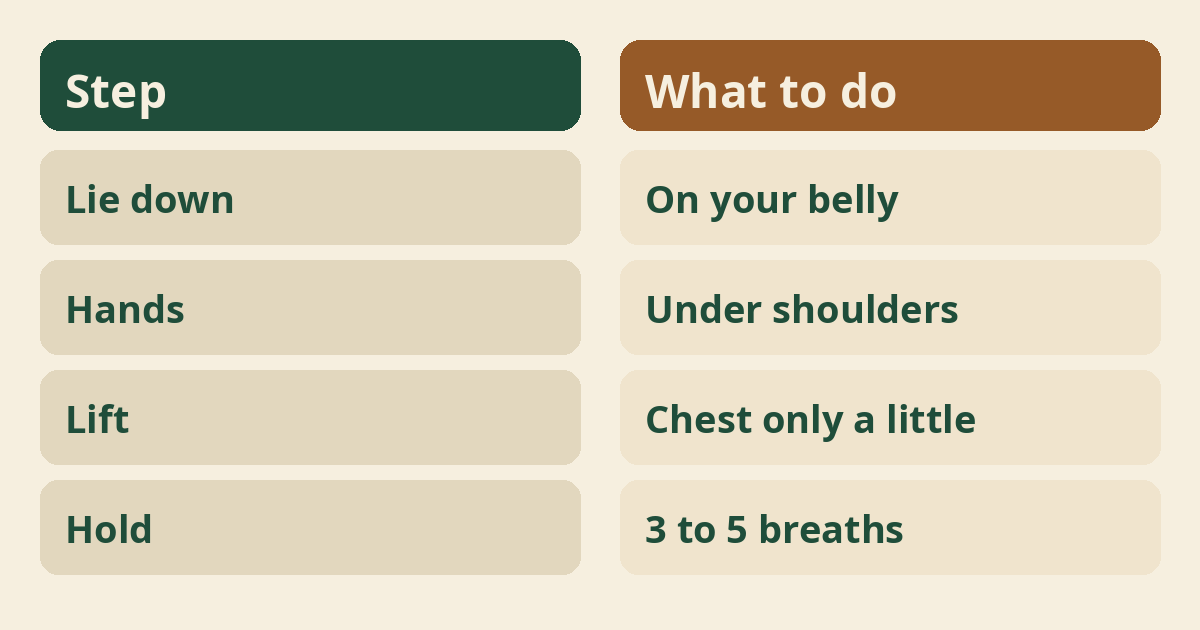
Lie on your belly with legs hip width apart, place the hands under the shoulders, press the tops of the feet down and lift the chest just a little. Keep the elbows close to the body and the shoulders away from the ears. Look slightly forward, keeping the neck long. Breathe in as you lift and out as you lower. Hold for three to five breaths, then rest on one cheek.
How high should you lift?
Lift only as far as you can with the back muscles, keeping a little weight off the hands. The hands are for balance, not for pushing up high. A low lift is enough. Lifting too high can pinch the lower back. Think of lengthening, not bending.
Where should the hips and legs be?
Keep the hips and thighs resting on the floor, the legs relaxed or gently active, and the pubic bone pressing lightly down. Strong legs help support the lower back. Do not clench the buttocks hard. Feel the length from the head through the feet.
What should the neck do?
Keep the neck long and in line with the spine, with the gaze a little ahead of you, not up at the ceiling. Dropping or craning the neck can strain it. Our guide to yoga for neck and shoulders explains care for the neck. Stay comfortable.
What about the shoulders?
Draw the shoulders down and back, away from the ears, and keep the chest open. Squeezing the shoulder blades gently together can help. Do not shrug. If the shoulders feel tight, lift lower.
Sphinx pose, a gentler version
Rest on the forearms with the elbows under the shoulders and lift the chest softly. This version is gentler on the lower back and wrists. It is a good first step for beginners. Hold for five to ten breaths. Our guide to yoga for wrists explains why forearm versions help.
Baby cobra with hands off the floor
Lift the chest with the hands hovering above the floor to use only the back muscles. This builds strength with less strain. Keep it small. Hold for two or three breaths, then lower and rest.
What are the benefits?
Many people find cobra opens the chest, strengthens the back muscles and helps them stand and sit taller, though results vary. Our guide to the benefits of yoga explains what regular practice may offer. The National Center for Complementary and Integrative Health notes that research on yoga is still developing.
Does it help posture?
It strengthens the muscles that help hold the spine upright and stretches the chest, which can support better posture habits. Our guide to yoga for posture has more. Posture changes slowly. Practise regularly and gently.
Is cobra good for the back?
It can feel good for a stiff back, but speak to a doctor first if you have back pain or a spinal condition. Our guide to yoga for back pain and yoga with a bad back explain safe habits. Stop if pain increases.
How should you breathe?
Breathe in slowly as you lift, hold with smooth breaths and breathe out as you lower. Never hold the breath. Our guide to belly breathing explains an easy pattern. The belly stays on the floor, so breathe into the sides and back.
How long should you hold it?
Hold for three to five breaths, rest on your belly and repeat two or three times. Short holds with rests are better for beginners. Our guide on how often to do yoga shows how to build up. Add time slowly.
How do you come out?
Lower the chest slowly, rest one cheek on the mat and relax the back for a few breaths. Then press back into child’s pose if it feels good. Our guide to child’s pose shows a gentle counter pose.
What are common mistakes?
Lifting too high, pushing up with the arms, crunching the neck and clenching the buttocks. Use the back muscles. Keep the lift small. Keep the neck long. Rest between rounds.
What poses pair well with it?
Cat and cow, child’s pose and bridge pose make good partners. Our guide to cat and cow pose is a good warm up. Move between poses slowly with your breath.
How can you prepare the body?
Warm up with a few cat and cow rounds, gentle hip circles and shoulder rolls. A warm body moves more safely. Spend a minute or two preparing. Our guide to a morning yoga routine shows an easy warm up.
Who should be careful?
People with back injuries, neck problems, pregnancy, wrist problems, hernias or recent abdominal surgery should check with a doctor first. Lying on the belly is not suitable in pregnancy. Our guide to prenatal yoga explains special care. Stop if you feel pain, numbness or pressure.
Can older adults practise it?
Yes, with a low lift or a standing wall version, but check with a doctor if you have concerns. Our guide to yoga after 50 shows gentle options. A wall version, standing and pressing the hands lightly, is kinder.
Is it good for stress?
The slow breathing and gentle opening may feel calming for some people, but cobra is not a treatment for stress. Our guide to yoga for stress relief has more ideas. If stress is heavy, speak to a doctor.
When should you see a doctor?
See a doctor before starting if you have an injury, health condition, pregnancy or any concern. Stop if you feel pain, numbness or dizziness. This guide is general education, not medical advice.
How can you set up your mat?
Use a non slip mat on a firm floor, with a folded blanket under the hips if the pelvis feels sensitive. A thin towel under the front of the hips can ease pressure. Keep your arms free to move. Clear the area around you so you do not bump anything. Our yoga mat guide explains how to choose a comfortable mat.
What should you feel?
You should feel a gentle work in the muscles along the back and a soft stretch across the chest and front of the body. A pinch or pain in the lower back is a sign to lower. Gentle effort is fine. If you feel pressure in the neck, ease off and lengthen the neck. Stay within a comfortable range.
How often can you practise?
A few gentle rounds most days or a few times a week is a good aim for beginners. Let your body guide you. Take rest days if your back feels tired. Over weeks, many people notice the pose feels easier. Patience works better than pushing.
How can you track progress?
Notice how the lift feels, how steady your breath is and how you feel afterwards, rather than how high you go. A small note after a session helps you see slow change. Compare with yourself, not with pictures. Gentle consistency builds comfort and strength without strain.
Where to read next
For a calm, beginner-friendly start, Ranjana Sinha’s Begin Where You Are is written for people who want simple steps. Our guide to starting a home yoga practice adds a gentle routine you can follow at home.
Frequently asked questions
What is cobra pose good for?
A gentle chest opener that strengthens the back muscles.
How high should I lift in cobra pose?
Only a little, using the back muscles.
Is cobra pose safe for the lower back?
Usually when gentle, but speak to a doctor if you have back pain.
What is a gentler option?
Sphinx pose on the forearms.
Can I do cobra pose in pregnancy?
No. Lying on the belly is not suitable. Ask your doctor.
The bottom line
A small, calm lift is enough. Keep the neck long, breathe smoothly and rest between rounds.

