
Gentle yoga may help you feel calmer by combining slow movement, steady breathing and quiet attention. Start with five to ten minutes, choose comfortable poses and never strain. Yoga is a support, not a treatment, so see a doctor if stress feels overwhelming.
This is general education, not medical advice. Yoga does not replace care from a doctor or mental health professional. If you feel overwhelmed or unwell, please seek help.
Can yoga help with everyday stress?
Many people find that gentle yoga helps them feel calmer and more relaxed, though it is not a treatment and results vary from person to person. Yoga brings together slow movement, steady breathing and quiet attention. Together these can give the mind a break from busy thoughts. The National Center for Complementary and Integrative Health describes yoga as a mind and body practice and says it is generally low impact. Our guide to the benefits of yoga explains more.
What does stress feel like in the body?
Stress often shows up as tight shoulders, a clenched jaw, shallow breathing, a racing mind or trouble sleeping. You may not notice these signs until you slow down. Yoga gives you a chance to check in with the body and let some of the tension go. Noticing is the first step, and it needs no special skill. Even a minute of quiet attention can help.
Where should a beginner start?
Start with five to ten minutes of slow, easy movement and breathing, in a quiet spot, at a time you can repeat. Do not aim for hard poses. Choose a few comfortable shapes and stay with the breath. Our morning yoga routine and evening yoga routine are gentle places to begin.
How does slow breathing help?
Slow, even breathing gives the mind something simple to follow and may help the body settle. Breathe in through the nose, let the breath out a little more slowly and keep the shoulders soft. Our guide to box breathing is a simple pattern, and pranayama explains more options. Never strain or hold the breath for long.
Which poses feel calming?
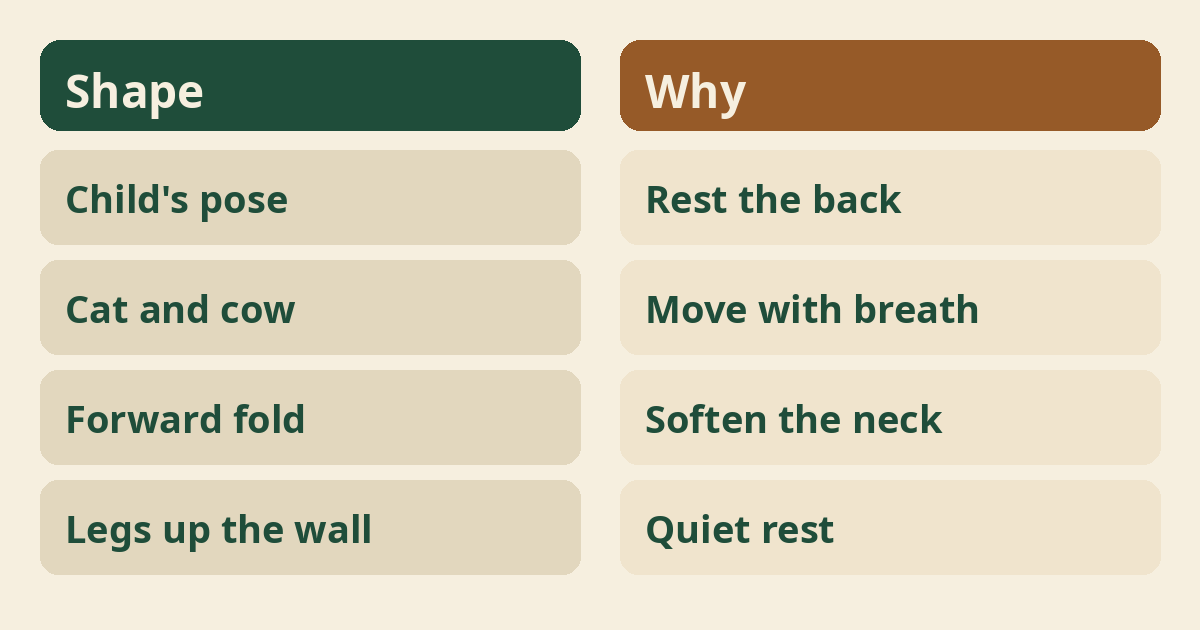
Child’s pose, cat and cow, a gentle forward fold and lying with the legs up a wall are popular, calming shapes. Our guide to child’s pose shows how to rest with a pillow. Choose poses that feel safe and supported. A calm pose is one you can stay in without effort.
What about gentle movement with the breath?
Moving slowly with the breath, as in cat and cow, can help the mind and body work together. Our guide to cat and cow shows a simple version. Breathe in as the spine lengthens, breathe out as it rounds. Keep the movement small and smooth, and let the breath lead.
How can you release neck and shoulder tension?
Gentle neck and shoulder stretches can soften the places where many people hold stress. Our guide to neck and shoulder stretches can be done sitting at a desk. Drop the shoulders away from the ears, take a slow breath and move gently. Never force the neck.
What is the role of the final rest?
The final rest, called savasana, gives the body time to absorb the practice and lets the mind settle. Our guide to savasana explains how to lie still. Even a few minutes can feel restful. If lying down is uncomfortable, rest in a chair.
How does body awareness help?
Noticing the body, one part at a time, gives the mind a calm focus and may help you spot tension early. Our guide to body scan meditation is an easy way to practise. Move your attention slowly from the feet to the head, without trying to change anything.
Can you combine yoga with meditation?
Yes. A short meditation after yoga is a common and natural pairing. After a few gentle poses the body is quieter, which can make sitting still easier. Our guide to meditation for stress offers simple steps. Start with two or three minutes.
How often should you practise?
A few short sessions a week, or a few minutes each day, is a good start. Our guide to how often to do yoga gives a simple plan. Small, regular steps are easier to keep than big ones. Choose a time you can repeat.
What about yoga at work?
Short breaks at your desk, with a few stretches and slow breaths, can help you reset during a busy day. Stand up, roll your shoulders, take three slow breaths and sit back down. Our guide to meditating at work gives more ideas. A minute is enough to start.
What about sleep and evening stress?
A gentle evening routine may help you wind down, but sleep problems that last need a doctor’s advice. Choose slow poses, dim the lights and finish with rest. Our guide to yoga nidra for sleep offers a guided relaxation. Avoid strong, energetic practice late at night.
Does yoga replace professional help?
No. Yoga can be a gentle support, but it does not replace care from a doctor or mental health professional. If you feel overwhelmed, anxious or low for more than a short time, please speak with a doctor or a trained professional. This guide is general education, not medical advice.
How can you stay consistent?
Choose a regular time, keep your mat in view and start with a very small goal. Link your practice to something you already do. Be kind if you miss a day and simply begin again. A gentle habit lasts longer than a strict one.
What if your mind will not settle?
That is normal, so gently bring your attention back to the breath without judging yourself. Minds wander, especially when you are stressed. Each time you notice and return is a small success. Count the breaths if it helps. Keep sessions short at first.
What mistakes should you avoid?
Pushing too hard, expecting instant calm, comparing yourself with others and ignoring pain are common mistakes. Yoga for stress should feel kind. If a pose or a breath pattern makes you tense or dizzy, stop and breathe normally. Go slowly and stay curious.
What props can help?
A cushion, blanket, bolster or chair can make poses more supportive and restful. Support makes it easier to relax. Place a pillow under the knees when lying down. Use a folded blanket under the hips when sitting. Props are a help, not a sign of weakness.
What about a quiet space?
Choose a corner that is clear, warm and quiet, and let others know you need a few minutes. Turn off notifications. Soft light helps. You do not need a special room, just a space where you will not be disturbed. Our yoga mat guide explains how to choose a mat.
What about children and teens?
Children can enjoy simple breathing games and gentle stretches, which can give them a calm break. Keep it short and playful. Do not insist. A caring adult can join in. Speak with a doctor or school counsellor if a child seems very anxious.
How long before you notice change?
Some people feel calmer after a single session, while for others it takes several weeks, and results vary. Be patient. Notice small changes, such as an easier breath or a softer shoulder. Keep a short note after each session.
Who should be careful?
People with health conditions, pregnancy, breathing problems, or recent injury should check with a doctor before starting. Skip breath holds if you have a heart, blood pressure or breathing condition. Stop if you feel dizzy or unwell. Tell your teacher about any concerns.
When should you seek help?
See a doctor if stress is affecting your sleep, work or relationships, or if you have thoughts of harming yourself. Reach out to a trusted person, a doctor or a local helpline. Yoga can be a kind support, but you do not have to manage everything alone.
What does a five minute calming routine look like?
Sit or stand comfortably, take five slow breaths, move through cat and cow, rest in child’s pose and finish with a minute of quiet stillness. Keep everything slow and soft. If you only have two minutes, take ten slow breaths and roll your shoulders. The aim is not to do more, but to give yourself a small pause. Repeat it at the same time each day so it becomes a gentle habit you look forward to.
Where to read next
For a calm, beginner-friendly start, Ranjana Sinha’s Begin Where You Are is written for people who want simple steps. Our guide to starting a home yoga practice adds a gentle routine you can follow at home.
Frequently asked questions
Can yoga reduce stress?
Many people feel calmer after gentle yoga, but it is not a treatment and results vary.
How long should a stress relief session be?
Five to ten minutes is enough to start.
What are the best yoga poses for stress?
Child’s pose, cat and cow, gentle forward fold and legs up the wall are common calming choices.
Can I do yoga at my desk?
Yes. Short seated stretches and slow breaths help.
When should I see a doctor?
If stress affects your sleep, work or health, or you feel overwhelmed.
The bottom line
Go slowly, breathe easily and choose poses that feel kind. A few minutes of gentle yoga each day can be a calm pause in a busy life.

