
Yoga after 50 is best done gently: choose chair, restorative or slow beginner classes, warm up first, use props and move within comfort. Check with a doctor first if you have a heart, blood pressure, bone or joint condition, and stop if you feel pain or dizziness.
This is general education, not medical advice. If you have a health condition, recent surgery or are unsure, check with your doctor before starting yoga.
Is it safe to start yoga after 50?
Yes, many people begin yoga after 50 and enjoy it, as long as they start gently, move slowly and check with a doctor first if they have health conditions. It is never too late to begin. A gentle style, a patient teacher and props make a big difference. The National Center for Complementary and Integrative Health describes yoga as a mind and body practice and notes that it is generally low impact. Choose a class made for beginners or older adults.
What are the aims of yoga after 50?
Good aims are comfort, balance, steady breathing and confidence in everyday movement, rather than deep stretches or difficult poses. Think of getting up from a chair with ease, reaching for a shelf or walking with a steady step. Our guide to the benefits of yoga explains what regular practice may offer, though results vary.
Which style suits beginners over 50?
Gentle, slow styles such as chair yoga, restorative yoga and beginner hatha are usually the most comfortable choices. Our guide to chair yoga is a good place to start. Avoid fast, hot or very strong classes at first. A slower pace gives you time to learn each pose.
How should you warm up?
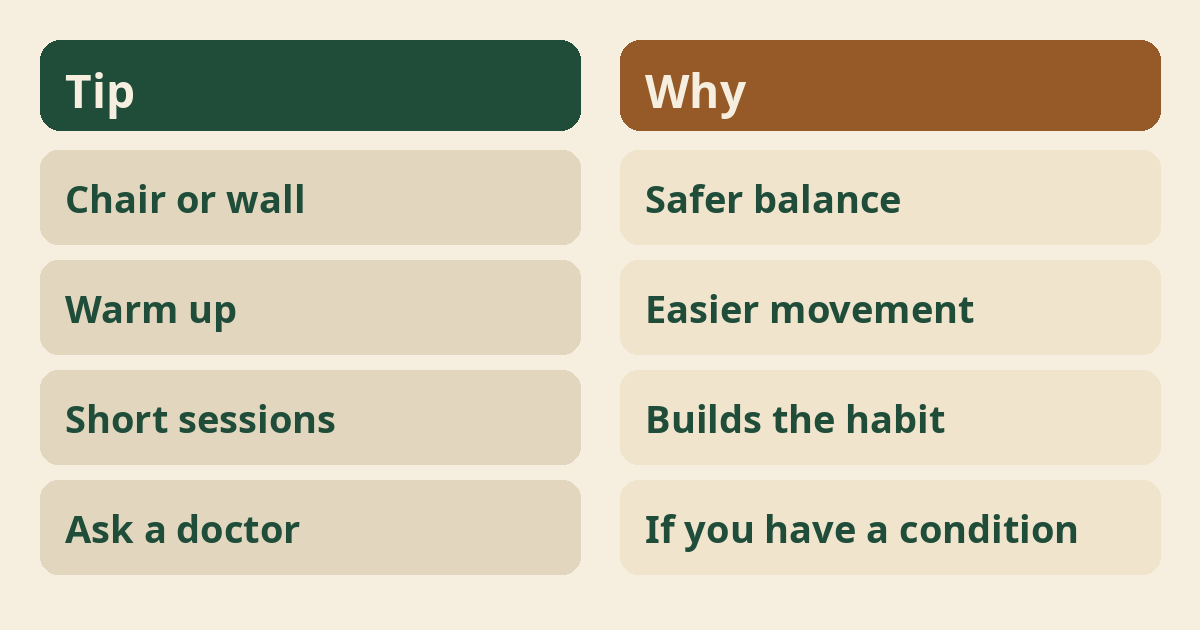
Start with a few minutes of easy movement, such as walking, shoulder rolls and gentle ankle circles. Warm muscles and joints move more easily. Our morning yoga routine begins with gentle movements. Do not skip the warm up, even if you are short on time.
What about balance?
Balance practice is helpful, and doing it next to a wall or a chair makes it safer. Our guide to tree pose shows how to keep the toes on the floor if you are unsteady. Always keep something to hold close by.
What about flexibility?
Flexibility may change with age, so go slowly, hold each stretch for a few breaths and never force a pose. Our guide to yoga for flexibility explains safe stretching. A mild stretch is enough. Comfort matters more than range.
How can you protect the joints?
Use props, keep the knees over the toes, avoid deep bends and pay attention to any pain. Keep a soft bend in the knees and avoid locking the joints. Our guide to neck and shoulder stretches shows easy movements. Stop if you feel sharp pain.
What about the back?
Gentle movements such as cat and cow can help the back feel looser, but twisting and deep forward folds need care. Our guide to cat and cow is a gentle start. Keep the spine long, and bend from the hips. If you have osteoporosis or back pain, speak with a doctor first.
What if you have osteoporosis or low bone density?
Speak with your doctor first, avoid deep forward folds and strong twists, and choose gentle, supported poses. Poses that round the spine under load may not be suitable. A good teacher can offer safe options. Your doctor can tell you what to avoid.
What about blood pressure and the heart?
If you have high blood pressure or a heart condition, talk to your doctor before you start, and avoid holding your breath or staying upside down. Keep the breath smooth. Rise slowly from lying or bending poses to avoid dizziness. Our guide to box breathing notes that people with such conditions should skip breath holds.
How long should a session be?
Start with ten to twenty minutes, two or three times a week, and build slowly. Our guide to how often to do yoga gives a simple plan. Short regular sessions beat long ones. Rest between poses whenever you need.
How do you rise safely from the floor?
Roll to one side, push up with your hands and come up slowly, or use a chair for help. Take your time. Pause before standing so you do not feel dizzy. If getting down to the floor is hard, practise in a chair.
What props help most?
A chair, a wall, blocks, a strap, cushions and blankets make poses safer and more comfortable. Use them freely. They let you enjoy a pose without strain. Our yoga mat guide explains how to choose a grippy mat.
How does breathing help?
Slow, easy breathing keeps you calm and helps you notice when a pose is too much. Breathe in through the nose and out slowly. Never hold your breath in a stretch. Our guide to pranayama explains gentle breathing practice.
What about sleep and stress?
Gentle evening practice may help you wind down, though results vary from person to person. Our evening yoga routine is a calm sequence. Choose slow poses and finish with rest. If sleep problems continue, speak with a doctor.
How can you find a good class?
Look for a beginner or gentle class with a qualified teacher who offers modifications and asks about injuries. Ask if you can watch a class first. Tell the teacher about any health condition before you start. A friendly group can also make it easier to keep going.
What about practising at home?
Home practice works well with a clear space, a mat, a chair and a short routine. Our guide to starting a home yoga practice shows how to plan. Keep your phone away and give yourself a quiet time.
What should you wear?
Wear comfortable clothes that stretch and do not slip, and practise barefoot or in grippy socks. Avoid slippery socks on a smooth floor. Keep water nearby.
How do you handle stiff mornings?
Start with gentle movement in bed or in a chair, such as ankle circles and slow stretches. Give your body time. A warm drink and a short walk can help too. Stretch gently rather than hard.
What about weight, arthritis and other conditions?
Many people with common conditions practise gentle yoga, but you should ask your doctor first and tell your teacher. This guide is general education, not medical advice. Your doctor can say which movements suit you. Gentle yoga does not replace medical care.
What mistakes should you avoid?
Trying to match younger students, forcing stretches, holding the breath and ignoring pain are the most common mistakes. Go at your own pace. A smaller version of a pose is still yoga. Rest when you need to.
How can you stay motivated?
Set a small goal, keep a note of how you feel and practise with a friend or class. Celebrate small changes, like feeling steadier on the stairs. Our guide to doing yoga every day explains how to listen to your body.
How long before you notice change?
Many people feel a little looser and calmer within a few weeks, but results vary and depend on your health. Be patient. Notice small things such as ease in standing up. Keep going gently.
When should you see a doctor?
See a doctor before starting if you have a heart condition, high blood pressure, osteoporosis, joint problems, recent surgery or any health concern. Stop if you feel chest pain, dizziness, shortness of breath or sharp pain. This guide is general education, not medical advice.
How can you make practice feel welcoming?
Choose a time when you are rested, a space that feels calm and a pace that never rushes you. Many people over 50 enjoy yoga most when it feels like a pause in the day and not a test. Put your phone aside, breathe slowly and let each pose be small and easy. If a pose feels hard, there is always a gentler version, and choosing it is a sign of good judgement, not weakness.
What can a teacher do to help?
A good teacher watches your body, offers gentler options and never asks you to push past comfort. Tell your teacher about injuries, surgeries and medicines before class. Ask questions. A caring teacher will explain how to use props and will suggest rest when you need it, so you can learn at your own speed.
Where to read next
For a calm, beginner-friendly start, Ranjana Sinha’s Begin Where You Are is written for people who want simple steps. Our guide to starting a home yoga practice adds a gentle routine you can follow at home.
Frequently asked questions
Is yoga good for people over 50?
Gentle yoga is popular and can be comfortable, but start slowly and check with a doctor if you have conditions.
Which yoga is best for seniors?
Chair yoga, restorative yoga and slow beginner hatha classes are common choices.
Can I start yoga at 60 or 70?
Yes, many people do, with a gentle class and props.
How often should I practise?
Two or three short sessions a week are a good start.
What should I avoid?
Forcing stretches, deep bends, holding the breath and anything that causes pain.
The bottom line
Start gently, use props and listen to your body. Yoga after 50 can be a comfortable, steady habit when you go at your own pace.

