
A good beginner yoga mat is non-slip, comfortably cushioned and long enough for your body. You do not need an expensive one. Choose firm grip, medium thickness and a size that lets you lie down fully, and care for it so it keeps its grip.
This is general education, not medical advice. If you have joint pain, an injury or a health condition, check with your doctor before starting yoga, and stop if you feel pain.
What kind of yoga mat should a beginner choose?
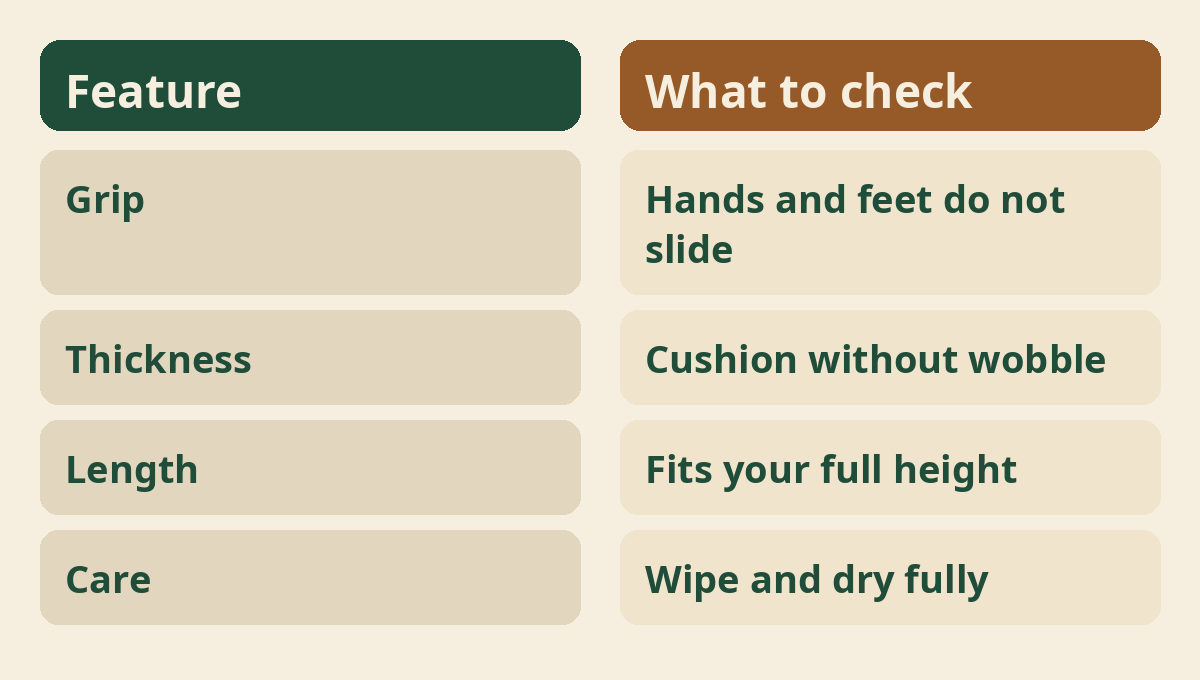
A beginner should choose a mat that is non-slip, comfortably cushioned and long enough for their body, and it does not need to be fancy. Look for a firm grip, a thickness that protects your knees without wobbling, and a size that fits your height. Our guide to starting a home yoga practice explains what else you need. Choose what feels stable under your hands and feet.
Why does the right mat matter?
A good mat gives grip so your hands and feet do not slide, and it gives a little cushion for your knees and spine. If your hands slip in downward dog, you may tense your shoulders. A steady surface helps you relax and focus on your breath. The wrong mat can make simple poses feel harder than they are.
How thick should a yoga mat be?
Most beginners are comfortable with a mat that is thin enough to feel the floor and thick enough to cushion the knees. A very thin mat can be hard on knees in child’s pose. A very thick, soft mat can make balance poses wobbly. A medium thickness suits most people. If you have sensitive knees, you can also fold a towel or blanket under them.
What materials are common?
Common mat materials include natural rubber, foam, cork and plant based blends, and each feels a little different. Rubber mats usually grip well. Foam mats are light and soft. Cork gives a firm, grippy surface when slightly damp. Read the label if you have a latex allergy. Choose what feels good to touch and use.
How important is grip?
Grip matters a lot, because a slippery mat can cause hands and feet to slide and may lead to strain. Test the mat if you can. Place a hand on it and press. Sweaty hands may need a mat with more texture. Our guide to warrior pose shows why steady feet matter. Wipe the mat if it gets dusty.
What size should you pick?
A mat that is at least as long as your height lets you lie down fully, and a wider mat gives more room to move. Taller people may want an extra long mat. If you have a small space, a standard size is fine. Make sure the whole body fits in savasana, when you lie flat.
Do you really need a mat at all?
You can practise on a carpet or a firm, non-slip surface at first, but a mat gives grip and a clear space for practice. A mat also marks a place for your practice, which can help build the habit. If you are unsure, try a few classes with a borrowed mat before you buy.
What about travel mats and light mats?
A thin travel mat is easy to carry but offers less cushion, so it suits short sessions or travel. You can use a light mat for a quick session at a desk or in a hotel room. Our guide to neck and shoulder stretches can be done with very little space.
How do you care for a mat?
Wipe it with a damp cloth and mild soap, let it dry fully and store it rolled or flat away from strong sun. Follow the care label. Avoid harsh chemicals. A clean mat gives better grip and lasts longer. Wipe it after sweaty sessions and let it air out.
When should you replace a mat?
Replace it when it slips, crumbles, tears or feels too thin to protect your joints. A worn mat can be unsafe. If the surface has gone shiny and slippery, or if the cushion has flattened, it is time to change it. A good mat usually lasts a long time with care.
What else helps your practice?
A folded blanket, a firm cushion, a strap and a block are simple props that can make poses more comfortable. You can use household items. A belt can replace a strap and a stack of books can replace a block. Props are a help, not a sign of weakness. Our guide to yoga for flexibility shows how props can support gentle stretching.
What should you wear on the mat?
Wear comfortable clothes that stretch and stay in place, and practise barefoot or in grippy socks. Avoid loose tops that fall over your face in forward folds. You do not need special clothing. Comfort and freedom to move are what matter.
How do you set up a good space?
Choose a quiet, flat, clear space with enough room to stretch your arms and legs, and keep water nearby. Remove sharp objects. Keep the space calm, with soft light if you like. Our morning yoga routine and evening yoga routine fit well in a small corner.
Is a wooden or tiled floor a problem?
A mat on a hard floor can slide, so put it on a flat, non-slip surface or add a rug underneath. Tiles and polished wood can be slippery. A thin rug or a non-slip pad under the mat can help. Make sure all four corners lie flat.
Can a mat help with sore knees or wrists?
A softer mat or a folded blanket can ease pressure on knees and wrists, but it will not fix pain. If you feel pain, change the pose, use props or rest. Speak with a doctor or physiotherapist if pain continues. Our guide to yoga with a bad back explains safe habits.
What if you share a mat or use a studio mat?
Wipe a shared mat before and after, or bring your own if you prefer. Studios often provide cleaning spray. A personal mat is also more hygienic and helps you feel at home. If you borrow one, use a clean towel on top.
How can you carry and store a mat?
Roll it loosely, use a strap or bag and keep it away from heat. Storing it flat or loosely rolled helps it keep its shape. Do not leave it in a hot car, which can warp some materials.
Should you buy the most expensive mat?
No. A well chosen basic mat is enough for most beginners, and the best mat is the one you will actually use. Start with a simple one. If your practice grows and you notice what you need, such as more grip or more cushion, you can choose a different mat later.
How do you know if a mat suits you?
You feel steady in standing poses, comfortable in kneeling poses and not too hot or slippery. Try a few poses on it. If you notice your hands sliding, your knees hurting or your feet wobbling, try a different option or add a towel.
What about children and older adults?
Children may like a smaller, lighter mat, and older adults may like a slightly thicker one with firm grip for comfort and safety. Older adults who find the floor hard can use a chair. Our guide to chair yoga is a gentle option.
What about hygiene and smell?
Let the mat air out after use and wipe it regularly to keep it fresh. A mild, natural smell on a new mat usually fades. If a mat smells strongly or irritates your skin, stop using it and check the material. Wash your hands and feet before practice if you like.
Is eco friendly a good goal?
If it matters to you, choose a durable mat made from materials you are comfortable with, and use it for a long time. The most sustainable mat is often the one you keep using. Look for care instructions and avoid buying many mats.
What common mistakes should you avoid?
Buying a mat that is too thick, too short or too slippery, and ignoring pain, are common mistakes. Try before you buy if you can. Keep it simple. Focus more on how you move than on what you own. A calm, steady practice does not depend on equipment.
Where to read next
For a calm, beginner-friendly start, Ranjana Sinha’s Begin Where You Are is written for people who want simple steps. Our guide to starting a home yoga practice adds a gentle routine you can follow at home.
Frequently asked questions
What is the best yoga mat for beginners?
A non-slip, medium thickness mat that is long enough for your body.
Do I need a thick yoga mat?
Not always. Choose enough cushion for your knees without making balance poses wobbly.
Can I do yoga without a mat?
Yes, on a firm, non-slip surface, but a mat adds grip and comfort.
How do I clean a yoga mat?
Wipe with a damp cloth and mild soap, then let it dry fully.
How long does a yoga mat last?
It depends on use and care. Replace it when it slips, tears or flattens.
The bottom line
Pick a simple, non-slip mat that feels stable and comfortable, and keep it clean. The best mat is the one you will actually use.

