
You can practise gentle breathing and meditation at home without a guru, but specific Kriya yoga techniques are usually taught by a teacher within a tradition. The honest answer depends on what you mean by “Kriya yoga”. If you mean calm breathing and quiet sitting, home practice is fine for most healthy adults. If you mean a fixed set of techniques from a lineage, a teacher matters. This guide explains the difference and shows a safe way to begin at home.
This is general education, not medical advice. If you have a heart, lung or blood pressure condition, are pregnant, or feel unsure, speak with your doctor before trying any breathing practice.
Can you practise Kriya yoga at home?
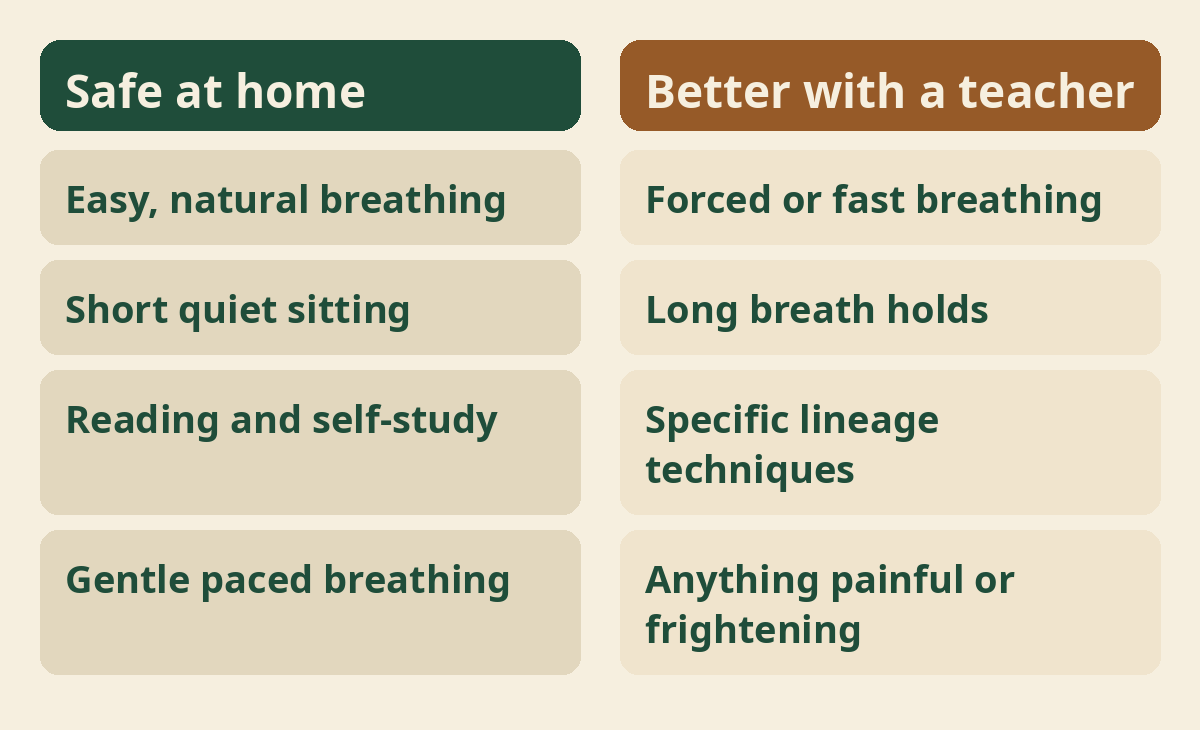
Yes, you can practise the gentle, general parts at home, such as easy breathing, quiet sitting and self-study. These are safe, simple and do not need initiation. What you should not do is copy strong breathing techniques from a video and push them hard on your own.
The term “Kriya yoga” is used in more than one way. In the Yoga Sutras it means three habits: self-discipline, self-study and surrender. Those can be lived anywhere. In some modern lineages it names a specific set of techniques. Our guide to Kriya yoga for beginners explains both meanings.
Do you need a guru for Kriya yoga?
You do not need a guru for general breathing and meditation, but many traditions teach their own Kriya techniques only through a teacher. A teacher is not a requirement for being calm or disciplined. A teacher is a requirement if a tradition says its steps must be learned in person.
Think of it like learning to swim. You can splash in shallow water alone. For deep water and strong strokes, you want someone who can watch you. That is not a rule of nature. It is a practical way to avoid mistakes.
What can you safely do at home?
Safe home practice means gentle, unforced breathing, short sitting sessions and reflective reading. Keep every session comfortable. Here are the parts most healthy adults can try.
- Natural breath awareness. Sit and watch your breath without changing it.
- Easy paced breathing. Breathe in for four counts and out for four to six, without strain.
- Quiet sitting. Sit for a few minutes with a tall spine and soft eyes.
- Self-study. Read a short passage on yoga philosophy and think about it.
Our guide to pranayama for beginners shows gentle breathing practices in more detail.
What should you avoid doing alone?
Avoid forced breathing, long breath holds and any technique you do not fully understand. These are the practices most likely to cause dizziness, strain or anxiety. If a video or a post tells you to push through discomfort, treat that as a warning sign.
- Fast or forceful breathing for long periods.
- Holding the breath until it feels uncomfortable.
- Practising while tired, unwell or on a full stomach.
- Following advice that says pain or fear is part of the process.
Our article on whether Kriya yoga is safe for beginners goes through the warning signs in more detail.
How to set up a calm home practice
- Pick a quiet corner and a chair or cushion.
- Choose a regular time, such as early morning.
- Sit with a tall spine and loose shoulders.
- Watch the natural breath for two minutes.
- Try easy paced breathing for five rounds.
- Sit quietly for three to five minutes.
- Stop at once if you feel dizzy, tense or anxious.
For more ideas, see our guide to starting a home yoga practice and our note on morning meditation.
When is a teacher worth it?
A teacher is worth it when you want specific techniques, feel stuck, or have a health condition that needs care. A good teacher watches your posture and pace, notices when something is not suiting you and explains why each step exists.
Look for openness. A trustworthy teacher explains what is taught, welcomes questions, takes health seriously and never pressures you to pay, join or keep secrets. Be cautious of anyone who promises dramatic results or says doubt is a weakness.
What can books and classes offer instead?
Books and classes can teach the ideas, the philosophy and the gentle practices without any initiation. They are a good middle step between solo practice and a teacher. A class also gives you a person to ask about problems.
If you like reading, Ranjana Sinha’s Begin Where You Are is a calm starting point for beginners, and The Journey of Yoga Through Time explains where these ideas came from. Our list of free yoga books and resources is another place to look.
How long should you practise each day?
Five to fifteen minutes a day is enough for most beginners. Start with the shorter end and add a minute or two only when practice feels easy. Regular short sessions beat rare long ones. Our article on how long to meditate gives more detail, and our guide to how long it takes to learn Kriya yoga explains what to expect over months.
What does the research say?
Research on breathing and meditation practices is still developing. The National Center for Complementary and Integrative Health summarises findings on yoga effectiveness and safety and on meditation and mindfulness. These pages are general. They do not test any single named Kriya technique, so be wary of strong claims.
Who should check with a doctor first?
People with heart, lung or blood pressure conditions, pregnant women and anyone who feels unwell should speak with a doctor before breath practice. People who tend toward panic or anxiety may prefer short, gentle sessions. Quiet sitting is low risk, but it is not right for every person at every moment. If symptoms continue, stop and seek advice.
How can you tell your home practice is going well?
A healthy home practice feels calm, steady and sustainable. You look forward to it, or at least do not dread it. You feel a little more settled afterwards. You can stop at any time without worry. If practice makes you tense, restless or discouraged, shorten it and return to easy breathing.
Try keeping a short note after each session. Write how long you sat, how the breath felt and what your mind was doing. After a few weeks you will see patterns you cannot notice day to day.
What if you feel drawn to a specific lineage?
Take your time, ask questions and try a short introduction before you commit to a lineage. Many traditions offer open talks or classes. Use these to see how the teacher speaks, how health is handled and whether you feel comfortable. There is no hurry to decide, and a good tradition will not rush you.
It also helps to write down what you want from practice: calm, focus, better sleep habits or simple curiosity. That makes it easier to judge whether a teacher or method fits your goal. If a group asks for large payments, secrecy or total obedience early on, step back and think again.
How do you build a base before meeting a teacher?
Build a base with a few weeks of easy breathing, comfortable sitting and regular timing. This gives a teacher something to work with and helps you notice what feels natural. It also tells you whether you enjoy the practice, which matters more than any technique.
- Week one: watch the natural breath for two to three minutes a day.
- Week two: add easy paced breathing for five rounds.
- Week three: extend quiet sitting to five or ten minutes.
- Week four: review your notes and decide what to ask a teacher.
This is only a gentle outline. Move slower if you need to, and skip any step that feels wrong.
Common myths
- “Without a guru, nothing works.” Gentle breathing and quiet sitting work without one.
- “Home practice is dangerous.” Gentle practice is low risk. Forced practice is the problem.
- “More intense means more progress.” Steady and gentle is safer and often more useful.
- “A video is as good as a teacher.” A video cannot see you or adjust to you.
Frequently asked questions
Can I learn Kriya yoga at home?
You can learn about it and practise gentle breathing and meditation at home. Specific techniques from a lineage are usually taught by a teacher.
Is Kriya yoga safe to do alone?
Gentle, unforced practice is generally low risk for healthy adults. Avoid forced breathing and long breath holds without guidance.
Can I learn Kriya yoga from YouTube?
You can learn ideas and gentle practices from videos. A video cannot watch your posture or adjust the pace, so be careful with strong techniques.
Do I need initiation to practise Kriya yoga?
Not for general breathing and meditation. Some traditions require initiation for their specific techniques.
How long should I practise Kriya yoga at home each day?
Five to fifteen minutes is enough for most beginners. Add time slowly.
What is the safest way to start?
Begin with natural breath awareness and short sitting sessions. Check with a doctor first if you have a health condition.
The bottom line
You can build a calm, safe home practice without a guru. Keep it gentle, keep it regular and seek a teacher when you want specific techniques or guidance.

