A yoga gratitude practice is a short routine where you move gently, breathe slowly, and bring to mind things you feel thankful for. You do not need to be flexible or experienced. A few quiet minutes on a mat, a chair, or a cushion are enough to begin. This guide explains the basics in plain words, with easy steps you can try today.
This article is general education and is not medical advice. If you have a health condition, an injury, or you are pregnant, please check with your doctor before you start any new practice.
What is a yoga gratitude practice?
It is a gentle yoga routine that pairs easy movement and breathing with thoughts of thankfulness. You move slowly, notice your body, and name a few things you appreciate. There is no fixed style, so you can shape it to fit your day.
Why do people practice gratitude in yoga?
Many people use it to slow down and notice what is going well in their lives. Yoga already asks you to pay attention. Adding thankfulness gives that attention a kind direction, and many people enjoy that mix.
Where does the idea come from?
Thankfulness and contentment are old themes in yoga teaching. Traditional texts speak of santosha, a word often explained as contentment. A modern gratitude practice borrows that spirit in a simple, everyday form.
Do you need experience?
No, a complete beginner can do this practice. The poses are basic and the focus is on how you feel, not how you look. If you can sit and breathe, you can start.
How do you start?
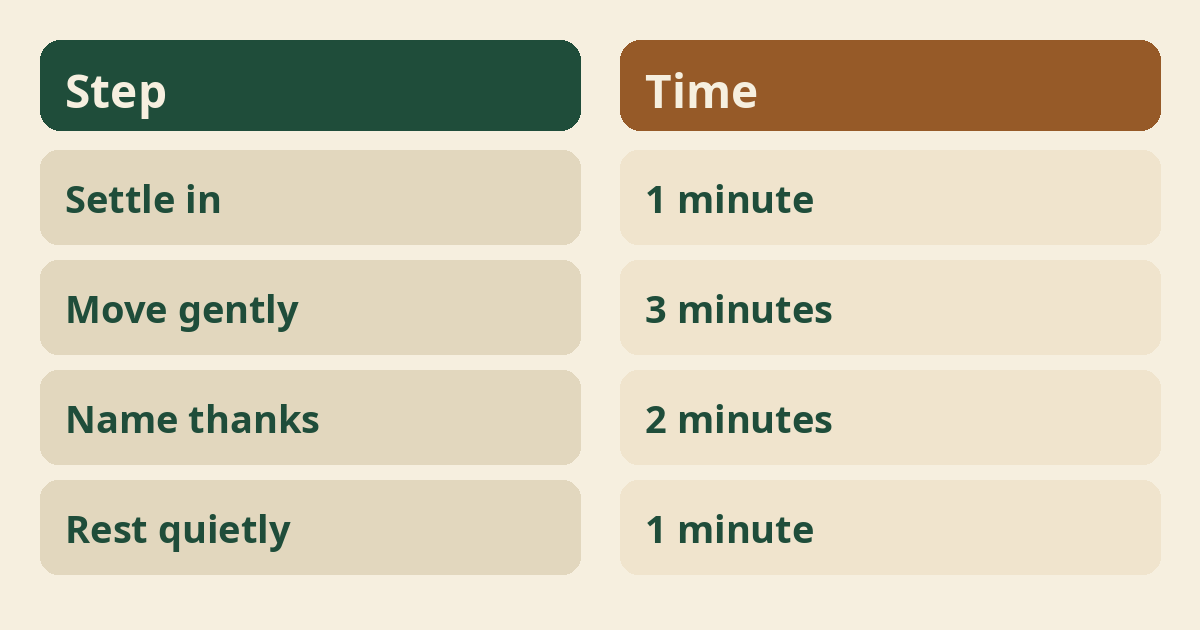
Start with five minutes in a quiet spot and one simple intention. Sit comfortably and decide you will spend this time noticing what you appreciate. Keep your phone away so the time stays yours.
Step 1: How do you set up your space?
Pick a calm corner with room to sit and stretch your arms. A mat is nice but not required. Soft light and a quiet room help, though a corner of a busy home works too.
Step 2: How do you settle in?
Sit tall, rest your hands on your knees, and close your eyes or soften your gaze. Spend a minute feeling your seat on the floor. Let your shoulders drop away from your ears.
Step 3: How do you begin the breath?
Breathe in through the nose and out through the nose or mouth, slowly and without force. Let each breath be a little longer than usual if that feels easy. If it feels strained, go back to your normal breath.
Step 4: How do you move gently?
Use a few easy poses, such as a seated stretch or a slow cat and cow. Move with your breath, one pose at a time. See cat cow pose for beginners for a simple guide.
Step 5: How do you name what you are thankful for?
Think of one person, one thing, and one small moment from your day. Say each one silently as you breathe out. They can be tiny, like a warm drink or a kind message.
Step 6: How do you finish?
End with a minute of stillness and a quiet thank you to yourself. Rest your hands on your heart or lap. Open your eyes slowly and take a moment before you stand.
How does breathing fit in?
Slow breathing gives the practice a steady rhythm. Many people breathe in while they recall a thankful thought and breathe out as they let it settle. For a gentle method, read about belly breathing for beginners.
How long should a session last?
Five to ten minutes is a good length for a beginner. A short session you finish is better than a long one you skip. You can add time later if you enjoy it.
How often should you practice?
Once a day is a nice rhythm, but even a few times a week is fine. Pick a time that already exists in your day, like after waking or before bed. Our page on how often you should do yoga can help you plan.
What is the best time of day?
The best time is the one you will actually keep. Morning can set a kind tone for the day. Evening can help you look back on what went well.
Do you need a mat or props?
No special gear is needed, though a few items can add comfort. A folded blanket under your seat or a cushion for your knees can help. See yoga props for beginners for ideas.
Can you do it in a chair?
Yes, a chair works well if the floor is uncomfortable. Sit with your feet flat and your back tall. This is handy at work too, and yoga at your desk for beginners has more ideas.
Which poses suit a gratitude practice?
Gentle, open, and restful poses fit best. Good picks include mountain pose, child’s pose, and a simple seated forward fold. Choose what feels kind to your body.
How can mountain pose help?
Mountain pose is a simple way to stand tall and feel grounded. Stand with feet under your hips and arms relaxed. Breathe slowly and think of one thing you are thankful for.
How can child’s pose help?
Child’s pose is a quiet shape for turning your attention inward. Kneel, sit back toward your heels, and rest your forehead down. Use a cushion under your head or hips if you need it.
What about a hand on the heart?
Resting a hand on your chest is a simple gesture many people like. It gives you something to feel while you breathe. It is optional, and you can skip it if it feels odd.
Should you write things down?
Writing a few lines after practice can make it feel more real. Keep a small notebook nearby and list three things in a few words. Some people prefer to keep it silent, and that is fine.
What if you cannot think of anything?
Start with the basics, such as your breath, a roof, or a meal. Gratitude does not have to be big. On hard days, noticing one small good thing is enough.
What are common mistakes?
The most common mistakes are rushing, forcing a feeling, and doing too much. Try not to judge yourself if you feel nothing special. Keep it short, keep it kind, and let the feeling come in its own time.
Is it okay to feel mixed emotions?
Yes, quiet time can bring up many feelings, and that is normal. You might feel calm, sad, or simply tired. Be gentle with yourself and stop if it feels like too much.
What are the possible benefits?
Many people find that a regular gratitude practice helps them feel calmer and more positive. Results vary from person to person, and it is not a promise of any outcome. For general information on mind and body practices, visit National Center for Complementary and Integrative Health.
Is this a treatment?
No, a yoga gratitude practice is not a treatment for any condition. It is a simple habit for attention and well-being. It does not replace care from a doctor or other health professional.
Who should be careful?
Anyone with a health condition, injury, or pregnancy should talk to a doctor first. Ask about which movements are suitable for you. Pregnant readers may also like prenatal yoga vs regular yoga.
What if you have a bad back?
Choose gentle seated options and check with your doctor before you start. Avoid deep bends and move only within comfort. Our page on yoga with a bad back gives more general information.
How can you keep the practice comfortable?
Move slowly and stop if you feel pain. A stretch should feel mild, never sharp. Use blankets or a chair, and rest whenever you need to.
How do you progress?
Add a little time or one new pose after a couple of weeks. You might extend your breath, add a short walk, or try a longer seated stay. Keep changes small and enjoyable.
Can you add other practices?
Yes, you can blend it with stretching, balance, or stress-relief poses. Try yoga for stress relief or yoga for balance on other days. Let the gratitude moment stay at the end.
Do you need a teacher?
A teacher is helpful but not required. If you want feedback on poses, a qualified instructor can guide you in person or online. For a simple practice like this, many beginners are happy at home.
What mindset helps most?
A kind and patient mindset helps more than any pose. Treat the practice as a visit with yourself, not a test. There is no right or wrong way to feel thankful.
How do you make it a habit?
Link it to something you already do every day. Do it after brushing your teeth or with your first cup of tea. Small, steady habits tend to last longer than big plans.
Where to read next
For a calm, beginner-friendly start, Ranjana Sinha’s Begin Where You Are is written for people who want simple steps. Our guide to starting a home yoga practice adds a gentle routine you can follow at home.
Frequently asked questions
Is a yoga gratitude practice religious?
No, it can be done by anyone of any belief and needs no religious ideas.
Can I do it without poses?
Yes, you can simply sit, breathe, and think of things you are thankful for.
How soon will I notice a change?
Experiences vary, and some people feel a little calmer right away while others need more time.
What if I fall asleep?
That is fine, and it may mean you needed rest, so try again at another time of day.
Can children try it?
Yes, a short and playful version can work, with an adult nearby.
The bottom line
Begin with five quiet minutes today, and let gratitude grow at its own gentle pace.