Yoga goal setting means choosing a clear, realistic way to practice rather than chasing a perfect pose. For beginners, a useful goal describes something you can do, such as setting aside a few quiet minutes, asking for help, or learning one comfortable movement. This guide explains how to build that kind of plan, notice what works, and change it when life gets busy. You do not need an advanced routine or a flexible body to begin with a meaningful goal.
This article offers general education and is not medical advice. If you have a health condition, an injury, are pregnant, or have concerns about exercise, check with your doctor before starting or changing a yoga practice.
What is yoga goal setting?
Yoga goal setting turns a broad wish into a practical choice about your practice. Instead of saying you must become good at yoga, decide what showing up will look like. Your goal can involve learning, comfort, attention, or building a routine, without requiring a particular change in your body.
Why do people set yoga goals?
People set yoga goals to give their practice direction without having to decide everything again each day. A modest plan can make it easier to choose when to practice and what to try. It should support your life, not create another task you feel guilty about leaving unfinished.
What makes a useful beginner goal?
A useful beginner goal is clear, manageable, and open to change. You should be able to explain what you will do in one plain sentence. Avoid goals that depend on a teacher’s praise, a body shape, or matching someone else’s progress, because those outcomes are not fully within your control.
Step one: choose your reason
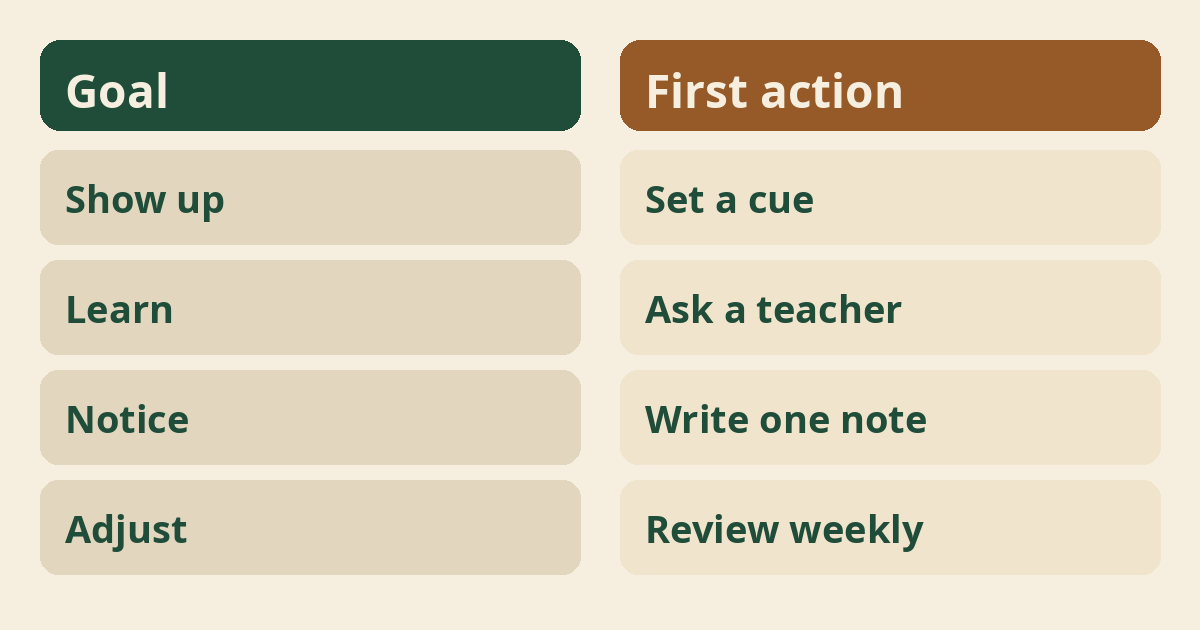
Start by naming what you want your practice to make space for. You might want a quiet pause after work, a chance to learn movement skills, or time away from a screen. Write that reason in your own words so your plan reflects your needs rather than a challenge you saw online.
Step two: choose one action
Pick one small practice action instead of several big ambitions at once. For example, plan to attend one beginner class or explore a short sequence you already understand. If your aim involves flexibility, use a beginner flexibility guide as a learning prompt, not a promise to reach a shape.
Step three: make the action smaller
Shrink your chosen action until it fits an ordinary busy day. If a full class feels difficult to arrange, begin by putting out your mat and practicing a familiar movement briefly. A small starting point is not a lesser version of yoga; it gives you a workable place to begin.
Step four: choose a cue
Connect your practice to a reliable part of your day. You could practice after changing out of work clothes or before putting your phone on charge. Choose a cue that usually happens, rather than waiting for a quiet mood or a completely free evening that may never arrive.
Step five: make a backup plan
Decide in advance what you will do when the original plan does not fit. Your backup might be a shorter practice, a different day, or rest. Write it beside your main goal so changing plans feels like part of the process rather than evidence that you have failed.
Step six: set a review point
Choose a time to look back and decide whether the goal still suits you. At the end of a week, ask whether the plan was practical and whether anything felt uncomfortable. Keep what helped, change what did not, and avoid making the next goal harder simply because a week has passed.
How long should a practice be?
Choose a practice length you can finish without rushing or pushing through discomfort. A few minutes may be enough for your starting goal, while a class may suit a day with more time. Duration is a planning choice, not a measure of how serious or worthy your practice is.
How often should you practice?
Choose a frequency that leaves room for your energy, commitments, and recovery. You do not have to begin with daily yoga to build a useful routine. Read how often to do yoga for planning ideas, then select a schedule that you can revise without guilt.
Can breathing be a goal?
A beginner breathing goal can focus on noticing an easy, unforced breath. Avoid breath holding, forceful breathing, or trying to reach a particular breath count without suitable guidance. If you want a simple introduction, explore belly breathing for beginners, and stop if you feel dizzy, strained, or uncomfortable.
What benefits are realistic?
Many people find that modest goals make practice feel more manageable, but results vary. Yoga may support well-being for some people, yet a goal cannot guarantee a health outcome or a change in mood. For a balanced overview of yoga’s possible benefits and safety limits, include the reference National Center for Complementary and Integrative Health alongside your reading.
Is this a treatment?
Yoga goal setting is not a treatment or a replacement for medical care. A practice plan should never require reducing prescribed care, ignoring symptoms, or proving that yoga can solve a health problem. If your reason for starting is tied to symptoms, speak with your doctor before choosing physical goals.
Who should be careful?
Get your doctor’s advice first when a health condition or injury could affect your practice. Pregnancy, recent surgery, persistent pain, or concerns about balance may change what is appropriate for you. Tell a qualified teacher about any agreed limits, and do not use a general online plan as personal medical clearance.
Which props might help?
Props can help you arrange a practice that fits your body and available space. A stable chair, blocks, or a folded blanket may be useful when chosen for a specific movement. See yoga props for beginners for ideas, and check stability rather than assuming every household substitute is safe.
Should the goal be a difficult pose?
A difficult pose is not necessary for a meaningful beginner goal. Learning how to set up, move comfortably, and come out of a position can be a better first task. A guide such as mountain pose for beginners can support learning without turning practice into a performance test.
How do you measure progress?
Measure the actions you chose rather than judging how your body looks. You could note whether you began, used your backup plan, or asked a useful question in class. These records show how your plan works in real life without claiming that every completed practice creates a visible or medical result.
What belongs in a practice journal?
A brief journal only needs to record what you tried and what you noticed. Write the practice, a short note about comfort, and one change you might make next time. Avoid scoring yourself as good or bad, because a record is most useful when it helps you make practical decisions.
What if you miss a session?
Missing a session calls for a fresh choice, not a punishment practice. Return to your next workable opportunity without doubling your time or forcing harder poses to catch up. If missed sessions become common, look at the size, timing, or appeal of the goal before blaming your willpower.
What are common planning mistakes?
Common mistakes include setting too many goals, leaving the action vague, and choosing an unrealistic schedule. Another mistake is treating every uncomfortable day as a reason to try harder. Make your plan specific enough to follow but flexible enough to allow rest, questions, and changes in your circumstances.
How do you avoid comparison?
Compare your current plan with your own needs rather than another person’s pose. Photographs and class demonstrations do not show someone’s full background, available support, or comfort. If comparison keeps pulling your attention away, return to one question: what is a suitable and useful choice for me today?
What mindset helps beginners?
A curious mindset leaves room to learn without expecting each practice to feel better than the last. Some sessions will feel ordinary, distracted, or awkward. You can notice that honestly and still learn something, such as which instructions are clearer or which practice time creates less pressure in your day.
When should you progress?
Progress when your current plan feels manageable, not because a calendar demands it. You might add a little time, learn one movement, or ask for a suitable variation. Change one part at a time so you can notice how it affects comfort, effort, and your willingness to keep practicing.
When should you reduce the goal?
Reduce the goal when it repeatedly clashes with your life or encourages you to ignore discomfort. A smaller plan can be the right response to busy weeks, illness, or a change in responsibilities. Rest is also a valid choice; keeping a streak is never more important than responding to your needs.
How can a teacher help?
A qualified beginner-friendly teacher can help you choose tasks suited to your experience. Share your goals, concerns, and any limits advised by your doctor before class. Ask how to make movements easier and how to stop safely, rather than asking for a deadline for reaching an advanced pose.
Can you set goals at home?
Home goals work best when the practice is simple and the instructions are clear. Set aside a clear space and choose movements you understand rather than building a complicated routine from memory. If you are unsure about a position or keep feeling discomfort, seek guidance instead of repeatedly guessing at the setup.
Can desk practice count?
A short desk practice can count when it matches the goal you actually chose. If your aim is to pause during a workday, a brief comfortable movement break may fit better than an evening class. Explore yoga at your desk without treating chair-based practice as automatically suitable for every condition.
Should you set a flexibility target?
A flexibility goal is more useful when it describes practice rather than a fixed depth or deadline. Bodies differ, and reaching farther does not automatically mean you are practicing well. Focus on controlled, comfortable movement and suitable guidance instead of promising yourself a split, a toe touch, or a particular range.
Can rest be part of the plan?
Rest belongs in a yoga plan whenever it is the suitable choice for you. Your goal can explicitly allow rest without requiring you to earn it through previous effort. This makes it easier to respond to tiredness or illness without turning your schedule into a rule that overrides good judgment.
What should make you stop?
Stop a movement if it causes pain, dizziness, numbness, or a sense that something is wrong. Do not force yourself through symptoms to meet a practice target. Seek medical advice for concerning or recurring symptoms, and get urgent medical help for severe symptoms such as chest pain or fainting.
Can you have more than one goal?
You can hold a wider intention while keeping one main practice goal at first. For example, wanting a calmer routine can sit behind a practical goal of attending a beginner class. Wait until the first action feels workable before adding another demand, and remove goals that no longer serve your purpose.
What might a first week look like?
A first week can focus on trying a modest plan and learning from it. Choose a short familiar practice on a few suitable days, keep a backup option, and make a brief note afterward. At your review, decide what to repeat rather than automatically adding more time or more poses.
How do goals stay useful over time?
Goals stay useful when you treat them as adjustable tools rather than promises you must defend. Your schedule, interests, and support may change, so your practice can change too. Keep returning to the reason you began, and let that reason guide your next practical choice instead of chasing an endless list of milestones.
Where to read next
For a calm, beginner-friendly start, Ranjana Sinha’s Begin Where You Are is written for people who want simple steps. Our guide to starting a home yoga practice adds a gentle routine you can follow at home.
Frequently asked questions
Do I need a yoga goal before my first class?
No, your first goal can simply be to attend, ask questions, and learn what a beginner class involves.
Should I practice every day to succeed?
No, a schedule that fits your circumstances is more useful than a daily target that pushes you to ignore your needs.
What if my goal feels too easy?
Keep it long enough to see whether it works consistently, then consider one modest change without making difficulty the point.
Can yoga goals include weight or appearance?
You can notice those wishes, but action-based goals avoid making your practice depend on a promised body change.
Is changing a goal the same as giving up?
No, changing a goal can be a sensible response to new information, discomfort, or a shift in your daily life.
The bottom line
Choose one small action, leave room for rest, and let your next review guide the practice that comes after it.