The best yoga clothes for beginners are the ones you can move, bend, and breathe in without thinking about them. You do not need special brands or a new wardrobe. Soft, stretchy, close-fitting pieces that stay in place work well for most people. This guide explains what to wear, what to skip, and how to build a small, simple set for your first weeks of practice.
This article is general education only and is not medical advice. If you have a health condition, an injury, or you are pregnant, check with your doctor before starting yoga.
What are yoga clothes?
Yoga clothes are simply comfortable clothes that let your body move freely. Nothing about them is magic or required. Any outfit that stretches, stays put, and does not pinch can work as yoga wear.
Why does clothing matter in yoga?
The right clothes let you focus on your breath instead of your waistband. Yoga asks you to bend, reach, twist, and fold. If your outfit slips, rides up, or digs in, your mind keeps drifting back to it.
Do I need to buy special clothes?
No, most beginners can start with clothes already in their cupboard. An old pair of stretchy pants and a fitted cotton tee is enough for a first class. Wait a few weeks and see what you actually miss before spending money.
How do I start choosing an outfit?
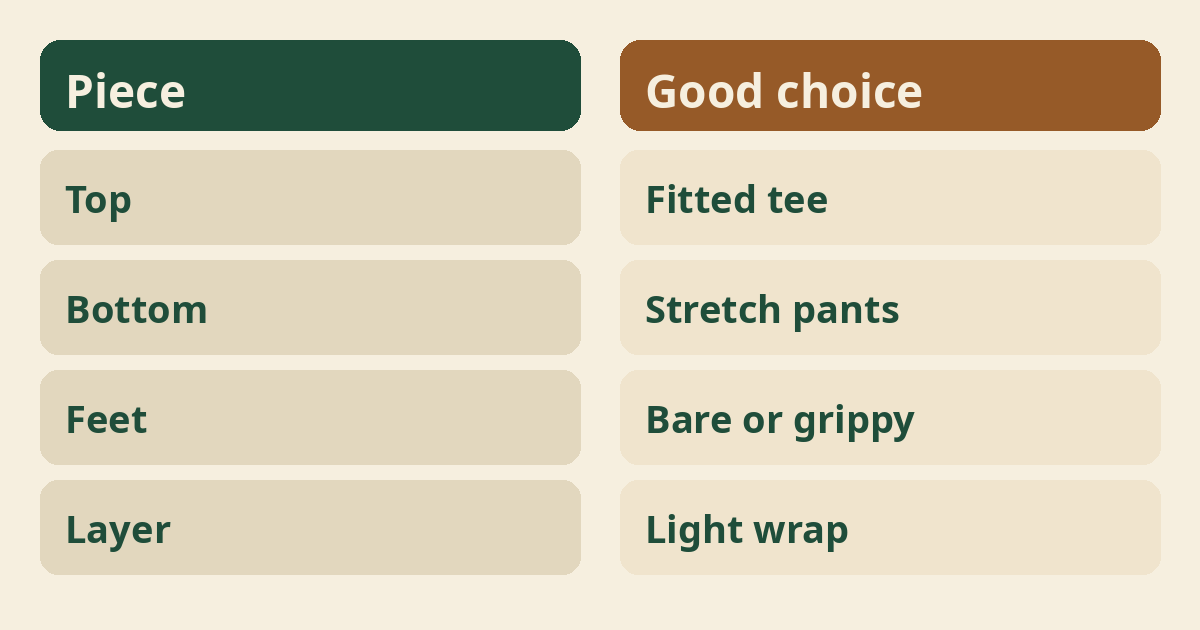
Start with one comfortable top and one comfortable bottom you can move in. Try a few squats, a forward fold, and a reach overhead at home. If nothing slides, pinches, or flashes, you have a good first outfit.
Step 1: What should I check about stretch?
Choose fabric that stretches in all directions. Hold the fabric and pull it gently sideways and lengthwise. If it springs back and does not feel tight, it will likely move well with you.
Step 2: How snug should the fit be?
Aim for fitted but not tight. Very loose tops fall over your face in forward folds. Very tight pieces limit your breath. A close, relaxed fit sits in the middle.
Step 3: How do I test an outfit at home?
Do a short test run in your living room before class. Fold forward, drop into a low squat, and lift your arms. Give the clothes a quick check from a mirror, and swap anything that shifts too much.
Step 4: What about layers?
Wear light layers you can remove easily. A thin sweater or wrap is handy for the start and end of class when your body is cooler. Take it off once you warm up.
Step 5: Do I need to think about the room?
Match your clothes to the room temperature. A heated or humid room calls for light, breathable pieces. A cool studio or an early morning at home may call for an extra layer.
What are good bottoms for beginners?
Stretchy leggings, joggers, or soft shorts are all good choices. Pick a waistband that stays flat when you fold forward. High, wide waistbands often feel more secure than thin elastic ones.
What are good tops for beginners?
A fitted tee, tank, or light long sleeve works well. Long loose shirts tend to slide down in poses like puppy pose. Shorter or closer-fitting tops stay out of the way.
Which fabrics feel best?
Soft cotton blends and stretchy synthetic blends are popular. Cotton feels natural and soft. Blends with some stretch dry faster and hold their shape. Choose what feels good on your own skin.
Is cotton a good choice?
Cotton is comfortable, but it can feel heavy when you sweat. Many people like it for gentle, slow classes. For a more active session, you may prefer a lighter blend that dries faster.
What about moisture-wicking fabric?
Moisture-wicking fabric moves sweat away from the skin, which many people find comfortable. It can be a nice option for warm rooms or active styles. It is optional, and plain breathable fabric is fine for gentle practice.
What colors and patterns should I pick?
Choose any color that makes you feel calm and at ease. Dark colors hide sweat marks, and light colors feel airy. Very thin pale fabric can turn see-through when stretched, so check it in the mirror.
Should I wear socks or go barefoot?
Most people practice barefoot because bare feet grip the mat best. If you feel cold or prefer cover, grippy yoga socks are an option. Regular socks can slip, so skip them on a smooth mat.
Do I need yoga shoes?
No, yoga is normally done without shoes. Shoes are removed before you step on the mat. Keep a pair of easy slip-ons for the walk to and from class.
What about a sports bra or supportive underwear?
Wear what keeps you comfortable and supported when you bend and fold. Choose pieces with no digging straps or hard seams. Light to medium support is usually enough for gentle yoga, though comfort varies from person to person.
What should I avoid wearing?
Avoid stiff, tight, or very loose clothes. Jeans, belts, and heavy buckles limit movement. Floaty tops and baggy pants can fall into your face or trip you up in standing poses.
Common mistake: Why not wear jeans?
Jeans do not stretch enough for most yoga poses. A squat or forward fold in denim can feel awkward and restrictive. Keep them for after class.
Common mistake: Why do clothes keep slipping?
Slipping usually means the fit or fabric is wrong for movement. Try a higher waistband, a shorter top, or a snugger layer. Test it at home before you go to class again.
Common mistake: Is more gear better?
No, too many extras can make a simple practice feel complicated. Beginners often buy a lot and use little. Start with a mat and comfortable clothes, then add things only when you truly need them.
Do props count as part of my outfit?
Props are separate from clothes, but they help you feel supported. A strap, block, or blanket can make poses easier on the body. See yoga props for beginners for simple ideas.
What about jewelry and accessories?
Keep jewelry to a minimum, or leave it at home. Rings, long necklaces, and dangling bracelets can snag on the mat or get in the way. A simple hair tie is usually all you need.
How should I handle long hair?
Tie long hair back so it stays off your face and neck. A soft ponytail or bun works well, but a bun at the back can bother your head in lying poses. A low braid is often more comfortable.
Who should be careful with clothing choices?
People with health conditions, injuries, or pregnancy should talk to a doctor first. Your doctor can say whether yoga suits you and how to adjust it. Pregnant students may want specific advice, as in prenatal yoga vs regular yoga.
Are yoga clothes a treatment for anything?
No, yoga clothes are not a treatment for any condition. They are just comfortable wear. If you have a health concern, talk with a qualified health professional and do not rely on clothing or yoga alone.
What are the benefits of wearing the right clothes?
Many people find that comfortable clothing helps them relax and stay focused. Results vary, and clothing is only one small part of practice. For general information about yoga and health, see National Center for Complementary and Integrative Health.
How do my clothes affect my breathing?
Clothes that are not tight around the chest and belly let you breathe more easily. A soft waistband matters for belly breathing. If your breath feels cramped, loosen or change the piece.
How do clothes help with gentle poses?
Stretchy, secure clothes let you settle into simple shapes without fuss. Poses like child’s pose and cat cow need freedom at the hips and back. Fabric that moves with you makes them feel easier.
Can I wear yoga clothes at my desk?
Yes, soft stretchy clothes make short desk stretches easier. Many people keep a comfortable layer at work for quick breaks. Try yoga at your desk for easy ideas.
How often will I need to wash them?
Wash your yoga clothes after each use if you sweat. Fresh clothes feel better and last longer. Follow the care label, and a small set of two or three outfits can cover a whole week.
How do I build a simple yoga wardrobe over time?
Add a piece only when you notice something missing. After a few weeks, you will know what you like. Maybe a warmer top, a better waistband, or a lighter fabric. Let your practice guide your shopping.
What is a good progression for gear?
Begin with comfortable clothes, then a mat, then props if you need them. See how often should you do yoga to plan a routine, and add items as your practice settles in.
Do I need to dress up for a teacher?
No, teachers care about how you feel, not what you wear. Ask the teacher or studio if you are unsure about the dress style. Most welcome plain, comfortable clothes in any color.
What mindset should I bring?
Come as you are, and let comfort come first. Yoga is not a fashion show. Wear what lets you be kind to your body and pay attention to your breath.
Where to read next
For a calm, beginner-friendly start, Ranjana Sinha’s Begin Where You Are is written for people who want simple steps. Our guide to starting a home yoga practice adds a gentle routine you can follow at home.
Frequently asked questions
What should a beginner wear to a first yoga class?
Wear stretchy, comfortable clothes that stay in place, such as leggings and a fitted tee.
Do I need to buy expensive yoga clothes?
No, plain comfortable clothes you already own are enough to begin.
Should I wear shoes in yoga?
Most people practice barefoot, with grippy socks as an option if you feel cold.
Can I wear shorts for yoga?
Yes, as long as they stay in place when you bend, fold, and squat.
Can I wear jeans for yoga?
Jeans usually feel too stiff, so it is better to choose stretchy pants.
The bottom line
Wear what lets you move and breathe with ease, then roll out your mat and begin.