
Yoga for truck drivers can mean a few gentle movements and calm breathing during a safe, fully parked break. Never stretch, turn, close your eyes, or follow a yoga routine while driving or while the truck is moving. Start with a stable seat or level ground, move within a comfortable range, and stop if anything feels wrong. This beginner guide offers general ideas, not a substitute for medical advice or rest required for safe driving.
This article is for general education and is not medical advice. If you have a health condition, injury, new symptoms, or concerns about exercise, ask your doctor before trying these movements.
What yoga means for drivers
For a truck driver, beginner yoga can be a brief, gentle movement break taken only after parking safely. It does not require a mat, difficult poses, or a long session. The goal is to pay attention to posture and movement without turning a break into a workout or delaying the rest you need.
Why drivers consider it
Some drivers use a short routine to add movement and a change of focus to a long day of sitting. A few easy motions can be done beside the truck or in a stable parked seat. People respond differently, so treat the practice as an option rather than a promise of better health or performance.
Start with safety
The first step is to secure the vehicle and make sure you are in a safe place to stop. Park legally, follow workplace and road rules, secure the truck as required, and leave the driving area clear. Do not begin if the location, weather, lighting, or traffic makes moving around unsafe.
Check with your doctor
Ask your doctor before beginning if you have a medical condition, a recent injury or surgery, balance concerns, or symptoms that are new or unexplained. This matters especially if a movement might conflict with your care plan. If you are unsure whether a stretch is suitable, skip it until you can get personal guidance.
Choose the right moment
Practice only when the truck is stationary and you are fully off driving duties for that moment. Never do yoga at a red light, in traffic, during a rolling stop, or while controlling a moving vehicle. If a break is short, choose rest and safe driving readiness over completing a routine.
Step one: settle in
Begin seated only when the truck is parked securely and the seat is stable. Sit upright with both feet supported, hands resting on your thighs, and shoulders easy. Take a moment to notice how you feel, then keep the movement small enough that you can stay comfortable and steady.
Step two: move your feet
Slow ankle circles or gentle toe and heel lifts can bring attention to the feet while seated. Keep the movement relaxed and brief, and do not force the ankles into a large range. If your feet feel numb, painful, unusually weak, or otherwise concerning, stop and seek appropriate medical advice rather than stretching through it.
Step three: relax your shoulders
Gentle shoulder rolls can help you notice and release unnecessary tension without straining. Lift the shoulders slightly, guide them back and down, and repeat at an easy pace while sitting still. Keep the neck relaxed and the range small; skip the motion if it causes pain, dizziness, or another unusual feeling.
Step four: turn your head gently
A small, comfortable look from side to side can be part of a seated reset after parking. Move slowly and stop before reaching any pull or pain; do not use your hands to force the head farther. If you want a neck-focused practice, see gentle neck and shoulder yoga for another beginner option.
Step five: try seated cat-cow
Seated cat-cow uses a small change in the shape of the back while you remain supported. Rest your hands on your thighs, gently round the back, then return to a comfortable upright position without pushing the chest forward. Keep the movement smooth and modest; beginner cat-cow instructions can help you learn the basic pattern.
Step six: make a side reach
A light side reach can add a small stretch while you stay seated and balanced. Keep both sitting bones supported, raise one arm only if that feels steady, and lean a little to the opposite side without twisting. Return to centre before changing sides, and skip the reach if your shoulder or back objects.
Step seven: add an easy twist
A seated twist should be small, slow, and comfortable, never a forced turn. Sit tall, place your hands lightly on your thighs, and turn only as far as feels easy while keeping your hips still. Come back to centre before repeating; drivers with back concerns can review general back-care yoga guidance and ask their doctor.
Step eight: stand with support
If you leave the cab, stand up slowly and use a stable handhold if needed. Give yourself time to adjust before walking, especially after sitting for a while. Do not use a door edge, loose item, or uneven step as a substitute for a reliable support, and avoid standing movements where footing is uncertain.
Step nine: stretch only on safe ground
A simple standing stretch is optional only when the ground is level, clear, and away from traffic. Keep one hand near a stable support, place your feet comfortably, and make a small reach rather than a deep bend. If space or footing is poor, stay seated or skip the movement altogether.
Step ten: finish and reset
End by returning to a comfortable neutral position and checking how you feel. Take a few ordinary breaths, gather your belongings, and make sure the area is clear before resuming work. A routine is complete even if you did only one movement or chose to rest instead.
Use calm breathing
Let breathing remain natural and unforced during beginner yoga. You can notice an easy inhale and exhale without holding the breath, counting, or trying to breathe deeply. If breath focus feels uncomfortable, return to normal breathing; gentle belly breathing basics are an optional guide for a parked break.
How long should it take?
A beginner session can be just a few minutes, and there is no required minimum. Use only the time that fits a safe break and your work rules. Stop before you feel tired or rushed, and do not let a yoga routine replace a proper break, meal, sleep, or other needed recovery.
How often should you practice?
There is no single schedule that suits every driver. Some people may choose a brief movement break when they are safely parked; others may prefer not to add yoga on a given day. Follow your health advice, driving schedule, and comfort, and see how to think about yoga frequency for general planning.
Fit it around the route
Plan movement around lawful, safe stops instead of trying to fit it into driving time. A route may leave little room for a routine, and that is fine. Never delay a required check, ignore fatigue, or continue driving when you need rest just to finish an exercise plan.
Common mistake: stretching while driving
Doing yoga while the truck is moving is unsafe and is not part of this guide. Do not turn the wheel, reach, breathe with eyes closed, or follow audio instructions while driving. Wait until safely parked and off driving duties; if you cannot stop safely, skip the practice.
Common mistake: forcing a pose
A stretch should stay comfortable and should never be forced to match a picture. Avoid bouncing, strong pulling, and sudden twisting, especially when your body feels stiff or tired. More range is not a measure of success, and stopping early is a sensible choice.
Common mistake: moving too quickly
Slow transitions give you time to notice balance and comfort. Pause before standing, changing sides, or walking away from the vehicle. If you feel unsteady, sit back down only if you can do so safely, and do not continue with standing movements.
Props you might use
A chair or the parked cab seat may be enough for a simple routine. A folded towel can add comfort only if it is stable and does not slide; keep loose objects away from pedals and controls. For safe, basic ideas, read beginner yoga prop guidance.
Who should be careful?
People with a health condition, injury, balance issue, or symptoms should check with a doctor before trying yoga. Use extra care if a movement affects your breathing, causes pain, or feels unfamiliar. Do not use a general online routine to decide whether a specific symptom is safe to ignore.
Is this a treatment?
No, this routine is not a treatment and does not replace medical care. Yoga should not be used to diagnose a problem, manage an urgent symptom, or change prescribed care. Talk with a qualified clinician about your health questions and follow their advice.
Possible benefits
Many people find gentle movement and a quiet pause pleasant, but results vary. A short practice may help some people feel more aware of posture or more settled during a break, while others may notice little or prefer rest. For balanced general information, see National Center for Complementary and Integrative Health and discuss individual questions with your doctor.
Progress at your own pace
Keep the routine simple until each movement feels familiar and comfortable. You can repeat one easy motion, leave out another, or stop for the day; there is no need to add harder poses. If you later want more, build gradually and ask a clinician if you have health concerns.
Consider a qualified teacher
A qualified yoga teacher can show basic movements and offer safer ways to adapt them. Tell the teacher that you drive for work and explain any limits your doctor has given you. Choose instruction that welcomes questions and modifications, and do not follow a pose that feels wrong just because it is in a class.
Keep the mindset practical
Yoga for drivers works best as a small optional practice, not another performance target. The useful choice may be a few gentle motions, a normal rest break, or no yoga that day. Pay attention without judging yourself, and let safety and comfort decide what you do.
Stop if something feels wrong
Stop the movement if you feel pain, dizziness, unusual breathlessness, weakness, numbness, or another worrying change. Do not try to push through or test the symptom with another pose. Seek medical help appropriate to the situation, and do not drive if you do not feel safe to drive.
Respect rest and fatigue
Yoga is not a substitute for sleep or a safe rest break. If you are tired, drowsy, or not alert enough to drive safely, follow road-safety guidance and your employer’s rules rather than relying on stretching or breathing to keep going. A movement routine cannot make unsafe driving safe.
Use the cab thoughtfully
The cab can offer a seat for small movements, but it is not a reason to ignore vehicle safety. Keep movements clear of the steering wheel, pedals, switches, and other controls, even when parked. Do not use the seat if it is unstable or if getting in and out feels unsafe; choose a safer place or skip the routine.
Adapt to weather and ground
Outdoor standing stretches are optional and should be skipped when conditions make footing unreliable. Rain, ice, heat, poor light, loose gravel, or nearby traffic can make a simple movement less safe. Stay in a secure place, use seated options only if suitable, or take a regular break without yoga.
Make a small routine
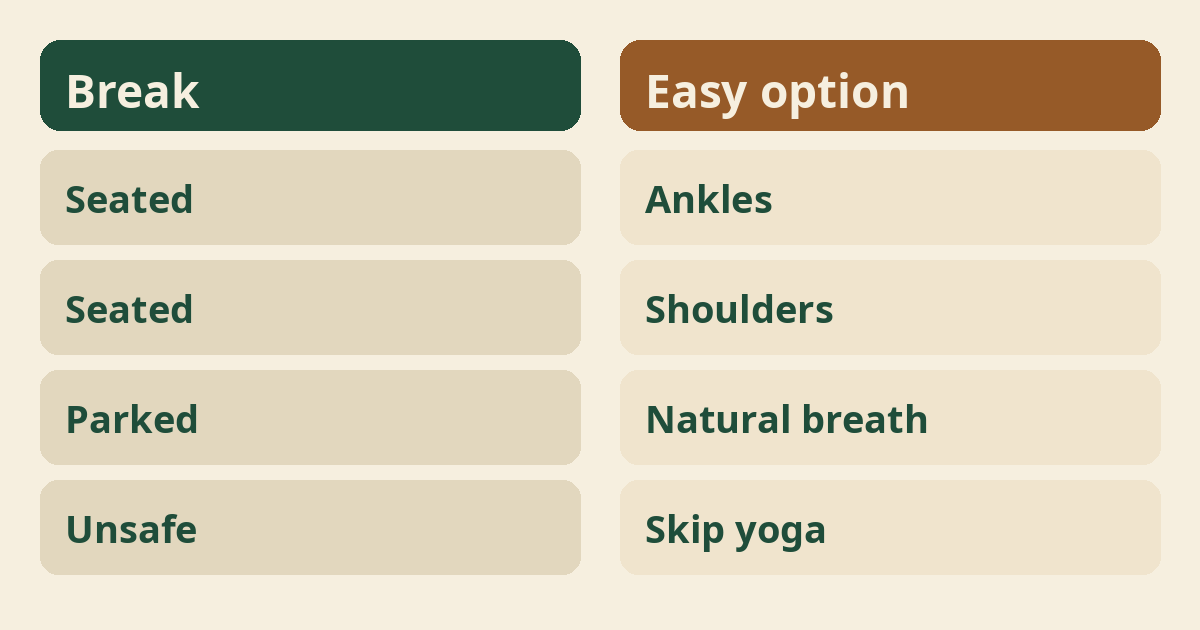
A short repeatable sequence can be easier to remember than a long list of poses. For example, settle in, roll the shoulders, move the ankles, take natural breaths, and finish with a comfort check. Keep every part optional and never rush through it to meet a target.
Where to read next
For a calm, beginner-friendly start, Ranjana Sinha’s Begin Where You Are is written for people who want simple steps. Our guide to starting a home yoga practice adds a gentle routine you can follow at home.
Frequently asked questions
Do I need a yoga mat?
No, a mat is not required for the gentle seated ideas in this guide.
Can I do yoga at a fuel stop?
Only if you are parked legally and the area is safe for the movement you choose.
Can I stretch in the driver’s seat?
You may try small seated movements only while the truck is securely parked and you are off driving duties.
What if I feel stiff?
Keep movements small and comfortable, and do not force a stretch.
Is yoga required for drivers?
No, yoga is optional and is not a requirement for safe driving.
The bottom line
Keep any yoga break gentle, optional, and limited to a safe parked stop; your health advice and driving safety come first.

