
Yoga can give football players a calm, structured way to explore movement, balance, and body awareness alongside their usual training. A beginner practice does not need advanced poses or a long session. Start with comfortable shapes, easy breathing, and enough space to move without rushing. Football training and yoga have different aims, so let each support a sensible weekly routine without expecting yoga to replace coaching, recovery guidance, or medical care.
This article is for general education and is not medical advice. If you have a health condition, current injury, recent surgery, or uncertainty about exercise, check with your doctor before starting and follow their guidance.
What yoga means here
Yoga is a set of mindful movement and breathing practices that can be adapted for beginners. For a football player, a session may include standing poses, floor shapes, gentle mobility, and quiet pauses. There is no need to imitate advanced poses or compare your range of motion with another player. Choose movements that feel controlled and comfortable today.
Why players may explore it
Many football players explore yoga as a different way to move and pay attention to their bodies. Practice can offer a change of pace from drills, matches, and gym sessions. Some players enjoy the focus, breathing, or variety it brings to a routine. Those experiences differ by person, and yoga is not a promise of improved performance.
Set a modest first goal
A useful first goal is to learn a few simple movements without forcing a stretch. Keep the first session short enough to stay attentive, and leave time to notice how each position feels. You can stop early or rest whenever needed. A steady, comfortable start is more useful than trying to prove flexibility.
Choose a suitable time
Choose a time when you can move without being rushed or interrupted. Some people prefer a light session after a warm-up or on a separate training day, while others like a quiet practice at home. Avoid squeezing yoga into a moment when you are exhausted or distracted. Ask your coach or doctor about fitting activity around your own plan.
Prepare a clear space
A clear, nonslip space lets you move without needing to watch for obstacles. Use a mat if you have one, or another stable surface that does not slide. Leave room to extend your arms and step in each direction. Keep water nearby, and choose comfortable clothing that lets you bend and breathe normally.
Begin with a body check
Start by noticing how you feel before choosing the day’s movements. Stand or sit comfortably and take a moment to notice energy, balance, and any areas that feel unusual. Do not use this check to diagnose a problem. If you have a new or concerning symptom, pause and ask an appropriate health professional for guidance.
Step one: settle your stance
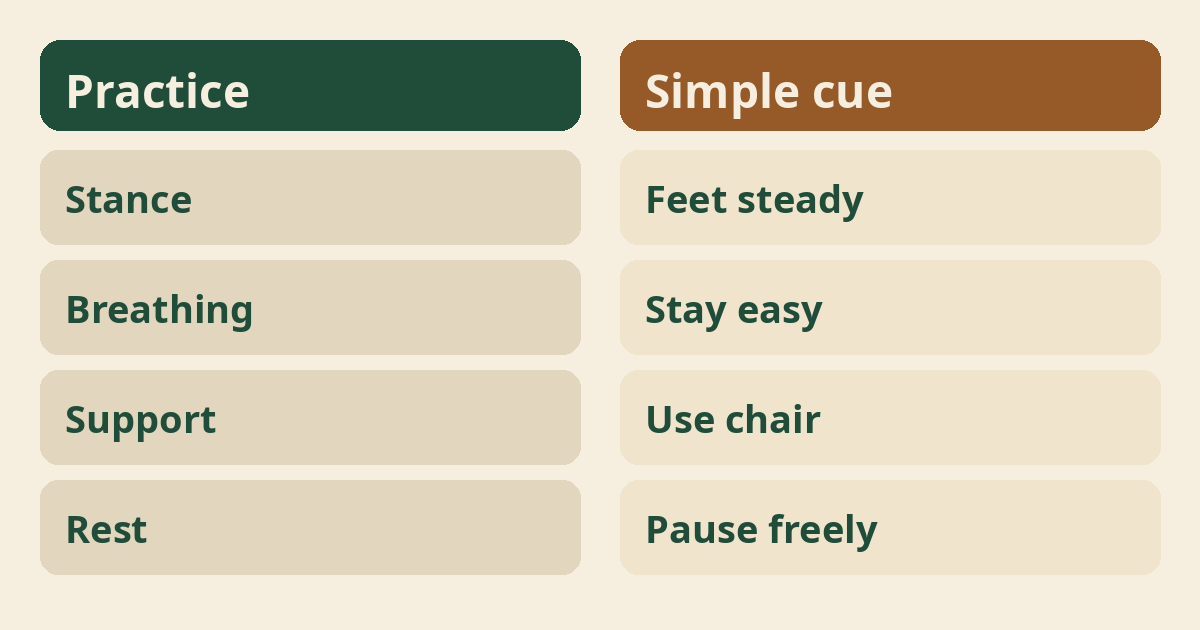
A steady stance gives you a simple starting point for practice. Stand with feet about hip-width apart, knees soft, and arms resting by your sides. Feel the floor under both feet without gripping your toes. If standing feels unsteady, sit on a firm chair and keep the movement small.
Step two: move the spine gently
Small, unhurried spinal movements help you explore motion without chasing a deep stretch. From hands and knees, gently round and lengthen your back within a comfortable range. Let the breath stay easy and keep your neck relaxed. Use a beginner Cat-Cow guide if you want a separate description of that familiar movement.
Step three: try a supported lunge
A supported lunge is an option for practicing a stable, modest step shape. Place one foot forward and lower the back knee onto a folded towel if that feels comfortable. Keep your hands on a chair or blocks, and make the stance short enough to control. Change sides slowly, or skip the shape if it does not feel right.
Step four: add a side reach
A gentle side reach gives you a chance to move your arms and torso with control. Sit or stand tall, raise one arm only as far as comfortable, and lean slightly to the opposite side without twisting. Keep both sides of your body relaxed and breathe normally. Return upright before changing sides rather than bouncing into the reach.
Step five: pause on the floor
A floor-based rest can make a session feel calmer and less demanding. Sit back toward your heels only if the position is comfortable, or place a cushion between your body and legs. Rest your hands on the floor or a support. For another option, see a supported Child’s Pose guide, and leave it out if kneeling bothers you.
Step six: finish with balance
A simple balance practice can help you notice how you organize your stance. Stand near a wall or sturdy chair, keep one hand close to support, and shift weight gently from one foot to the other. If steady, briefly lift a heel rather than raising a whole leg. Use a beginner Mountain Pose guide to explore a quiet standing position.
Keep breathing easy
Comfortable breathing matters more than making the breath long or complicated. Let air move naturally through your nose or mouth, whichever feels easy, and avoid holding your breath during a pose. If you feel light-headed or uncomfortable, return to normal breathing and sit or rest. A beginner does not need advanced breath-control techniques.
How long to practice
A short session is enough to learn the basic rhythm of a beginner practice. You might begin with ten minutes, including a calm start and finish, then adjust based on comfort and your wider activity plan. This is an example, not a required target. Stop sooner if you feel unwell or if a movement causes concerning discomfort.
How often to practice
Practice frequency should fit your schedule, football workload, and personal guidance. Some beginners choose one or two brief sessions in a week, then decide whether the routine suits them. There is no universal schedule for every player. For ideas on choosing a rhythm, read how often to do yoga, and discuss training load with your coach.
Yoga and football practice
Yoga should sit alongside football practice rather than compete with it. Your coach can help you understand how an extra activity fits your team plan, while your doctor can advise about health concerns. Avoid treating an online routine as a replacement for team warm-ups, coaching, or a clinician’s instructions. Keep the total workload in view.
Common mistake: forcing range
Forcing a position is not necessary for a useful yoga session. A stretch should not become a contest or a test of toughness. Use a smaller range, add support, or leave the pose out if you cannot stay relaxed. Stop for sharp, worsening, or unusual symptoms and seek appropriate professional advice rather than pushing through.
Common mistake: copying others
Copying another person’s pose can lead you away from your own comfortable range. Players differ in experience, body shape, mobility, and how they feel on a given day. Treat a demonstration as one possible version, not a standard you must match. A chair, shorter stance, or resting position can be a sensible alternative.
Common mistake: rushing transitions
Moving slowly between poses makes it easier to stay aware of your balance. Take a moment to place your hands and feet before changing position. If you are tired after training, simplify the sequence or stop instead of moving quickly to finish. You do not have to complete every shape in a video or class.
Use props without hesitation
Props can make beginner positions easier to arrange and hold comfortably. A sturdy chair, folded blanket, or yoga block can bring support closer to you. Props are tools, not signs that you are doing yoga incorrectly. See a beginner guide to yoga props for simple ways to set up a practice space.
Who should be careful
Anyone with a health concern or current injury should get medical guidance before starting. Speak with your doctor first if you have a diagnosed condition, recent operation, recurring symptoms, or a concern about exercise. Follow any limits they give you, and tell a qualified instructor about relevant movement restrictions. When guidance is unclear, wait and ask rather than testing a pose.
Is yoga a treatment?
Yoga is not a treatment for a football injury or a medical condition. Do not use a class or online routine as a substitute for an assessment, treatment plan, or professional advice. If something hurts or affects ordinary activity, contact a qualified health professional. A yoga teacher can guide movement, but cannot replace your doctor or physiotherapist.
Possible benefits, with care
Many people find that yoga offers a calm way to practice movement, attention, or breathing, but results vary. Some players may enjoy the routine or find it helps them notice how a movement feels; others may not find it useful. These are personal experiences, not guaranteed outcomes or medical claims. For general information about yoga and health, see National Center for Complementary and Integrative Health and discuss personal questions with your doctor.
Progress at your own pace
Progress means finding a routine that remains comfortable and workable for you. You might first learn a few poses, then explore a small change in balance or support when the basics feel familiar. There is no need to deepen every shape or add time each week. If your comfort changes, return to an easier option or pause.
Choose a suitable teacher
A suitable teacher explains options and respects your choice to rest or stop. Look for clear beginner guidance, demonstrations of simpler versions, and calm reminders not to force positions. Before joining, ask whether the teacher can accommodate your experience and any movement limits from your clinician. A class should not pressure you to disclose private health details publicly.
Practice mindset
A helpful mindset is curiosity without pressure to perform. Yoga is not another football trial, and there is no score for how far you reach. Notice the breath and the support of the floor, then let a pose be simple. A quiet practice can still be worthwhile even when it looks ordinary.
After a session
Finish by noticing how you feel and choosing what to do next with care. Sit or stand quietly for a moment, then return to your normal routine at an unhurried pace. Do not assume that feeling different means a health problem has changed. If you notice persistent or worrying symptoms, seek advice from a qualified professional.
Before a match
Avoid adding an unfamiliar routine right before a match without checking your plan. A new class or deep stretch may not fit every player’s schedule or preference. Keep familiar team guidance first, and ask your coach or clinician about timing if you are unsure. There is no requirement to do yoga on match day.
On a rest day
A rest day can include quiet movement only if it fits your recovery guidance. Rest does not have to mean adding another workout. If your coach or health professional recommends rest, follow that advice. When gentle movement is appropriate for you, keep it easy and stop if you feel uncomfortable.
At home or in class
Home and class practice can both work when the setting feels safe and appropriate. At home, choose a beginner routine with clear options and enough room around you. In class, tell the instructor you are new and ask where to rest if needed. Neither setting removes the need to follow medical advice or your team’s training plan.
Adapt for tight space
A small space can still support a simple seated or standing practice. Keep movements close to your body and avoid steps that bring you near furniture or sharp edges. A stable chair can support balance or seated poses. If you cannot move safely in the available space, wait until you can set up a clearer area.
When to pause
Pause whenever you feel unwell, unsafe, or unsure about a movement. Sit or lie down in a comfortable position and let your breathing return to normal. Do not resume just to finish a sequence. If symptoms are severe, persistent, or worrying, contact a medical professional or local emergency service as appropriate.
Make the routine yours
A beginner routine should be easy to adjust rather than fixed to one exact sequence. Keep a few movements that feel comfortable and replace the rest with a rest position or simple breathing. Your needs may change with training, schedule, and health guidance. Use your own comfort and professional advice, not a promise from a routine, to decide what belongs.
A note for parents and coaches
Parents and coaches can support a beginner by making choice and safety visible. Invite the player to ask questions, modify, or sit out without embarrassment. Do not use yoga as a test of toughness or a substitute for medical evaluation. For younger players, follow the guidance of their parent or guardian, coach, and health professional.
Keep expectations realistic
A few sessions cannot guarantee a change in skill, fitness, or injury risk. Football ability depends on many factors, and yoga is only one optional activity. Focus on learning the movements and deciding whether you enjoy the practice. Let coaches and clinicians address performance plans or health concerns within their roles.
Review your routine
Review a routine when it stops feeling suitable or your circumstances change. A new symptom, change in training, or fresh medical advice is a reason to pause and reassess. You can shorten the session, return to supported movements, or stop while you seek guidance. Keeping a simple note of what you tried may help you explain your questions to a professional.
Where to read next
For a calm, beginner-friendly start, Ranjana Sinha’s Begin Where You Are is written for people who want simple steps. Our guide to starting a home yoga practice adds a gentle routine you can follow at home.
Frequently asked questions
Can a football beginner do yoga?
Many beginners can explore gentle yoga, but anyone with health concerns should ask a doctor first.
Does yoga replace football training?
No, yoga is optional movement and does not replace coaching or a team’s training plan.
Do I need to be flexible?
No, begin with comfortable ranges and use support rather than forcing a pose.
How long should my first session be?
A short session, such as ten minutes, can be a starting example, not a rule.
Can yoga treat a football injury?
No, yoga is not a treatment, so seek guidance from a qualified health professional.
The bottom line
Start small, follow medical and coaching guidance, and keep only the movements that feel comfortable and useful to you.

