
Yoga can give nurses a brief, steady way to move and pause around a demanding workday. You do not need a long class, special clothes, or a perfect schedule to begin. This guide offers simple options for before or after a shift, on a day off, or during a quiet break. Keep every movement comfortable, follow your own limits, and ask a healthcare professional about personal concerns before starting, as your schedule allows.
This article is general education, not medical advice or a substitute for care from a qualified professional. If you have a health condition, injury, pregnancy-related question, or concern about movement, check with your doctor before trying these ideas.
Why nurses try yoga
Yoga offers nurses a simple way to set aside a few minutes for mindful movement. Nursing days can involve long periods standing, quick changes in task, and little control over breaks. A short practice can create a deliberate pause without requiring a full class. Choose movement because it feels useful to you, not because you think you must keep up with anyone else.
What yoga means
Yoga combines movement, attention, and breathing in different ways. A beginner practice can be as simple as standing steadily, moving the shoulders gently, and noticing a few easy breaths. Some classes include more poses or meditation, while others are quiet and slow. There is no single routine every nurse needs to follow.
Can shift workers practice
Nurses can adapt a yoga routine to the time and energy they have. Rotating shifts and overtime can make fixed class times hard to keep. Think in small units: a few movements before work, a short sequence on a day off, or a quiet rest after a shift. A missed day is not a failure; begin again when it fits.
Start with a safety check
Begin only when you feel alert enough to move with care. If you are very sleepy after a night shift, choose quiet breathing or rest rather than balancing poses. Use a clear floor space, stable chair, and wall if needed. If any movement feels wrong or brings pain, stop and ask a qualified professional what is suitable for you.
Choose a simple setting
A small, uncluttered space is enough for a beginner routine. You can use a mat, carpet, or firm floor that does not slide. Move bags, cords, and equipment away so you have room to step and sit. A calm corner may help, but silence and a special room are not requirements for a useful practice.
Set a gentle intention
Pick one modest purpose for the practice before you begin. You might want to move slowly, notice your posture, or take a few minutes away from screens. Keep the aim small enough for the day you are having. If you have little energy, a seated movement and a pause can count as your full practice.
Step 1: Stand and settle
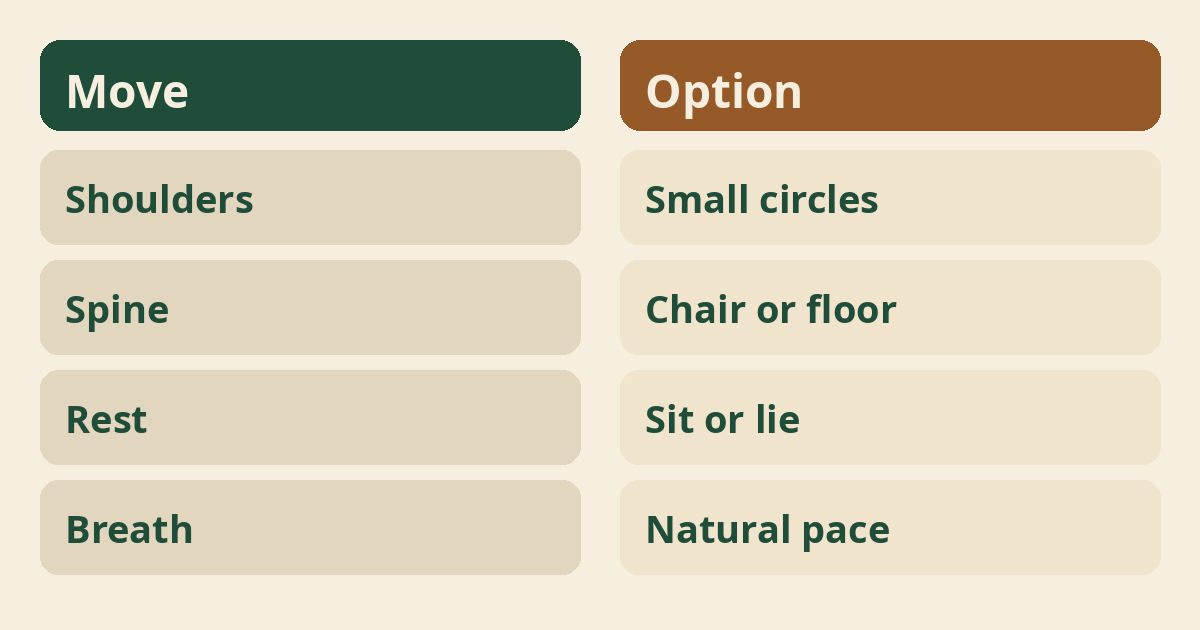
Start by standing with both feet resting comfortably on the floor. Place your feet about hip width apart and let your arms hang naturally. Notice whether your weight feels even without forcing a rigid pose. If standing feels unsteady, sit on a firm chair and follow the same slow attention from there.
Step 2: Release the shoulders
Gentle shoulder circles can help you explore comfortable movement. Lift your shoulders only as far as feels easy, then roll them back and down in a small circle. Repeat slowly a few times, then reverse direction if that remains comfortable. Keep your jaw and hands relaxed, and avoid pulling hard on the neck.
Step 3: Move the spine gently
Cat and cow can be practiced on hands and knees or from a chair. On the floor, place hands under shoulders and knees under hips, then gently round and lengthen the back within an easy range. From a chair, rest hands on thighs and make the same small movement. See the cat-cow guide for a beginner-friendly version.
Step 4: Rest in child’s pose
Child’s pose is an optional resting shape, not a required stretch. Kneel and fold forward only if the position feels comfortable for your knees, hips, and back. You can place a cushion under your chest or sit upright in a chair instead. Read the child’s pose guide for options, and leave the pose out if it does not suit you.
Step 5: Try a seated twist
A small seated turn can add gentle variety to a short routine. Sit tall on a stable chair and turn your chest a little to one side without pulling on the chair or forcing your neck. Return to center, pause, and try the other side if comfortable. Keep the movement mild and skip it if twisting is not suitable for you.
Step 6: Finish with stillness
End with a short pause so you can notice how you feel. Sit or lie down in a position that feels easy, and let your hands rest. There is no need to change your breathing or search for a special feeling. Take a moment to check that you are ready before standing and returning to other tasks.
Use easy breathing
Let breathing remain natural while you explore the poses. Avoid holding your breath or trying to breathe as deeply as possible. If you want a focus, notice the air moving in and out without controlling it. A simple belly-breathing practice is another option; see belly breathing for beginners and stop if it feels uncomfortable.
How long should it take
A short practice can be a reasonable starting point for a busy nurse. Try five to ten minutes if that feels manageable, then adjust to your schedule and energy. A longer session is optional, not a measure of success. If you have only two minutes, choose one comfortable movement and finish with a pause rather than rushing through a sequence.
How often should nurses practice
A steady, realistic routine matters more than a demanding schedule. You might begin once or twice in a week and see how it fits around your shifts. If the practice feels comfortable, choose a frequency you can maintain without pressure. For more planning ideas, read how often to do yoga and adapt the suggestions to your own week.
Before a shift
Keep pre-shift movement brief and leave time to get ready. A few shoulder circles, standing comfortably, and easy breathing may be enough. Avoid trying unfamiliar or intense poses when you need to leave soon. Pick movements you already know, keep your clothes and work bag ready, and finish with time to transition calmly.
After a night shift
After overnight work, choose rest or mild movement according to your alertness. If you feel drowsy, avoid challenging balance or any position where you could fall. You may prefer lying down, sitting quietly, or going to bed instead of exercising. There is no need to use yoga to push through tiredness or delay sleep that you need.
At a desk or station
A chair-based pause can fit when floor space is unavailable. Sit with both feet supported and make small shoulder rolls or gentle ankle movements if these are comfortable. Keep your attention on your own space and do not block a walkway or interrupt patient care. See yoga at your desk for more seated ideas.
Use props if helpful
Props can make a pose easier to adjust, but they are optional. A folded blanket, cushion, or sturdy chair may support a comfortable position. Choose items that do not slide or tip, and place them before you start moving. The beginner guide to yoga props explains common choices; household items are enough for a basic routine.
Wear comfortable clothing
Clothes that let you move without distraction are suitable for a simple practice. You do not need a uniform, branded set, or special footwear for gentle movements at home. If you practice at work, follow the workplace dress and safety rules first. Avoid loose items that could catch, and make sure your floor or mat is stable.
Common mistakes
The most common beginner mistake is turning a gentle practice into a test. Do not force a pose, hold your breath, or compare your range of motion with another person. Avoid trying to make up for missed sessions with a long, hard routine. If a step feels awkward, reduce its range, use a chair, or leave it out.
Adjust for limited energy
You can scale a routine down on a demanding day. Choose two movements instead of six, or remain seated from start to finish. A few minutes of quiet attention may fit better than physical poses after an exhausting shift. Let the plan change with the day, and do not treat a smaller practice as a lesser one.
Who should be careful
Nurses with health concerns should get personal guidance before beginning. Ask your doctor before trying yoga if you have a medical condition, recent injury or surgery, balance concern, pregnancy-related question, or symptoms that worry you. A clinician can help you understand whether particular positions or effort levels are appropriate. Tell a qualified yoga teacher about any relevant limits before class.
Is yoga a treatment?
No, this beginner routine is not a treatment for a health condition. Yoga is not a replacement for medical care, prescribed treatment, rest, or workplace support. Do not use a pose or breathing exercise to manage a new or serious symptom instead of seeking appropriate care. If you are unsure whether movement is suitable, ask your doctor first.
Possible benefits
Many people find that gentle yoga supports a sense of ease, attention, or movement, but results vary. A personal experience is not a promise that the same outcome will happen for you. Keep expectations modest and note how a routine feels over time without judging yourself. For general background, consult National Center for Complementary and Integrative Health and discuss health questions with a qualified professional rather than relying on a blog post.
Progress at your own pace
Progress can mean finding a version that feels more comfortable for you. You might learn a chair variation, remember a breathing cue, or build a routine that fits between shifts. There is no need to reach a deeper pose or increase the time every week. Change one small part only when the current version feels steady and appropriate.
Choosing a teacher
A suitable teacher should welcome questions and offer options. Look for beginner instruction that explains how to modify poses and reminds students not to force movement. Ask about the teacher’s training and whether the class is appropriate for your needs. A teacher can guide practice, but cannot replace personal advice from your healthcare professional.
Mindset for busy nurses
A kind, flexible approach makes a routine easier to return to. You do not need to earn rest or prove discipline by practicing when exhausted. If work interrupts your plan, resume later without criticism. Treat each session as an option to check in with yourself, not another task that must be completed perfectly.
Practice at work thoughtfully
Keep workplace movement brief, private, and compatible with your duties. Patient care, infection-control rules, break policies, and shared spaces come first. Do not practice where you might obstruct staff or equipment, and do not leave responsibilities unattended. A quiet stretch during an approved break is optional; if the setting is not appropriate, wait until you are off duty.
Hydration and rest
Yoga does not replace water, food, sleep, or a proper break. Follow your workplace guidance and your own care needs, especially during a long shift. Avoid strenuous movement when you are depleted or unwell. Gentle movement can sit alongside normal self-care, but it should not be used to cover up a need for support or recovery.
When to stop
Stop the movement if it causes pain, dizziness, or another concerning feeling. Return to a safe seated or resting position and do not push through symptoms. If a symptom is severe, new, or does not settle, seek appropriate medical help. Before trying the movement again, ask a qualified professional whether it is suitable for you.
Start with a simple plan
A small plan is more useful when it can flex around real shifts. Choose a short sequence, decide where you might practice, and keep an easier version ready. You could pair it with changing out of work clothes or another routine that already happens. If your schedule changes, move the practice rather than treating the original time as a rule.
Where to read next
For a calm, beginner-friendly start, Ranjana Sinha’s Begin Where You Are is written for people who want simple steps. Our guide to starting a home yoga practice adds a gentle routine you can follow at home.
Frequently asked questions
Do nurses need a yoga mat?
No, a stable chair or non-slip floor can be enough for gentle beginner movements.
Can I do yoga after a long shift?
Only if you feel alert and comfortable; rest may be a better choice when you are very tired.
Is a ten-minute session enough to begin?
Yes, a brief practice can help you learn whether the movements suit you.
Should I practice in my scrubs?
Follow workplace rules, and choose clothes that let you move safely without catching on anything.
What if I cannot do a pose?
Skip it, use a comfortable chair variation, or ask a qualified teacher for an option.
The bottom line
Begin with one gentle movement, keep your own limits in view, and let your routine fit the realities of nursing work.

