
A tight, gassy belly after dinner can flatten a whole evening, and slow beginner yoga is one simple way many people ease that pressure at home. This guide keeps everything easy: a few floor poses, calm breathing, and clear answers on how long and how often to practice. You will learn which poses people reach for when gas feels stuck, when to roll out the mat, and when to call a doctor instead. No experience needed, just a quiet corner and ten minutes.
This article is for general education only and is not medical advice. If you have a gut condition, ongoing pain, or any health concern, check with a doctor before trying these poses.
What is yoga for bloating and gas?
It is a short, slow practice built around poses that let the belly soften and move. You rest, fold, rock, and twist in easy shapes while breathing low and steady. The aim is comfort, not a workout. Anyone new can follow along on a mat or a carpet.
Why do people try it?
Most people want a calm, low-cost way to help a tight belly at home. Big meals, long desk days, stress, and travel can all leave you feeling puffy. A short practice fits into normal life and asks for no special gear. It also buys you a few quiet minutes, which many find helpful on its own.
Can movement help trapped gas?
Slow movement and position changes may help trapped gas shift and pass. Hugging the knees in, rocking, and soft twists all change the shape of the belly. That gives pockets of gas a chance to move along. Results vary, so treat it as comfort care rather than a fix.
How do I start today?
Pick three poses from this guide and give them ten quiet minutes. Wear loose clothes and wait a while after a big meal. Keep a pillow close by for support. Stop any shape that pinches or hurts.
What props do I need?
A mat, a pillow, and a folded blanket cover everything here. Props bring the floor closer so poses feel kind instead of strained. If you are new to blocks and bolsters, our guide to yoga props for beginners shows cheap swaps you already own. Firm couch cushions work well too.
Step one: settle and breathe
Lie on your back with bent knees and take ten slow breaths. Rest one hand on the belly so you can feel it rise and fall. Keep the jaw loose and let the exhale run long. This tells your body it is safe to soften.
Step two: child’s pose
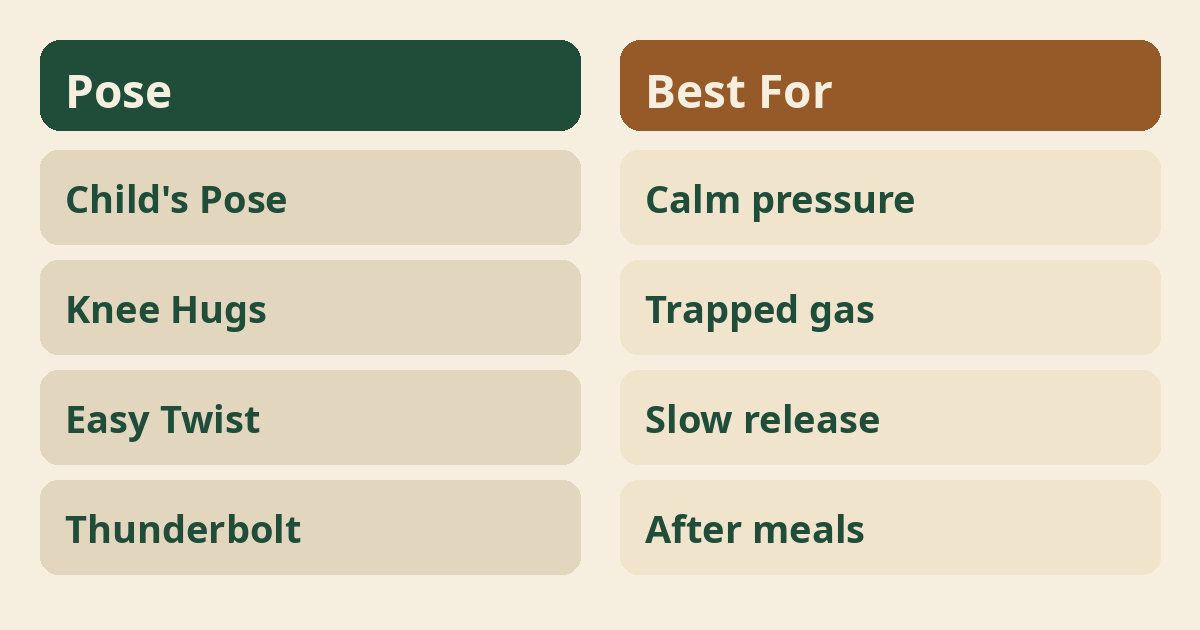
Fold forward over a pillow and let the belly rest heavy. Bring the knees wide, big toes touching, forehead down. The soft pressure across the stomach can feel soothing on a gassy day. If the shape is new, our walk-through of child’s pose for beginners shows the easy version.
Step three: cat-cow
Rock the spine slowly to wake the belly up. On hands and knees, arch on the inhale and round on the exhale. Move with the breath for eight to ten rounds. Our page on cat-cow pose for beginners covers form and common mistakes.
Step four: hug the knees in
Lying down, pull one knee and then both knees toward the chest. Rock a little side to side if that feels good. This is the classic shape people reach for when gas feels stuck. Hold about a minute and keep breathing low.
Step five: easy twist
Drop both bent knees to one side and breathe into the belly. Twists wring the middle softly, a bit like pressing water from a sponge. Keep both shoulders near the floor and stay six to eight breaths per side. Come back through the center slowly.
Step six: rest and notice
Finish lying flat for two quiet minutes. Let the belly go soft and heavy. Notice whether the pressure has shifted since you started. That check-in matters more than how any pose looked.
How should I breathe?
Slow belly breathing is the engine of this whole practice. In through the nose, out long through the nose or soft lips. Short, held breaths tend to tense the stomach, so keep the air moving. The full lesson in belly breathing for beginners pairs well with every pose here.
How long should a session be?
Ten to twenty minutes is plenty for most beginners. Short, calm sessions beat long, strained ones. Once you know the poses, you can finish in less time than a TV ad break. Add minutes only when the short version feels easy.
How often should I practice?
Three to five short sessions a week is a steady rhythm for most people. Some prefer a few minutes every evening after dinner. Our page on how often to do yoga helps you shape a week that fits real life. Skip days when you feel run down.
What time of day works best?
Many people like the evening, at least an hour after eating. A full stomach and deep folds do not mix well. Morning before breakfast works too, when the belly is empty. Pick the slot you can repeat without rushing.
What mistakes do beginners make?
Rushing, holding the breath, and forcing depth cause most of the trouble. New students often clench the stomach instead of softening it. Others bounce in stretches or copy deep shapes from videos. Slow down, shrink the range, and let the breath lead.
Which poses should I skip at first?
Leave out deep backbends, hard core work, and long inversions. These raise pressure in the belly and can feel miserable on a gassy day. You lose nothing by skipping them for now. Simple floor poses carry the whole practice.
Can I do any of this at my desk?
A seated twist and slow breathing at your desk can take the edge off during work. Long sitting slows the gut for many people, so small breaks add up. Try the short routine in yoga at your desk for beginners between meetings. Stand, walk a little, then sit tall again.
Does stress play a part?
For many people, a wound-up mind and a tight belly arrive together. The gut and the brain talk to each other all day, and slow breathing is a way to answer back. If stress is your main trigger, our guide to yoga for stress relief goes deeper. Even five calm breaths before a meal can change how dinner sits.
Is there a pose I can do after eating?
Kneeling back on the heels is the one pose people often use right after a meal. Sit tall on your heels for a few minutes and breathe low. Many find it settles a heavy stomach. The step-by-step lives in thunderbolt pose for beginners.
Does squatting help with gas?
A low squat changes the angle of the belly and pelvis, which many people find useful. Hold a doorframe or the side of a bed for balance, and let the heels lift if they need to. Our walk-through of garland pose for beginners shows a supported version. Stay for five to ten breaths, then stand slowly.
Who should talk to a doctor first?
Anyone with a gut condition, recent surgery, a hernia, or pregnancy should check with a doctor first. The same goes for strong pain, reflux that flares when lying down, or unexplained weight loss. A short conversation keeps the practice safe. Bring this guide along if it helps that talk.
Is this a treatment for bloating?
No. This is comfort care, not a treatment. Bloating can come from food, hormones, gut conditions, or medicines, and those causes need proper care. Yoga may help you feel more comfortable while you sort out the cause. Think of it as one tool, never the whole plan.
What benefits might I notice?
Many people find the belly feels softer and the mind calmer after a short session. Some report easier evenings after meals and less worry about gas, though results vary. The National Center for Complementary and Integrative Health notes that yoga is generally safe for healthy adults when practiced with care. Comfort and calm are the realistic wins here.
What warning signs mean stop?
Severe pain, vomiting, fever, blood in the stool, or a hard, swollen belly all need medical care. Those are not yoga problems, so get checked before anything else. Return to the mat once a clinician has cleared you. Trust the signal over the routine.
Do food habits matter too?
Slow eating, smaller evening meals, and enough water pair well with this practice. Gulping food and fizzy drinks feed the problem for many people. Small changes at the table often help more than any single pose. A simple note of what sets you off can be eye-opening.
How do I progress over time?
Add one new pose or one extra minute each week. Progress here means more comfort, not harder shapes. When the basics feel easy, try a longer twist or a slower breath count. There is no finish line to chase.
Should I work with a teacher?
A few sessions with a good teacher can tidy up your form quickly. Look for someone who teaches beginners and listens more than they talk. Tell them bloating is your reason for coming. Beginner-labeled online videos work too if a class is not practical.
What mindset helps most?
Curiosity will carry you further than willpower here. Some days the belly cooperates and some days it does not. Neither says anything about your progress. Show up, breathe, and let the practice stay small.
What if I pass gas during a pose?
It happens, and it usually means the practice is doing its job. At home it is a non-issue, and in classes it is far more common than you would think. Teachers have seen it all. Let it be funny and move on.
Can I practice during my period?
Most people can, and many find slow poses comforting at that time. Hormones can add to bloating, so the same easy routine often fits well. Skip anything that feels wrong and rest more when cramps are strong. Shorter sessions are fine.
How can I tell if it is helping?
Keep a one-line daily note of belly comfort before and after you practice. Rate it loosely, like better, same, or worse. After two weeks, patterns usually show up. That record is useful for a doctor too, if you ever need one.
Where does this guide fit in the series?
This article is one chapter of our beginner series on digestion. The pillar guide, yoga-for-digestion-for-beginners, ties food, movement, and daily habits together in one place. Read it next if belly trouble is a regular visitor. It will help you build a fuller routine.
Can an evening session help me sleep?
A calm session before bed often sets up a more comfortable night. Lying awake with a tight, gassy belly is miserable. Ten slow minutes on the floor first can help you settle. Keep the lights low and treat it as a wind-down.
Where to read next
For a calm, beginner-friendly start, Ranjana Sinha’s Begin Where You Are is written for people who want simple steps. Our guide to starting a home yoga practice adds a gentle routine you can follow at home.
Frequently asked questions
Will yoga make gas pass faster?
It may help gas move by changing the belly’s position, though results vary from person to person.
Should I try these poses right after a meal?
Wait about an hour after eating, with kneeling thunderbolt pose the common exception people use.
Is it normal to feel more bloated when I first start?
Yes, paying attention to your belly can make sensations feel louder at first, and it usually settles as you relax.
Do I need every pose in this guide each day?
No, three poses and ten minutes done often beat a long routine done rarely.
What if folding forward hurts my stomach?
Skip the folds, stay with lying-down poses and breathing, and check with a doctor if the pain keeps coming back.
The bottom line
Start small, breathe low, and let your belly learn that it can soften.

