Mudras are hand positions used in yoga and meditation to help you stay focused and calm. You hold your fingers in a set shape while you sit or breathe. They need no gear and no flexibility, only a few quiet minutes and a calm place. This guide explains the basics, gives simple steps, and shows how to begin gently and safely, with a short daily habit that fits into any busy day.
This article is general education and is not medical advice. If you have a health condition, pain, or any concern with your hands, wrists, or breathing, check with your doctor before you begin.
What are mudras?
Mudras are symbolic hand gestures used in yoga, meditation, and Indian dance. The word is often translated as “seal” or “gesture.” Each one is a simple shape made with the fingers and palms. People hold them quietly while they sit or breathe.
Where do mudras come from?
Mudras come from old Indian traditions of yoga, dance, and ritual. You can see them in temple art and in statues of seated teachers. Over time, yoga teachers began to use them as a focus aid during practice.
Why do people practice mudras?
Many people use mudras to give the mind a simple point of focus. A still hand shape gives your attention somewhere to rest. Some find it makes sitting feel more intentional. Others just enjoy the calm ritual.
Do you need experience to start?
No, you can start mudras on day one with no experience. Most beginner gestures only ask you to touch two fingers together. You do not need to be flexible or fit. If you can sit in a chair, you can try them.
What do you need to begin?
You need only your hands and a quiet place to sit. A chair, a cushion, or the floor all work. Wear something comfortable. A few simple props can help if sitting feels hard.
How do you sit for mudras?
Sit tall and comfortable, with a relaxed neck and shoulders. A chair with both feet on the floor is fine. If you sit on the floor, raise your hips on a cushion. Let your spine be long without forcing it.
How do you set up your hands?
Rest the backs of your hands on your knees or thighs with palms open. Keep your arms loose and your shoulders soft. Do not squeeze or strain. The fingers should feel light, as if holding a small feather.
Step 1: How do you begin a practice?
Begin by sitting still and taking three slow breaths before you form any shape. Notice how your body feels. Let your jaw and eyes soften. This short pause helps you arrive before you start.
Step 2: How do you form Gyan mudra?
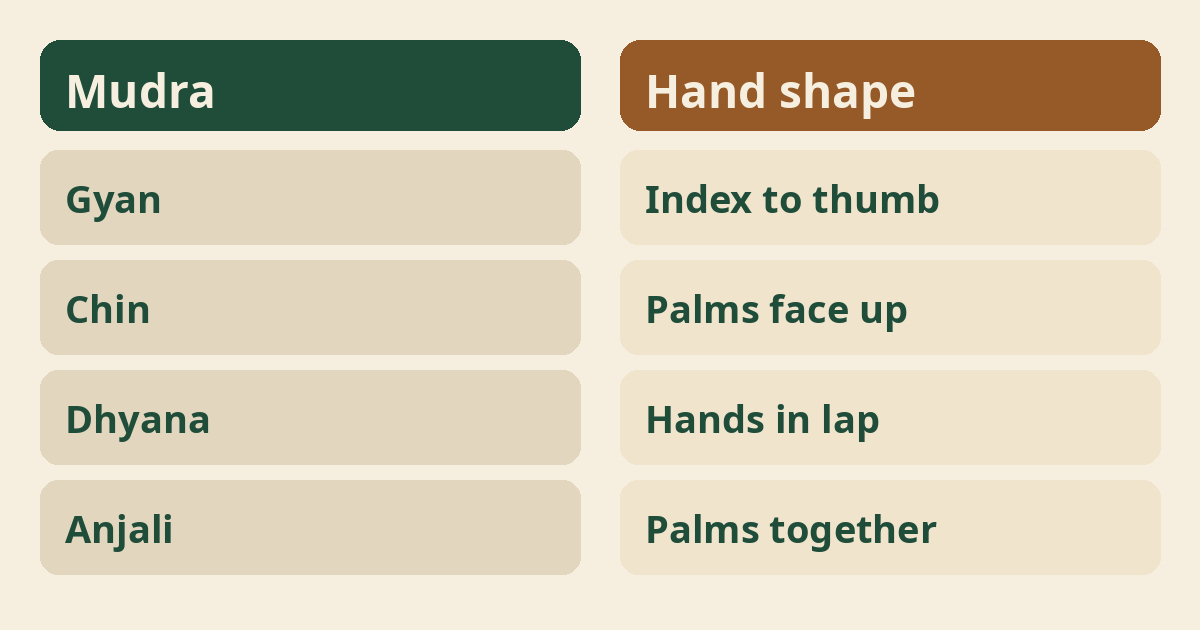
Touch the tip of your index finger to the tip of your thumb. Keep the other three fingers long and relaxed. Press only lightly, like holding a small leaf. This is the most common mudra for beginners.
Step 3: How do you form Chin mudra?
Make the same shape as Gyan mudra, but turn your palms face up. Rest the backs of your hands on your thighs. Many people feel this version is more open and receiving. Try both and see which feels better.
Step 4: How do you try Dhyana mudra?
Place one hand in the other in your lap, palms up, thumbs touching. Rest your hands low, near your belly. This shape is often seen in seated meditation images. It gives your arms a quiet, supported place to rest.
Step 5: How do you try Anjali mudra?
Press your palms together in front of your chest. Keep your thumbs resting near your breastbone. Let your elbows hang loose. This is the familiar prayer-style gesture, often used at the start or end of a session.
Step 6: How do you finish?
Release the shape slowly, rub your palms together, and rest them on your lap. Sit for a few more breaths. Notice any change in how you feel, without judging it. Then open your eyes and move on with your day.
How should you breathe during mudras?
Breathe slowly and naturally through your nose. Do not force the breath or hold it. If you want a simple pattern, try belly breathing. Let the breath be easy and quiet.
How long should you hold a mudra?
Start with two to five minutes and build up slowly. A short, relaxed hold is better than a long, tense one. If your hands feel tired, stop and shake them out. You can add a minute or two as it feels comfortable.
How often should you practice?
A few minutes most days is a good rhythm for a beginner. Regular short sessions are easier to keep up than rare long ones. See our guide on how often to do yoga for ideas on building a steady habit.
When is a good time to practice?
Any quiet moment works, so choose a time you can keep. Many people like the morning or before bed. Others try a mudra while waiting or on a break. The best time is the one you will actually use.
Can you do mudras at your desk?
Yes, mudras can be done sitting in a chair at work. Rest your hands on your lap or the desk and form a simple shape. Pair it with a few slow breaths. A short desk yoga break fits well alongside it.
Can you pair mudras with other yoga?
Yes, mudras often go well with seated and gentle poses. Many people add them at the end of a session, after a calm pose like child’s pose. They can also be used during a short sit before or after movement.
What are the common mistakes?
The most common mistake is pressing the fingers too hard. Others include tensing the shoulders, holding the breath, and expecting fast results. Keep everything light and relaxed. If something hurts, ease off.
What if your hands feel tense or numb?
If your hands feel tense, numb, or sore, release the gesture and rest. Shake your hands out and adjust your posture. Check that your shoulders are not hunched. If the feeling comes back, speak with your doctor.
Do you need to believe in anything?
No, you can use mudras as a simple focus tool without any belief system. Many people treat them as a quiet habit, like a mindful pause. You can learn about the tradition if you like. Take what is useful and leave the rest.
What do the fingers stand for?
In tradition, each finger is linked with an element or idea. The thumb is often tied to fire, the index finger to air, and so on. These are cultural symbols, not science. You can enjoy them as part of the story without taking them as fact.
What are the many benefits people mention?
Many people find mudras help them feel calmer and more focused, though results vary. Some say it helps them slow down and notice their breath. Others find little difference. For general wellness information, see National Center for Complementary and Integrative Health.
Is this a treatment?
No, mudras are not a treatment for any condition. They are a gentle focus habit, not a medical tool. Do not use them in place of care from your doctor. Think of them as one quiet part of a healthy routine.
Who should be careful?
Check with your doctor first if you have wrist, hand, nerve, or breathing issues. The same goes if you are pregnant, recovering from injury, or have other health concerns. Your doctor knows your situation. If you are expecting, see also prenatal yoga vs regular yoga.
What if sitting is hard for you?
Use a chair, a cushion, or lean on a wall for support. There is no need to sit cross-legged. If your back complains, read about yoga with a bad back. Comfort comes first.
Can you do mudras lying down?
Yes, you can rest on your back with your hands on your belly or sides. This can be easier if sitting is uncomfortable. Just stay relaxed and awake enough to notice your breath. Some people find it a good option at night.
How does posture help?
Good posture helps your breath and your hands feel easier. Stack your head over your shoulders and your shoulders over your hips. A simple mountain pose can show you what tall and relaxed feels like.
How can you add a short sound or word?
You can quietly repeat a word or count breaths while holding a mudra. Some people count from one to ten, then start again. Others pick a calm word. This is optional and just gives the mind a bit more to hold on to.
How do you progress?
Progress by holding longer, trying new gestures, and noticing more detail. Add one new mudra only after the first feels natural. Keep sessions short and easy. Slow steady growth is the aim, not a big list of shapes.
Do you need a teacher?
A teacher is helpful but not required for the basic gestures. If you want to go deeper, a qualified yoga teacher can guide you in person or online. Ask questions and share any health concerns first. Good teachers respect your pace.
What mindset helps most?
A curious, gentle, patient mindset helps most. Skip the pressure to do it perfectly. If your mind wanders, simply return to your fingertips. Each return is part of the practice.
What if you miss a few days?
Just begin again with no guilt. Habits grow with kindness, not strictness. Sit for two minutes and carry on. A small restart beats a big stop.
How can you make it a habit?
Link your mudra time to something you already do each day. For example, practice after brushing your teeth or after your morning tea. Keep a cushion where you can see it. Small cues make habits stick.
Is it okay to use mudras for stress moments?
Yes, many people use a simple gesture and slow breaths in busy moments. It gives you a pause and a point of focus. It will not solve life’s problems, but it can be a small calm break. For more ideas, see yoga for stress relief.
Where to read next
For a calm, beginner-friendly start, Ranjana Sinha’s Begin Where You Are is written for people who want simple steps. Our guide to starting a home yoga practice adds a gentle routine you can follow at home.
Frequently asked questions
What is the easiest mudra for beginners?
Gyan mudra, where the index finger and thumb touch, is the most common first choice.
Can I do mudras with my eyes open?
Yes, you can keep your eyes open with a soft gaze or close them, whichever feels better.
Do both hands need to match?
Usually yes, but some gestures use one hand in the other, and either is fine for beginners.
How soon will I notice a difference?
It varies, and some people notice a calmer feel in minutes while others notice little, so be patient.
Are mudras safe for everyone?
They are gentle for most people, but check with your doctor first if you have hand, wrist, or health concerns.
The bottom line
Start with one simple hand shape, a few slow breaths, and a quiet place to sit.