
A stiff lower back after a long shift, a car ride, or a night of bad sleep is one of the most common complaints beginners have. The good news is that a few simple lower back stretches at home can help you feel looser and move more easily. You do not need a gym, special gear, or any experience. This guide walks you through easy stretches, breathing, hold times, and safety tips so you can start today with confidence.
This guide is shared for general education and is not medical advice. If you have a back condition, an injury, or pain that does not go away, talk with a doctor before you begin.
What are lower back stretches?
Lower back stretches are slow, simple movements that lengthen the muscles around your lower spine and hips. They target areas like the lumbar muscles, the hips, and the backs of the legs. Most are done lying on the floor or on hands and knees, so they are easy on the body. Beginners can do them at home with nothing more than a mat or a folded blanket.
Why do people stretch their lower back?
Most people stretch their lower back to ease everyday stiffness from sitting, standing, or awkward sleep positions. Long hours in one posture can leave the lower back feeling tight and tired. Stretching gives those muscles a chance to relax and lengthen. Many people also stretch simply because it feels calming at the end of a busy day.
Who are these stretches good for?
These stretches suit almost any beginner who wants an easy way to care for a stiff back. Office workers, drivers, parents, and older adults all use them. You do not need to be fit or experienced to begin. Each stretch in this guide can be adjusted to match how your body feels on a given day.
Is it safe to stretch a sore back?
Mild everyday stiffness is usually fine to stretch, but sharp or lasting pain is a stop sign. Pay attention to how your body answers each movement. A mild pulling feeling is normal, while pain that shoots, stabs, or spreads down a leg is not. When in doubt, rest and get checked before you continue.
When should you see a doctor first?
Talk to a doctor before stretching if you have an injury, a diagnosed back condition, or pain with numbness or weakness. The same goes for pain after a fall, pain that wakes you at night, or pain that comes with a fever. These stretches are meant for ordinary stiffness, not medical problems. Getting checked first keeps a small issue from turning into a bigger one.
How do you set up at home?
All you need is a quiet floor space, a mat or blanket, and ten unhurried minutes. Wear clothes that let you bend freely. Clear enough room to lie down with your arms out. Keep a cushion or folded towel nearby in case you want extra support under your head or knees.
Which props make stretching easier?
Simple props like a strap, a cushion, or a rolled towel make lower back stretches more comfortable for beginners. A strap helps you hold a leg without straining your grip. A cushion under the knees can soften a lying twist. If you want ideas for affordable gear, our guide to yoga props for beginners covers what is actually worth having at home.
How do you warm up first?
Warm up with two or three minutes of easy movement before you settle into still stretches. March in place, roll your shoulders, or sway slowly side to side. Warm muscles respond better to stretching than cold ones. Even a short walk around the room is enough to get blood moving.
How to start, step one: knees to chest
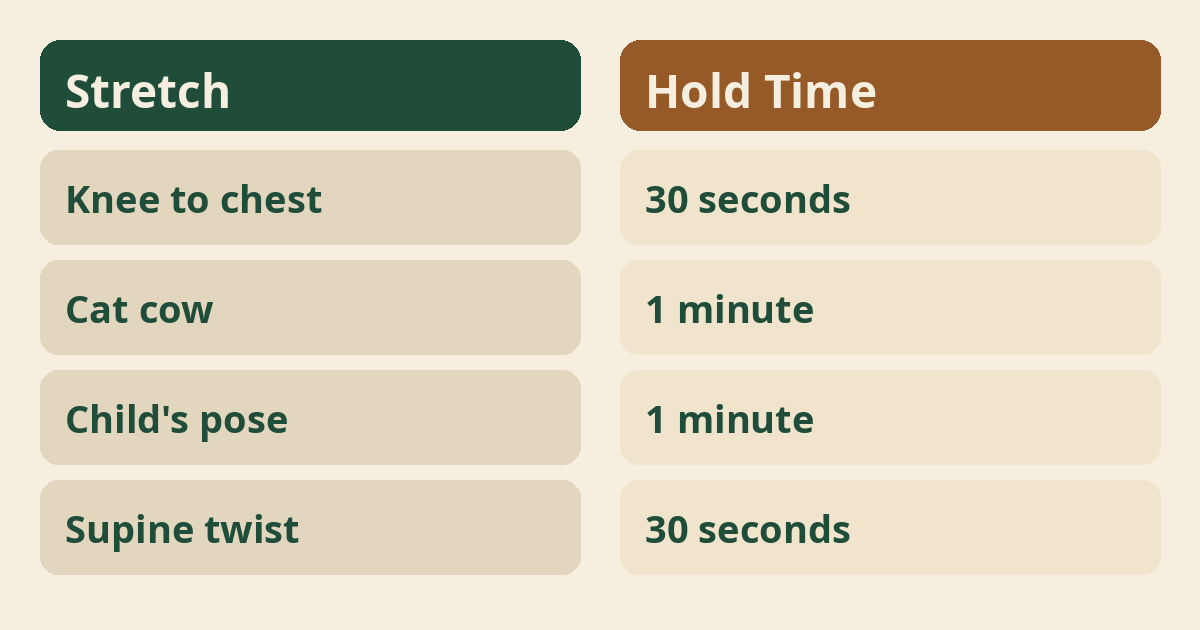
Lie on your back and hug one knee, then both knees, toward your chest. Keep your head relaxed on the floor. Breathe slowly and let your lower back sink down with each exhale. Hold for about 30 seconds, then release. This is often the first stretch where beginners feel their back let go.
Step two: cat cow
Come to hands and knees and slowly round, then arch, your spine with your breath. Inhale as you lift your chest and tailbone, and exhale as you round your back toward the ceiling. Move slowly for about one minute. The full breakdown is in cat cow pose for beginners, and it pairs well with every other stretch here.
Step three: child’s pose
From hands and knees, sit your hips back toward your heels and rest your forehead down. Stretch your arms forward or rest them alongside your body. Let your lower back widen as you breathe. Stay for up to a minute. For form tips and common fixes, read child’s pose for beginners.
Step four: lying spinal twist
Lie on your back, drop both knees to one side, and turn your head the other way. Keep both shoulders resting on the floor as much as you can. Hold for 30 seconds, then switch sides. Twists like this one can help the muscles along the spine release after long sitting.
Step five: puppy pose
From hands and knees, walk your hands forward and melt your chest toward the floor while your hips stay high. You should feel a long stretch through your spine and the backs of your shoulders. Hold for 30 to 45 seconds with slow breathing. The setup details are in puppy pose for beginners.
Step six: figure four stretch
Lie on your back, cross one ankle over the opposite knee, and draw both legs toward you. This reaches the hip and glute muscles that often tug on the lower back. Hold 30 seconds per side. Tight hips are a hidden cause of back stiffness, so our guide to yoga for hips for beginners is a useful next read.
How should you breathe?
Breathe slowly through your nose and let each exhale be a little longer than each inhale. Steady breathing tells your nervous system it is safe to relax, which helps muscles release. Never hold your breath during a stretch. If belly breathing is new to you, belly breathing for beginners shows the basics step by step.
How long should you hold each stretch?
Beginners do well holding most lower back stretches for 20 to 45 seconds. Shorter holds are fine on stiff days. Longer holds are fine once your body knows the shape. Avoid bouncing, since quick movements can make tight muscles guard instead of release.
How often should you stretch?
A short session most days beats one long session once a week for most people. Ten minutes daily keeps stiffness from building back up. If you want help building a rhythm, how often should you do yoga explains how to set a schedule you can actually keep.
What does a quick routine look like?
A simple routine is knees to chest, cat cow, child’s pose, a twist, and figure four, in that order. That sequence takes about ten minutes and covers the front, sides, and back of your lower spine. Do it once through on busy days. Add a second round when you have more time.
What mistakes do beginners make?
The most common mistakes are forcing depth, holding the breath, and rushing between positions. Depth matters far less than comfort and consistency. Move slowly into each shape and back out of it. If a stretch only works when you strain, back off and use a prop instead.
Should a stretch ever hurt?
No, a stretch should feel like mild tension, never sharp, burning, or shooting pain. Pain is information, not progress. Come out of any position that hurts and try a smaller version. Discomfort that lingers after you stop is worth mentioning to a doctor.
Is morning or evening better?
Both work, so pick the time you will actually stick with. Morning stretching can loosen the stiffness that builds overnight, though your back may feel tighter then, so move slowly. Evening stretching helps many people unwind before bed. Consistency matters more than the clock.
What benefits do people report?
Many people find that regular lower back stretches leave them feeling looser, more comfortable, and more aware of their posture, though results vary from person to person. Some notice easier movement within a couple of weeks, while others take longer. Stretching may also support relaxation and body awareness, and the National Center for Complementary and Integrative Health notes that yoga style practices are commonly used for back comfort. Keep expectations modest and judge by how your own body responds.
Is stretching a treatment for back pain?
No, these stretches are general education for everyday stiffness, not a treatment for back pain or any medical condition. They are not a cure, and they do not replace care from a doctor or physical therapist. If pain is strong, new, or getting worse, get it checked. For a broader practice built around back care, our cornerstone guide to yoga for lower back pain is a good next step.
Can you stretch with a bad back?
Many people with cranky backs can stretch safely by going slower, using props, and skipping painful positions. The key is working within a comfortable range and stopping at the first sign of real pain. Our article can you do yoga with a bad back explains how beginners adapt poses when their back needs extra care.
How do you progress over time?
Progress means longer comfortable holds, smoother movement, and less stiffness, not deeper or fancier shapes. After a few weeks, you might add a second round or explore new poses. Flexibility grows slowly, and our guide to yoga for flexibility for beginners shows how to build it without forcing.
What if you sit at a desk all day?
Desk workers benefit from breaking up sitting time with short stretch pauses, even away from the mat. A quick stand and side bend every hour can stop stiffness from stacking up. For moves that work in an office chair, yoga at your desk for beginners has a full set of options.
Does stress make back stiffness worse?
Stress can leave the muscles around the spine tense, which many people feel as extra tightness in the lower back. Slow stretching with calm breathing is one way people unwind that tension. If stress is a big part of your week, yoga for stress relief for beginners offers simple practices for the mind and body together.
Do you need a teacher?
You can start these stretches on your own, but a good teacher helps you refine form and avoid habits that hold you back. Even a few beginner classes can correct small alignment issues you cannot feel yet. Online videos work too. Look for teachers who cue slow movement and offer easier versions of each shape.
How do you stay motivated?
Tie your stretching to a habit you already have, like after brushing your teeth or before bed. Ten minutes is easier to keep than thirty. Track your sessions on a calendar if streaks help you. Most motivation follows action, so start small and let the routine pull you forward.
What if you miss a week?
Missing time is normal, and you can restart at the next session without making up lost days. Your body may feel a little stiffer after a break, so return with shorter holds. There is nothing to catch up on. The habit matters more than any single week.
Can older adults do these stretches?
Yes, older beginners can do these stretches with slower transitions and a bit more support. A sturdy chair nearby helps with getting down to and up from the floor. Cushions under the knees add comfort. Anyone with osteoporosis or joint replacements should check with a doctor first.
What about pregnancy?
Pregnancy changes which stretches are comfortable and safe, so a modified approach is needed. Deep twists and long time lying flat on the back are usually adjusted or swapped out. Our comparison of prenatal yoga versus regular yoga explains the main differences to look for.
How do you know it is working?
Signs of progress include easier mornings, longer comfortable holds, and less stiffness after sitting. Change is gradual, so notice trends over weeks rather than days. Some people keep a short note on their phone about how their back feels. Small improvements add up over time.
What should you learn next?
Once these stretches feel familiar, a full beginner yoga practice is a natural next step. Standing poses like the one in mountain pose for beginners build posture awareness that supports your back all day. Add one new element at a time and keep the pace easy.
Where to read next
For a calm, beginner-friendly start, Ranjana Sinha’s Begin Where You Are is written for people who want simple steps. Our guide to starting a home yoga practice adds a gentle routine you can follow at home.
Frequently asked questions
Can I stretch my lower back every day?
Yes, daily stretching is fine for most beginners as long as the movements stay comfortable and pain free.
Why is my back so stiff when I wake up?
Muscles and joints stiffen during overnight stillness, and slow morning movement usually eases that feeling.
Should I stretch before or after a workout?
Save longer holds for after exercise and use light movement to warm up beforehand.
What if I cannot reach my feet?
Loop a strap or towel around your leg and never force the reach.
Do these stretches fix a slipped disc?
No, a disc problem needs medical care, so see a doctor rather than stretching through it.
The bottom line
Start with ten easy minutes today, and let quiet consistency do the work for your back.

