A stiff back first thing in the morning is common, and a short, easy stretching routine can help your body wake up more comfortably. You roll out of bed, your lower back feels tight, and the first few steps feel slow. This guide walks you through simple morning stretches for back pain that any beginner can do at home. No equipment, no experience, and only a few minutes a day.
This article is general education, not medical advice, and it cannot replace care from a qualified professional. If you have a back condition, a recent injury, or pain that keeps coming back, talk to your doctor before starting any new stretching routine.
What are morning stretches for back pain?
Morning stretches for back pain are short, easy movements you do soon after waking to loosen a stiff back. They usually target the spine, hips, and the muscles along the back. Most take only a few minutes and need no equipment. You can do them on a mat, a rug, or a carpet.
Why is my back stiff when I wake up?
A back often feels stiff in the morning because it has stayed in one position for hours. During sleep your muscles cool down and your joints barely move. Some sleep positions also put extra pressure on the lower back. That is why the first moves of the day can feel slow and creaky.
Why do people stretch first thing in the morning?
People stretch in the morning because it wakes the body up slowly instead of all at once. A few easy moves raise blood flow to tight muscles. Many people also find that it sets a calm tone for the rest of the day. It is a small habit that fits into almost any schedule.
How do I start a morning stretching routine?
Start with five minutes and two or three simple stretches you can remember without a guide. Do them at the same time each morning, such as right after you get out of bed. Keep the moves slow and stop if anything hurts. For a wider view of back-friendly movement, our cornerstone guide on yoga-for-lower-back-pain covers the basics.
How long should morning stretches take?
Most beginners do well with five to ten minutes of morning stretching. Short and steady beats long and rare. If ten minutes feels like too much, do three minutes and build from there. The habit matters more than the length.
How often should I do these stretches?
Daily practice works best for most people, because consistency is what loosens a stiff back over time. Missing a day is fine; just start again the next morning. For more on building a steady rhythm, read about how often you should practice.
Step 1: wake up your breath
Begin by sitting tall in bed or on the floor and taking five slow breaths. Breathe in through your nose and let your belly rise. Breathe out slowly and let your shoulders drop. This simple start tells your body it is time to move, and belly breathing is an easy place to learn it.
Step 2: warm up your spine
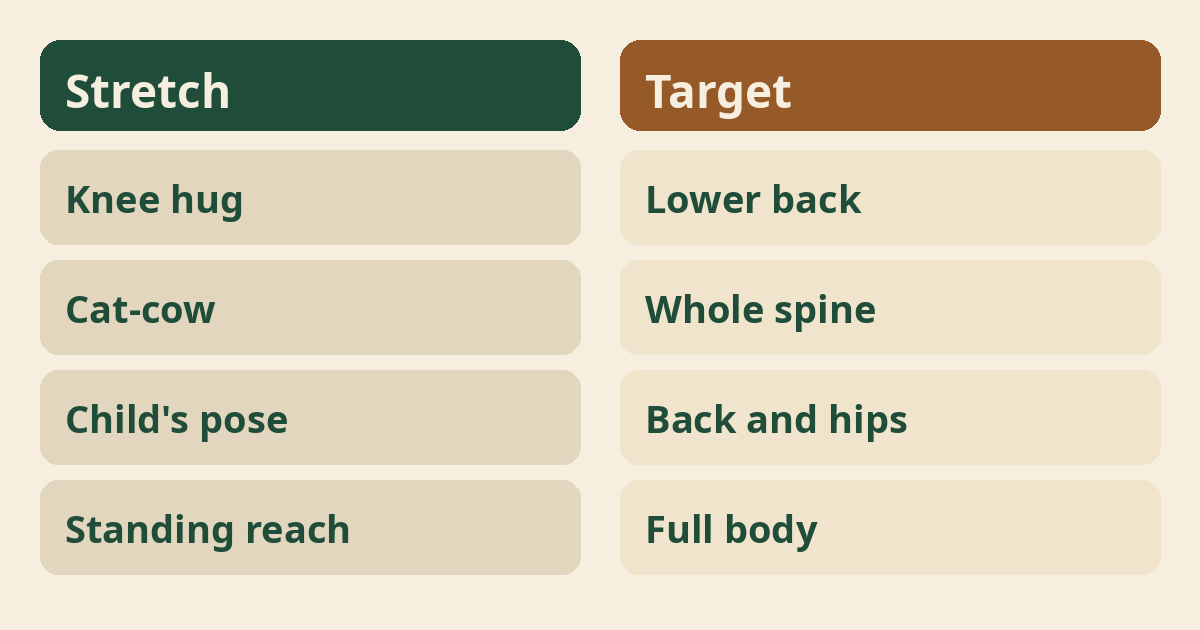
Move your spine slowly in every direction before you hold any stretch. Try small rounds of arching and rounding your back on your hands and knees. The cat-cow pose is a classic way to do this. Keep the movement small and smooth.
Step 3: stretch your lower back
A knee-to-chest hug is one of the kindest first stretches for a tight lower back. Lie on your back and pull one knee toward your chest. Hold for a few breaths, then switch legs. Keep the other leg bent with your foot on the floor if that feels better.
Step 4: release with child’s pose
Child’s pose gives your whole back a long, restful stretch. Kneel, sit back toward your heels, and reach your arms forward on the floor. Rest your forehead down and breathe. The child’s pose for beginners guide walks through it step by step.
Step 5: stand tall
Finish by standing up slowly and reaching your arms overhead. Take a few breaths while standing tall, which is the heart of mountain pose. Roll your shoulders back and let your arms float down. You are ready for the day.
How should I breathe while stretching?
Breathe slowly and steadily through your nose during every stretch. Never hold your breath, because holding it makes muscles tense up. Match each move to a breath: move on the exhale, settle on the inhale. If breathing feels strained, back off the stretch a little.
What props make morning stretches easier?
A folded blanket, a firm pillow, or a yoga block can make stretches far more comfortable. Sit on a pillow if the floor feels hard. Loop a belt or towel around your foot if your hands cannot reach. Our guide to simple props shows easy household swaps.
What are the most common mistakes?
The biggest mistake is bouncing or forcing a stretch past your comfort zone. Cold morning muscles respond better to slow, steady holds. Another common slip is rushing through the moves on the way to coffee. Give each stretch a few calm breaths instead.
Should I stretch on an empty stomach?
Light stretching on an empty stomach is fine for most people. Big meals and deep stretches do not mix well, which is one reason morning works so nicely. A glass of water first is a good idea. If you feel lightheaded, eat something small and stretch later.
Can I do morning stretches for back pain in bed?
Yes, many morning stretches for back pain work well right in bed. A firm mattress is better than a very soft one. Knee hugs, slow twists, and easy side reaches all work lying down. Move to the floor when you want a deeper stretch.
Do I need to be flexible to start?
No, you do not need any flexibility to begin morning stretches. Stretching is how flexibility slowly improves, not a test you have to pass first. Move only as far as feels comfortable today. Over weeks, that comfortable edge tends to move on its own.
Is stretching the same as yoga?
Morning stretches and beginner yoga overlap a lot, and many stretches come straight from yoga poses. Yoga adds slow breathing and a calmer pace to the same basic movements. If you enjoy the stretching habit, a beginner flexibility practice is a natural next step.
What if stretching hurts?
Stop right away if any stretch causes sharp, shooting, or worsening pain. Mild pulling or warmth is normal; pain is not. Note which move caused it and skip that move next time. If pain keeps coming back, see your doctor.
Who should be careful with morning stretches?
Anyone with a recent back injury, surgery, a slipped disc, osteoporosis, or ongoing pain should check with a doctor first. The same goes for numbness, tingling, or pain running down a leg. Pregnant readers should ask their own care provider what is safe for them. When in doubt, get personal advice before you begin.
Are morning stretches a treatment for back pain?
No, morning stretches are not a treatment, cure, or fix for back pain or any medical condition. They are a general wellness habit, like a short walk or drinking enough water. Back pain that is severe, constant, or getting worse needs a doctor or physical therapist. Stretching can sit alongside proper care, never replace it.
What are the possible benefits?
Many people find that a regular morning routine helps their back feel looser and their mornings feel easier, though results vary from person to person. Some notice better posture during the day or less stiffness after sitting. Research on stretching and yoga for back comfort is still growing, and the National Center for Complementary and Integrative Health has a balanced overview of what is known. Nothing is guaranteed, and slow progress is normal.
When will I notice a difference?
Most people who stretch daily notice small changes within a few weeks, but everyone is different. The first sign is often that getting out of bed feels a little easier. Some days will feel stiffer than others, and that is normal. Judge the habit month by month, not morning by morning.
How do I make the stretches harder over time?
Progress by holding each stretch a few breaths longer or adding one new move at a time. Do not jump to deep backbends or strong twists. A slow, low-impact build keeps things safe. When the basics feel easy, puppy pose is a kind next stretch for the spine.
Should I learn from a teacher?
A qualified teacher or physical therapist can check your form and tailor stretches to your back. Even one or two sessions can clear up small mistakes you cannot see yourself. Look for someone experienced with back issues. Bring a list of what you do each morning.
Is morning better than evening for stretching?
Morning and evening stretching each have their place, and neither is wrong. Mornings loosen a stiff back before the day starts. Evenings help you unwind after sitting. Many people do a short version at both ends of the day.
What about stretching during the workday?
Short stretch breaks during the day keep morning stiffness from creeping back. Stand up every hour or so and roll your shoulders. If you sit at a desk, simple desk stretches fit between tasks without a mat.
What if I have a bad back already?
People with a sensitive back can often still do easy morning stretches, with the right moves and a doctor’s ok. The key is choosing low, supported positions and skipping deep bends. Our article on moving with a bad back explains how to adapt. Start smaller than you think you need to.
What should I wear and where should I stretch?
Wear anything loose and comfortable, and stretch on any flat, non-slippery surface. Pajamas are fine. A yoga mat, carpet, or rug all work. Keep a clear space near your bed so starting takes no setup at all.
How do I stay motivated?
The easiest way to keep a morning habit is to make it tiny and tie it to something you already do. Stretch right after your alarm, before you check your phone. Mark the days on a calendar if that helps. Two minutes done is better than ten minutes skipped.
Can beginners overdo stretching?
Yes, doing too much too soon can leave muscles sore and discourage the habit. More stretch is not always better, especially on cold morning muscles. Stay in a mild, comfortable range. Add time only after a couple of easy weeks.
What is a good five-minute version?
A good five-minute routine is breathing, cat-cow, knee hugs, child’s pose, and a standing reach. That is about one minute per move, with a few slow breaths in each. It covers the spine, hips, and shoulders. Short enough to repeat every single day.
Does mindset matter?
Yes, treating stretching as a kind moment for yourself makes the habit stick better than treating it as a chore. Go slowly and notice how your back feels without judging it. Some mornings will feel great and some will not. Both count as practice.
What comes after a month of practice?
After a month of easy morning stretches, most beginners are ready for a slightly longer routine or a beginner yoga class. You might add a twist, a hip opener, or a balance move. Keep the same calm pace. The goal is a back that feels cared for, not pushed.
Where to read next
For a calm, beginner-friendly start, Ranjana Sinha’s Begin Where You Are is written for people who want simple steps. Our guide to starting a home yoga practice adds a gentle routine you can follow at home.
Frequently asked questions
How many minutes should a beginner spend stretching in the morning?
Five to ten minutes is plenty for most beginners, and even three minutes helps.
What if my back cracks or pops while stretching?
Occasional painless pops are usually normal, but stop and see a doctor if any sound comes with pain.
Should I stretch before or after breakfast?
Either works, though many people find light stretching more comfortable before a big meal.
Can older adults do morning back stretches?
Yes, with slow moves and a doctor’s ok, older adults can usually stretch safely.
Is it normal to feel stiffer some mornings than others?
Yes, stiffness naturally varies with sleep position, weather, and activity, so work with how your body feels that day.
The bottom line
Start tomorrow with five slow minutes, and let your back wake up as kindly as the rest of you.