Your mind will not slow down. Your chest feels tight, your shoulders are up by your ears, and rest feels far away. Yoga poses for anxiety are slow, simple shapes paired with steady breathing that many people use to settle their body and mind. You do not need experience, special gear, or a long class. This guide shows you easy poses, clear steps, and safe ways to begin at home, one quiet minute at a time.
This article is for general education and is not medical advice. If you have a health condition, ongoing anxiety, or any pain, talk with your doctor before you start.
What are yoga poses for anxiety?
Yoga poses for anxiety are slow, restful shapes that help the body relax. Most are done low to the ground, with long holds and steady breathing. The goal is not a workout. The goal is to give your nervous system a chance to settle.
Why do people try yoga when they feel anxious?
People try yoga for anxiety because it pairs movement with breath in a calm, controlled way. Anxiety often shows up in the body as tight muscles and fast breathing. Slow poses and long exhales give the body a different signal to follow.
Can yoga poses really help with anxiety?
Many people find that slow yoga helps them feel calmer, but results vary from person to person. Research suggests yoga may ease feelings of stress for some people. It is not a fix for everyone, and it works best as one small part of a wider self-care routine.
Is yoga a treatment for anxiety?
No, yoga is not a treatment for anxiety or any other condition. It is a comfort practice, not a cure, and it does not replace care from a doctor or therapist. If anxiety affects your daily life, professional support is the right first step.
Who should talk to a doctor first?
Anyone with a health condition, an injury, or strong ongoing anxiety should check with a doctor first. This includes pregnancy, heart or blood pressure concerns, and joint problems. A doctor can tell you which shapes are safe for your body.
How do you start a simple practice?
Start with two or three easy poses and five quiet minutes. Pick a time you can keep most days, like before bed. Short and regular beats long and rare, especially in the beginning.
How much space and gear do you need?
You need a quiet floor space about the size of a yoga mat. A mat, rug, or folded blanket is enough to begin. Comfortable clothes that let you breathe and bend are all you need to wear.
Step one: set up a quiet spot
Choose a calm corner where you will not be disturbed. Dim the lights or silence your phone if that helps you relax. A predictable spot tells your brain it is time to slow down.
Step two: begin with your breath
Sit or lie down and take ten slow breaths before any movement. Let each exhale be a little longer than each inhale. If you are new to this, our guide on belly breathing for beginners walks you through it step by step.
Step three: move through the poses slowly
Move into each pose slowly and hold it without forcing anything. Stay where the stretch feels mild and your breath stays steady. If a shape hurts or makes you hold your breath, ease out of it.
Step four: rest at the end
Finish every session lying still for two to five minutes. This resting time is where many people notice the most calm. Let your body be heavy and your breathing return to normal on its own.
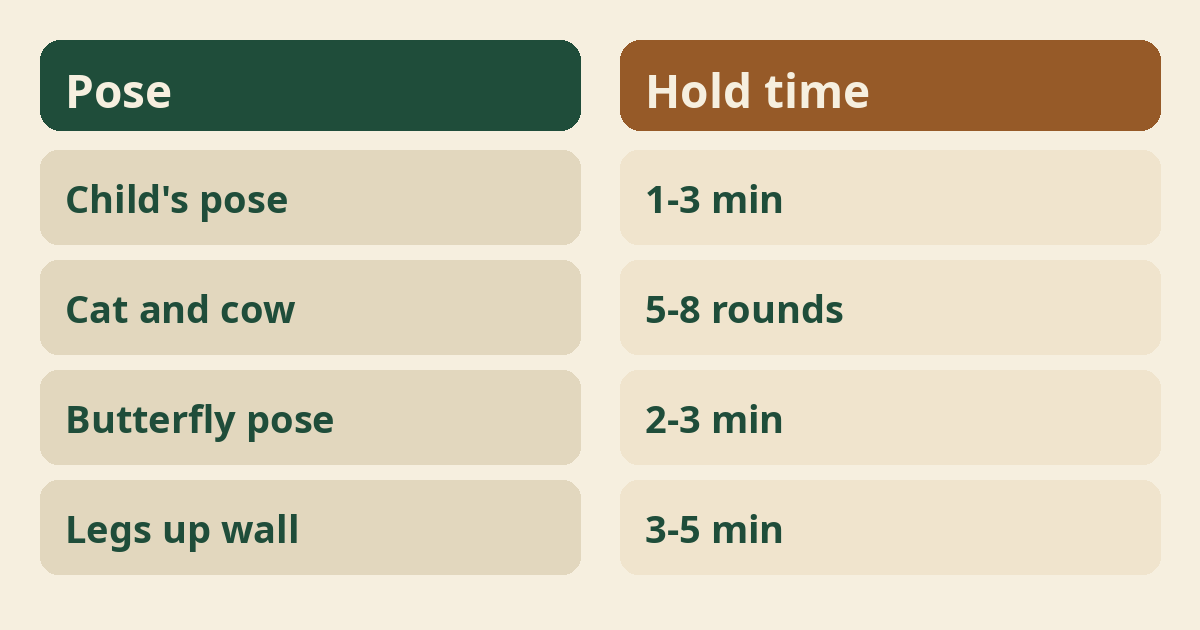
Child’s pose
Child’s pose is a resting forward fold that many beginners find soothing. Kneel, bring your big toes together, and fold forward over your thighs with your arms stretched out or resting by your sides. Our full guide on child’s pose for beginners shows easy ways to support your head and knees.
Cat and cow pose
Cat and cow is a slow spinal movement that pairs naturally with breathing. On hands and knees, round your back as you breathe out and soften it as you breathe in. You can learn the full shape in our article on cat cow pose for beginners.
Mountain pose
Mountain pose is simply standing tall with steady attention. Stand with your feet hip width apart, arms relaxed, and breathe slowly. Many people use it between poses to reset, and our guide on mountain pose for beginners explains the details.
Butterfly pose
Butterfly pose is a seated shape where the soles of your feet touch and your knees fall open. Sit tall and let gravity do the work instead of pushing your knees down. For cushion ideas and safer knee positions, see butterfly pose for beginners.
Puppy pose
Puppy pose is a soft chest opener that melts tension across the shoulders. From hands and knees, walk your hands forward and lower your chest toward the floor. Props and knee padding are covered in our article on puppy pose for beginners.
Legs up the wall
Legs up the wall is a rest position with your legs supported on a wall. Lie on your back, swing your legs up, and let your arms rest by your sides. Stay for a few minutes and breathe slowly, then roll to one side to come out.
How does breathing calm the body?
Slow breathing gives the body a steady rhythm that many people find calming. Long, easy exhales are linked with the body’s rest response. Breathing through the nose, when comfortable, tends to slow things down even more.
How long should a session be?
Five to fifteen minutes is plenty for a beginner session. A few minutes most days does more than one long session once in a while. Add time only when it still feels good, not because you think you should.
How often should you practice?
Most beginners do well with three to seven short sessions a week. Consistency matters more than length, and daily practice is fine if the poses stay easy. Our article on how often you should do yoga helps you find a rhythm that fits your week.
What time of day works best?
The best time is the time you will actually keep. Many people like evenings because slow poses help them wind down before sleep. Others prefer mornings to start the day settled, so try both and notice which feels better.
Common mistakes to avoid
The most common mistakes are rushing, forcing, and holding the breath. Skipping the rest at the end is another one, because that rest is part of the practice. Keep each pose mild and let your breathing lead the pace.
Props that make poses easier
Simple props like blankets, pillows, and blocks make poses more comfortable. A folded blanket under the knees or head can turn a hard pose into a restful one. See our guide on yoga props for beginners for easy household swaps.
What benefits do people report?
Many people say they feel calmer, sleep more easily, and carry less muscle tension after gentle practice, though results vary. Some notice a quieter mind right away, while for others it builds slowly over weeks. The National Center for Complementary and Integrative Health notes that yoga may help with stress for some people, and it is best seen as support, not a solution on its own.
How do you progress over time?
Progress means longer holds and a steadier breath, not harder shapes. When a pose feels easy, you can hold it a little longer or add one new pose. Some people later explore flexibility work, and our guide on yoga for flexibility for beginners is a safe next step.
Working with a teacher
A qualified teacher can adjust poses to your body and answer questions. Even a few classes, in person or online, can correct small habits early. Tell the teacher about any injuries or health concerns before class begins.
Mindset: be kind to yourself
Approach each session with patience instead of goals. An anxious mind often judges itself, so notice that habit and let it pass. There is no perfect pose here, only a few quiet minutes that belong to you.
Can you do these poses at your desk?
Some calming movements, like seated breathing and shoulder rolls, work at a desk. They will not replace a full practice, but they can ease a tense moment during the day. Our guide on yoga at your desk for beginners has simple options that need no mat.
What if your back hurts?
If your back hurts, skip deep bends and keep every movement small. Anxiety and back tension often show up together, so extra care matters. Read can you do yoga with a bad back before you try floor poses, and ask your doctor if pain continues.
Neck and shoulder tension
Anxiety often collects in the neck and shoulders, and slow release work can help. Soft shoulder rolls and easy side stretches pair well with the resting poses above. Our article on yoga for neck and shoulders shows safe ways to loosen this area.
Stress and anxiety are not the same
Stress is usually tied to a situation, while anxiety can linger without a clear cause. The same slow poses can feel good for both, but ongoing anxiety deserves professional attention. For everyday tension, our guide on yoga for stress relief for beginners is a good companion read.
Where this guide fits
This article is one part of a bigger picture on calming practice. Our cornerstone guide on yoga for anxiety covers the wider topic, including routines and breathing, in more depth. Use this poses guide as your starting point and build from there.
What if I cannot sit still?
If you cannot sit still, start with slow movement instead of stillness. Cat and cow, easy rocking in child’s pose, or walking gently between poses all count. Stillness often arrives on its own after the body has moved.
Is it normal to feel emotional during practice?
Yes, some people feel waves of emotion during quiet poses, and that is normal. Slowing down can surface feelings that a busy day kept hidden. If it feels like too much, sit up, open your eyes, and return another day.
Where to read next
For a calm, beginner-friendly start, Ranjana Sinha’s Begin Where You Are is written for people who want simple steps. Our guide to starting a home yoga practice adds a gentle routine you can follow at home.
Frequently asked questions
What is the easiest yoga pose for anxiety to start with?
Child’s pose is the easiest starting point for most beginners because it is restful and needs no flexibility.
Do I need a yoga mat for these poses?
No, a folded blanket or a carpeted floor works fine for all the poses in this guide.
Can yoga poses replace therapy or medication for anxiety?
No, yoga is a comfort practice and never a replacement for care from a doctor or therapist.
How quickly will I feel calmer from these poses?
Some people feel a small shift in the first session, while for others the calm builds over a few weeks of regular practice.
Should I practice in the morning or at night?
Either works, so pick the time you can repeat most days, with evenings often helping people wind down before sleep.
The bottom line
Start with one pose and one slow breath tonight, and let the practice grow at its own pace.