
Yes, you can start pranayama for thyroid support at home, even if you have never done breathwork before. Maybe your neck feels tight by evening, your energy dips for no clear reason, or your doctor mentioned your thyroid and you want something calm to add to your day. Slow breathing practices are easy to learn, need no equipment, and fit into ten quiet minutes. This guide walks you through safe beginner steps and honest limits.
This guide is general education, not personal medical advice, and it cannot replace care from your own doctor. If you have a thyroid condition or take any medication, ask your doctor before starting a breathing practice.
What is pranayama for thyroid health?
Pranayama for thyroid health is the practice of slow, controlled breathing to support calm and comfort while you live with a thyroid condition. Pranayama is the yoga name for breathwork. A few practices, like humming bee breath, create soft vibration near the throat where the thyroid gland sits. Most people use them to feel steadier, not to change lab results.
Why do people try pranayama for thyroid support?
Most people try it because they want a simple, free way to manage stress alongside their medical care. A thyroid diagnosis often comes with worry, tiredness, or a racing mind. Slow breathing gives people something practical to do each day. It takes no equipment and very little space.
How is stress linked to the thyroid?
Long-term stress can wear down your energy and sleep, and many people with thyroid issues say stress makes them feel worse. Stress and thyroid function influence each other in complex ways. Calming the nervous system will not fix a gland, but it can make daily life feel more manageable. That alone is worth something to many people.
Is pranayama a treatment for thyroid problems?
No, pranayama is not a treatment, cure, or replacement for thyroid medication or medical care. It cannot raise or lower your hormone levels in any proven way. Think of it as a comfort practice that sits beside your treatment plan, never instead of it. Keep taking your medication exactly as prescribed.
Who should talk to a doctor first?
Anyone with a diagnosed thyroid condition should check with their doctor before starting pranayama. This includes hypothyroidism, hyperthyroidism, Hashimoto’s, Graves’ disease, nodules, or a goiter. Also ask first if you are pregnant, have high blood pressure, a heart condition, or recently had neck surgery. A short conversation keeps you safe.
How do I start as a complete beginner?
Start with five quiet minutes of slow breathing once a day, seated comfortably with a tall but relaxed spine. Pick a time you can keep, like early morning or before bed. Sit on a chair or a cushion. No flexibility or fitness is required here.
Step 1: how do I set up my space?
Choose a quiet spot where you can sit undisturbed for about ten minutes. Silence your phone or set it across the room. A chair with back support works well if the floor is uncomfortable. Keep a light blanket nearby if you tend to feel cold.
Step 2: how do I settle in?
Close your eyes and spend the first minute simply watching your natural breath. Notice where you feel it most, the nose, chest, or belly. Let your shoulders drop away from your ears. There is nothing to change yet, just notice.
Step 3: how do I practice belly breathing?
Breathe in through your nose and let your belly rise, then breathe out slowly and let it fall. Place one hand on your belly so you can feel the movement. Keep your chest fairly still. If this is new to you, our guide to belly breathing for beginners walks through it in detail.
Step 4: how do I try ujjayi breath?
Breathe in and out through your nose with a soft whispering sound at the back of your throat. Slightly narrow your throat as if fogging a mirror, but keep your mouth closed. The sound should be quiet and even, like a calm sea. Stop if your throat feels strained or dry.
Step 5: how do I try humming bee breath?
Breathe in through your nose, then hum softly like a bee on a long, slow exhale. The hum creates a mild vibration in the throat and face. Keep the sound low and comfortable rather than loud. Four to six rounds is plenty for a first session.
Step 6: how do I finish a session?
End by sitting quietly for one or two minutes and breathing normally. Notice how your body feels compared to when you sat down. Move slowly when you open your eyes. Rushing off right away can undo some of the settling effect.
What is nadi shodhana, or alternate nostril breathing?
Nadi shodhana is a practice where you breathe through one nostril at a time, using your fingers to guide the flow. Many people find it steadying when the mind feels scattered. Use your thumb and ring finger to close each nostril in turn. Beginners can skip it until the basic practices feel easy.
Which practices should beginners skip for now?
Skip fast, forceful breathing like kapalabhati and bhastrika, and skip long breath holds, especially with an overactive thyroid. These strong practices can raise heart rate and feel agitating. Chin locks that press firmly into the throat are also best avoided without a skilled teacher. Slow and easy practices are the safer starting point.
How long should a session be?
Ten minutes a day is a good target for most beginners. You can start with five minutes and add time slowly. Short daily practice beats one long session a week. Stop if you feel lightheaded at any point.
How often should I practice?
Daily practice, even for a few minutes, works better than occasional long sessions. The nervous system responds to repetition. If you want structure for the rest of your movement routine, our article on how often to do yoga can help you plan a week. Consistency matters more than intensity.
What time of day works best?
Morning and evening both work, so choose the time you can actually keep. Many people like a short session before breakfast to start the day calmly. Others prefer practice before bed to unwind. Avoid practicing right after a heavy meal.
What if I feel dizzy or strange?
Stop the practice, return to normal breathing, and rest until you feel steady again. Dizziness usually means you were breathing too fast, too deep, or too long. Shorten the next session and slow everything down. If dizziness keeps happening, pause the practice and speak with your doctor.
Common mistakes beginners make
The most common mistake is trying too hard instead of letting the breath stay easy and natural. People often force deep breaths, hold too long, or chase a special feeling. Another mistake is practicing only on bad days and then stopping. Small, regular, unremarkable sessions do the real work.
Do I need any props?
No props are required, but a firm cushion or a supportive chair makes sitting more comfortable. A folded blanket under the hips can ease the lower back. If your legs or back complain while sitting, our guide to yoga props for beginners shows simple household options. Comfort helps you stay consistent.
What benefits do people report?
Many people find that regular pranayama helps them feel calmer, sleep a little better, and handle daily stress more easily, though results vary from person to person. These are comfort benefits, not changes in thyroid hormone levels. Some people also notice a quieter mind and less tension in the neck and jaw. For balanced background on breathing practices and relaxation, see National Center for Complementary and Integrative Health. Keep your expectations modest and kind.
Can pranayama change my thyroid hormone levels?
There is no solid evidence that breathing exercises can raise, lower, or fix thyroid hormone levels. Research on pranayama is still early and small in scale. Some findings about stress and wellbeing are encouraging, but nothing replaces blood tests and medication. Be cautious of anyone who promises otherwise.
How does breathwork fit with yoga poses?
Pranayama pairs well with slow, easy poses that release the neck, shoulders, and chest. Many people do a few minutes of movement before sitting to breathe. If your neck and shoulders carry tension, our guide to yoga for neck and shoulders offers simple releases. A settled body makes settled breathing easier.
Can I practice at my desk?
Yes, quiet breathing practices like belly breathing and soft ujjayi adapt well to a desk chair. Humming bee is better saved for home since it makes sound. If you spend long hours at a computer, our article on yoga at your desk has more ideas that fit a workday. Even two calm minutes between tasks counts.
How does pranayama fit a full thyroid-friendly routine?
Breathwork works best as one piece of a wider routine that includes medical care, movement, rest, and regular meals. For a complete starter plan that combines simple poses with daily habits, see our pillar guide, yoga-for-thyroid-health-for-beginners. It covers the bigger picture this article only touches on. Small pieces add up over months.
What about stress, mood, and sleep?
Many people with thyroid conditions say stress and poor sleep make everything harder, and calming breathwork can be one useful tool for both. A slow session before bed may help you unwind. For more ideas in the same spirit, see our guide to yoga for stress relief. Better rest supports everything else you are doing.
How do I progress over time?
Add time and new practices slowly, only after the basics feel easy and pleasant for a few weeks. You might move from five minutes to ten, then add humming bee or alternate nostril breathing. There is no finish line to chase. Slow progress is still progress.
Should I learn from a teacher?
A qualified yoga teacher can help, especially if you want to try stronger practices later. Look for someone experienced with health conditions, not just athletic classes. Tell them about your thyroid before the session begins. A good teacher will adjust rather than push.
What mindset helps the practice stick?
Treat pranayama as a small daily kindness rather than a fix you are testing. Some days will feel calm and some will not. Both count as practice. Judging every session makes people quit, while simple patience keeps them going.
What if my mind keeps wandering?
A wandering mind is normal, and coming back to the breath is the practice itself. Counting breaths or softly noting in and out can help. You do not need a blank mind. Every return is a repetition, like one calm push-up for your attention.
Can I practice while lying down?
Yes, lying on your back with bent knees is a fine position for belly breathing and quiet rest. Keep your head comfortable with a thin pillow. Ujjayi and humming bee are easier sitting up, since posture supports the throat. If lying down makes you sleepy, save it for evenings.
Is pranayama safe during pregnancy?
Simple, easy breathing is usually considered safe in pregnancy, but ask your doctor or midwife first. Skip breath holds and anything forceful. Thyroid conditions in pregnancy need medical monitoring on their own. Your care team should know about every practice you add.
How do I keep track of how I feel?
Keep a short note on your phone with the date, minutes practiced, and one word about how you felt. After a few weeks, patterns start to show. You might notice calmer evenings or easier sleep. Share anything unusual with your doctor at your next visit.
What is a simple weekly plan?
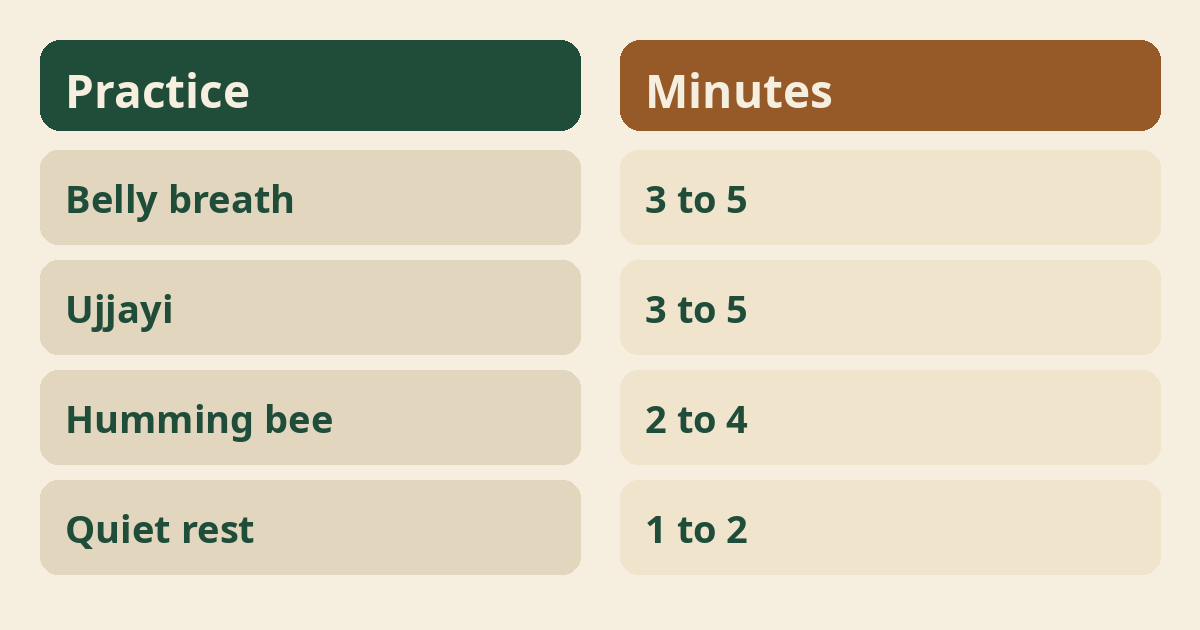
Practice belly breathing daily, and add ujjayi or humming bee on three or four days once they feel comfortable. The table below shows one easy starting rhythm. Adjust it to your energy, which can change day to day with a thyroid condition. Doing less but daily beats doing more but rarely.
Where to read next
For a calm, beginner-friendly start, Ranjana Sinha’s Begin Where You Are is written for people who want simple steps. Our guide to starting a home yoga practice adds a gentle routine you can follow at home.
Frequently asked questions
Is pranayama safe if I have hypothyroidism?
Most slow breathing practices are considered low risk, but check with your doctor first, especially if your medication or dose recently changed.
Will breathing exercises fix my thyroid levels?
No, pranayama cannot cure or correct a thyroid condition, so keep up your prescribed treatment and blood tests.
Which breathing practice is easiest for a total beginner?
Belly breathing is the simplest place to start, since it asks for nothing more than slow, comfortable breaths.
When should I skip a session?
Skip practice when you feel dizzy, unwell, short of breath, or simply exhausted, and rest instead.
Can I do pranayama right after taking my thyroid tablet?
Breathing practice does not interfere with medication timing, but follow your doctor’s instructions on when and how to take it.
The bottom line
Start with five quiet minutes today, and let a small, steady practice support you while your medical care does the heavy lifting.

