
You feel the pressure building behind one eye, the lights seem too bright, and your shoulders are already creeping up toward your ears. Many people reach for slow breathing at that moment, hoping to calm their body. Breathing exercises for migraine relief are quiet routines that may help you feel steadier. This guide shows easy ways to begin, and what to keep in mind.
This article shares general education about breathing practices and is not medical advice. If you live with migraine or any other health condition, please check with your doctor before you start.
What are breathing exercises for migraine relief?
They are slow, planned ways of breathing that many people use to feel calmer during or between headaches. Nothing about them is complicated. You simply pay attention to the air moving in and out, and you slow it down on purpose. Results vary, and they sit alongside your regular care.
Why do people try breathing for migraine?
Many people try it because slow breathing can help the body shift toward a calmer state. Stress and tension often show up around a migraine day, and breath is one tool you always carry. It costs nothing and needs no equipment. That makes it a friendly place to begin.
Is breathing practice a treatment?
No, breathing practice is not a treatment for migraine and it does not replace medical care. Think of it as a calming habit, not a fix. It may help you feel more at ease, but your doctor guides any plan for your symptoms. Keep any medicine or advice you already have in place.
Talk with your doctor first
Check with your doctor before you start, especially if your headaches are new, changing, or severe. Sudden or unusual head pain, vision changes, weakness, or confusion need prompt medical attention, not a breathing session. Share your plan with your doctor so they can tell you what fits your situation.
Who should be extra careful?
People with breathing problems, heart conditions, pregnancy, or dizziness should get medical advice before trying new breathing patterns. Strong or forced breathing can make some people lightheaded. Keep every exercise here soft and easy. If anything feels wrong, return to normal breathing and rest.
How do I get ready to start?
Pick a quiet spot, sit comfortably, and loosen anything tight around your neck or waist. Dim the lights if bright light bothers you. Keep a glass of water nearby. A cushion behind your back can help you sit tall without effort. A few minutes of setup makes the practice feel kinder.
What is the best position?
Sitting upright in a supportive chair or lying on your back with knees bent are both good starting points. Choose the one that feels easiest on your neck. Rest your hands on your belly or thighs. If lying down, a small pillow under your knees can ease your lower back. A prop guide like simple props that make sitting more comfortable may help you set up.
Step 1: Notice your natural breath
Start by simply watching your breath for one minute without changing it. Feel the air cool at your nostrils and warm as it leaves. Notice where it moves in your body. This quiet check tells you how tense you are right now, and it is a good habit before any exercise.
Step 2: Try belly breathing
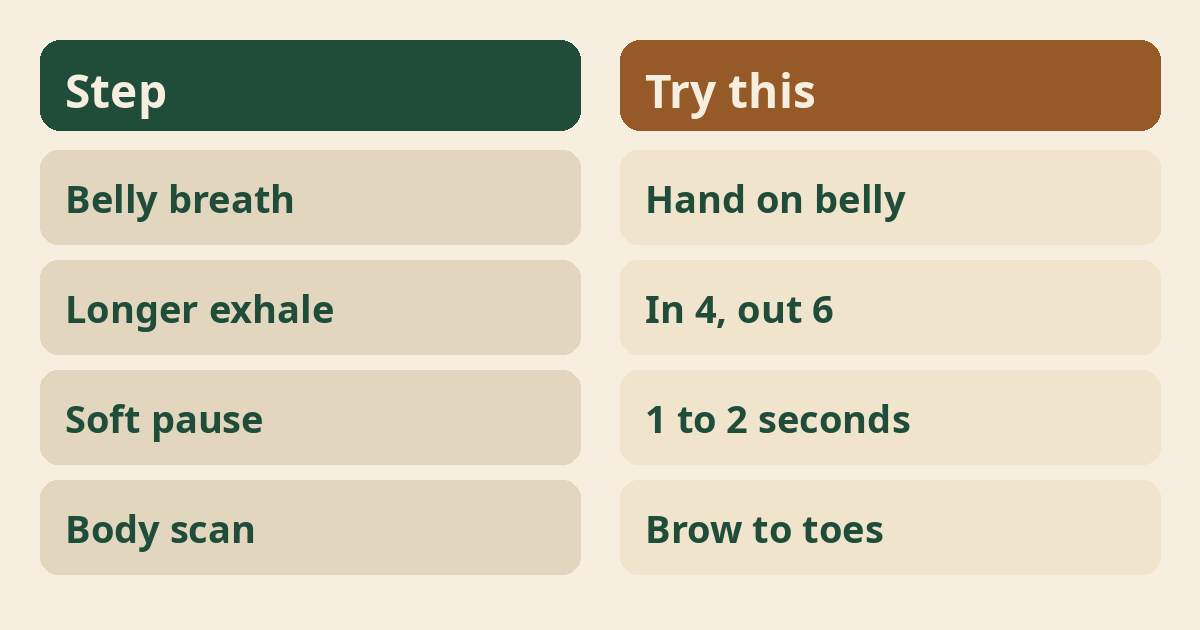
Belly breathing means letting your lower belly rise as you inhale and soften as you exhale. Place one hand on your belly and one on your chest. Aim for the belly hand to move more. Keep it slow and small. Our page on belly breathing for beginners walks through this in more detail.
Step 3: Lengthen the exhale
Making your out-breath a little longer than your in-breath is a common calming pattern. Try breathing in for a count of four and out for a count of six. Do not strain. If the count feels hard, shorten both numbers. The goal is ease, not a perfect count.
Step 4: Try the pause
A short, soft pause after the exhale can make the breath feel slower and more spacious. Keep the pause tiny, one or two seconds at most. Never hold your breath hard. If a pause feels uncomfortable or makes you tense, skip it and keep the smooth flow going.
Step 5: Try slow nostril breathing
Breathing quietly through your nose is a mild way to keep the pace slow. Let your jaw soften and your tongue rest. Breathe in through the nose and out through the nose. Skip this if your nose is blocked. Mouth breathing is fine on those days.
Step 6: Add a body scan
After a few rounds, let your attention travel from your forehead down to your feet. Notice where you hold tension, such as the brow, jaw, or shoulders. With each exhale, picture that spot softening. You do not have to force anything to change. Noticing is enough.
How should my breathing feel?
It should feel quiet, smooth, and comfortable, never forced or noisy. If you hear yourself gasping or feel your chest tighten, you are pushing too hard. Back off to about half your effort. Easy breathing is the sign you are on the right track.
How long should one session last?
Two to five minutes is plenty for a beginner. Short practice is easier to repeat. You can lengthen it to ten minutes later if it feels good. Set a soft timer so you do not watch the clock. Stop sooner if you feel dizzy or uneasy.
How often can I practice?
Many people practice once or twice a day on regular days and keep it simple. A steady daily habit usually feels better than one long session. Pick a time you can keep, like after waking or before bed. If you are wondering about pacing in general, how often to do yoga covers a similar idea.
Can I breathe this way during a headache?
Some people do, if it feels comfortable and soothing at that moment. Choose the softest version, just slow belly breaths in a dim, quiet room. If a pattern adds pressure or makes you feel worse, stop. Your comfort and your doctor’s advice come first.
Is it better to practice between episodes?
Many people find regular practice on calmer days builds familiarity with the breath. When the pattern already feels natural, it is easier to use when you are uncomfortable. Think of it like learning a route before you need it. Results vary from person to person.
What are common mistakes?
The most common mistake is breathing too hard or too deep. Other slips include holding the breath, lifting the shoulders, and rushing the count. Slow down. Let the breath be smaller than you think. You are teaching the body to relax, not training for a race.
Should I count my breaths?
Counting can help, but only if it does not turn into stress. A simple count of four in and six out gives your mind a job. If counting makes you tense, drop it and just follow the feeling of the breath. Both ways are fine.
What if I feel dizzy?
Stop, breathe normally, and rest until the feeling passes. Dizziness usually means the breathing was too big or too fast. Next time, go slower and smaller. If dizziness keeps coming back, mention it to your doctor before continuing.
What about my neck and shoulders?
Relaxed shoulders let the breath move more freely. Many of us hold tension in the neck without noticing. Roll your shoulders back and down before you begin. A short stretch routine like beginner yoga for the neck and shoulders may help loosen the area first.
Can I pair breathing with a pose?
Yes, a few quiet poses can support a calmer breath. Child’s pose is a restful shape that many people enjoy. Rest your forehead on a cushion and breathe into your back. See child’s pose for beginners for easy setup tips. Skip any pose that adds head pressure.
Can I breathe at my desk?
Yes, a few slow breaths at your desk can be a quick reset. Sit tall, drop your shoulders, and take five easy belly breaths. Look away from your screen first. If you spend long hours seated, yoga at your desk offers small movements to pair with it.
How does stress fit in?
Stress is a common part of many people’s days, and slow breathing may help you feel less wound up. Stress does not explain every headache, and it is not your fault. Still, a calm breath can ease the tension that tends to ride along. For more on this, read yoga for stress relief.
What are the possible benefits?
Many people find slow breathing leaves them feeling calmer and more relaxed, though results vary. Some notice softer shoulders, a quieter mind, or easier sleep. None of this is guaranteed, and it is not a treatment. For general background on mind and body practices, the National Center for Complementary and Integrative Health shares clear, balanced information.
How do I track my progress?
A short note after each session helps you see what feels useful. Write the time, how long you practiced, and how you felt before and after. Over a few weeks you may spot patterns. Share the notes with your doctor if they are helpful for your visits.
How can I make it a habit?
Tie your practice to something you already do each day. Try it right after brushing your teeth or before your first cup of tea. Keep it tiny at first, even one minute. Small, repeated habits are easier to keep than big plans.
How can I progress over time?
Add a minute at a time, or add a calm pose once the basic breath feels natural. Do not rush. Once belly breathing feels easy, try a longer exhale or a short body scan. Keep each change small. If a step feels stressful, go back to the last comfortable one.
Do I need a teacher?
A teacher is not required, but a qualified one can help you with form and safety. Look for someone who works with beginners and respects health limits. Tell them about your migraine up front. A good teacher will offer softer options and never push you.
What mindset helps most?
A patient, kind attitude helps more than effort. You are not trying to win at breathing. If your mind wanders, that is normal. Notice it, smile, and return to the breath. Some days will feel easier than others, and that is fine.
What about light, sound, and scent?
Many people prefer a dim, quiet room without strong smells during practice. Sensory triggers differ from person to person. Turn off bright screens and lower the volume. Skip candles or incense if scents bother you. Make the space as neutral and comfortable as you can.
Can I use these with other relaxing habits?
Yes, a warm shower, soft stretching, or a short rest can pair well with slow breathing. Pick habits that already feel good to you. A calm pose such as mountain pose can help you stand tall and feel grounded before you begin. Keep the whole routine low-impact. For the bigger picture, read our main guide, Yoga for Migraine for Beginners, which this page supports.
What should I do if it does not seem to help?
Stop, rest, and speak with your doctor if you are not sure how to continue. Not every technique suits every person. That is okay. Try a shorter session, a different position, or a break for a few days. Your care team can suggest next steps that fit you.
Where to read next
For a calm, beginner-friendly start, Ranjana Sinha’s Begin Where You Are is written for people who want simple steps. Our guide to starting a home yoga practice adds a gentle routine you can follow at home.
Frequently asked questions
Can breathing exercises stop a migraine?
No, they are not a treatment, though many people find slow breathing helps them feel calmer.
What is the easiest pattern for a beginner?
Slow belly breathing with a slightly longer exhale is a simple place to begin.
Is it safe to practice when my head hurts?
Some people find soft breathing comforting, but stop if it adds pressure and ask your doctor about your situation.
Do I have to sit in a special pose?
No, any comfortable seated or lying position works as long as your neck feels supported.
When should I see a doctor instead of practicing?
See a doctor promptly for sudden, severe, or unusual head pain or any new symptoms.
The bottom line
Start with one calm minute today, and let slow, kind breathing become a small part of your routine, alongside the care your doctor recommends.

