
Yoga for hairdressers is a short, gentle practice that targets the neck, shoulders, wrists, and lower back, the areas that work hardest behind the chair. This guide is for stylists who are brand new to yoga and want a simple place to start. You will learn why the practice suits salon work, how to begin in ten minutes, which poses help most, and how to keep the habit going on a busy schedule.
This article is general education about yoga, not medical advice. If you have a health condition, injury, or ongoing pain, check with your doctor before starting.
What is yoga for hairdressers?
Yoga for hairdressers is a gentle beginner practice built for people who stand and style hair all day. It focuses on the neck, shoulders, wrists, and lower back, which do the most work behind the chair. No special fitness level is needed. Most moves can be done at home or in a quiet corner of the salon.
Why do hairdressers try yoga?
Most hairdressers try yoga because long days of standing and styling leave the body stiff and sore. Raised arms, bent wrists, and leaning over clients add up over the years. A short daily practice gives those tired areas a chance to move and rest. Many stylists also say it helps them feel calmer during busy shifts.
Who is this guide for?
This guide is for hairdressers who are completely new to yoga and want a simple starting point. You do not need to be flexible, fit, or experienced. Every move here is beginner friendly and easy to modify. If you can breathe and stand, you can start.
How do I start yoga as a beginner?
Start with ten quiet minutes and a few simple moves, nothing more. Pick a small space, wear comfortable clothes, and set a time that fits your day. Mornings before work or evenings after your last client both work well. Keep it small enough that you actually do it.
Step one: set up your space
Clear a space the size of a bath towel and gather any props you plan to use. A mat is helpful, but a carpet or rug works too. Keep water nearby and silence your phone. For simple gear ideas, see yoga props for beginners.
Step two: warm up the body
Begin with slow, easy movements to wake up stiff muscles before any deeper stretch. Roll your shoulders, turn your head gently from side to side, and circle your wrists. Move at half speed. Two or three minutes of this is enough for a beginner session.
Step three: practice a few poses
Choose three to five beginner poses and move through them slowly with steady breathing. Good first picks include mountain pose, cat and cow, child’s pose, and a gentle seated twist. Hold each one for a few easy breaths. A stable standing shape like mountain pose is a calm way to begin.
Step four: focus on your breathing
Breathe slowly and evenly the whole time, because breathing is the heart of the practice. Let your belly soften and rise with each breath instead of forcing big chest breaths. If a pose makes you hold your breath, ease out of it a little. A simple guide is belly breathing for beginners.
Step five: cool down and rest
End every session lying down or sitting quietly for a few minutes of rest. Let your arms and legs relax fully and stop trying to do anything. This rest is not a bonus; it is part of the practice. Even two minutes helps your body settle after movement.
Step six: make it a habit
Attach your practice to a daily routine so it happens without much thinking. Unroll your mat after brushing your teeth or right after closing the salon. Keep the routine short enough that skipping feels like more effort than starting. Small and steady beats long and rare.
How long should a session be?
Ten to twenty minutes is plenty for a beginner session. Short sessions done often help more than one long session a week. On busy days even five minutes of stretching and breathing counts. Add time slowly as the habit sticks.
How often should you practice?
Most beginners do well with three to five short sessions a week. Daily practice is fine if the sessions stay gentle. Rest days are useful when your body feels worn out. More detail sits in how often should you do yoga.
What are the best poses for hairdressers?
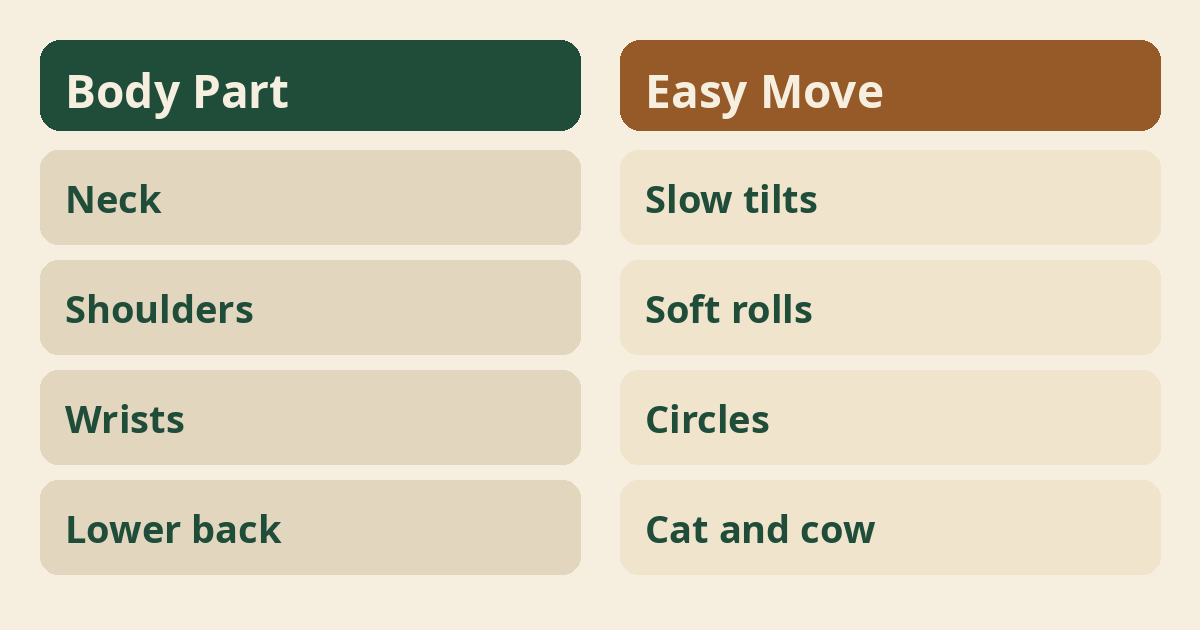
The best starter poses target the neck, shoulders, wrists, and lower back. Cat and cow eases a stiff spine, child’s pose rests the back, and gentle neck stretches release tension from looking down all day. Shoulder rolls can even be done between clients. Cat and cow is a kind first move for a tired back.
How does yoga help a sore neck?
Slow neck movements may ease the tightness that builds from holding your head at one angle all day. Drop your ear toward one shoulder, breathe, and switch sides. Keep every motion small and pain free. Never pull on your head with your hands.
Can yoga help tired shoulders?
Gentle shoulder stretches may help release the strain of holding your arms up to cut and style. Shoulder rolls, arm circles, and doorway stretches are all beginner friendly. Move slowly and stop before any sharp feeling. Yoga for the neck and shoulders has more moves for this area.
What about wrist and hand care?
Soft wrist stretches may ease the tired feeling from gripping scissors and brushes all day. Make gentle fists and open them wide a few times. Circle the wrists slowly in both directions. Stretch the fingers out long, then let them rest.
Can yoga help a tired lower back?
Gentle bending and twisting may help a lower back that aches from hours of standing. Cat and cow, child’s pose, and a slow seated twist are common picks. Skip deep backbends as a beginner. If your back pain is strong or new, talk to a doctor before stretching it.
What props do I need?
You need very little: a mat, and maybe a strap, block, or cushion. Props make poses easier and safer for stiff bodies. A folded towel can stand in for a cushion, and a belt can stand in for a strap. There is no need to buy anything before your first session.
Can I practice at the salon?
Yes, many gentle moves can be done standing in a break room or beside your chair. Wrist circles, shoulder rolls, and slow breathing need no mat at all. Even one minute between clients can loosen things up. Ideas like these appear in yoga at your desk.
What are common beginner mistakes?
The most common mistakes are pushing too hard, holding the breath, and copying advanced poses. Yoga is not a contest, and pain is not progress. Ease off whenever something pinches or stings. Slow and gentle always wins over deep and forced.
How do I breathe during yoga?
Breathe in and out through your nose, slowly and evenly, for the whole session. Match each movement to a breath: breathe in to lift or open, breathe out to fold or soften. If your breath gets short or strained, back off the pose. The breath is your built-in guide.
What benefits do people notice?
Many people find that regular gentle practice helps them feel looser, calmer, and less worn down by standing work, though results vary from person to person. Some notice easier movement at work within a few weeks, and others mainly enjoy the quiet time away from a busy chair. Groups like National Center for Complementary and Integrative Health describe yoga as a low-impact activity many adults use for relaxation and gentle movement. It is not a fix for anything, and it does not need to be.
Is yoga a treatment for pain?
No, yoga is not a treatment, cure, or medicine for any condition. It is a gentle form of movement and rest that many people enjoy. Ongoing pain, numbness, or tingling needs a doctor’s attention, not more stretching. Think of yoga as self-care, not healthcare.
Who should be careful?
Anyone with a recent injury, joint problem, or ongoing pain should talk to a doctor before starting. The same goes for pregnancy, blood pressure concerns, or past surgery. A quick check keeps you safe. Skip or adapt any move that does not feel right for your body.
What if I am not flexible at all?
You do not need any flexibility to begin, because yoga is how many people build it slowly. Every pose can be made smaller with props or shorter holds. Touching your toes is never the goal. Comfort and steady breathing matter far more.
How do I know if a pose is too much?
Sharp pain, pinching, or holding your breath means the pose is too much. Mild stretching sensations are normal; pain is not. Come out of the pose slowly and rest. Smaller versions of the same move still count.
What is a good morning routine?
A short morning routine of five gentle moves can set you up for a long day on your feet. Try shoulder rolls, cat and cow, a standing side stretch, wrist circles, and one minute of slow breathing. Keep it under ten minutes. Easy to repeat is the whole point.
What is a good evening wind-down?
A slow evening routine can help your body let go of the workday. Lie on your back with your knees bent and breathe slowly. Add a gentle twist on each side and a short rest at the end. Many stylists find this helps them settle before sleep.
Can yoga help with stress at work?
Slow breathing and gentle movement may help take the edge off a stressful day behind the chair. Clients, schedules, and long hours on your feet can wear on the mind as much as the body. A few quiet minutes can reset your mood. More ideas live in yoga for stress relief.
How do I progress over time?
Progress means holding poses a little longer, moving a little smoother, and keeping the habit alive. Add one new pose every couple of weeks instead of changing everything at once. Notice how your body feels at work as the real measure. There is no finish line to rush toward.
Should I take a class or practice alone?
Both work: a beginner class gives guidance, and home practice gives freedom. A teacher can check your form and suggest safer versions of poses. Videos and written guides work well at home. Many people mix the two over time.
How do I find a good teacher?
Look for a teacher who welcomes beginners and asks about injuries before class. A good teacher offers easier versions of every pose and never pushes your body into shape. Try a few classes before settling on one. Comfort with the teacher matters as much as the style.
What mindset helps beginners most?
A patient mindset helps most, so treat yoga as a small daily gift, not a chore or a race. Some days will feel stiff and some will feel easy. Both are normal. Showing up gently is the whole practice.
Do I need special clothes?
No, any comfortable clothes that let you move and stretch will do. You already own everything you need. Bare feet grip a mat better than socks. Salon clothes work fine for quick stretches at work.
Will yoga fit a busy salon schedule?
Yes, because short sessions and chair-side moves fit into almost any day. Ten minutes at home plus one-minute stretches between clients is a full practice. The habit bends around your bookings, not the other way around. Small daily effort adds up.
Where to read next
For a calm, beginner-friendly start, Ranjana Sinha’s Begin Where You Are is written for people who want simple steps. Our guide to starting a home yoga practice adds a gentle routine you can follow at home.
Frequently asked questions
Is yoga safe for complete beginners?
Yes, gentle beginner yoga is generally considered safe for most healthy adults when moves stay small and pain free.
Do I need to join a studio?
No, a quiet corner at home and a mat or rug are enough to begin.
Can I do yoga after a long shift?
Yes, keep evening practice slow and gentle and it can double as a wind-down.
What if my wrists hurt during poses?
Skip weight-bearing poses on sore wrists and stick to seated or standing stretches.
How soon will I notice a difference?
Many people feel looser within a few weeks of regular short sessions, though results vary.
The bottom line
Start with ten quiet minutes today and let your shoulders thank you at the end of your next shift.

