
Yes, drinking water can make yoga feel more comfortable, and the key is to sip steadily through the day instead of gulping right before class. Water helps you feel fresh, focused and ready to move. This guide explains when to drink, how much feels right, and which habits to avoid, all in plain words for new practitioners.
This article is general education only and is not medical advice. If you have a heart, kidney or other health condition, or take medicines, check with your doctor before changing how much you drink.
What is the link between yoga and drinking water?
Water is simply the fluid your body uses every day, and yoga is one more activity that asks a little more of it. When you move, breathe deeply and sometimes warm up, you lose a bit more fluid than when you sit still. Drinking water through the day helps you meet that need gently.
Why do people drink water around yoga?
Most people do it to feel comfortable and clear headed on the mat. Many find that a dry mouth or a heavy, tired feeling is easier to notice and fix when they pay attention to fluids. Others just like the calm routine of a few sips.
How do I start a water habit for yoga?
Start by drinking a glass of water earlier in the day, not just before class. Keep a bottle where you can see it. Small, regular sips are easier on the body than one big drink, and they turn into a habit without effort.
Step 1: Sip steadily through the day
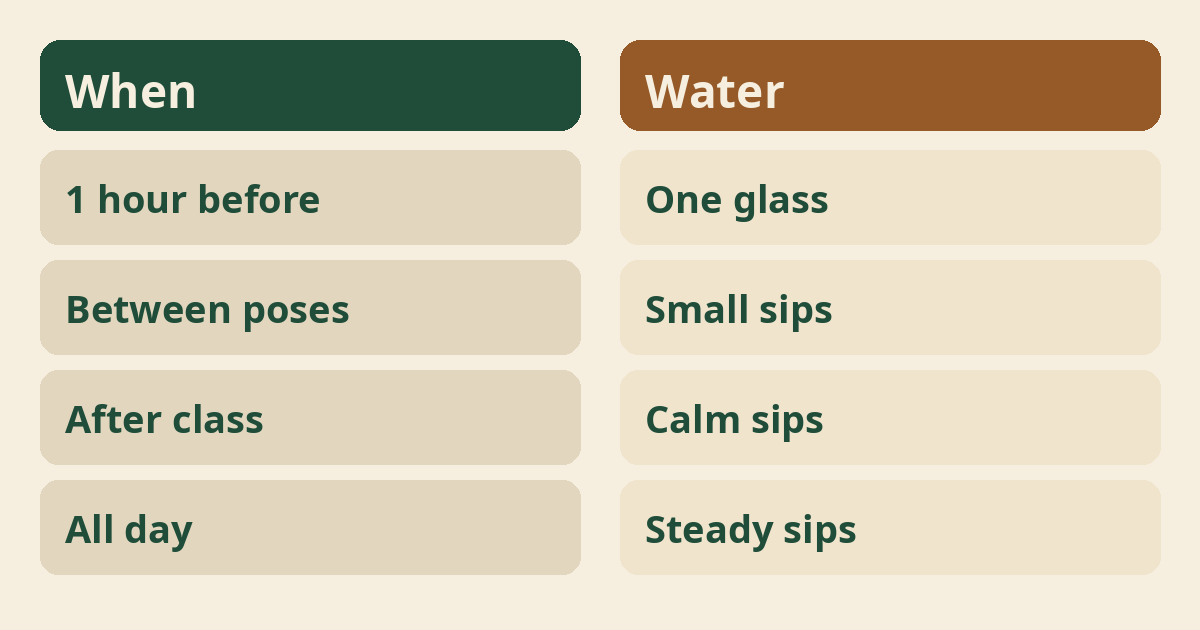
Steady sips beat big gulps. Take a few mouthfuls every hour or so while you work or study. By the time you unroll your mat, your body is already comfortable, and you do not need to rush to catch up.
Step 2: Finish your main drink early
Try to finish a full glass about an hour before you practice. This gives your stomach time to settle so twists and forward folds feel easy. If an hour is too long for you, even thirty minutes with a smaller amount can work.
Step 3: Keep a small sip ready on the mat
A bottle near your mat lets you take a sip when you truly need one. Place it a short reach away, not under your face. A mouthful between poses is plenty, and you never have to leave the flow to find it.
Step 4: Pause for water between sequences
The best time for a sip is between sequences, not in the middle of a pose. Come to a simple seated position, take a slow breath, drink a little, and breathe again. This small pause also gives your mind a rest.
Step 5: Sip gently after practice
After class, take a few calm sips and then drink normally as you feel thirsty. There is no need to drink a huge amount at once. Let your thirst and the rest of your day guide you, and eat a normal meal when you are hungry.
Step 6: Notice how your body feels
Your own signals are the best guide, so check in after each session. Ask yourself if you felt thirsty, heavy or light. Over a few weeks, these notes show you what amount and timing suit you best.
How does breathing connect to water?
Slow, deep breathing can leave your mouth dry, which is a normal sign you may want a sip. Try belly breathing at the end of class and notice the feeling in your throat. A small sip afterwards is usually enough, and there is no need to overdo it.
How much water is enough?
There is no single number that fits everyone, so use thirst and your doctor’s advice as your guide. Body size, weather, food and health all change what you need. If your urine is pale and you rarely feel thirsty, you are probably doing fine.
How long before class should I stop drinking?
Many people stop big drinks about an hour before class and keep small sips only. Everyone digests at a different speed. If you feel sloshing in your belly during twists, try leaving more time next time.
How often should I drink during the day?
Think of water as a rhythm, with a few sips every hour or two. A rhythm is easier to keep than a strict rule. Pair it with things you already do, like checking messages or finishing a task.
What are common mistakes with water and yoga?
The most common mistake is drinking a lot all at once just before class. Another is ignoring thirst until you feel dizzy or tired. Aim for calm, even habits and you will avoid both.
Should I gulp water between poses?
No, gulping can leave you feeling full and uncomfortable in the next pose. Small mouthfuls are kinder to your stomach. If you need more, take a longer pause and sit quietly for a minute.
What if I feel sloshy in twists?
Feeling sloshy usually means you drank too much too close to class. Next time, move your main drink earlier and sip less right before you start. Gentle twists will feel lighter. A simple standing pose can help you reset.
Do I need to sip during a short practice?
For a short, gentle session, you may not need to drink at all. Ten or fifteen minutes of easy movement is often fine with the water you drank earlier. Keep the bottle nearby just in case.
Does the type of yoga change my water needs?
Gentle styles ask for less, and faster or warmer styles ask for more attention to fluids. If a room feels warm or you sweat a lot, you may feel thirstier. Listen to your body and slow down if you feel unwell.
What props help with water habits?
A reusable bottle with a secure cap is the only prop you really need. A small towel for sweat is also nice. For other helpful items, see yoga props for beginners and keep the setup simple.
What water is best?
Plain room temperature or lightly cool water is a comfortable choice for most people. Very cold water can feel sharp when your body is warm. Sugary or fizzy drinks may sit heavy in the belly, so many people skip them before class.
Does hydration affect flexibility?
Many people feel looser and more comfortable when they are well hydrated, though results vary. Water is not a shortcut to deeper stretches. Patience and regular practice matter more. See yoga for flexibility for gentle ideas.
Can water help me feel more focused?
Some people find that a few sips help them feel clearer and calmer, though this is personal. If your mind feels foggy, a pause with water and a slow breath can be a kind reset. Try it with stress relief yoga on a busy day.
What are the possible benefits?
Many people find that good hydration makes yoga feel easier and more pleasant, though results vary. General information on staying hydrated and active is available from the National Center for Complementary and Integrative Health. Treat these ideas as comfort habits, not promises.
Is drinking water with yoga a medical treatment?
No, it is not a treatment for any condition and should not be used as one. Water and yoga are everyday habits that support comfort and routine. If you have a health concern, talk with a doctor first and follow their advice.
Who should be careful with water amounts?
People with heart, kidney or liver conditions, or anyone told to limit fluids, should ask a doctor first. The same goes for people who are pregnant or taking certain medicines. Your doctor can tell you what amount is safe for you.
What about pregnancy?
If you are pregnant, ask your doctor about both fluids and exercise before you begin. Needs can change from week to week. For general background, read prenatal yoga vs regular yoga and bring your questions to your care team.
Can I drink water if I have a bad back?
Water habits are the same, but you should ask your doctor before starting any new movement. Sitting still with a bottle is fine, yet poses need care. See yoga with a bad back for gentle thinking and check in with a professional.
How do I progress my habit?
Build slowly, adding one small change at a time. Start with a bottle on the mat, then add a morning glass, then a simple reminder. After a few weeks, the routine feels natural and needs no effort.
How can a teacher help?
A good teacher can show you when to pause, sip and rest without losing the flow. Tell them if you feel dizzy, thirsty or unwell during class. A kind teacher will let you take breaks, and a rest pose is always allowed.
What mindset helps most?
Treat water as a small act of care, not a rule to follow perfectly. Skip guilt on days you forget. Notice, sip, and carry on. Yoga is about listening to yourself, and thirst is one of the simplest signals to hear.
What if I forget to drink?
If you forget, simply begin again with the next sip. No day is ruined by a missed glass. Set a gentle reminder or tie sipping to a habit like rolling out your mat.
Can I do yoga when I feel very thirsty?
If you feel very thirsty or dizzy, pause and sip slowly before moving on. Rest in a comfortable seat and breathe slowly. If you still feel unwell, stop and consider talking to a doctor.
Where to read next
For a calm, beginner-friendly start, Ranjana Sinha’s Begin Where You Are is written for people who want simple steps. Our guide to starting a home yoga practice adds a gentle routine you can follow at home.
Frequently asked questions
Should I drink water before yoga?
Yes, a glass about an hour before and small sips later is a comfortable pattern for many people.
Can I drink water during class?
Yes, small mouthfuls between sequences are fine for most people.
How much water should a beginner drink?
It varies by person, so use thirst, comfort and your doctor’s advice as your guide.
Is cold water bad for yoga?
Not bad, but room temperature or lightly cool water often feels gentler on the stomach.
Does water make yoga a treatment for illness?
No, yoga and water are general wellness habits and not medical treatments.
The bottom line
Sip calmly, listen to your body, and let water be one simple, steady part of your yoga routine.

