Partner stretches are gentle stretches done with another person, who helps you hold a position or lean into it together. You do not need to be flexible or experienced to try them. All you need is a calm space, a trusted partner, and a willingness to talk as you go. This guide covers simple starting moves, breathing, safety, and common mistakes, all in plain words.
This article is general education only and is not medical advice. If you have an injury, pain, pregnancy, or any health condition, please check with your doctor before trying new stretches.
What are partner stretches?
Partner stretches are stretches where two people work together, using a hand, a pull, or a gentle lean for support. You each take a turn or move at the same time. The partner is there to steady you, not to push you.
Why do people do partner stretches?
Many people like them because stretching feels easier and more fun with company. A partner can help you stay in a pose a little longer and notice when you rush. It also turns exercise into time together.
Do you need to be flexible?
No, you can start with any level of flexibility. Partner stretches are small and slow at first. Tight muscles are a normal reason to begin, not a reason to wait.
How do you choose a partner?
Pick someone you trust who will listen to you and go slowly. A friend, family member, or spouse often works well. Choose a person who will stop at once when you say stop.
How do you start?
Start with a short warm-up, a quiet space, and a simple agreement about how you will talk. Walk around for a few minutes and roll your shoulders. Then agree on a word like “stop” so both of you feel safe. Read about standing tall in mountain pose first if you want a calm starting posture.
What should you wear and where should you practice?
Wear loose clothes and use a flat, non-slip floor or a mat. Bare feet or grippy socks help you feel steady. Leave some space around you so nobody bumps into furniture.
Step 1: Seated side-by-side shoulder opener
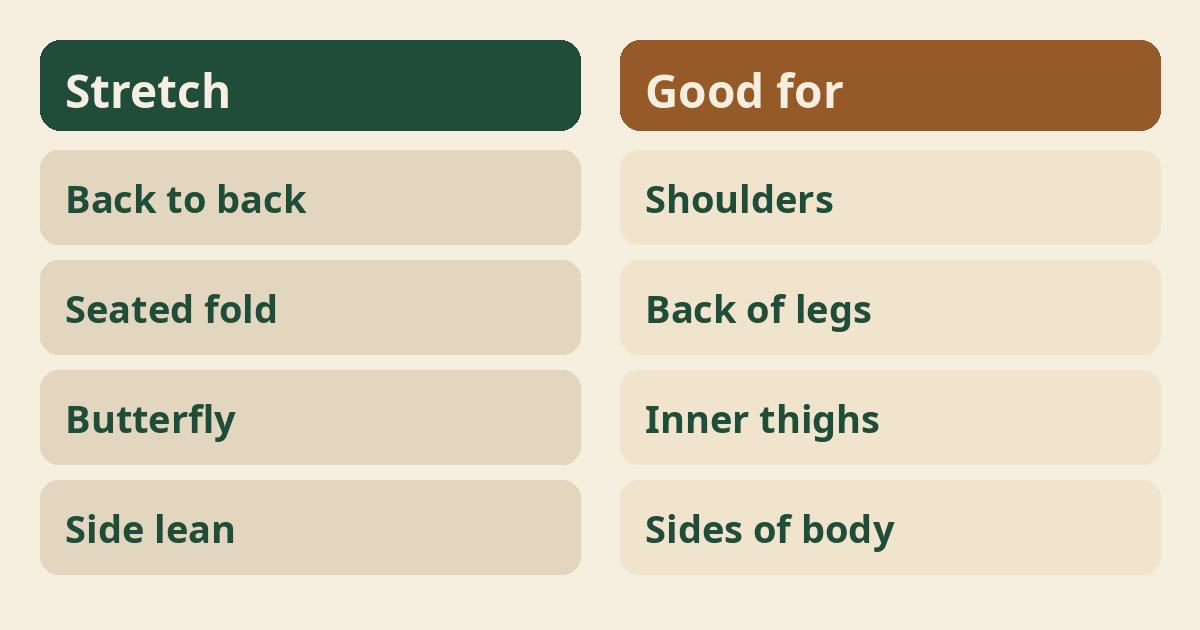
Sit back to back and let your spines rest lightly against each other. Sit tall and breathe slowly for a few rounds. Reach one arm up and lean gently away from your partner, then switch sides. Keep your hips on the floor.
Step 2: Seated forward fold with a pull
Sit facing each other with legs apart and hold hands or forearms. One person leans back a little while the other folds forward slowly. The pull is light and slow. Swap roles after a few breaths.
Step 3: Butterfly with a gentle assist
Sit with the soles of your feet together while your partner sits behind you. Your partner rests their hands on your upper back, not on your knees. You can read more about butterfly pose before you try this. Let your back round softly.
Step 4: Standing side stretch
Stand facing each other, a step apart, and lean to the side while holding hands. Raise one arm and reach over the top toward your partner. Move in small amounts. Both of you keep your knees soft and your feet planted.
Step 5: Child’s pose with a back rub
Sit on your heels and fold forward while your partner places light hands on your back. This is a calm position for the end of a session. Try child’s pose alone first so it feels familiar. Your partner stays soft and does not press down.
Step 6: Cat and cow in a pair
Come to hands and knees side by side and move through the spine slowly together. Breathe in as you lift your chest and out as you round your back. If you want a refresher, read about cat-cow pose. Match each other’s pace, but keep your own rhythm.
How should you breathe?
Breathe slowly through your nose and let your belly rise and fall. Longer breaths help many people feel calmer and less tense. If you are holding your breath, you are probably going too far. You may like to learn belly breathing first.
Should you talk while you stretch?
Yes, talking is part of safe partner stretching. Say things like “more”, “less”, or “stay there”. Clear words stop small problems before they become big ones.
How long should you hold each stretch?
A hold of about 15 to 30 seconds is a common starting point. Start shorter if it feels like too much. You can hold longer once your body feels used to it. There is no prize for going deep.
How often can you do partner stretches?
Once or twice a week is a gentle way to begin. Many people find that short, regular sessions feel better than one long one. You can read more in how often should you do yoga.
How long should a session last?
A beginner session of 10 to 20 minutes is plenty. Pick four to six stretches and spend a few breaths on each. End with a quiet minute together so you can notice how you feel.
What does a stretch feel like when it is right?
A good stretch feels like mild, even tension that you can breathe through. It should not feel sharp, pinching, or hot. If you feel any of those, ease off at once and tell your partner.
What are common mistakes?
The most common mistake is pulling too hard or too fast. Other mistakes are bouncing, holding the breath, and staying quiet when something hurts. Skipping the warm-up is also common. Go slowly and speak up.
Why should you never force a stretch?
Forcing a stretch can strain muscles and joints, and it takes the comfort out of the practice. Your partner cannot feel what you feel. You are the one in charge of how far you go, every time.
What props can help?
A mat, a folded blanket, and a strap can make stretches easier to hold. A strap lets you reach without straining, and a blanket softens sitting on the floor. See yoga props for beginners for more ideas.
Who should be careful?
Anyone with an injury, pain, pregnancy, joint concerns, or a health condition should talk to a doctor first. This includes recent surgery, balance problems, and anything that makes stretching feel unsafe. If you are expecting, see prenatal yoga vs regular yoga. Your doctor knows your health best.
What if you have back pain?
Check with your doctor before stretching and choose only very gentle moves. Back concerns need personal advice. You can read general ideas in can you do yoga with a bad back, but it does not replace a medical opinion.
Is partner stretching a treatment?
No, partner stretching is not a treatment for any condition. It is a gentle form of movement for general wellbeing. If you have symptoms or a diagnosis, talk to a doctor or other health professional.
What are the possible benefits?
Many people find partner stretches help them feel more relaxed and a bit looser, though results vary. Some also enjoy the connection and the sense of shared effort. For general information on movement and wellbeing, see National Center for Complementary and Integrative Health. Your own experience may differ.
Can it help with flexibility?
Some people find regular, gentle stretching helps them feel more flexible over time. Progress is slow and different for everyone. You can pair this practice with yoga for flexibility for more ideas.
Can it help with stress?
Many people find the slow breathing and shared time feel calming. A quiet session can be a pause in a busy day. For more calming ideas, see yoga for stress relief.
What about tight hips?
Hip stretches are popular because many people sit for long hours. Go very slowly and use a strap or cushion. Read yoga for hips for gentle solo options you can use between sessions.
What about neck and shoulders?
Gentle shoulder and upper-back stretches are a common choice for desk workers. Keep your partner’s hands light and away from your neck. You can find more in yoga for neck and shoulders.
How can you work on balance?
Standing partner stretches let you lean on each other to feel steadier. Hold hands and share the weight lightly. If you want to explore this more, read yoga for balance.
How do you progress?
Progress by adding time, then small range, and only when every move feels easy. Change one thing at a time. Add a few seconds to a hold, or try one new stretch each week. Stay with the easy version if you are unsure.
Should you work with a teacher?
A qualified teacher can show you safe positions and hand placement. This is helpful if you have any concerns or want to try more advanced moves. A teacher can also spot habits you cannot see yourself.
What mindset helps most?
A calm, curious, and patient mindset helps most. See each session as time to listen, not to perform. Leave comparison out of it, and be kind to yourself and your partner.
How can you make it a habit?
Pick a regular time and keep the session short. Evenings after a walk or weekend mornings both work for many pairs. A small routine you enjoy is easier to keep than a big one.
What is a good way to end a session?
End with a few slow breaths and a quiet moment together. Sit side by side, close your eyes if you like, and notice how you feel. Then thank each other and drink some water.
Where to read next
For a calm, beginner-friendly start, Ranjana Sinha’s Begin Where You Are is written for people who want simple steps. Our guide to starting a home yoga practice adds a gentle routine you can follow at home.
Frequently asked questions
Can I do partner stretches with a friend?
Yes, a friend you trust who listens and goes slowly is a fine choice.
Do partner stretches hurt?
They should not hurt, so stop and tell your partner if you feel sharp or sudden pain.
How long should I hold a partner stretch?
About 15 to 30 seconds is a common beginner hold, and shorter is fine.
Can kids do partner stretches?
Children can try very gentle versions with an adult watching, and a doctor can advise if you are unsure.
What if my partner is more flexible than me?
That is fine, since each of you only goes as far as your own body feels comfortable.
The bottom line
Go slowly, speak up, and enjoy stretching together.