A home yoga practice space is a clear, comfortable area where you can move safely without needing a spare room or special decor. A corner beside your bed, a quiet part of the living room, or a shared room can work when the floor is stable and your movement stays clear of furniture. Start with the space you already have, then adjust it after a few short sessions. The goal is a usable place for practice, not a room that looks perfect in photographs.
This article offers general education about setting up a practice area and is not medical advice. If you have a health condition, an injury, balance difficulties, or are pregnant, check with your doctor before beginning yoga and ask what changes you may need.
What is a home yoga practice space?
It is an area you prepare for the movements you plan to do. The space may be permanent or something you clear and put away each time. Its main job is practical: give your feet a stable surface, leave your body room to move, and keep your route in and out clear.
Why make a dedicated area?
A familiar area can make starting feel less complicated. Instead of searching for a mat or moving several objects, you already know where practice happens. Many people find this small bit of preparation helpful, although a tidy corner alone does not create a lasting habit or guarantee that yoga will feel easy.
How do you start without a spare room?
Choose one ordinary spot that is available when you actually want to practise. Think about the household’s daily use of the room rather than picking the prettiest corner. A modest area you can reliably use is more useful than a large space that regularly becomes a walkway or someone else’s work area.
Step one: clear the floor
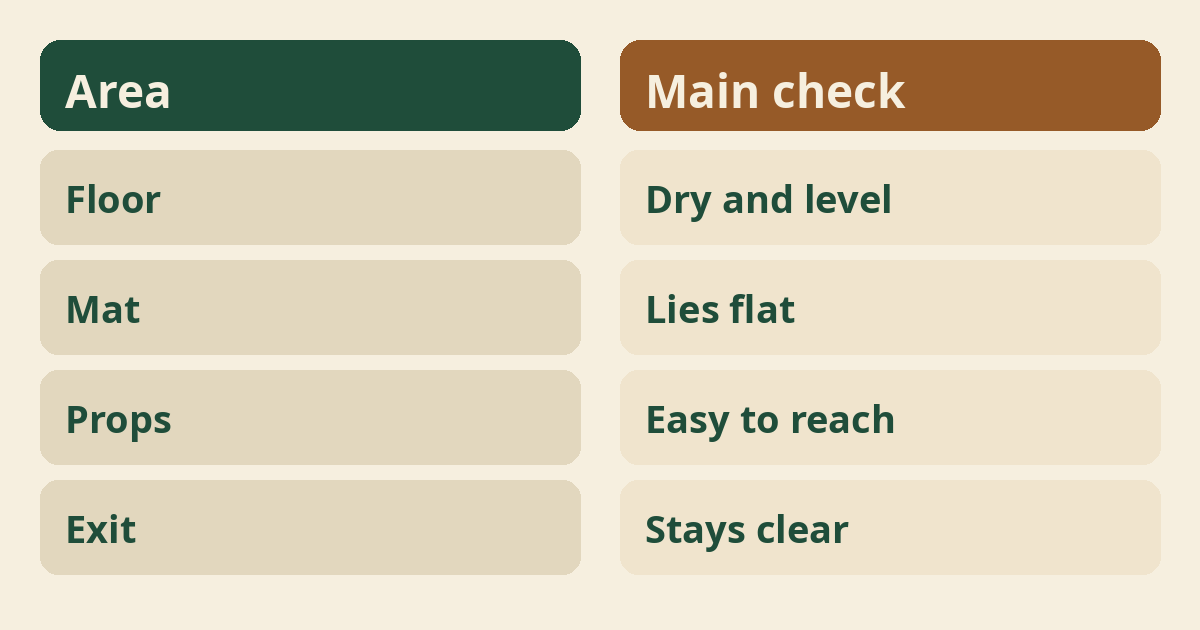
Remove objects from the whole area your body may reach. Look beyond the outline of your mat for cables, shoes, toys, and low furniture. Check overhead as well, including shelves and ceiling fans, because lifting your arms or rising from the floor changes the space your body occupies.
Step two: test your reach
Check your movement range slowly before beginning a session. Stand with your arms opening gently to each side, then check the room needed for the floor positions in your plan. If you must bend around furniture, choose a smaller movement or another location rather than trying to squeeze through the full pose.
Step three: check the surface
Use flooring that feels level, dry, and steady under your feet. A mat cannot make every surface suitable, and loose rugs can move beneath it. Try a simple standing position before adding transitions, using Mountain Pose basics as a starting reference rather than testing the floor with a difficult balance.
Step four: adjust light and air
Set up enough light to see the floor and enough airflow to feel comfortable. Avoid placing yourself in direct glare or beside a heater that makes the session uncomfortably hot. Curtains and an open door may be enough; you do not need to turn an ordinary room into a heated studio.
Step five: put essentials nearby
Keep the few items you use within easy reach but outside your movement area. Place a folded blanket or suitable props beside the mat, not where your feet will land. Read a beginner’s guide to yoga props before assuming that an object found around the house can safely support your weight.
Step six: plan the reset
Decide how you will leave the space ready for ordinary life afterward. In a shared room, allow a little time to roll the mat, collect props, and return moved furniture. A routine that respects the room’s other uses is easier to repeat than a setup that leaves everyone stepping around your belongings.
How much space is enough?
You need enough room for your chosen practice, not a fixed room size. A seated breathing session and a standing sequence have different needs. Test the actual shapes you intend to use, leaving clearance from hard edges, and shorten the session plan if the available area cannot comfortably hold every movement.
Can you practise in a bedroom?
A bedroom can work if the clear floor area is stable and accessible. Watch for bed frames, drawers, and rugs that extend into your movement path. Avoid using the bed itself as a substitute for a firm practice surface, and keep an unobstructed route to the door rather than filling the last available gap.
Can a living room work?
A living room can be useful when everyone knows which area needs to stay clear. Choose a time when the space is not a busy crossing point, and explain that your mat is not a walkway. If other people need the room, agree on a short practice window instead of depending on uninterrupted silence.
What if you live in one room?
A temporary practice space is still a valid practice space. Move only what is necessary, and choose movements that fit the room without crowding cooking or sleeping areas. If floor space is unavailable, desk yoga options may offer ideas, provided your chair and surroundings suit the movements you select.
Should the mat face a window?
Face whichever direction gives you clear movement and comfortable light. A window view is optional, and privacy may matter more than scenery. Check that an open window, curtain, or blind cord stays clear of you, and do not sacrifice safe spacing simply to arrange the mat around a pleasant view.
What kind of mat helps?
Choose a mat that stays put on your floor and feels steady during simple movements. More cushioning does not automatically mean better support for standing work. Check for slipping, curled edges, and worn areas, and follow the maker’s care guidance so cleaning does not leave the surface wet or unexpectedly slick.
Which props belong nearby?
Keep only props that suit your current practice and can be used safely. Blocks, a strap, and a folded blanket are common options, but none is compulsory for every session. Avoid makeshift supports that roll, collapse, or slide, and ask a qualified teacher if you are unsure whether a particular item is appropriate.
Can furniture support practice?
Use furniture only when it is stable and suitable for the specific activity. A rolling office chair, light table, or folding seat may shift when you place weight on it. Even a sturdy chair needs clear footing and a suitable position, so get guidance before treating household furniture as a support for balance or stretching.
How should breathing fit the space?
Leave enough quiet and comfort to notice your breath without forcing it. You do not need incense, complete silence, or special music to begin. If breathing practice interests you, belly breathing for beginners explains a gentle starting point; stop if you feel dizzy or uncomfortable rather than pushing through.
How long should the first session be?
Begin with a short session that lets you test the setup without rushing. Five or ten minutes can be enough to notice whether you can reach props and change position comfortably. Treat this first attempt as a practical check, then adjust the room before adding more movements or spending longer on the mat.
How often should you use the space?
Choose a frequency that fits your life and leaves room to adjust how you feel. A space is useful even when you use it briefly or less often than expected. For a broader discussion of routine, read how often to do yoga instead of treating daily practice as a rule everyone must follow.
What are the common setup mistakes?
The main mistakes are crowding the area and choosing appearance over function. A shelf full of decorations may look appealing but leave little room for your arms. Other problems include slippery flooring, props behind you, and a mat laid across a doorway; remove these obstacles before adding any decorative touches.
Who should be careful?
Check with your doctor first if your health or movement needs may affect safe practice. This matters if you have an injury, recent surgery, dizziness, balance difficulties, or another health condition, and during pregnancy. A qualified teacher can then help adapt the practice within that advice, but should not replace medical assessment or make unsupported promises.
Is this a treatment?
A home yoga space is not a treatment for any medical condition. It is simply an arrangement that may make a suitable personal practice easier to begin. If symptoms are affecting your daily life, seek medical advice rather than changing the lighting, buying more props, or extending yoga sessions in the hope that the room will solve them.
What benefits might the setup offer?
Many people find that a clear, familiar area makes practice feel more manageable, but results vary. Having fewer objects to move may remove one small obstacle to getting started. Broader information about yoga’s possible benefits and safety is available through National Center for Complementary and Integrative Health, while the room itself should not be credited with medical or guaranteed emotional effects.
How do you progress?
Improve the setup in response to real problems rather than buying everything at once. After a few sessions, note what interrupted you: missing props, glare, noise, or a cramped transition. Change one thing at a time, and increase the demands of your practice only when the movements suit your current ability and any advice you have received.
When can a teacher help?
A qualified teacher can help you match movements to both your ability and your available space. Describe the floor, nearby furniture, and any limits before the lesson begins. For an online lesson, place the camera where the teacher can see the relevant movement without balancing your device on an unstable pile of objects.
What mindset makes the space useful?
Treat the area as a place to practise, not a test of taste or discipline. Some days it will look ordinary, and some sessions will be brief. The useful question is whether the setup supports a safe, workable practice, not whether it resembles an image of someone else’s carefully arranged yoga room.
Do you need music or candles?
Neither music nor candles is necessary for a home practice space. If you enjoy sound, keep it low enough to hear instructions and household activity. Battery lights avoid an open flame, and leaving out fragrances may be more comfortable for people who find scented products irritating or who share the room with others.
What about children and pets?
Plan for interruptions without allowing the mat area to become a collision zone. Store straps and small items out of reach after practice, and avoid movements that depend on others staying perfectly still. If a child or animal enters the area, pause and reset rather than continuing a transition around an unpredictable obstacle.
How do you manage a shared room?
Agree on a clear beginning, end, and reset with the people who use it. A simple notice that you need the corner briefly may be enough, but ask rather than assuming priority. Keep essential routes open, and choose another time or a smaller practice when the room is needed for meals, work, or care.
How should you use a phone or video?
Position the screen where you can follow instructions without repeatedly twisting your neck. Preview the session so you know whether the movements fit your space and experience. Turn off optional notifications, keep charging cables away from your feet, and pause the video whenever you need time to adjust instead of chasing the demonstration.
How do you keep the area clean?
Keep the floor free of debris and let the mat dry fully after suitable cleaning. Follow the mat’s care instructions rather than guessing that any household cleaner is safe for it. Check the space again before each session, since a clean area yesterday can still contain a new toy, spill, or shifted rug today.
What if you lose the habit?
Make returning simple instead of redesigning the whole room. Clear the same small area, choose a familiar short practice, and begin without trying to recover missed sessions. If the old setup no longer fits your household or schedule, change the arrangement; keeping a useful routine matters more than preserving a particular corner.
What belongs on a final safety check?
Check the floor, your movement clearance, and your own comfort before you begin. Make sure the mat lies flat, supports stay stable, and you can leave the area easily. If something feels wrong in your body or surroundings, pause and reassess rather than assuming that completing the planned session is the most important goal.
Where to read next
For a calm, beginner-friendly start, Ranjana Sinha’s Begin Where You Are is written for people who want simple steps. Our guide to starting a home yoga practice adds a gentle routine you can follow at home.
Frequently asked questions
Do I need a separate yoga room?
No, a temporary clear area can work if it safely fits the practice you choose.
Can I leave my mat out all day?
Yes, if it stays clean and dry and does not create a trip hazard or block a shared route.
Is a mirror necessary?
No, a mirror is optional and should not replace suitable instruction or checking how a movement feels.
Can I set up without buying decor?
Yes, safe flooring, clear movement space, and practical storage matter more than decorative objects.
Should I keep changing the layout?
Change the layout when it solves a real problem, rather than assuming every session needs a new arrangement.
The bottom line
Begin with one safe, usable corner and let the space develop around the practice that genuinely fits your life.