A mantra is a sound, word, or phrase repeated as a focus for attention, often within a spiritual practice. For beginners, the simplest approach is to choose a suitable phrase, sit comfortably, and repeat it gently without forcing your breath. You do not need a perfect voice, a silent mind, or a long session. This guide explains how to begin respectfully, what to do when thoughts wander, and how to keep the practice comfortable rather than turning it into another task to get right.
This article offers general education, not medical advice or personal spiritual instruction. If you have a medical or mental health condition, check with your doctor before starting, especially if inward attention or repeated sounds have caused distress.
What is a mantra?
A mantra is a repeated sound, word, or phrase used to gather attention. In many traditions, its meaning goes beyond a simple concentration tool and belongs to a wider spiritual practice. A beginner can learn the basic act of repetition while staying clear about whether the chosen words are sacred, secular, or personally meaningful.
Why do people use mantras?
People repeat mantras for reasons that include devotion, reflection, and a steady point of focus. Some approach the practice through a religious tradition, while others use an ordinary phrase during a quiet pause. Knowing your own reason helps you choose a suitable approach instead of expecting every kind of mantra practice to do the same thing.
Mantra or affirmation?
A mantra and an affirmation can overlap, but they are not always the same practice. An affirmation usually expresses a statement someone wants to remember or believe. A traditional mantra may be repeated for its place within a teaching or devotional practice, so calling every positive sentence a traditional mantra can blur an important difference.
Do you need religious beliefs?
You do not need to adopt religious beliefs to repeat a simple secular phrase for attention. You can use ordinary words such as “one moment at a time” without presenting them as a sacred teaching. If you choose a religious mantra, learn what it means and where it comes from rather than treating its background as unimportant.
How do you choose words?
Choose words that feel understandable, appropriate, and easy to repeat without strain. A short phrase in a language you know is a practical starting point for a nonreligious exercise. Avoid promises that clash with your experience, such as insisting that everything is fine when you feel upset; a neutral phrase can leave more room for honesty.
Respect the tradition
A traditional mantra is best approached with care for its source and teaching context. Some practices are taught openly, while others belong within instruction from a qualified teacher in that tradition. If you are unsure, ask rather than assuming every phrase found online is meant for casual repetition or that you can teach it to others.
Step 1: Set a small intention
Begin by deciding that you will spend a short time returning to one phrase. Your intention might be to pause before a busy part of the day, not to reach a special state. Make the goal something you can actually do, such as sitting comfortably for a minute, rather than something you must feel before the practice counts.
Step 2: Choose a comfortable seat
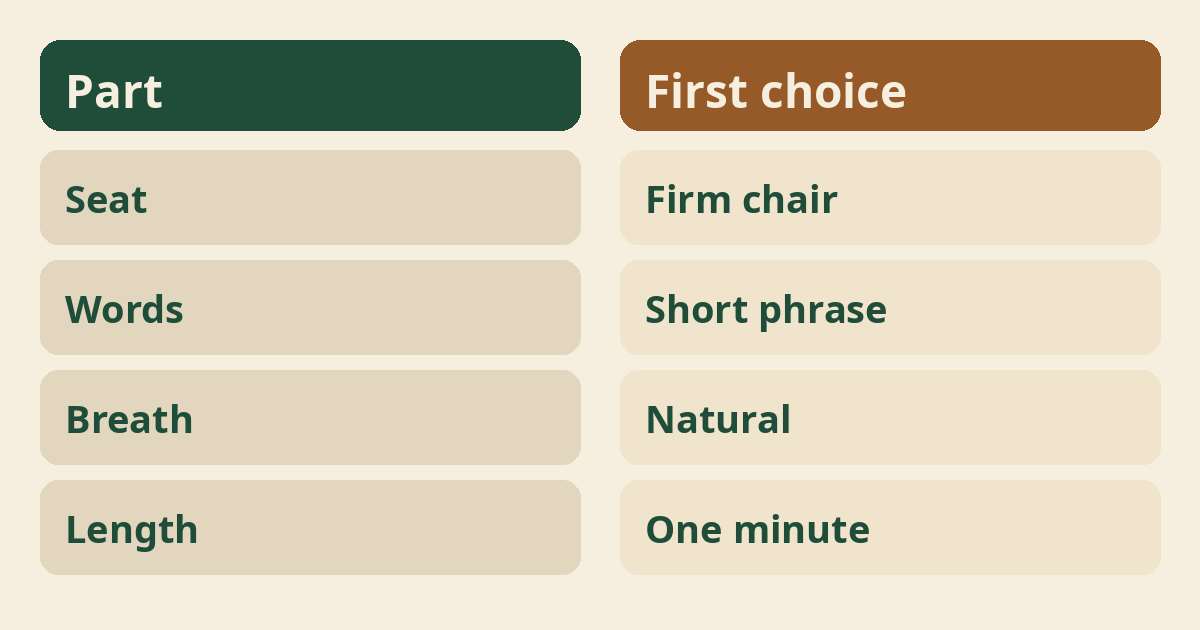
Sit in a position that lets you stay reasonably comfortable and breathe normally. A chair with your feet supported is often enough; there is no need to cross your legs or hold a rigid posture. If you want practical setup ideas, simple yoga props can help you think about support rather than appearance.
Step 3: Notice your surroundings
Take a moment to notice the room before beginning the repetition. Feel the support beneath you and look at a familiar object if that helps you stay oriented. You may keep your eyes open throughout; closing them is optional, and making the setting feel ordinary is more useful than trying to create a dramatic experience.
Step 4: Repeat gently
Repeat your chosen phrase at a pace that does not interfere with easy breathing. You can say it quietly or think it silently, leaving a little space between repetitions. Do not stretch a word to use every bit of an exhale, and do not try to match the rhythm of someone else’s recording if it feels awkward.
Step 5: Return when distracted
When your attention wanders, notice it and return to the next repetition. You do not need to finish every thought, argue with it, or push it out of your mind. The return is part of the exercise, so a session with many distractions can still be a session in which you practiced the intended skill.
Step 6: End without rushing
Stop the repetition and give yourself a brief transition back to your next activity. Notice the room again and move your hands or feet before standing if needed. There is no required feeling at the end, and you can finish a session that felt ordinary without adding extra minutes to chase a better result.
How should you breathe?
Let your breath stay natural instead of making repetition into a breathing challenge. The phrase does not need to fit one full inhale or exhale, and breath holding is unnecessary for this basic exercise. For a separate gentle introduction, explore belly breathing basics, but do not combine instructions if doing so makes breathing feel forced.
Out loud or silently?
Either quiet speech or silent repetition can work as a beginner’s attention exercise. Speaking softly may make the words easier to follow, while silent repetition suits shared spaces or a tired voice. Choose the option that feels comfortable today, and remember that volume is not a measure of sincerity, skill, or the value of the session.
Do you need to chant?
You do not need to sing or chant to begin a simple repetition practice. Spoken words and silent words are both reasonable options for a secular exercise. Chanting within a tradition may involve specific pronunciation, melody, or guidance, so learn those details from a suitable teacher instead of inventing rules and presenting them as traditional.
How long should you practice?
Start with a minute or two and stop sooner if you become uncomfortable. A short session gives you a chance to notice whether this kind of attention practice suits you without turning it into an endurance test. Longer is not automatically better, especially when you are tired, unsettled, or spending the whole session trying to force concentration.
How often is enough?
Choose a frequency that fits your life without making missed sessions feel like failure. You might try a brief practice on several days and then decide whether to continue. The same flexible thinking used in planning a yoga routine applies here: a manageable habit is more useful than an ambitious promise you resent.
Where can you practice?
Practice somewhere you can pause safely without needing to monitor traffic or other hazards. A quiet chair at home may be easier than a busy public place at first. Do not use inward-focused repetition while driving, cycling, crossing roads, or operating equipment; attention to the outside world takes priority whenever your surroundings require it.
What props do you need?
You can begin without beads, music, incense, or special clothing. A stable seat and a way to keep the session short are enough for a basic exercise. If you use a timer, choose a gentle sound and place it where you do not need to watch the countdown or handle your phone after each repetition.
Are counting beads necessary?
Counting beads are optional, and their use can carry a specific meaning within a tradition. For a secular exercise, you can simply repeat your phrase until your short timer ends. If you want to use a mala or another traditional aid, learn its intended use from a reliable teacher rather than assuming it is just a decoration or productivity counter.
What benefits are realistic?
Many people find a familiar phrase gives attention a simple place to return, but results vary. You may enjoy the pause without noticing a clear change in mood or focus, and that does not require a stronger technique. For broader background, use National Center for Complementary and Integrative Health for information on meditation; general meditation guidance does not prove that one particular mantra will produce a promised result.
Is this a treatment?
Mantra repetition is not a treatment or a replacement for medical or mental health care. Do not use it to delay an assessment, change prescribed medicine, or manage urgent symptoms on your own. If you are exploring it alongside care, discuss that choice with your clinician and keep following the plan you have agreed with them.
Who should be careful?
Speak with your doctor first if a health condition could affect how you respond to this practice. This matters especially if meditation, inward focus, or repeated sounds have previously brought panic, distressing memories, or a sense of disconnection. A spiritual teacher can explain a tradition, but cannot replace a clinician’s advice about symptoms or a medical condition.
What if you feel distressed?
Stop the exercise if it brings distress, dizziness, breathlessness, or a sense that you are not fully present. Open your eyes if they were closed, look around, and return to an ordinary activity in a safe setting. Seek medical advice for new or persistent symptoms, and get urgent help for severe symptoms rather than trying to repeat your way through them.
Common mistakes
The most common beginner mistake is turning a gentle practice into a test of perfect concentration. Other pitfalls include forcing your voice, controlling every breath, and starting with a long session because someone else does one. Reduce the demands when the practice feels like a struggle, and avoid judging your session by how still your body looks from the outside.
What if your mind stays busy?
A busy mind does not mean you are doing the exercise wrong. Notice whether you can return to the phrase without scolding yourself, even if the next thought arrives quickly. If repetition becomes irritating, try a shorter session or choose an external activity instead; you do not owe any particular method your continued attention.
What if the words feel false?
Change or stop using a secular phrase that feels dishonest, pressured, or upsetting. “I am always calm” may feel like an argument with your actual experience, while “this is a pause” asks much less of you. For a traditional mantra, discuss your concern with a teacher instead of changing sacred wording and calling it the same practice.
Can you use music?
Music is optional, and a quiet background may make your own phrase easier to follow. Lyrics or a strong beat can pull attention away from the words you have chosen, though preferences differ. Keep any sound low enough to remain aware of your surroundings, and skip headphones when they would reduce your ability to notice something important.
Can you practice before bed?
A brief session before bed is an option if you find it comfortable rather than stimulating. Keep the goal to having a quiet pause, not making yourself fall asleep on command. If you want other everyday ideas, gentle yoga for stress relief offers a separate starting point, not a promise that either approach will change your sleep.
How do you progress?
Progress by making the practice more comfortable and familiar before adding time. You might learn the meaning of a traditional phrase more carefully, settle on a useful seat, or notice self-criticism sooner. There is no need to collect harder words, longer sessions, or impressive counts, and you can keep a short beginner practice indefinitely if it suits you.
When should you find a teacher?
Find a suitable teacher when you want guidance within a particular mantra tradition. Ask about their training, the context of the practice, and what support they offer if someone feels uncomfortable. Be cautious about anyone who guarantees spiritual results, discourages medical care, or claims you must ignore distress to prove commitment to the practice.
What mindset helps?
Approach repetition with curiosity rather than a demand to feel peaceful. Some days may feel settled and other days may feel dull, restless, or distracted. You can notice those differences without ranking yourself, and you can decide a different activity suits you better without treating that choice as a personal or spiritual failure.
A simple first session
Your first session can be one minute of repeating a short, neutral phrase while seated comfortably. Try “one moment at a time,” spoken softly or silently, with normal breathing and your eyes open if preferred. When the minute ends, notice whether the exercise felt comfortable enough to try again; that practical observation is enough for a first attempt.
Where to read next
For a calm, beginner-friendly start, Ranjana Sinha’s Begin Where You Are is written for people who want simple steps. Our guide to starting a home yoga practice adds a gentle routine you can follow at home.
Frequently asked questions
Can I use words in my own language?
Yes, a simple secular phrase in a language you understand is a reasonable way to begin an attention exercise.
Must I repeat a set number of times?
No, this basic beginner exercise does not require a particular count, although specific traditions may teach their own methods.
Can I change my phrase every day?
You can, though staying with one comfortable secular phrase for a while may make the exercise easier to remember.
What if I cannot pronounce a traditional mantra?
Ask a qualified teacher in that tradition for guidance, or use a simple secular phrase rather than guessing.
Should I continue if I dislike repetition?
No, you can stop and choose another comfortable activity without needing to make mantra practice work for you.
The bottom line
Begin with a suitable phrase, an easy seat, and a short session, then let comfort and informed choice guide whether you continue.